


























Views
Downloads

Complete Feedback Systems Worksheet | Grade 10 Biology
Paste this activity's link or code into your existing LMS (Google Classroom, Canvas, Teams, Schoology, Moodle, etc.).
Students can open and work on the activity right away, with no student login required.
You'll still be able to track student progress and results from your teacher account.
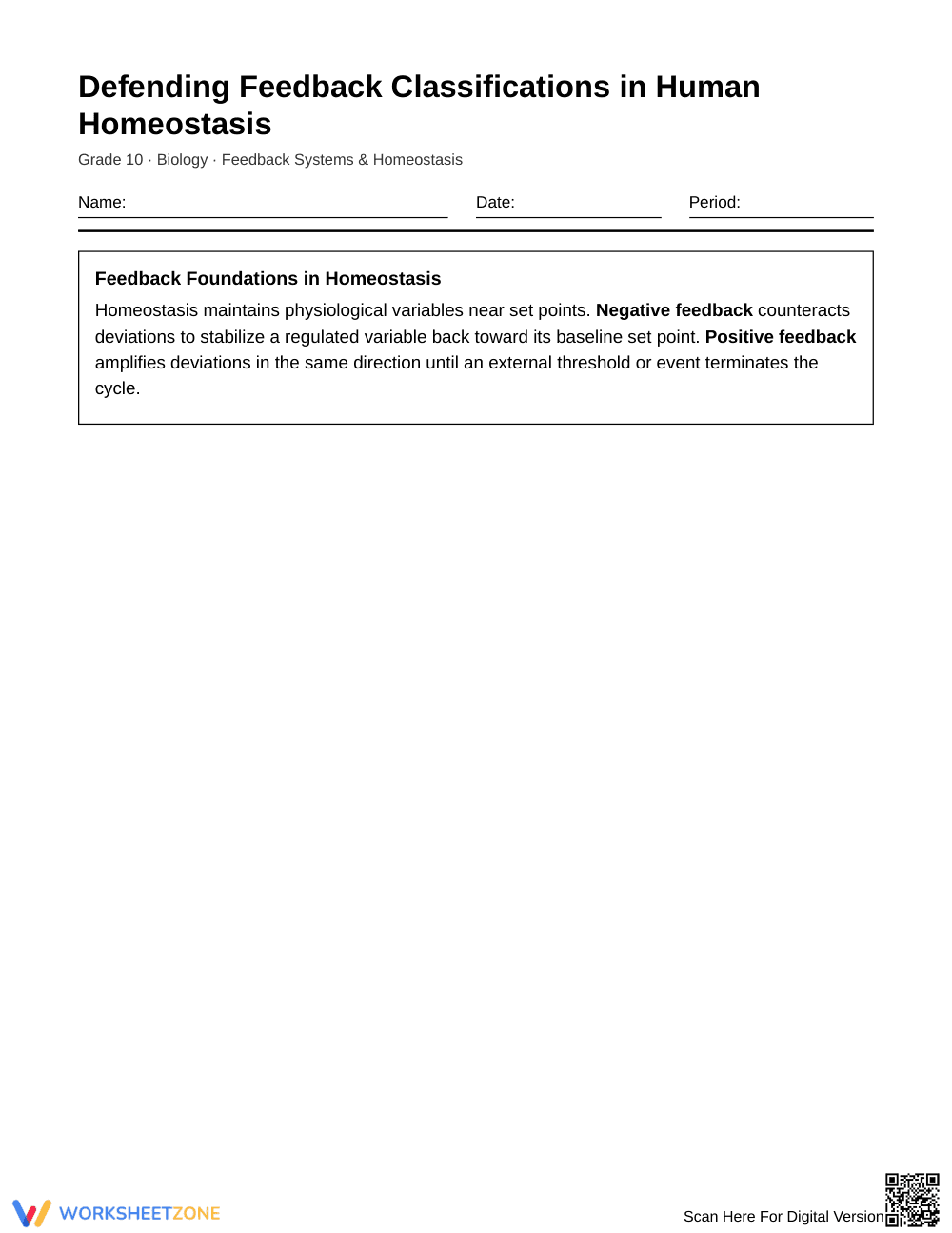
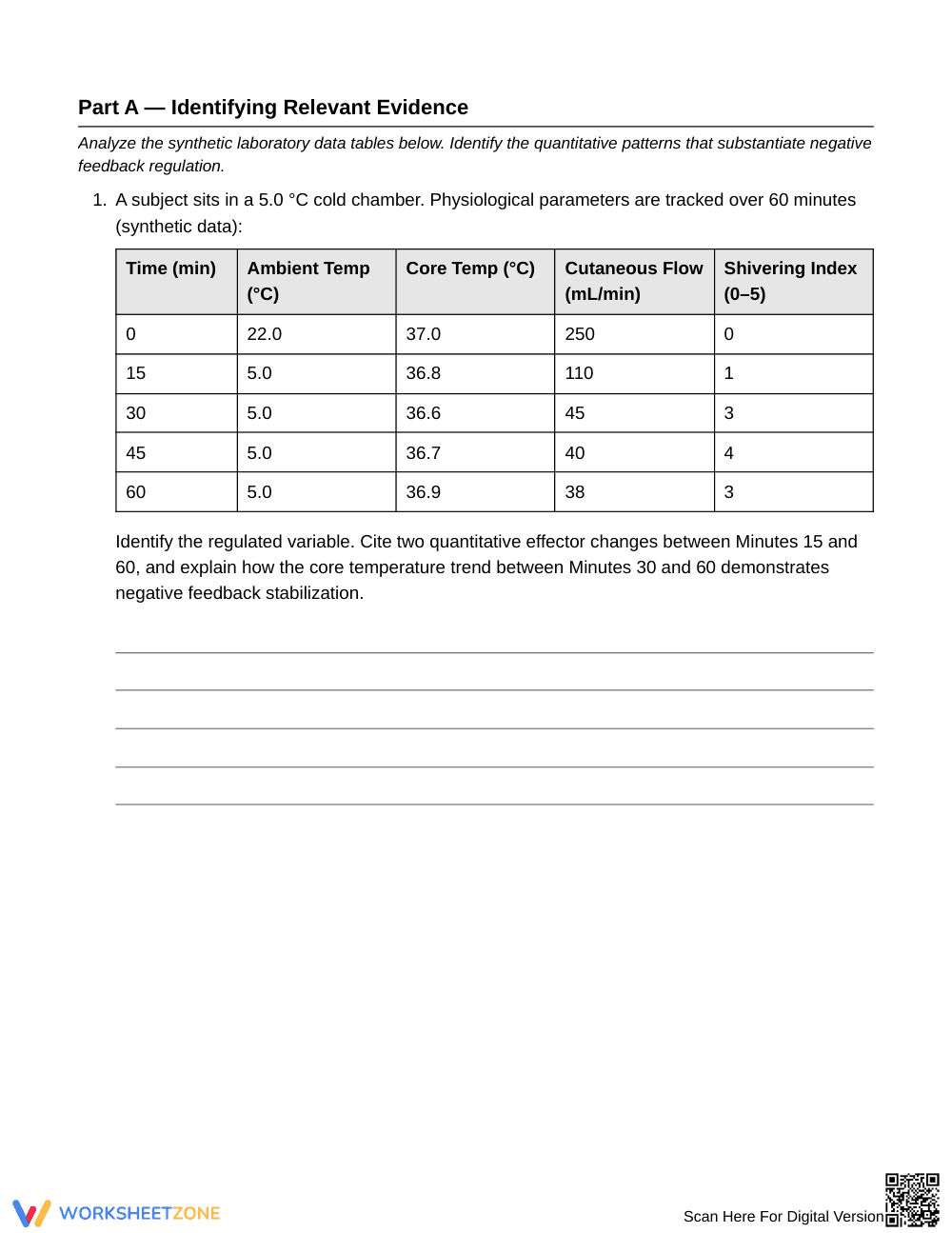
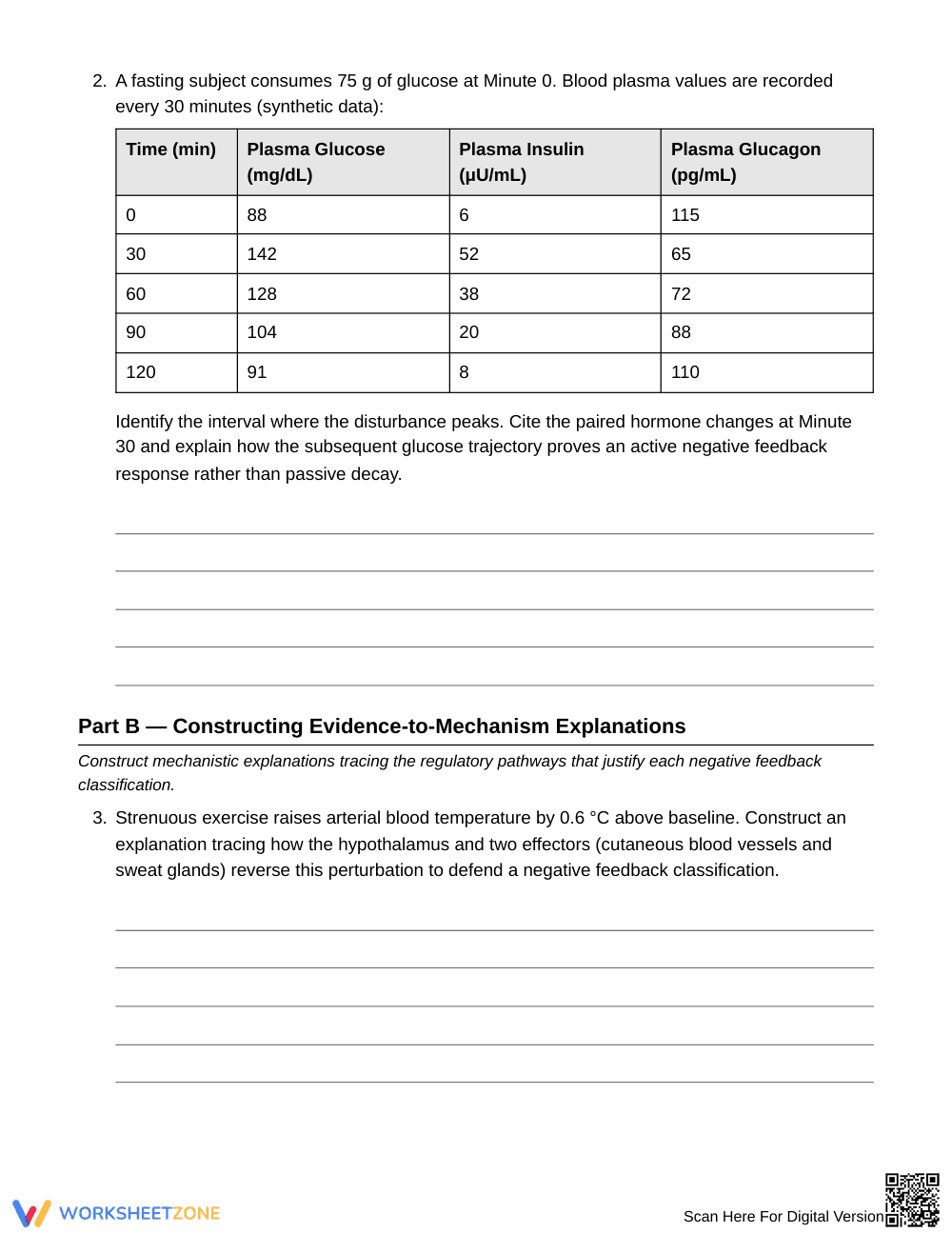
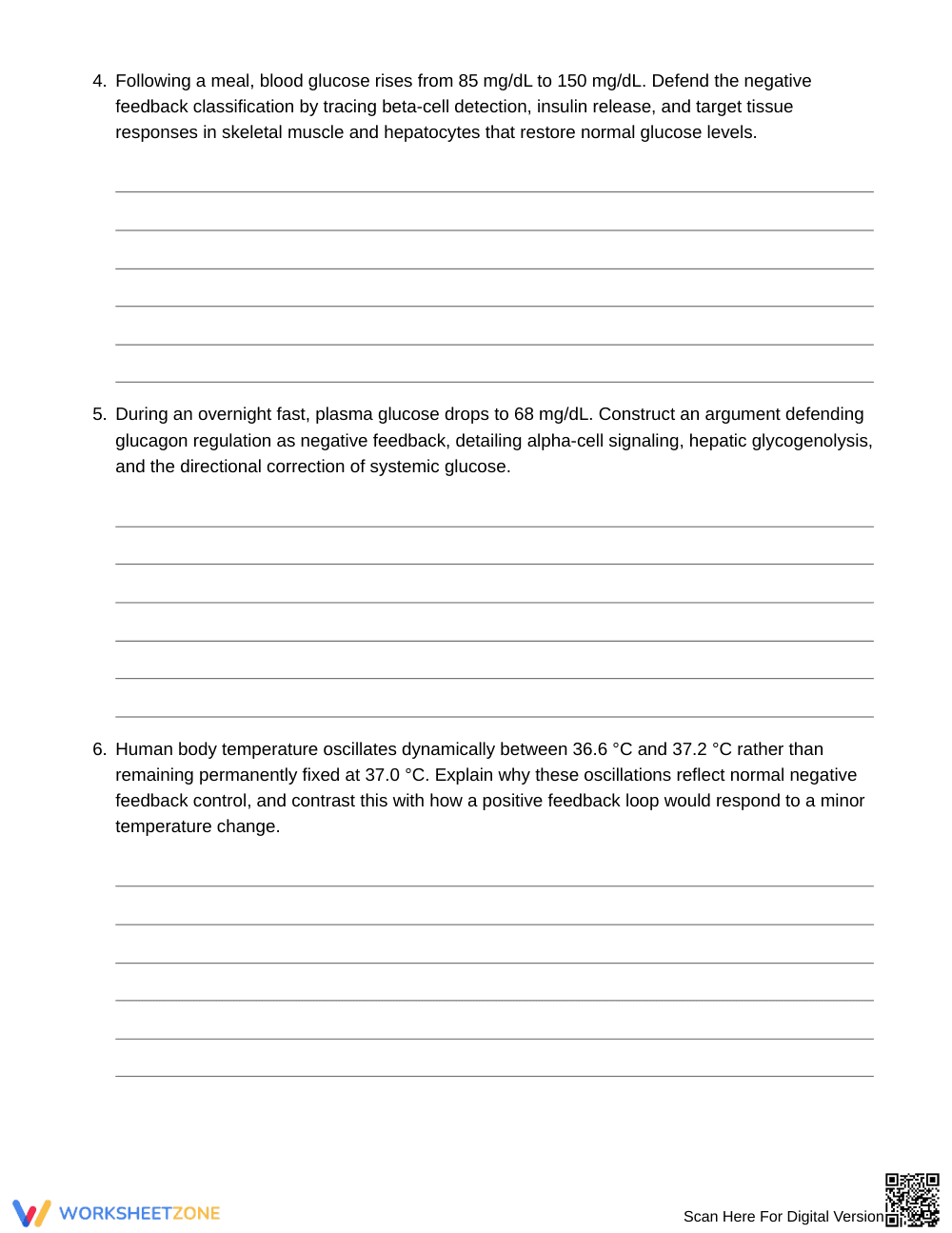
This high school biology worksheet trains students to analyze experimental data and construct mechanistic explanations defending feedback classifications. High schoolers examine thermal regulation and glucose dynamics, tracing physiological pathways to distinguish negative feedback stabilization from common misconceptions across 8 rigorous analytical tasks.
At a Glance
- Grade: 10 · Subject: Biology
- Standard: Homeostatic Feedback Mechanisms — Plan and conduct investigations or construct explanations for homeostatic feedback
- Skill Focus: Defend a Feedback Classification
- Format: 5 pages · 8 problems · Answer key included · PDF
- Best For: Homeostasis mechanism mastery & data analysis
- Time: 45–60 minutes
What's Inside
Across 5 detailed pages, this instructional resource guides students through synthetic laboratory data interpretation, pathway tracing, and misconception refutation. Students evaluate quantitative tables tracking core body temperature and blood plasma hormone levels, formulate written biological arguments detailing receptor-effector pathways, and analyze competing claims. A comprehensive 3-page answer key provides complete scientific explanations and exemplar student responses.
Skill Progression
- Guided practice (Part A — 2 multi-part data tasks): Students evaluate quantitative data tables representing thermoregulation and glycemic control, identifying regulated variables and effector shifts with structured prompts.
- Supported practice (Part B — 4 mechanistic explanation prompts): Students trace specific physiological pathways involving the hypothalamus, beta cells, alpha cells, and target tissues to justify directional corrections.
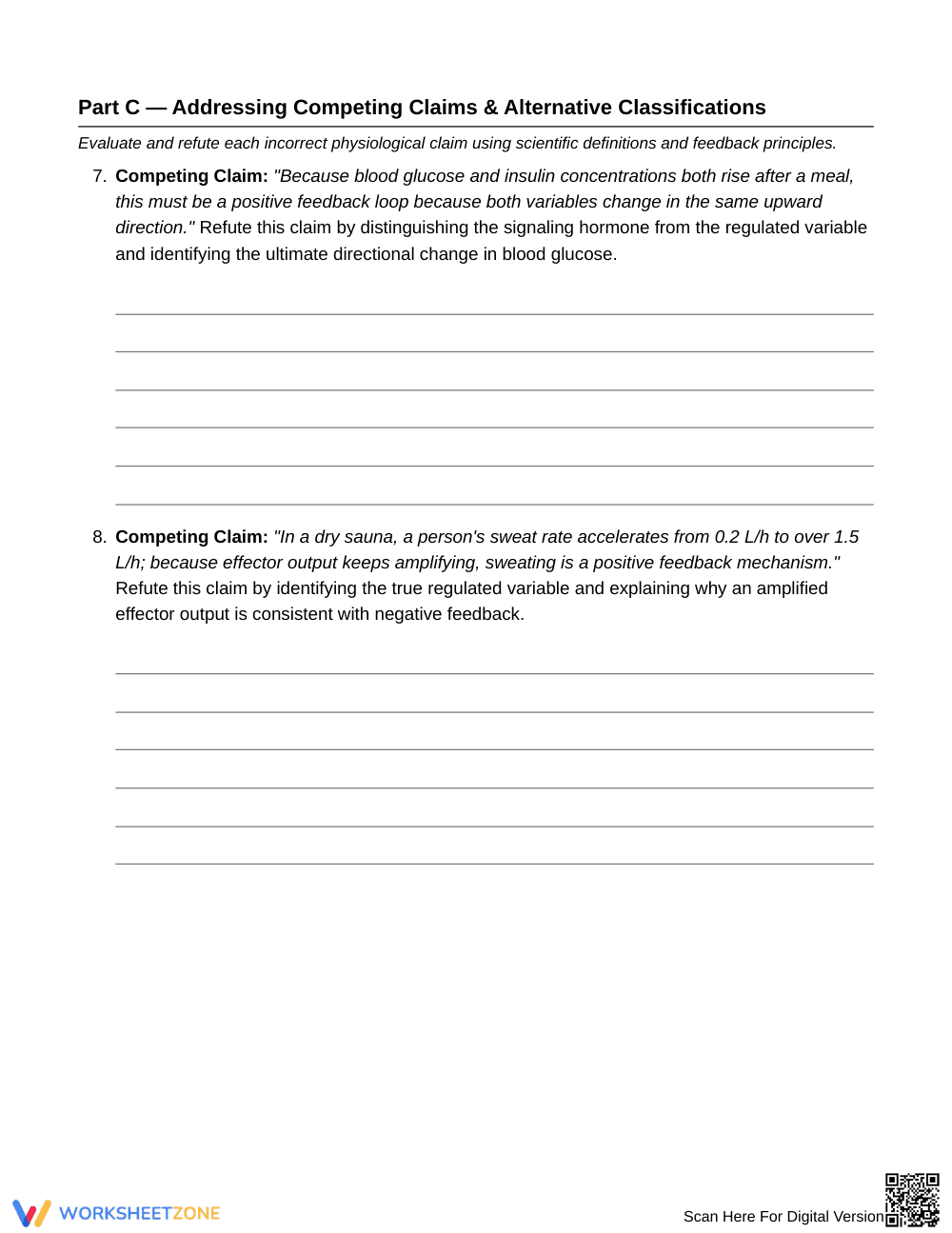
- Independent practice (Part C — 2 claim-refutation prompts): Students independently evaluate competing scientific claims, distinguishing signaling hormone fluctuations from regulated variables without scaffolding.
This gradual-release structure moves learners from scaffolded quantitative pattern recognition toward independent biological argumentation and error analysis.
Standards Alignment
This resource aligns directly with high school life science standards governing how feedback mechanisms maintain dynamic homeostasis. Students construct scientific explanations detailing how negative feedback loops utilize receptors, control centers, and effectors to reverse perturbations in biological systems. Both standard codes and core performance expectations can be copied directly into lesson plans, IEP goals, or district curriculum mapping tools.
How to Use It
Deploy this worksheet after direct instruction on homeostatic loops as an in-class collaborative activity (45–60 minutes). Formatively assess student understanding by checking Part C responses: ensure students differentiate between an amplifying effector response (like sweating) and the underlying regulated variable (core temperature). Alternatively, assign Parts B and C as independent homework or an end-of-unit review.
Who It's For
Designed for Grade 10 Biology students, this resource supports general, honors, and AP-prep biology tracks. Provide the data tables in Part A with highlighted parameter columns for striving readers, while challenging advanced students to graph the synthetic data. Pair this activity with a whole-class thermoregulation laboratory simulation or endocrine pathway anchor chart.
According to Fisher & Frey (2014), implementing a structured gradual-release framework allows secondary science learners to transition successfully from guided data analysis to independent scientific discourse. This 5-page Grade 10 Biology worksheet establishes that instructional trajectory across 8 targeted tasks focused on defending feedback classifications in human homeostasis. Learners evaluate physiological data sets depicting thermoregulation and blood glucose regulation before articulating mechanistic explanations for autonomic adjustments. By requiring students to address competing claims, the resource directly targets persistent student confusions between directional effector changes and regulated system variables. Research underscores that refuting scientific misconceptions via explicit evidence-based argumentation deepens conceptual retention and sharpens analytical reasoning skills. The included 3-page teacher key equips educators to verify student claims and identify gaps in homeostatic reasoning, making this an essential tool for secondary biology classrooms targeting rigorous life science mastery.


