




























Views
Downloads



Complete Dual Circulation Worksheet | Grade 8 Science

Paste this activity's link or code into your existing LMS (Google Classroom, Canvas, Teams, Schoology, Moodle, etc.).
Students can open and work on the activity right away, with no student login required.
You'll still be able to track student progress and results from your teacher account.
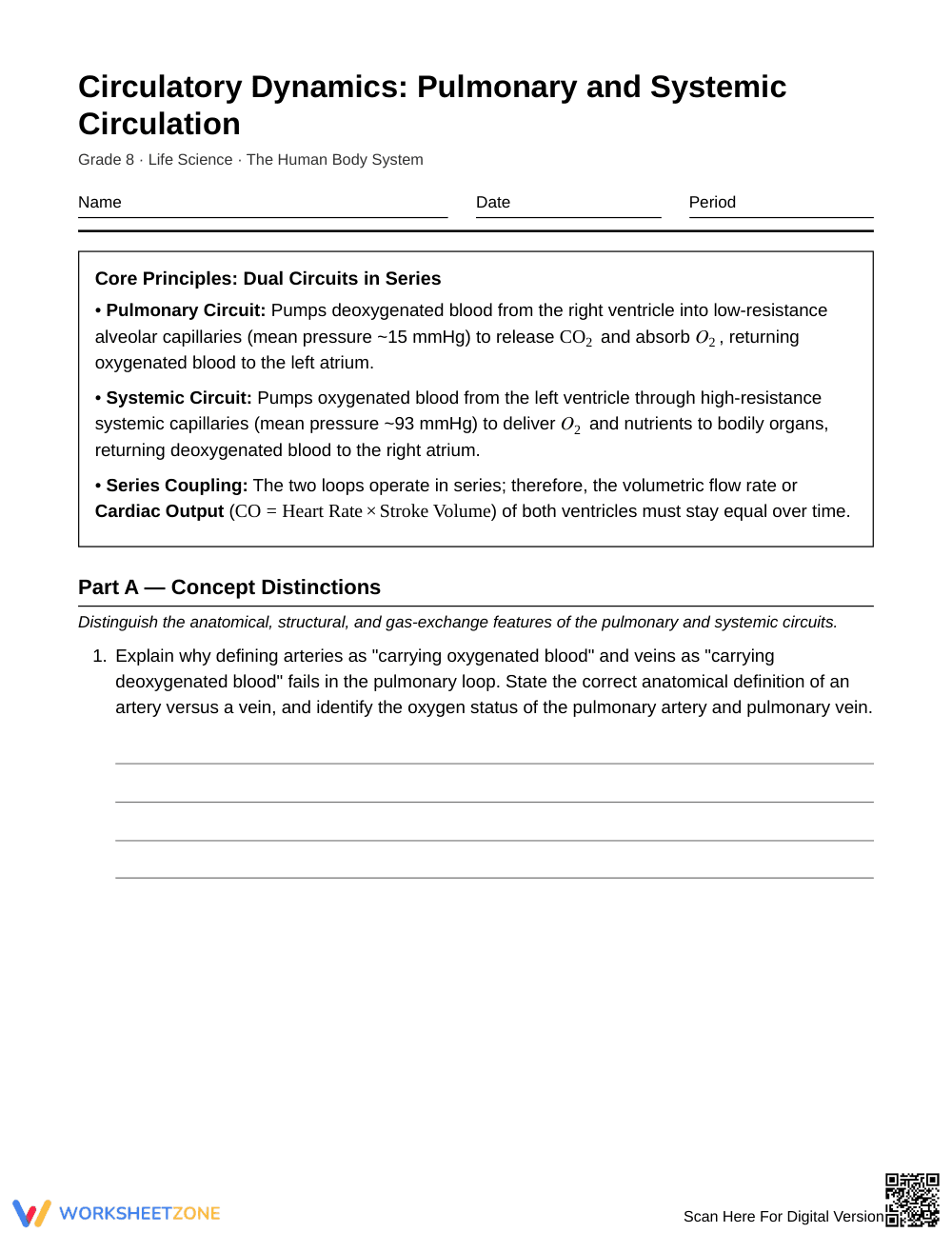
This Grade 8 science worksheet builds mastery in cardiovascular physiology by analyzing pulmonary and systemic circulation circuits. Students investigate pressure differentials, capillary gas exchange, and blood flow distribution across twelve rigorous analytical tasks, bridging structural anatomy with mathematical physiological data.
At a Glance
- Grade: 8 · Subject: Science
- Topic: Interacting organ systems supporting life functions in multicellular organisms
- Skill Focus: Pulmonary and Systemic Circulation Dynamics
- Format: 5 pages · 12 problems · Answer key included · PDF
- Best For: Human body systems cardiovascular unit
- Time: 45–60 minutes
What's Inside
This 5-page resource delivers twelve analytical tasks organized across three progressive sections, supported by a synthetic cardiovascular lab dataset and a 3-page complete answer key with detailed physiological explanations.
Skill Progression
- Guided Practice (Part A, Tasks 1–4): Focuses on foundational concept distinctions, correcting vessel oxygenation misconceptions, comparing ventricular wall thickness, and completing capillary gas-exchange mechanisms.
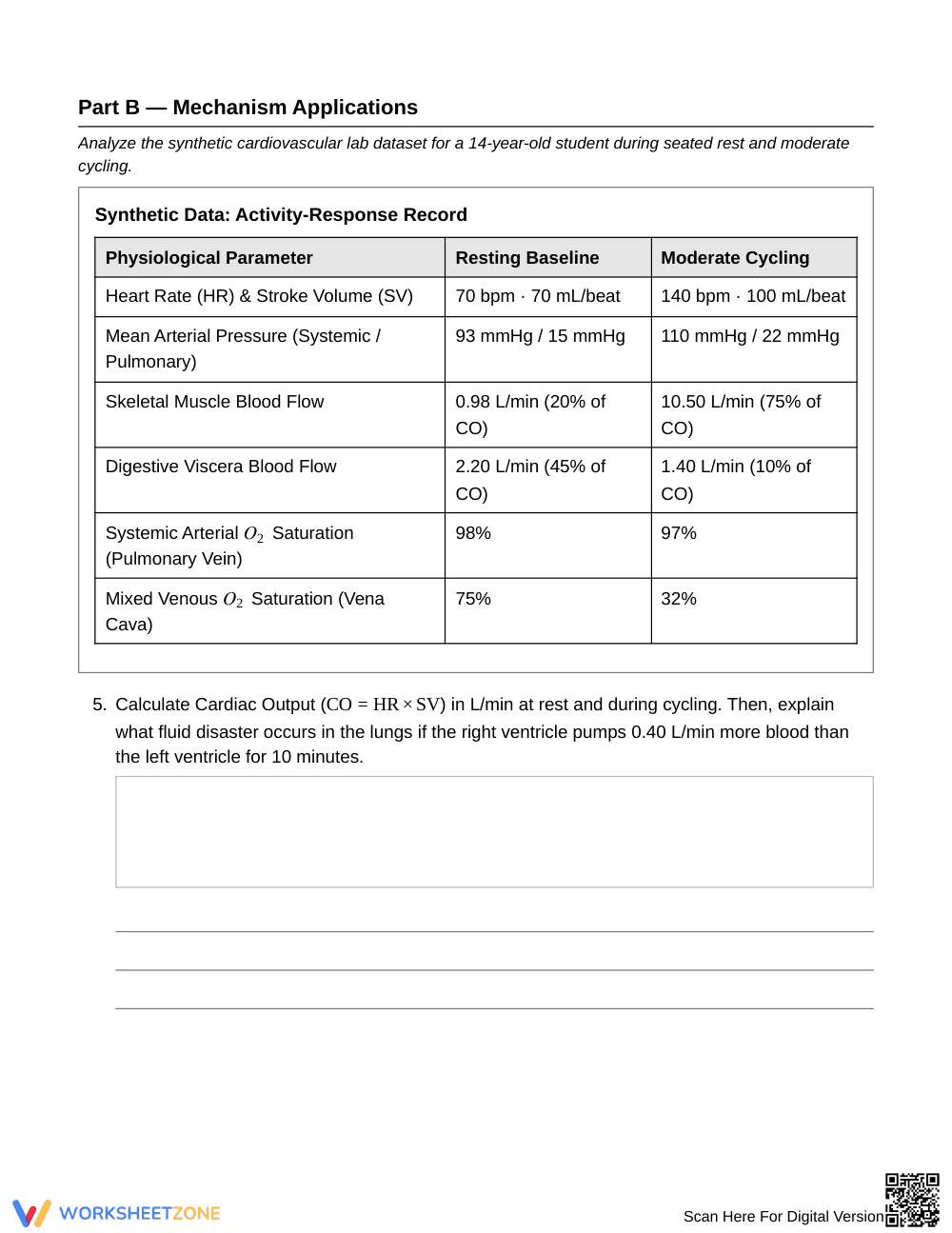
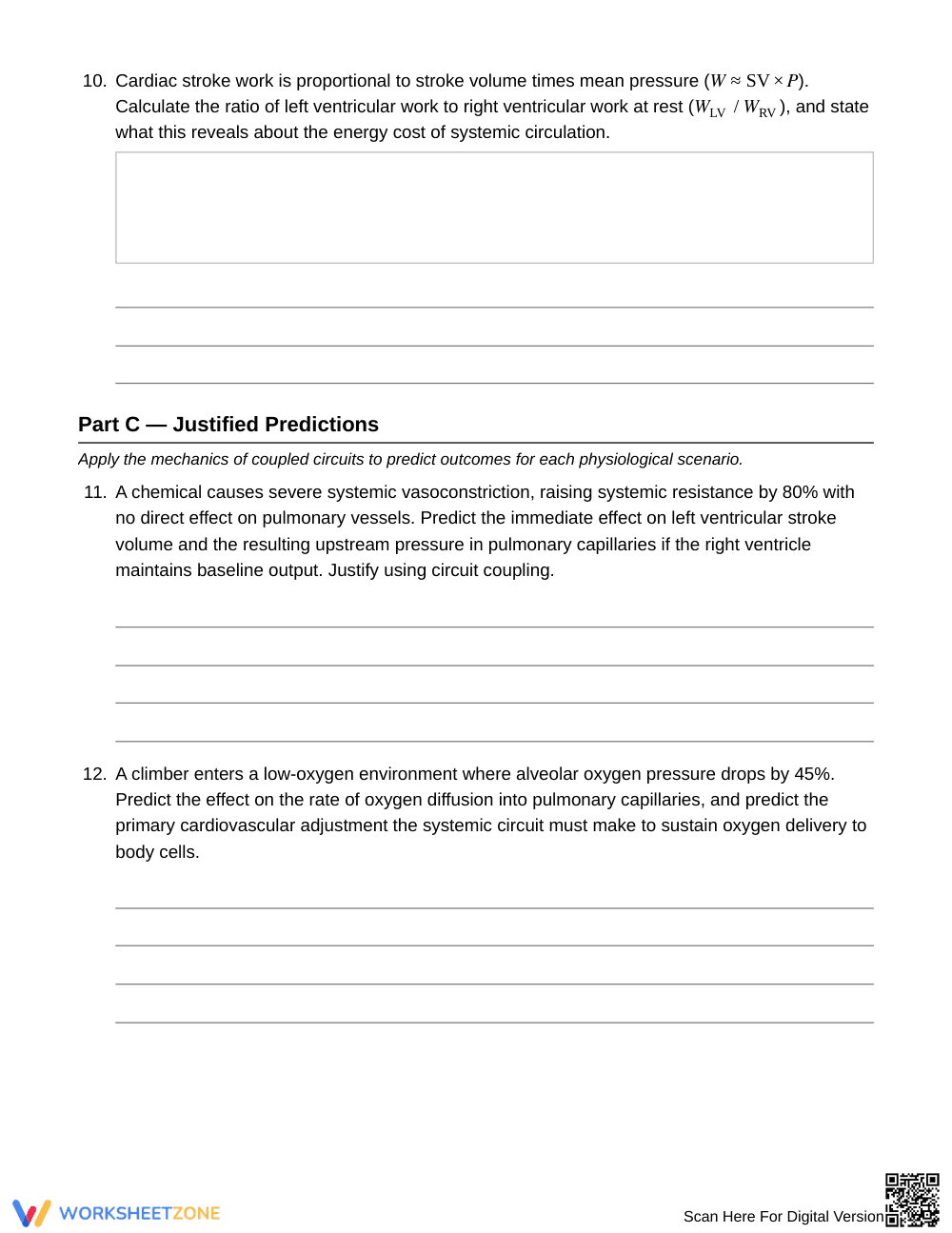
- Supported Practice (Part B, Tasks 5–10): Applies quantitative reasoning using synthetic exercise lab data to calculate cardiac output, analyze oxygen saturation drops, and explain capillary recruitment.
- Independent Practice (Part C, Tasks 11–12): Challenges students to construct justified predictions for complex physiological disruptions, including severe systemic vasoconstriction and high-altitude hypoxia.
This structured sequence follows a gradual-release model, advancing from foundational anatomy to data-driven physiological problem solving.
Curriculum Alignment
This resource aligns with middle school life science expectations for multicellular body systems. Students trace matter transport and energy distribution across interconnected organ subsystems. These foundational concepts can be incorporated directly into unit lesson plans, individualized learning goals, or district curriculum mapping tools.
How to Use It
Deploy this worksheet after direct instruction on heart anatomy and capillary exchange to transition students from memorizing structures to analyzing dynamic system interactions. As a formative assessment check, monitor how students resolve Task 5: ensure they grasp that an imbalance in cardiac output between series circuits causes fatal fluid accumulation in pulmonary tissue. Typical completion requires 45 to 60 minutes.
Who It's For
Designed for 8th-grade Life Science and introductory biology students, this worksheet provides scaffolded support for developing analytical readers while challenging advanced learners with quantitative cardiac calculations. It pairs naturally with interactive circulatory system diagramming and pulse rate laboratory investigations.
According to Fisher and Frey (2014), structured progression through domain-specific scientific tasks enhances students' ability to synthesize complex physiological mechanisms and transfer knowledge to novel scenarios. This Grade 8 science resource focuses on pulmonary and systemic circulation dynamics under middle school body system expectations. By guiding learners through anatomical definitions, quantitative exercise data analysis, and predictive clinical modeling, students master series circuit dynamics and capillary diffusion mechanics. The included synthetic dataset allows middle schoolers to practice calculating cardiac output and stroke work ratios while explaining real-time vascular adaptations. Furthermore, structured analytical prompts encourage active synthesis of gas transport pathways across both circuits. With detailed answer explanations, stepped scaffolding, and targeted reflection questions, educators can reliably evaluate student comprehension of interacting human organ subsystems while fostering authentic scientific inquiry and evidence-based physiological reasoning. These comprehensive problem sets build lasting biological literacy.


