


























Views
Downloads

Complete Cellular Respiration Worksheet | Grade 10
Paste this activity's link or code into your existing LMS (Google Classroom, Canvas, Teams, Schoology, Moodle, etc.).
Students can open and work on the activity right away, with no student login required.
You'll still be able to track student progress and results from your teacher account.
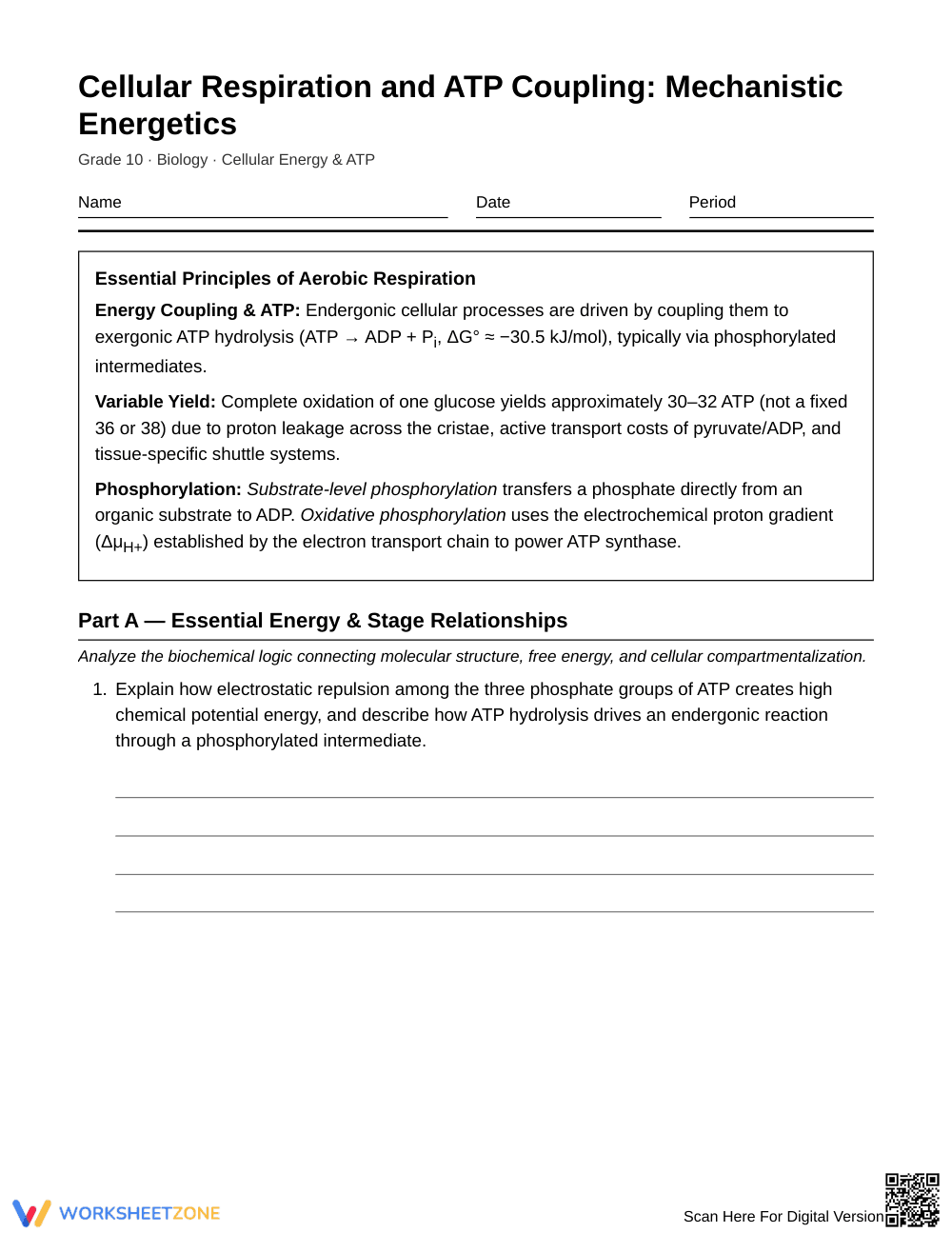
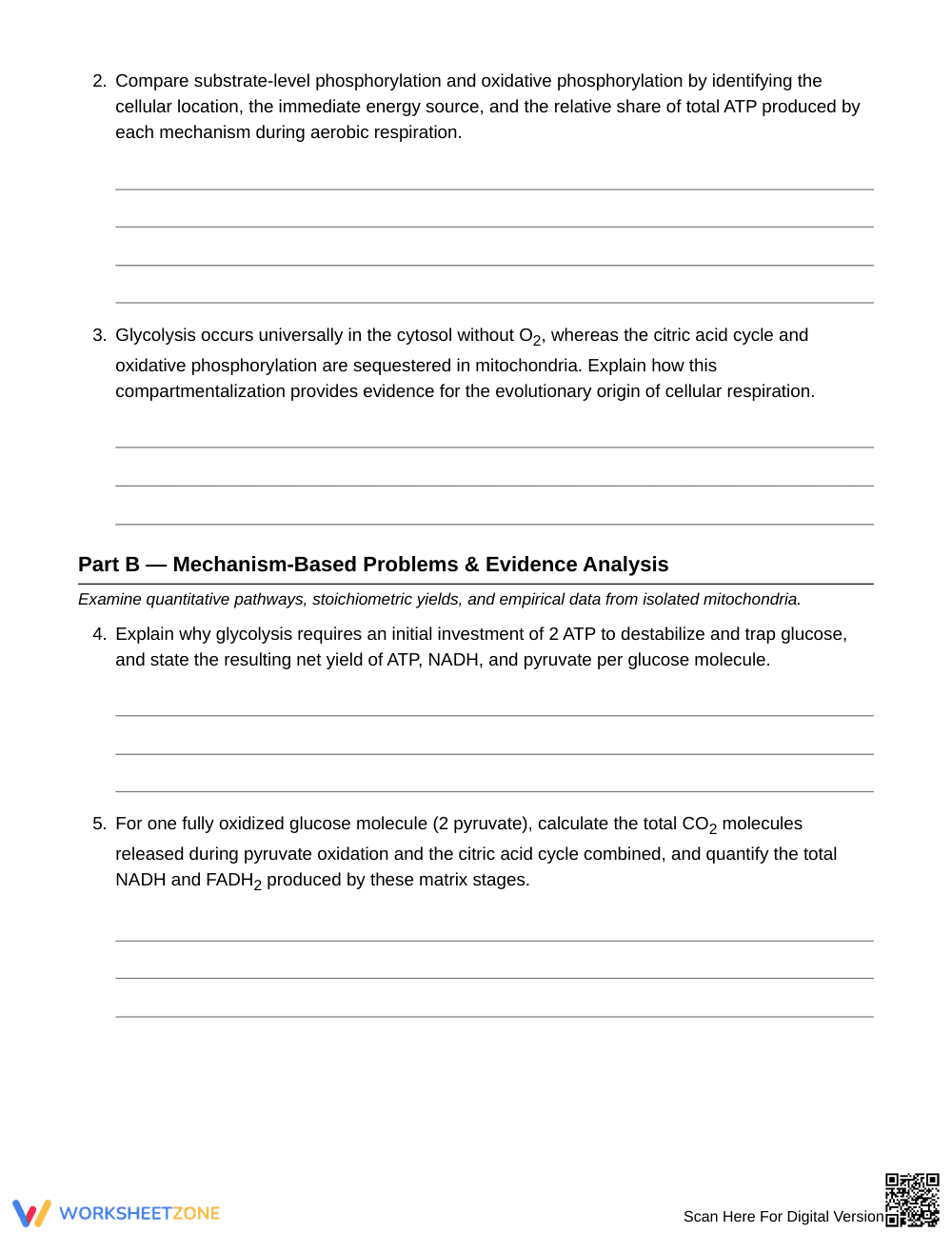
This Grade 10 Biology worksheet builds students' ability to explain the mechanistic roles of each major aerobic respiration stage — glycolysis, pyruvate oxidation, the citric acid cycle, and oxidative phosphorylation — through 12 structured problems that connect molecular structure, stoichiometric yield, and cellular energy logic.
At a Glance
- Grade: 10 · Subject: Biology
- Standard: Cellular Energy & ATP — Explain how each respiration stage produces and transfers energy in cells
- Skill Focus: Roles of major cellular respiration stages and ATP coupling mechanisms
- Format: 5 pages · 12 problems · Answer key included · PDF
- Best For: Guided practice after direct instruction
- Time: 40–55 minutes
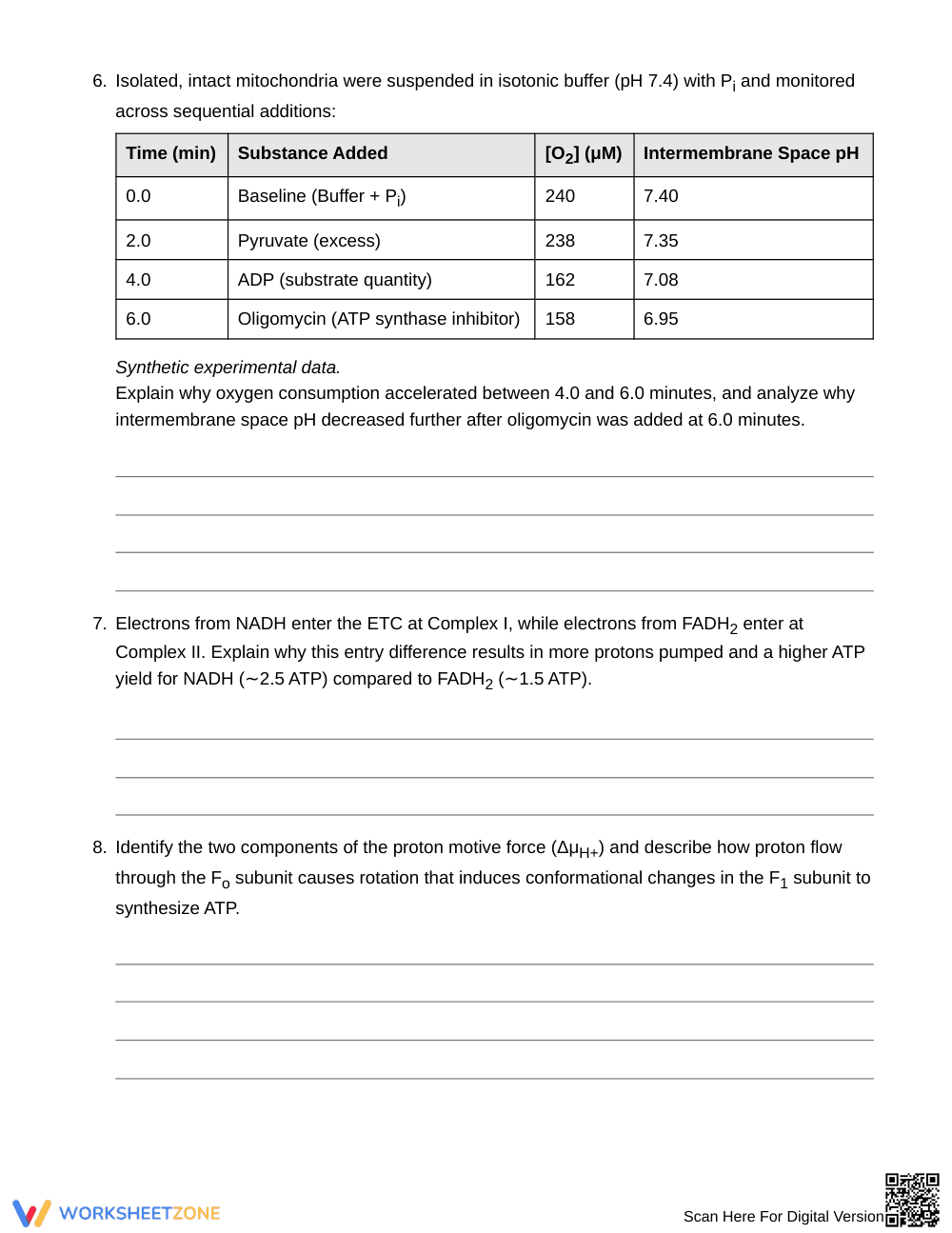
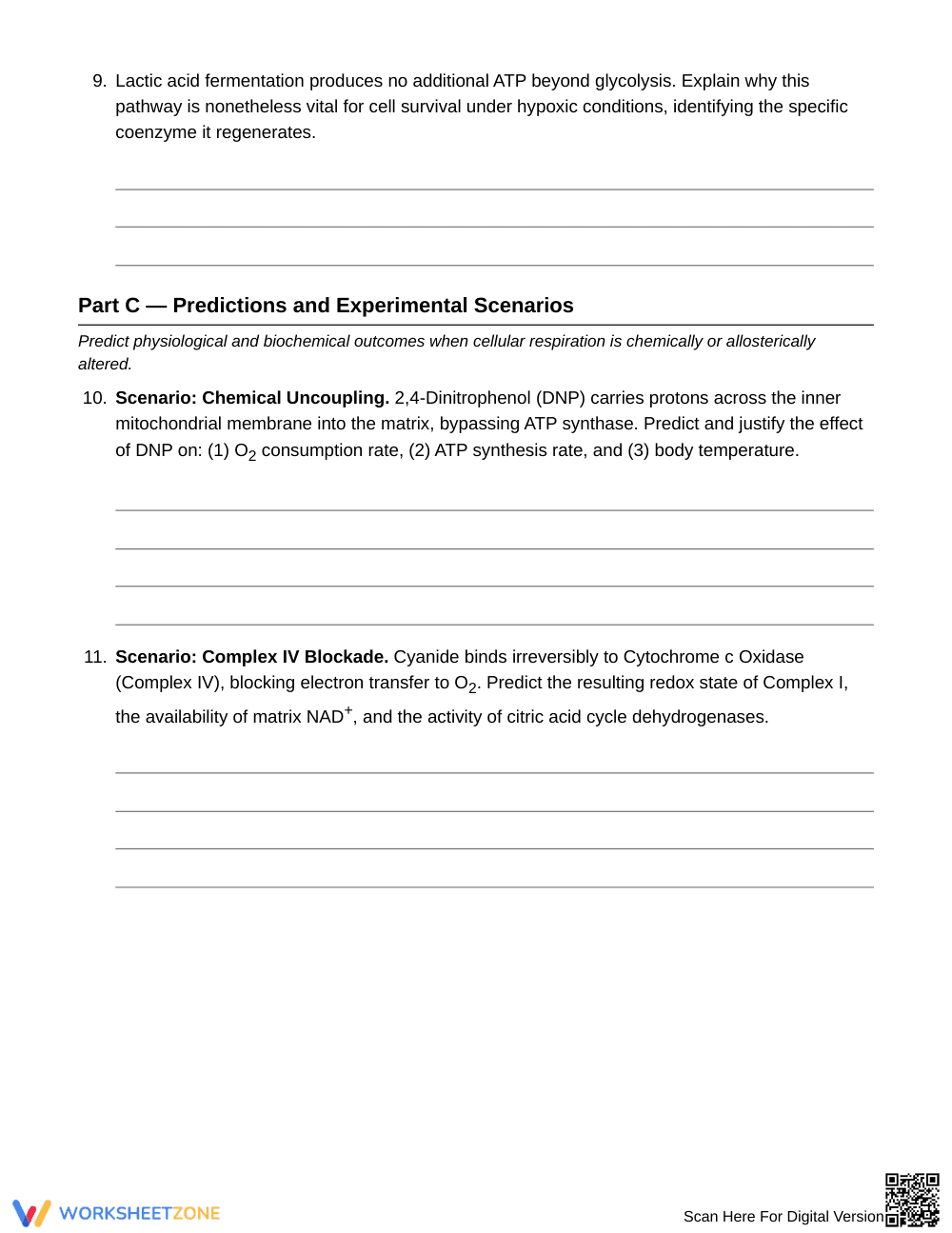
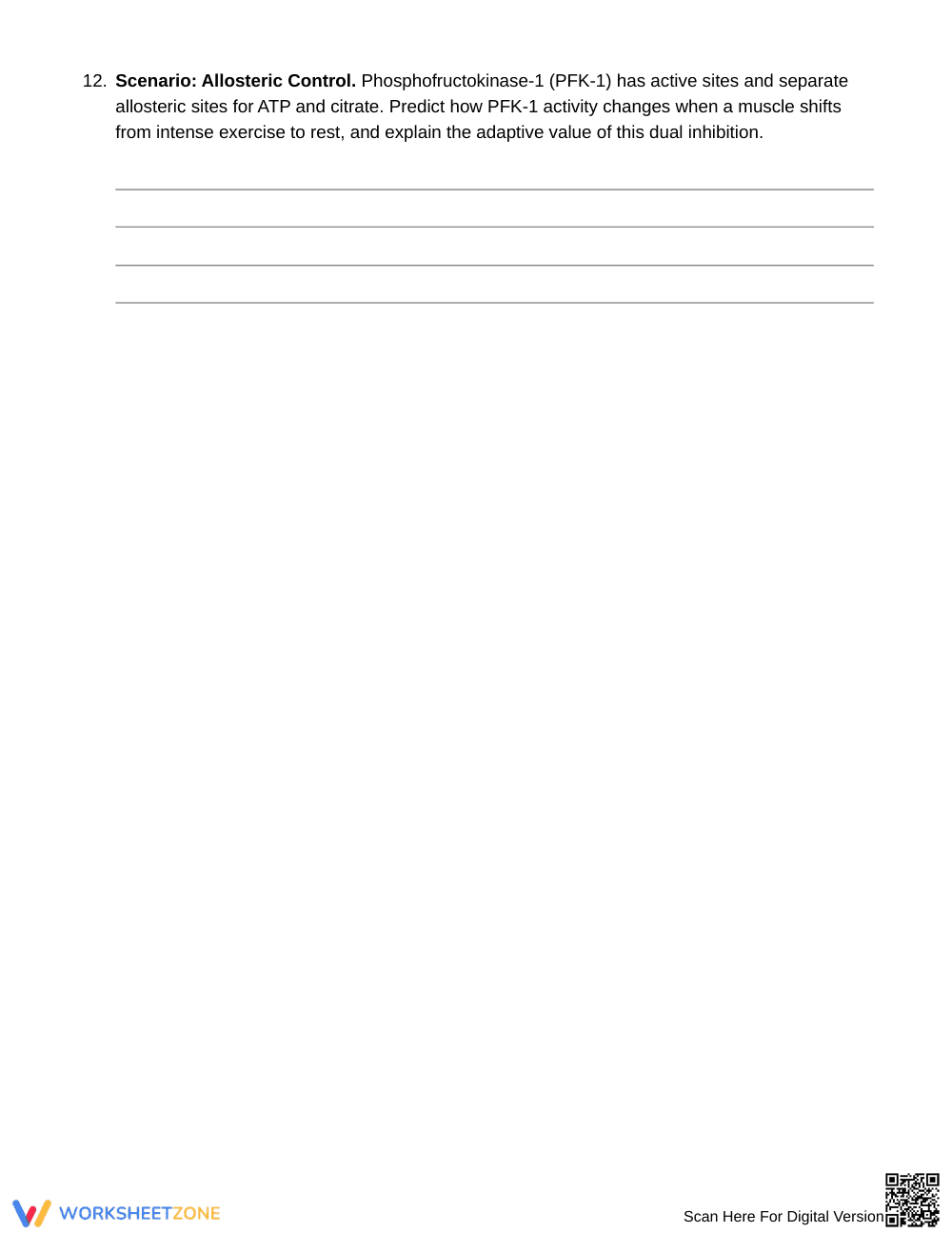
The worksheet spans 5 student-facing pages organized into three parts. Part A targets conceptual relationships, including ATP energy storage and phosphorylation types. Part B shifts to mechanism and data, where students calculate net yields and interpret a mitochondria data table tracking oxygen consumption. Part C presents scenario tasks requiring students to reason through chemical uncoupling by DNP, electron transport inhibitors, and allosteric regulation of PFK-1. A complete 3-page answer key covering all 12 items is included.
Skill Progression & Implementation
- Guided practice (Part A, 3 problems): A rule box defines energy coupling, ATP yield, and phosphorylation types to anchor student explanations.
- Supported practice (Part B, 5 problems): Students apply stoichiometric reasoning and analyze experimental data tracking oxygen levels and pH changes.
- Independent practice (Part C, 3 problems): Students construct predictions and mechanistic justifications for novel chemical inhibition scenarios.
How to Use It
Assign Part A immediately following direct instruction on ATP coupling. Use Parts B and C for structured review one to two days before a unit exam. Most students finish within 40–55 minutes. The progression makes it accessible to on-grade learners while providing rigorous challenge for honors students.
Research supports the use of structured, multi-part worksheets that sequence conceptual, quantitative, and application tasks within a single learning episode. Fisher & Frey (2014) found that gradual-release frameworks — moving students from teacher-supported to fully independent work — significantly improve retention of complex science content when the scaffold is explicit and then systematically removed. This worksheet applies that principle across its three parts, guiding Grade 10 Biology students from anchored explanation of ATP coupling and phosphorylation types through stoichiometric calculation and data interpretation, and finally to independent prediction of outcomes under novel experimental conditions. The 12-task design targets the cellular respiration and ATP unit objective, ensuring students can articulate the distinct mechanistic role of each respiration stage — a skill consistently identified as a high-leverage conceptual target in secondary life science curricula by NAEP performance data.


