


























Views
Downloads
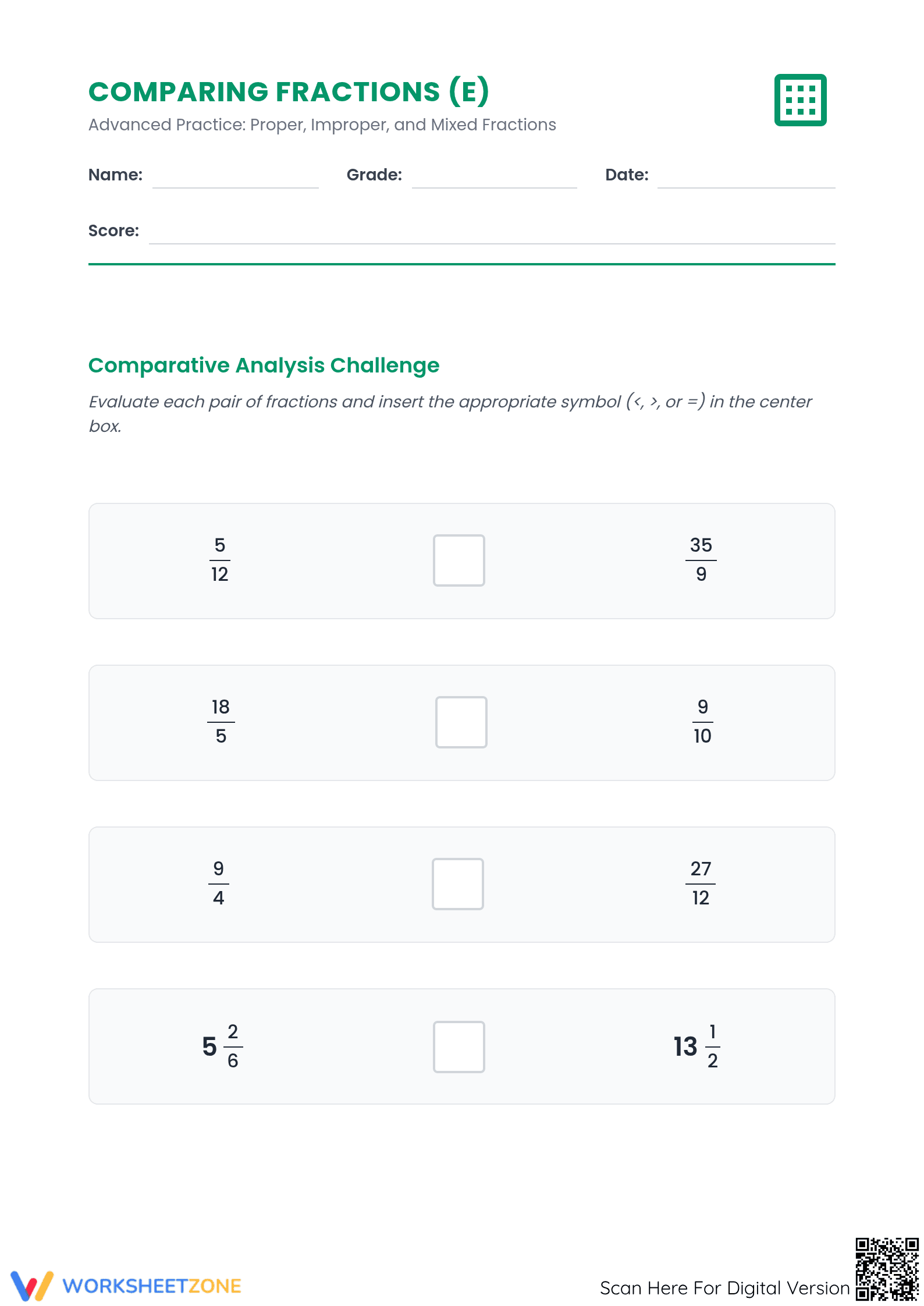
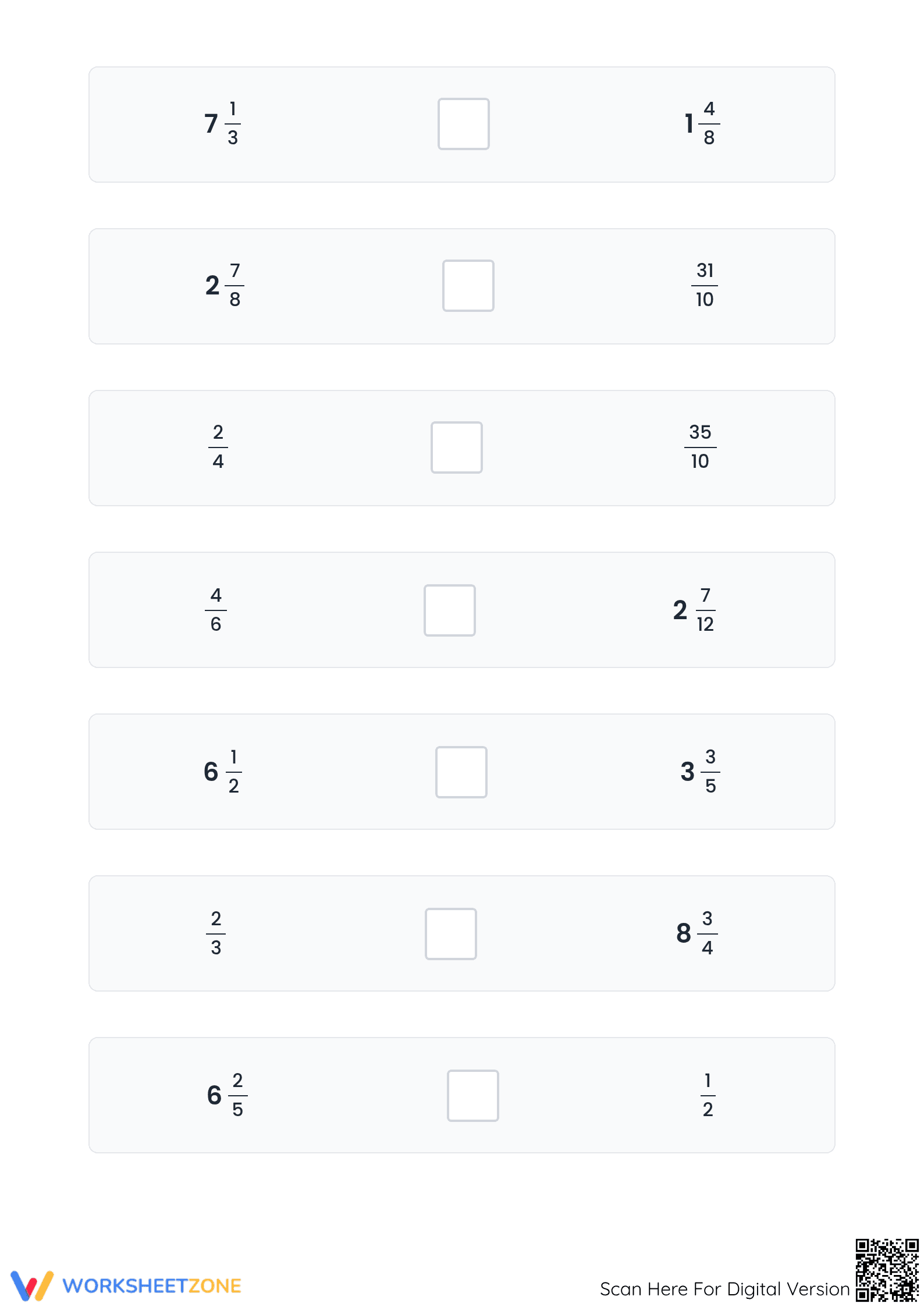
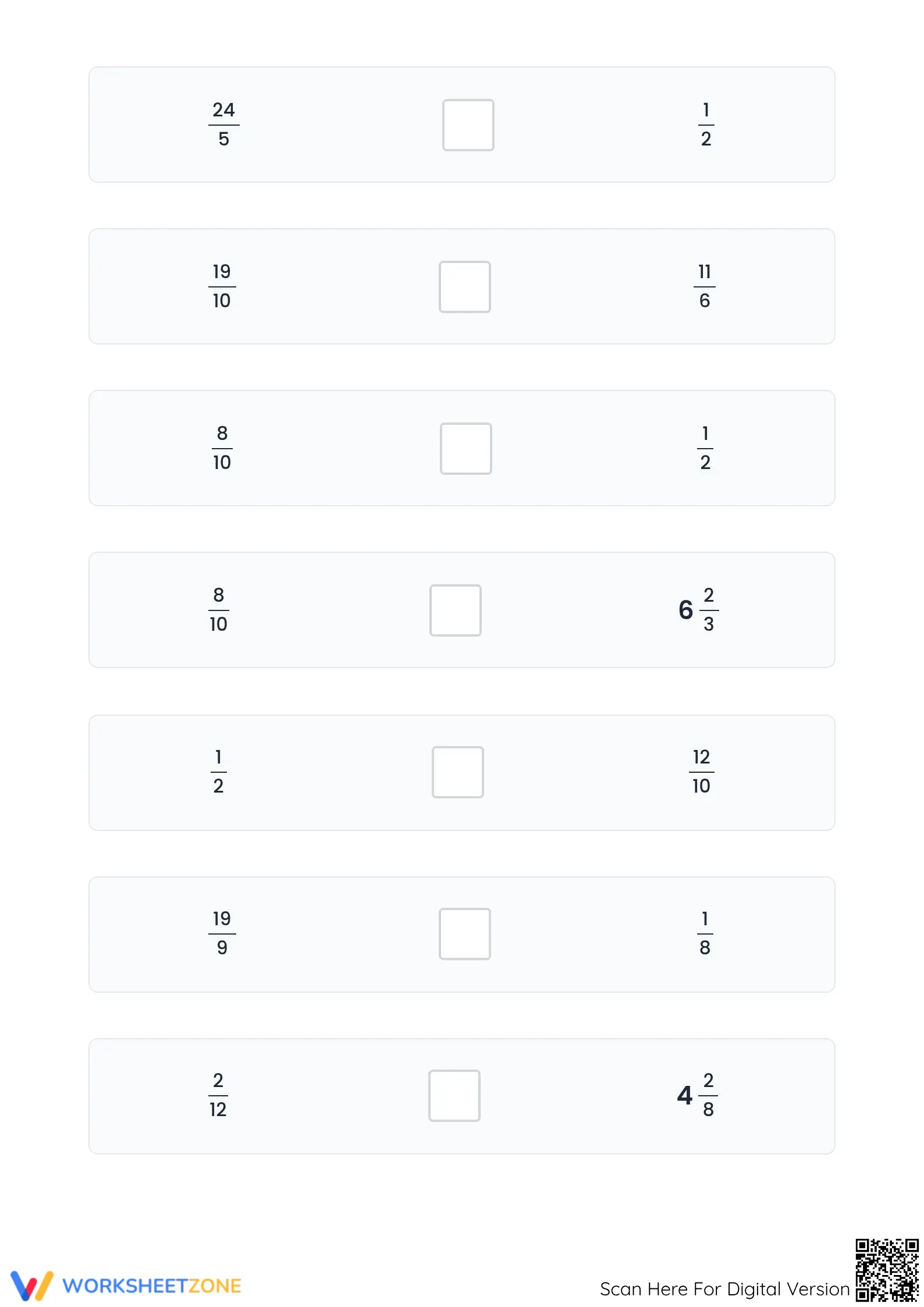
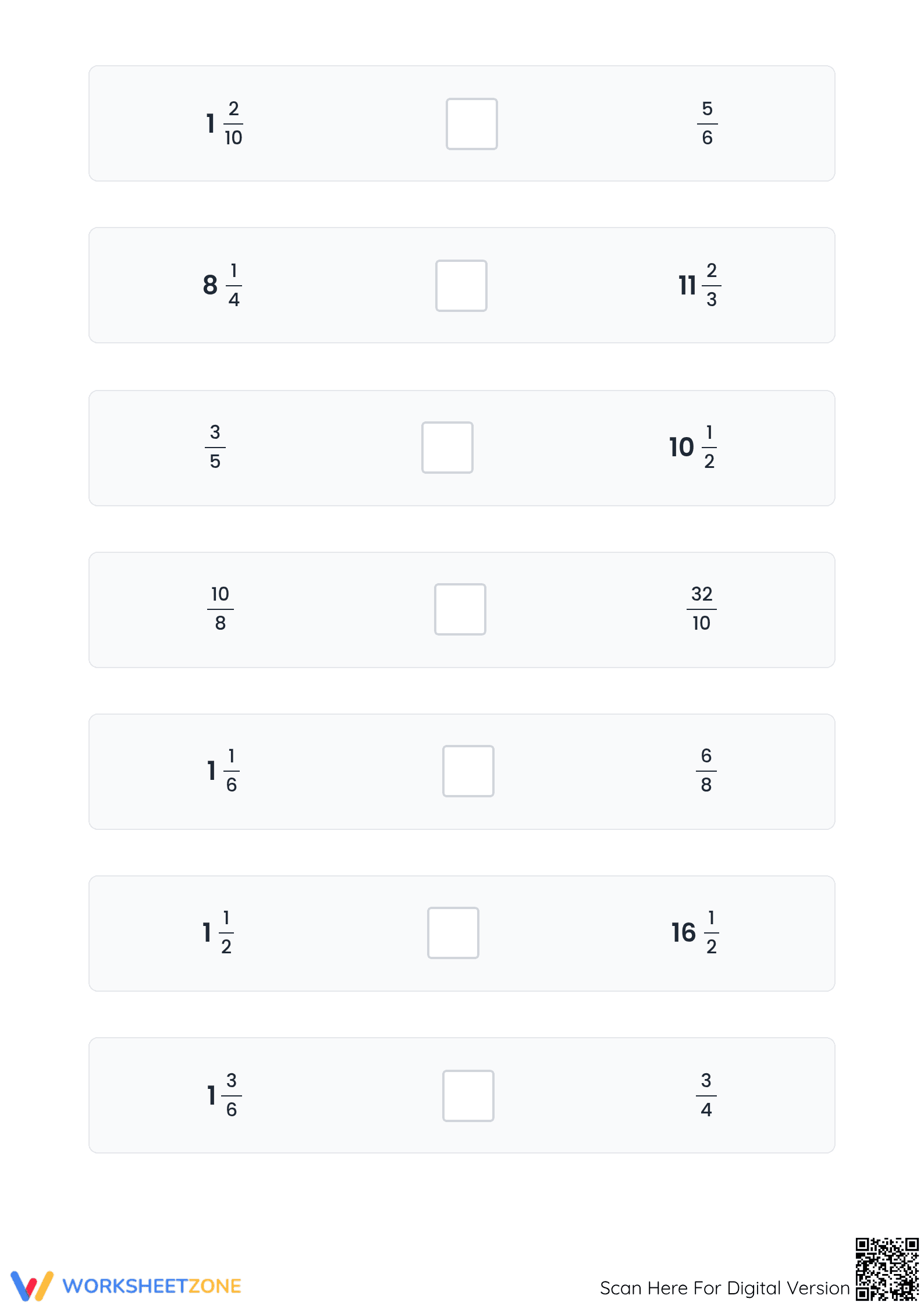
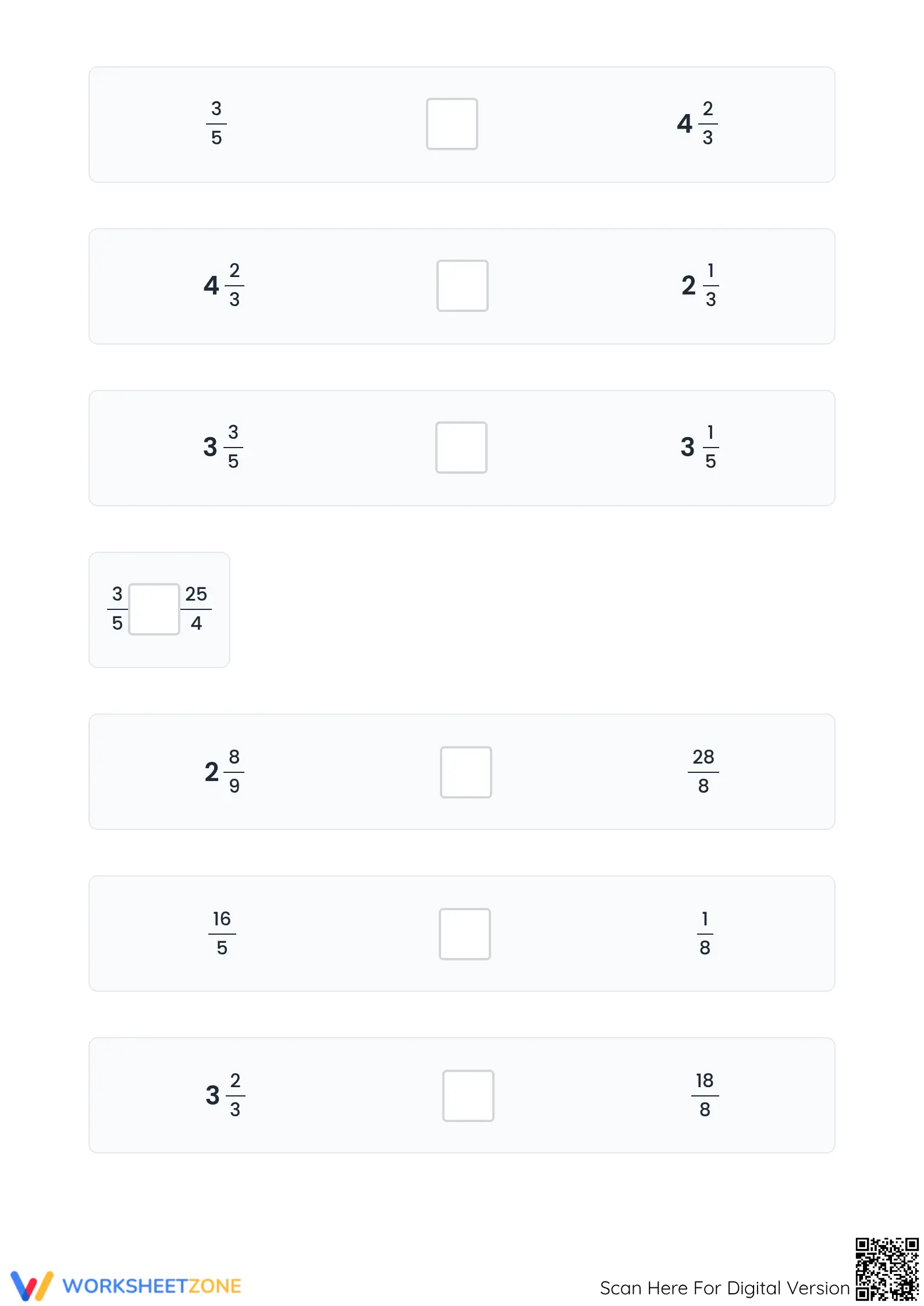

Printable Comparing Proper & Mixed Fractions Grade 4-5
Paste this activity's link or code into your existing LMS (Google Classroom, Canvas, Teams, Schoology, Moodle, etc.).
Students can open and work on the activity right away, with no student login required.
You'll still be able to track student progress and results from your teacher account.
This comprehensive fraction comparison resource provides rigorous practice for upper elementary and middle school students. By evaluating pairs of proper, improper, and mixed fractions, learners develop a deep conceptual understanding of numerical value and equivalence. This set ensures students can confidently order any fraction type they encounter.
At a Glance
- Grade: 4–5 · Subject: Math · Fractions
- Standard:
CCSS.MATH.CONTENT.4.NF.A.2— Compare two fractions with different numerators and different denominators- Skill Focus: Comparing Mixed and Improper Fractions
- Format: 5 pages · 32 problems · Answer key included · PDF
- Best For: Advanced practice and unit revision
- Time: 25–35 minutes
The Comparative Analysis Challenge spans five detailed pages, containing a total of 32 distinct comparison tasks. Each problem presents a pair of fractions—ranging from simple proper fractions to complex improper values and mixed numbers—separated by a central comparison box. A complete answer key is provided for immediate grading or self-checking.
Skill Progression
- Guided practice: The initial sets feature fractions with intuitive relationships, such as those with common denominators or easily identifiable whole-number parts, allowing students to anchor their reasoning.
- Supported practice: Problems transition to comparing improper fractions with mixed numbers, requiring students to convert values mentally or through scratch work to determine relative size.
- Independent practice: The final pages present advanced pairings with large numerators and varied denominators, challenging students to apply cross-multiplication or common denominator strategies autonomously.
This structured flow follows a gradual-release model to ensure mastery across all fraction formats.
Standards Alignment
The primary focus is CCSS.MATH.CONTENT.4.NF.A.2, which requires students to compare two fractions with different numerators and different denominators, e.g., by creating common denominators or numerators, or by comparing to a benchmark fraction such as 1/2. Both standard codes can be copied directly into lesson plans, IEP goals, or district curriculum mapping tools.
How to Use It
Deploy this worksheet as a summative assessment after completing a unit on fraction conversions and comparisons. During instruction, teachers can use individual problems as exit tickets to observe if students are successfully converting improper fractions to mixed numbers before comparing. Completion typically takes 30 minutes.
Who It's For
This resource is ideal for Grade 4 and 5 students mastering the Number and Operations—Fractions domain. It also serves as an excellent intervention tool for middle schoolers needing to strengthen their fluency with non-standard fraction forms. Pair this with a visual fraction wall or number line for additional support.
According to a ScienceDirect TpT Analysis, high-quality math resources that integrate multiple representations—such as the transition from improper to mixed fractions seen in this CCSS.MATH.CONTENT.4.NF.A.2 worksheet—significantly improve student retention of rational number concepts. The ability to compare different types of fractions is a prerequisite for more complex operations in middle school algebra. This 32-problem set provides the necessary repetition to move learners from procedural fluency to conceptual mastery. By requiring students to evaluate the relationship between proper and improper values, the worksheet targets common misconceptions regarding fraction size. This focus on Comparative Analysis aligns with current pedagogical shifts toward deeper mathematical reasoning rather than simple calculation. Educators can utilize these findings to justify the use of targeted practice in diverse classroom settings.


