


























Views
Downloads

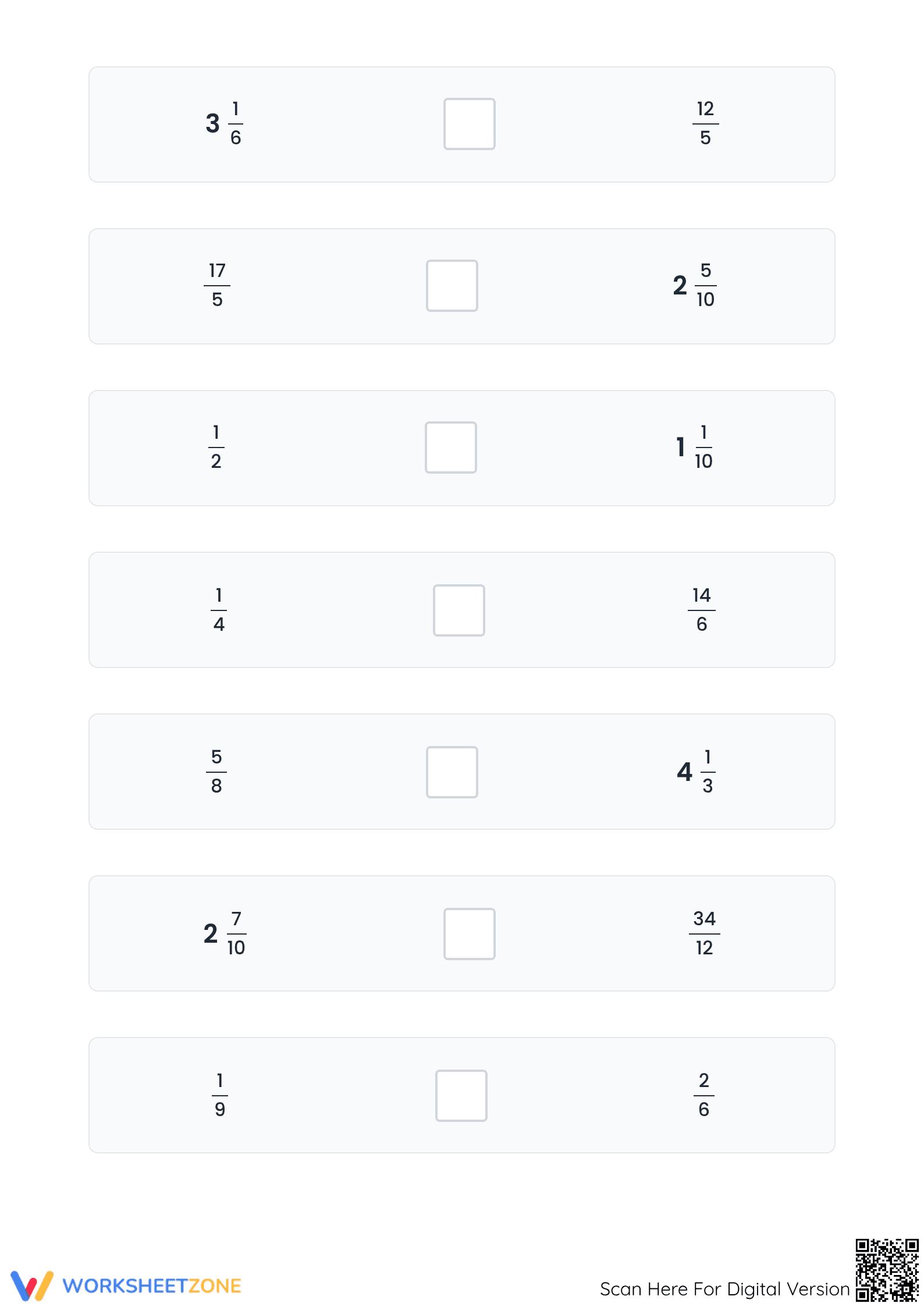
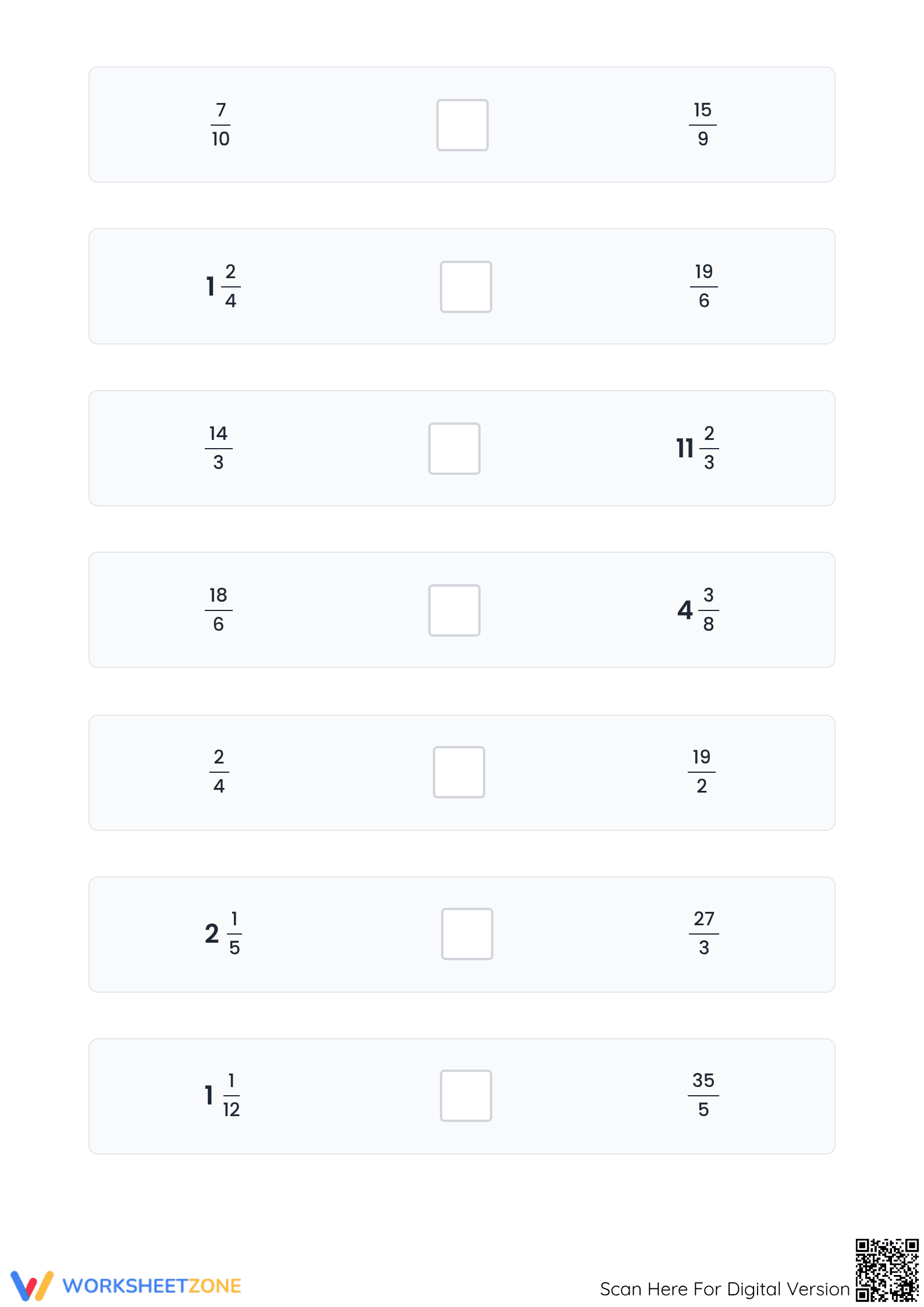
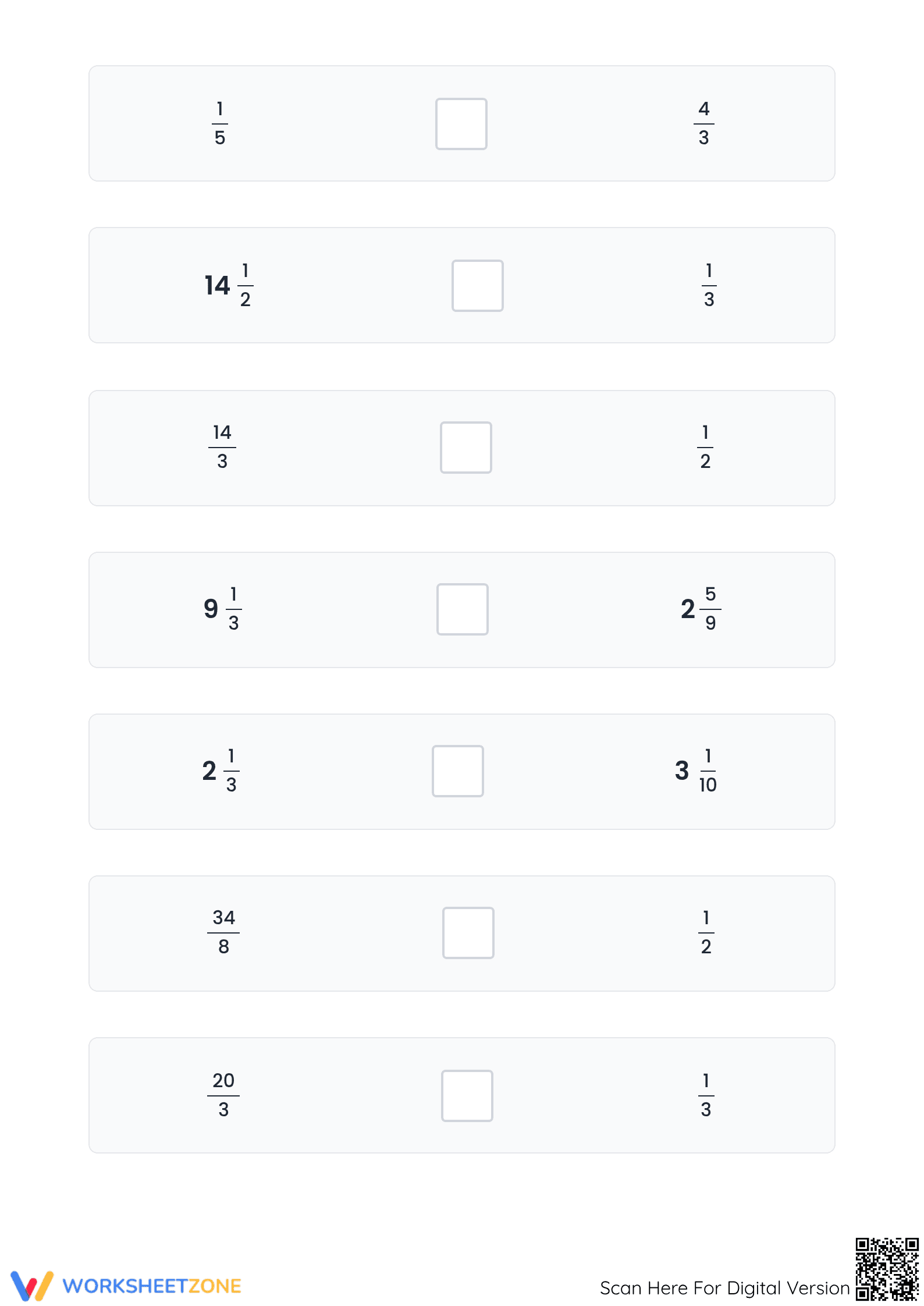
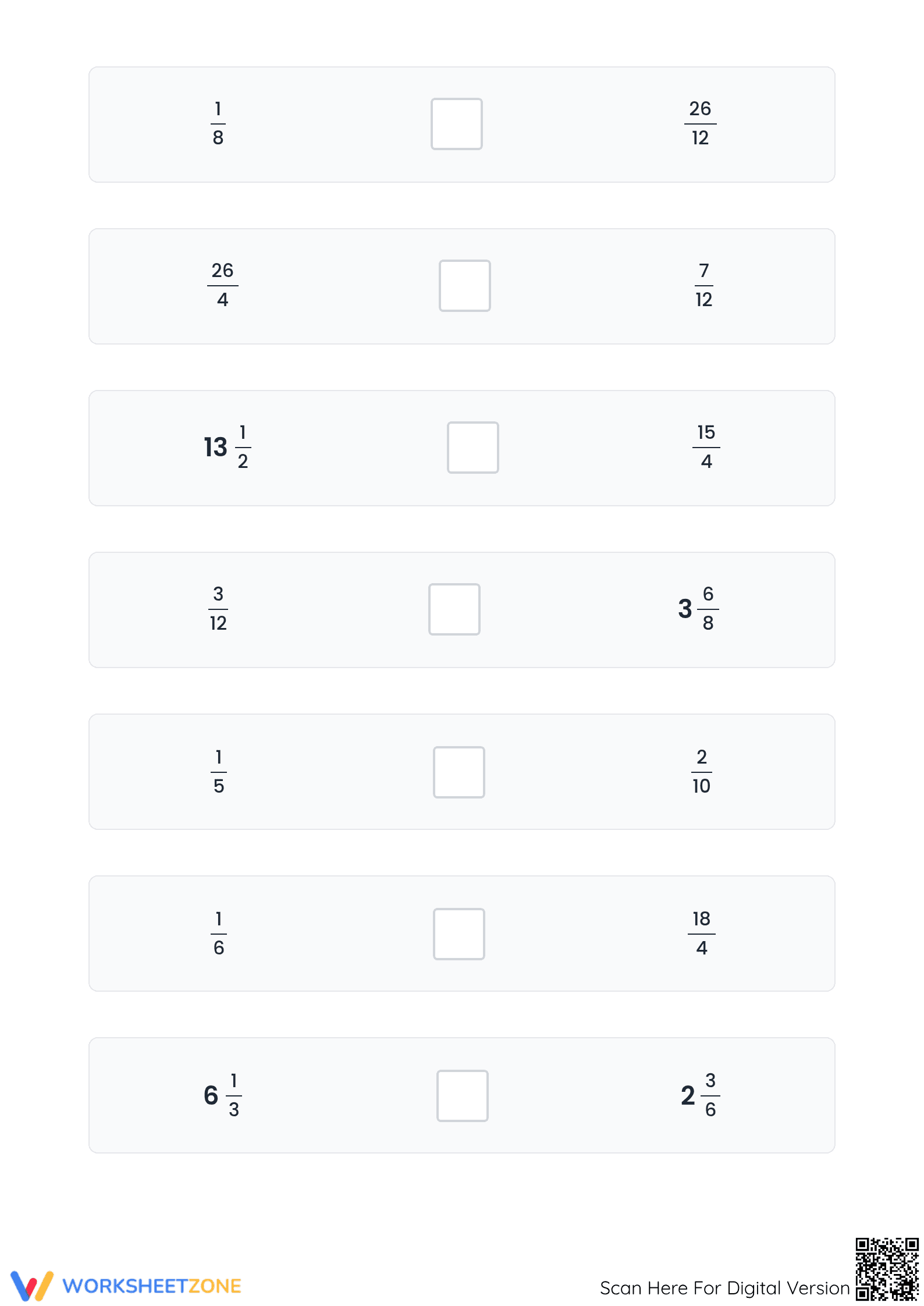

Printable Comparing Fractions Worksheet | Proper & Improper
Paste this activity's link or code into your existing LMS (Google Classroom, Canvas, Teams, Schoology, Moodle, etc.).
Students can open and work on the activity right away, with no student login required.
You'll still be able to track student progress and results from your teacher account.
Comparing different types of fractions is a foundational skill that bridges basic number sense with advanced algebraic thinking. This comprehensive set of worksheets provides students with extensive practice in identifying relationships between simple fractions, improper fractions, and mixed numbers. By using comparative symbols, learners develop a concrete understanding of magnitude across various fractional representations.
At a Glance
- Grade: 4–6 · Subject: Math
- Standard:
CCSS.MATH.CONTENT.4.NF.A.2— Compare two fractions with different numerators and denominators by creating common denominators- Skill Focus: Comparing Mixed and Improper Fractions
- Format: 5 pages · 32 problems · Answer key included · PDF
- Best For: Independent practice and formative assessment
- Time: 25–35 minutes
This 5-page resource contains 32 unique comparison problems, each featuring a dedicated box for students to record their analysis using standard comparative operators. The worksheet includes a diverse mix of proper fractions, improper fractions, and mixed numbers, ensuring students can handle any format. A full answer key is provided for immediate feedback and grading efficiency.
The worksheet follows a structured release of responsibility to ensure student success. First, Guided practice involves comparing simple fractions with similar denominators to build confidence. Next, Supported practice introduces improper fractions, requiring students to find common denominators or convert formats. Finally, Independent practice challenges students with mixed number comparisons, totaling over 30 problems that follow the research-backed gradual-release model.
This resource is primarily aligned to CCSS.MATH.CONTENT.4.NF.A.2, which requires students to compare two fractions with different numerators and different denominators by creating common denominators or comparing to a benchmark. It also supports 5.NF.A.1 by reinforcing the conversion skills necessary for fraction operations. Both standard codes can be copied directly into lesson plans, IEP goals, or district curriculum mapping tools.
Use this worksheet as a post-lesson assessment after teaching fraction conversion and common denominators. During instruction, observe how students handle the mixed-to-improper conversion; if they struggle, use the first page as a guided small-group activity. Students typically complete the 32 tasks in approximately 25 to 35 minutes, making it an ideal choice for independent seatwork or a homework assignment.
This set is designed for upper elementary students in grades 4 and 5, though it serves as an excellent remedial tool for middle schoolers. It pairs perfectly with visual fraction models, number lines, or direct instruction on finding the least common multiple. The large, clear formatting is beneficial for students who require extra space for calculations or those with visual processing needs.
The ability to accurately compare fractions across multiple formats—simple, improper, and mixed—is a critical predictor of future success in rational number operations. Research from the NAEP highlights that students who master fraction magnitude early show significantly higher proficiency in middle school algebra. This 5-page resource provides the repetitive, high-quality practice necessary to move from procedural calculation to conceptual mastery. By requiring 32 individual comparative analyses, the worksheet ensures that students move beyond lucky guesses to a systematic application of mathematical principles. According to a RAND AIRS 2024 analysis, structured practice that includes diverse fractional representations is essential for closing the gap in mathematical fluency. This resource facilitates that development by offering clear, focused tasks that align with evidence-based instructional strategies for teaching fractions in the upper elementary classroom.


