


























Views
Downloads


Comparing Fractions Worksheet (3 Levels) | Grade 4 Ready
Paste this activity's link or code into your existing LMS (Google Classroom, Canvas, Teams, Schoology, Moodle, etc.).
Students can open and work on the activity right away, with no student login required.
You'll still be able to track student progress and results from your teacher account.
Master the art of comparing different types of fractions with this comprehensive 3-level resource. This worksheet guides students through comparing simple, improper, and mixed fractions using standard comparison symbols. Learners build the conceptual understanding and procedural fluency required for high-level fraction mastery across various mathematical contexts.
At a Glance
- Grade: 4 · Subject: Math
- Standard:
CCSS.MATH.CONTENT.4.NF.A.2— Compare two fractions with different numerators and denominators by creating common denominators- Skill Focus: Comparing simple, improper, and mixed fractions
- Format: 5 pages · 30 problems · Answer key included · PDF
- Best For: Differentiated small group instruction and independent practice
- Time: 25–40 minutes
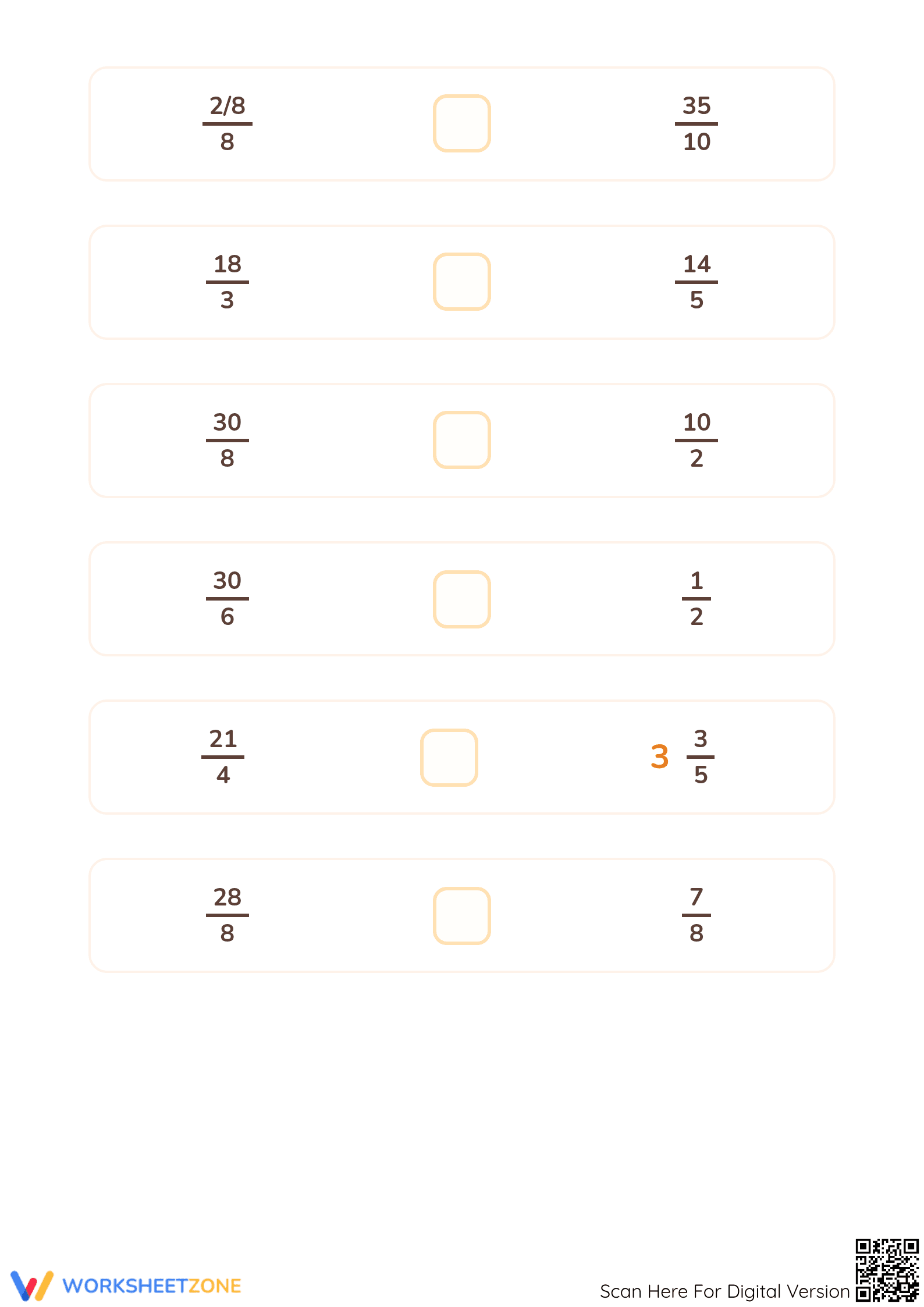
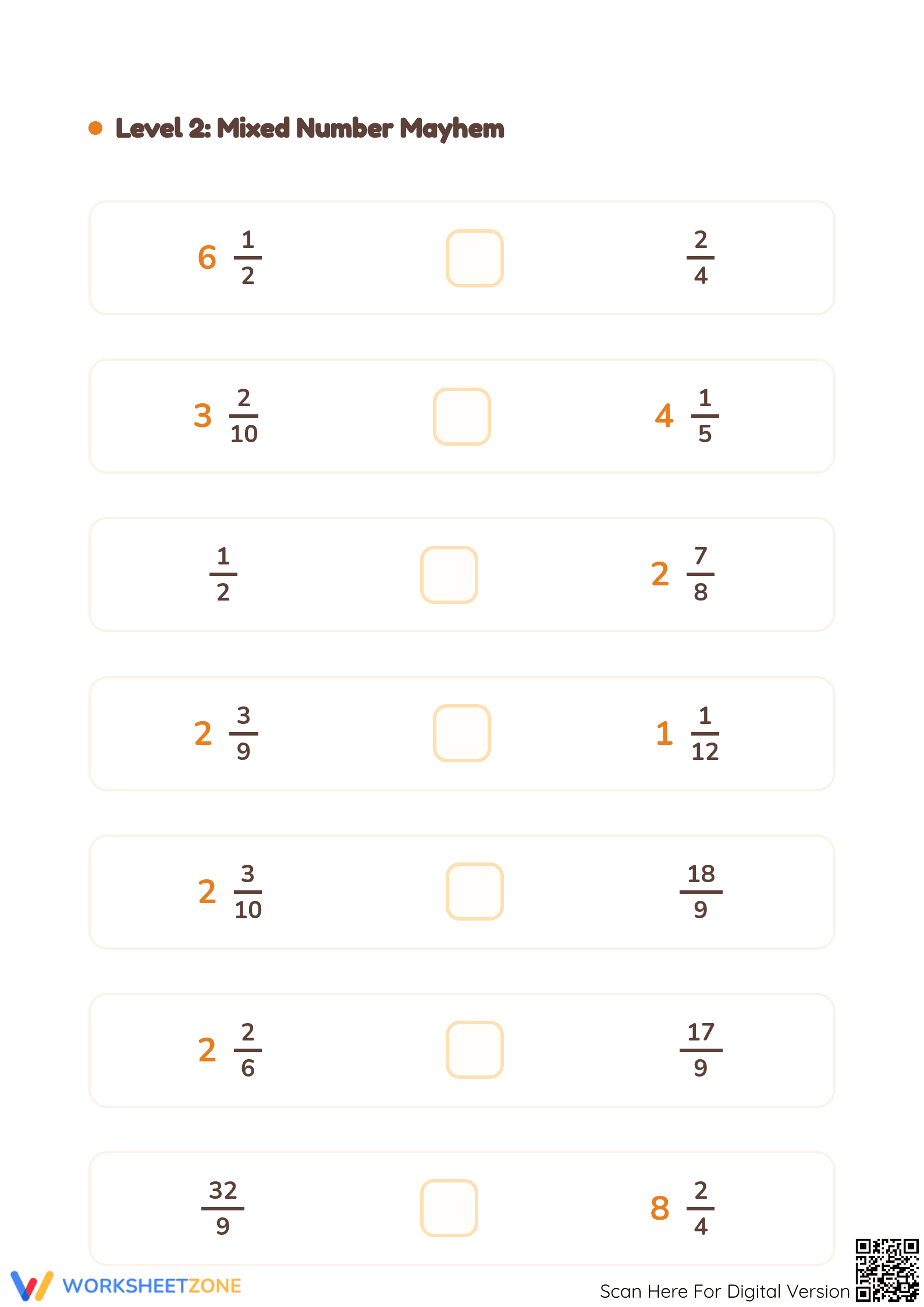
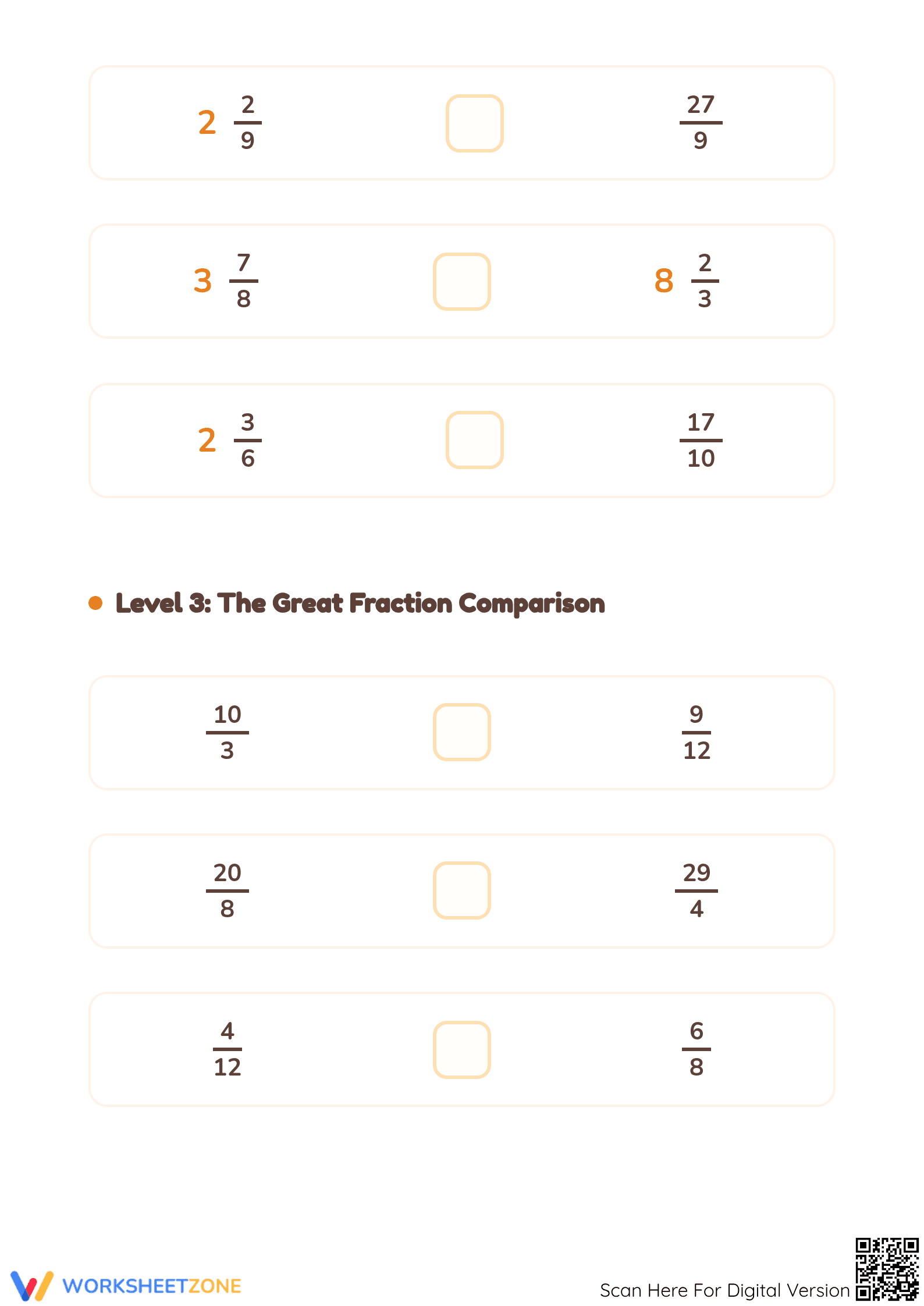
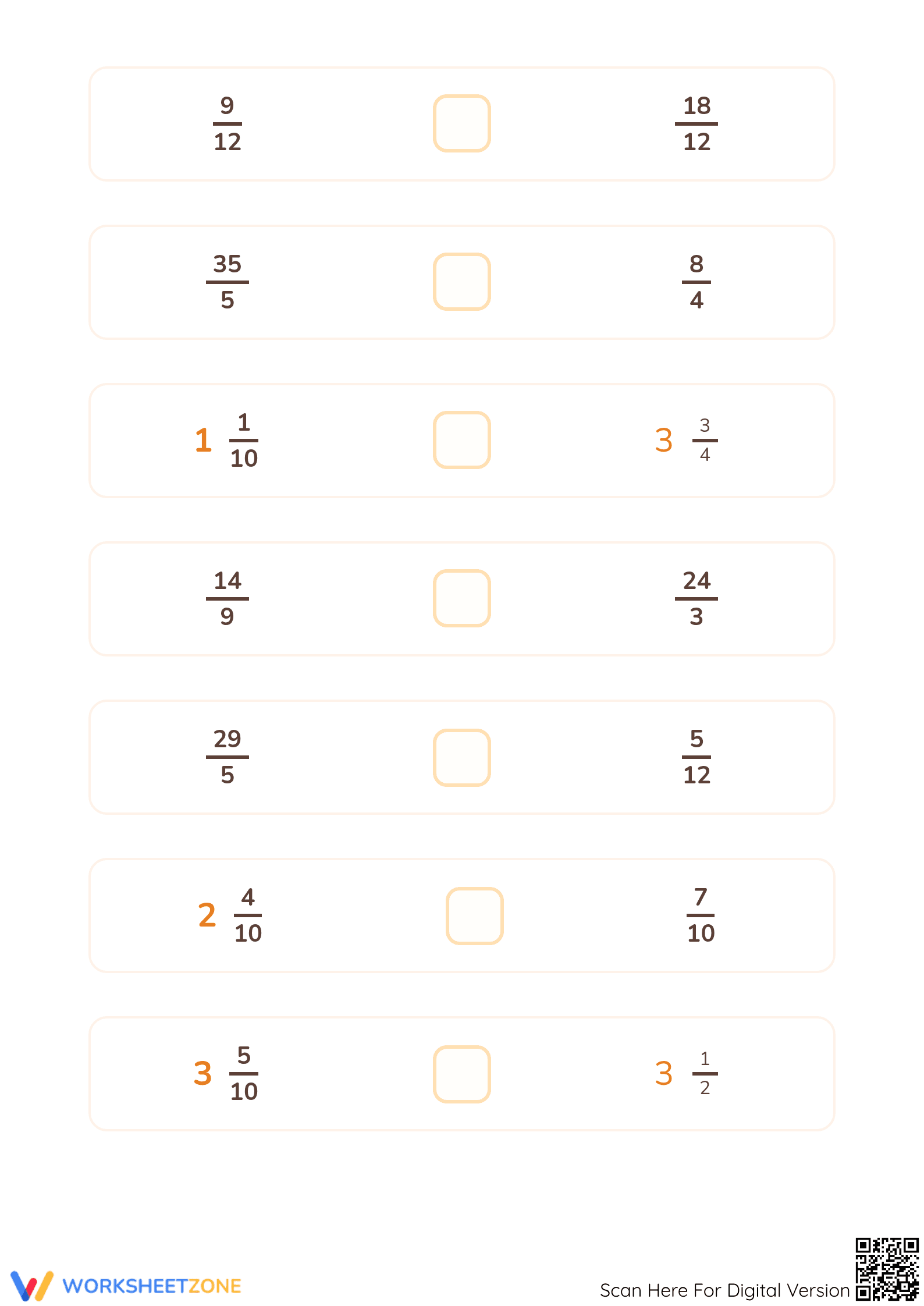
This 5-page PDF contains 30 comparison tasks organized into three distinct levels of difficulty. The worksheet covers comparisons between proper fractions, improper fractions, and mixed numbers. Each page features clear boxes for students to enter comparison symbols (<, >, or =). A complete answer key is provided for immediate feedback and easy grading.
- Level 1: Basic Fraction Duel (Below Grade) — Students compare simple proper and improper fractions with smaller denominators to build initial confidence.
- Level 2: Mixed Number Mayhem (On Grade) — Students navigate comparisons between mixed numbers and improper fractions, aligning with fourth-grade expectations.
- Level 3: The Great Fraction Comparison (Above Grade) — Students tackle complex comparisons with larger denominators and multi-step conversions.
All three levels are included in this single download to support classroom-wide differentiation.
Aligned to CCSS.MATH.CONTENT.4.NF.A.2: "Compare two fractions with different numerators and different denominators, e.g., by creating common denominators or numerators. Record the results of comparisons with symbols >, =, or <, and justify the conclusions." This standard code can be copied directly into lesson plans, IEP goals, or district curriculum mapping tools to ensure instructional alignment.
Use this worksheet during the "You Do" phase of a gradual release model. Assign specific levels based on pre-assessment data to provide targeted support. Use the student's ability to convert improper fractions as a formative assessment point during the Level 2 tasks. Total completion time is estimated at 30 minutes, making it suitable for standard class periods.
This resource is designed for Grade 4 students but works effectively for Grade 5 review or Grade 3 enrichment. It supports students who struggle with visualizing relative fraction sizes or those requiring structured scaffolding to transition from simple to complex fraction types. Pairs perfectly with visual fraction strips or a number line anchor chart during direct instruction.
The ability to compare heterogeneous fraction types is a critical milestone in elementary mathematics, serving as a prerequisite for fraction operations and algebraic thinking. This worksheet targets CCSS.MATH.CONTENT.4.NF.A.2 by requiring students to evaluate and compare simple, improper, and mixed fractions. According to NAEP research, proficiency in fraction comparison is a strong predictor of overall mathematical success in middle school and beyond. By providing 30 tasks across three levels of differentiation, this resource ensures that all students can engage with the material at their appropriate instructional level. The tiered structure supports the Gradual Release of Responsibility framework (Fisher & Frey, 2014), allowing for scaffolded mastery and independent application. Educators can utilize these problems to identify specific misconceptions regarding numerator-denominator relationships and fraction-to-mixed-number conversions. This standards-aligned resource provides a rigorous pathway to developing deep conceptual understanding of fraction magnitude and numerical value.


