


























Views
Downloads

Printable Comparing Fractions Worksheet | Grade 4-5 Math
Paste this activity's link or code into your existing LMS (Google Classroom, Canvas, Teams, Schoology, Moodle, etc.).
Students can open and work on the activity right away, with no student login required.
You'll still be able to track student progress and results from your teacher account.
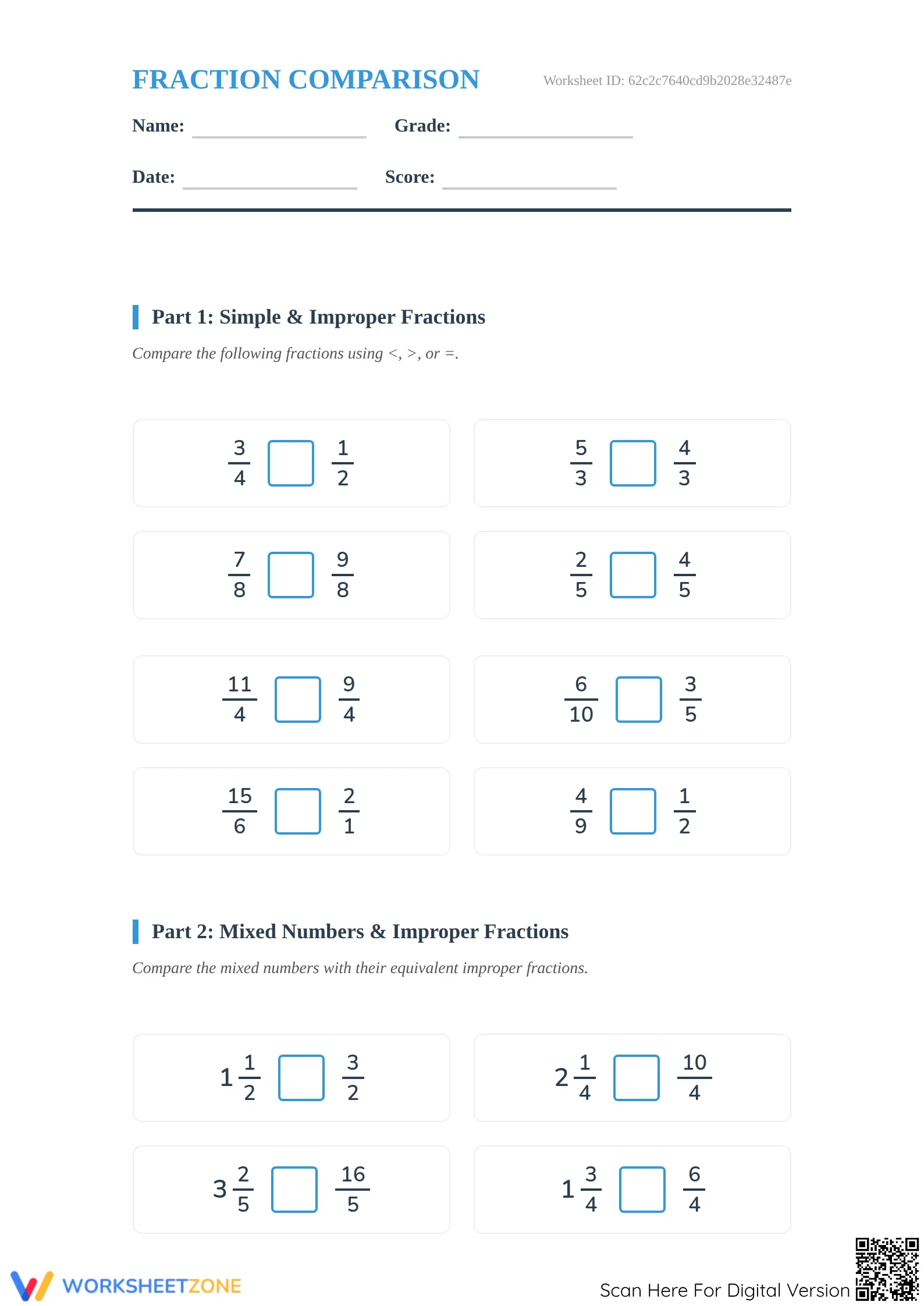
Grade 4 Math worksheet providing targeted practice in comparing fraction types, including simple, improper, and mixed numbers. By working through comparison tasks and word problems, learners visualize fractional values and determine relationships using inequality symbols. This set ensures student mastery before progressing to operations.
At a Glance
- Grade: Grade 4 · Subject: Math (Fractions)
- Standard:
CCSS.MATH.CONTENT.4.NF.A.2— Compare fractions with different numerators and denominators using symbols- Skill Focus: Improper and mixed fraction comparison
- Format: 4 pages · 28 problems · Answer key included · PDF
- Best For: End-of-unit revision and classroom review sessions
- Time: 30–45 minutes
What's Inside
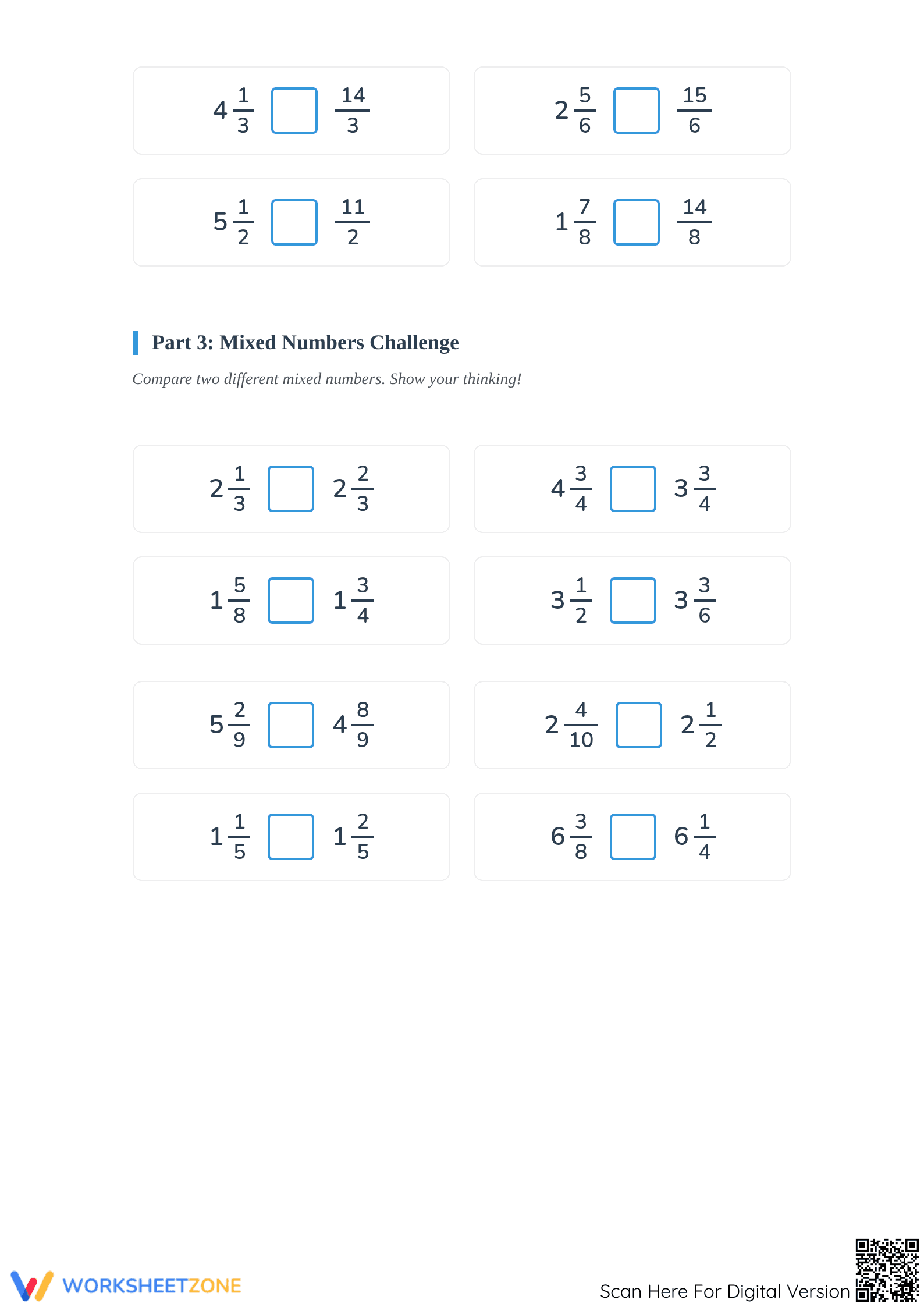
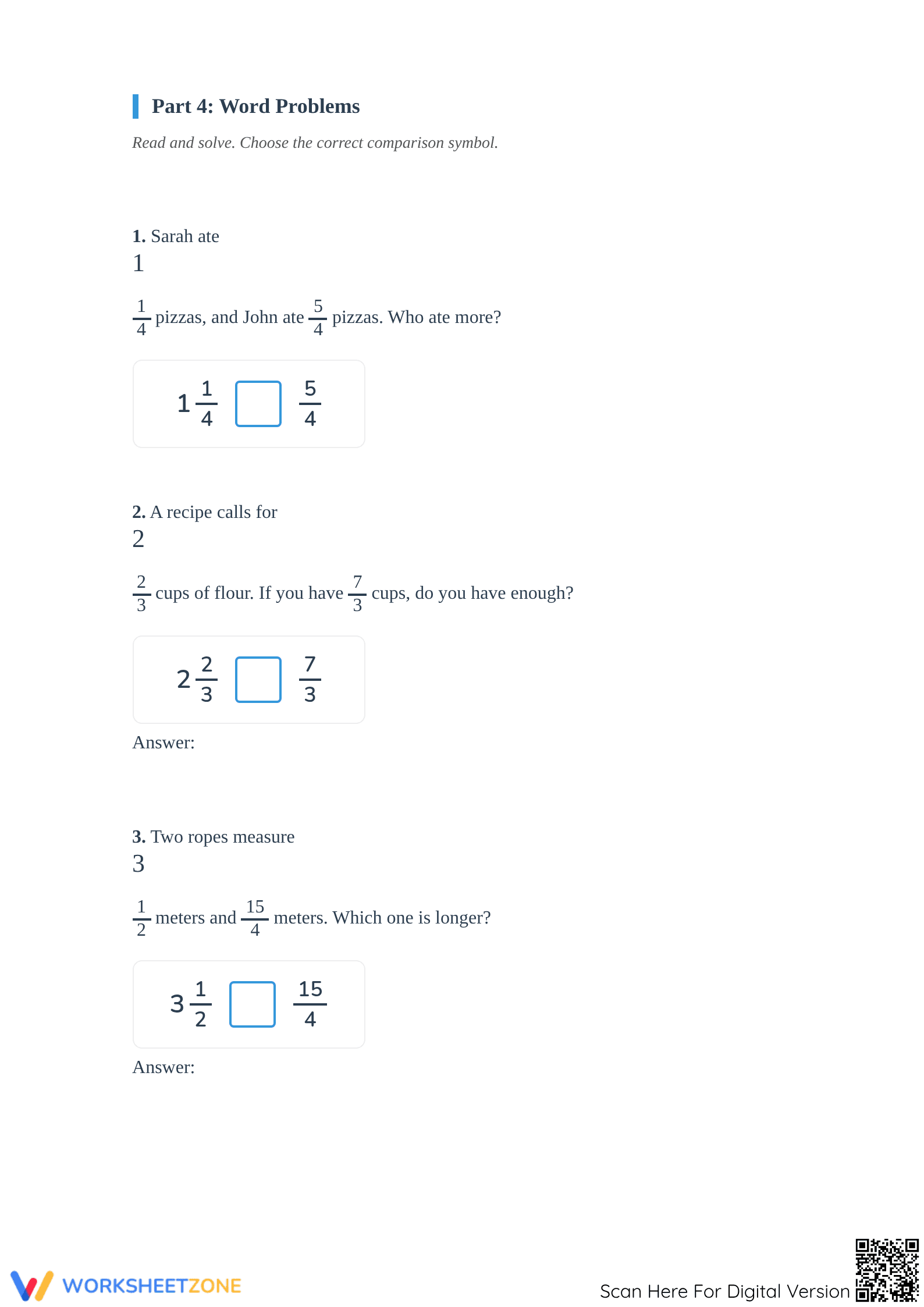
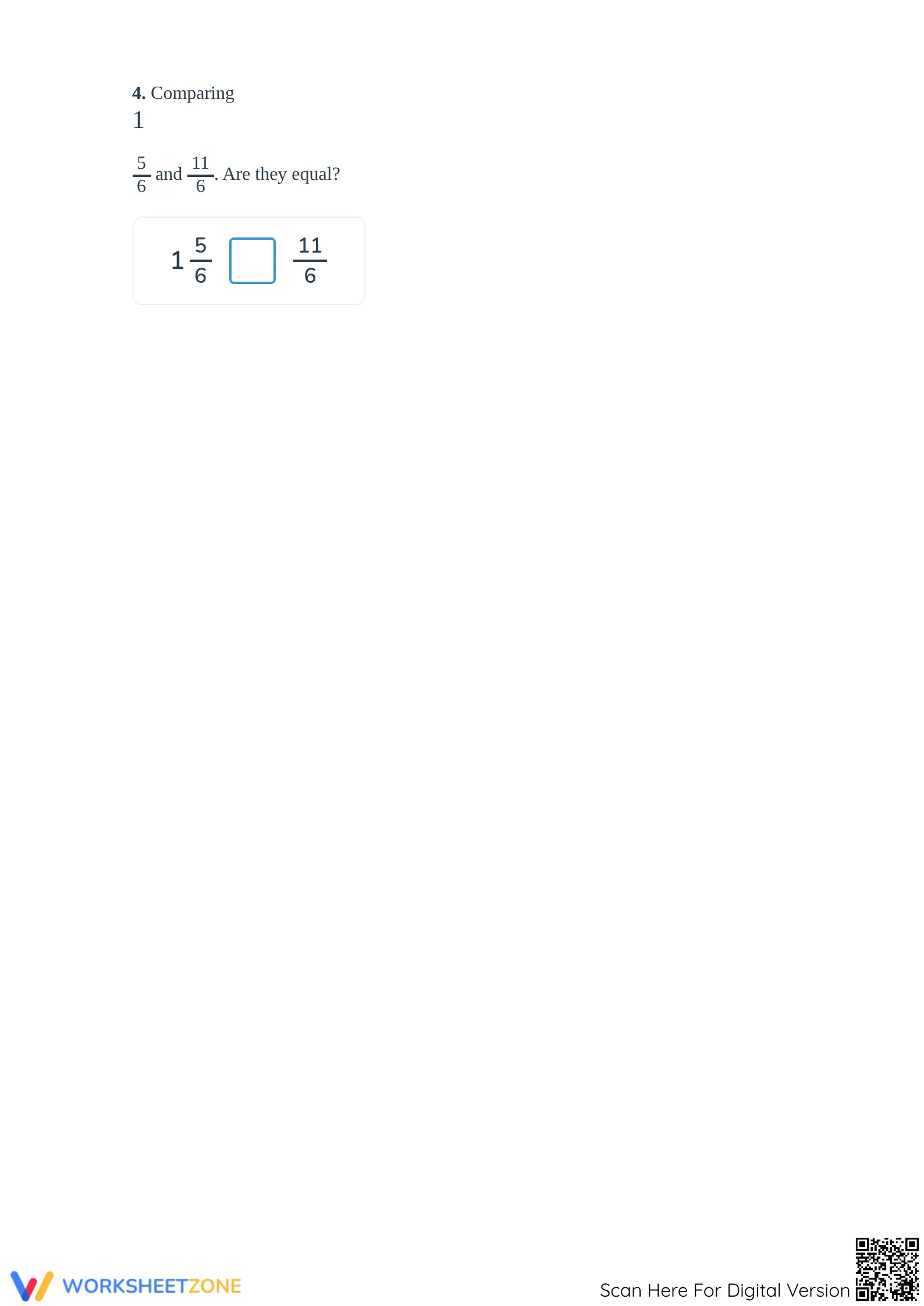
Four distinct sections building in complexity. Page one features simple and improper fractions. The second and third pages transition into mixed number comparisons, requiring students to convert values. The final page concludes with 4 application-based word problems in contexts like recipes and distance. A full answer key facilitates rapid grading and student self-correction.
Zero-Prep Workflow
This resource is designed for a seamless, under-two-minute setup. The streamlined three-step process includes:
- Print (30 seconds): Generate the 4-page PDF for your entire class.
- Distribute (30 seconds): Hand out packets for independent or partner work.
- Review (45 seconds): Check the word problems as a group or use the answer key.
This workflow makes it an ideal choice for emergency sub plans or quick assessment checks throughout the unit.
Standards Alignment
The worksheet is strictly aligned to CCSS.MATH.CONTENT.4.NF.A.2: "Compare two fractions with different numerators and different denominators, e.g., by creating common denominators or numerators, or by comparing to a benchmark fraction such as 1/2." Additionally, it supports higher-grade rational number fluency. Both standard codes can be copied directly into lesson plans, IEP goals, or district curriculum mapping tools.
How to Use It
Use this worksheet during the independent practice phase to verify mastery of fraction relationships. It serves as a formative-assessment tool; teachers should observe if students use benchmark fractions or common denominators to solve the 28 problems. Most students will complete the full set within a standard 40-minute math block, making it suitable for a single period.
Who It's For
Specifically crafted for fourth and fifth-grade students introduced to improper fractions. It provides support for learners struggling with abstract numeric values by offering consistent visual structures. It pairs naturally with physical fraction tiles or a benchmark anchor chart to help students visualize the fractional parts while they navigate the application problems on the final page.
Rigorous fraction instruction is a cornerstone of elementary mathematics, as early mastery of fraction comparison is a strong predictor of later success in algebra and higher-level rational number operations. According to the NAEP framework, students often struggle with the "whole number bias," where they incorrectly apply whole number properties to fractional values. This worksheet addresses this cognitive hurdle by explicitly requiring the comparison of improper fractions and mixed numbers, forcing students to reconcile the numerator-denominator relationship. Fisher & Frey (2014) emphasize that structured practice with inequality symbols within various representations—from pure numerical forms to word problems—helps cement the conceptual understanding required for fluency. By including 28 diverse tasks, this resource provides the necessary repetition to move students from procedural calculation to intuitive fractional reasoning. The inclusion of CCSS.MATH.CONTENT.4.NF.A.2 ensures that teachers are meeting grade-level expectations while providing the scaffolding needed for complex multi-step conversions.


