


























Views
Downloads

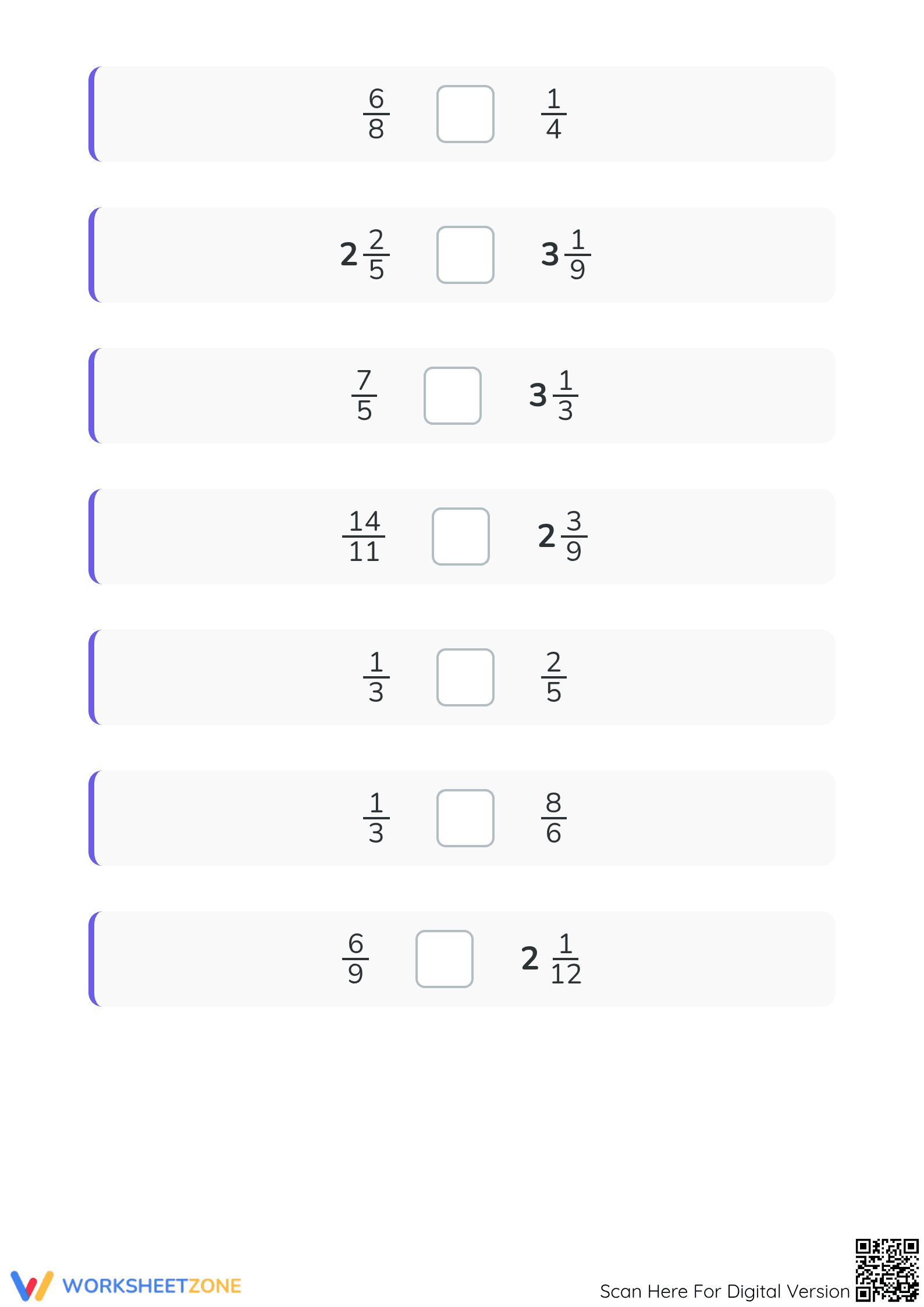
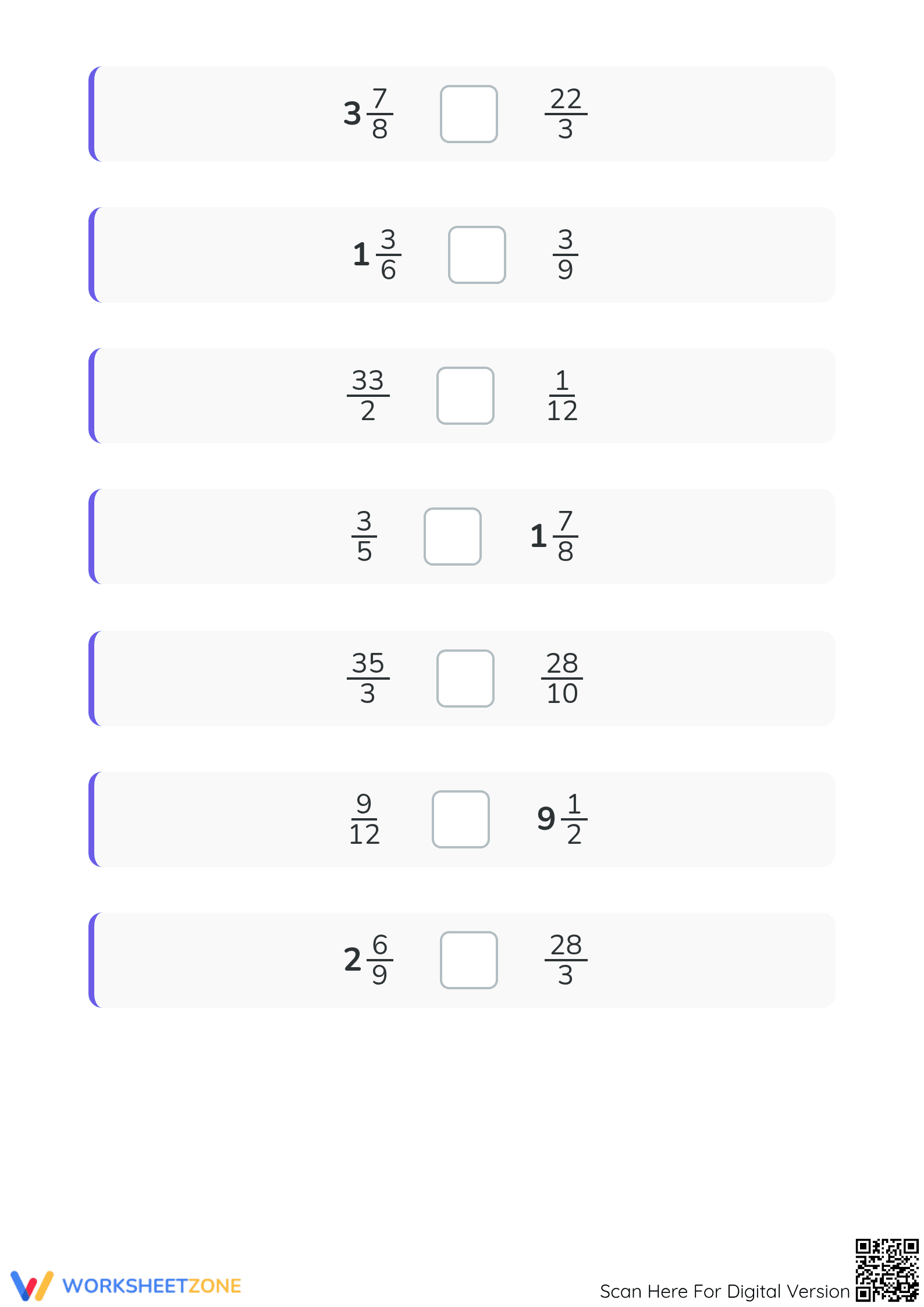
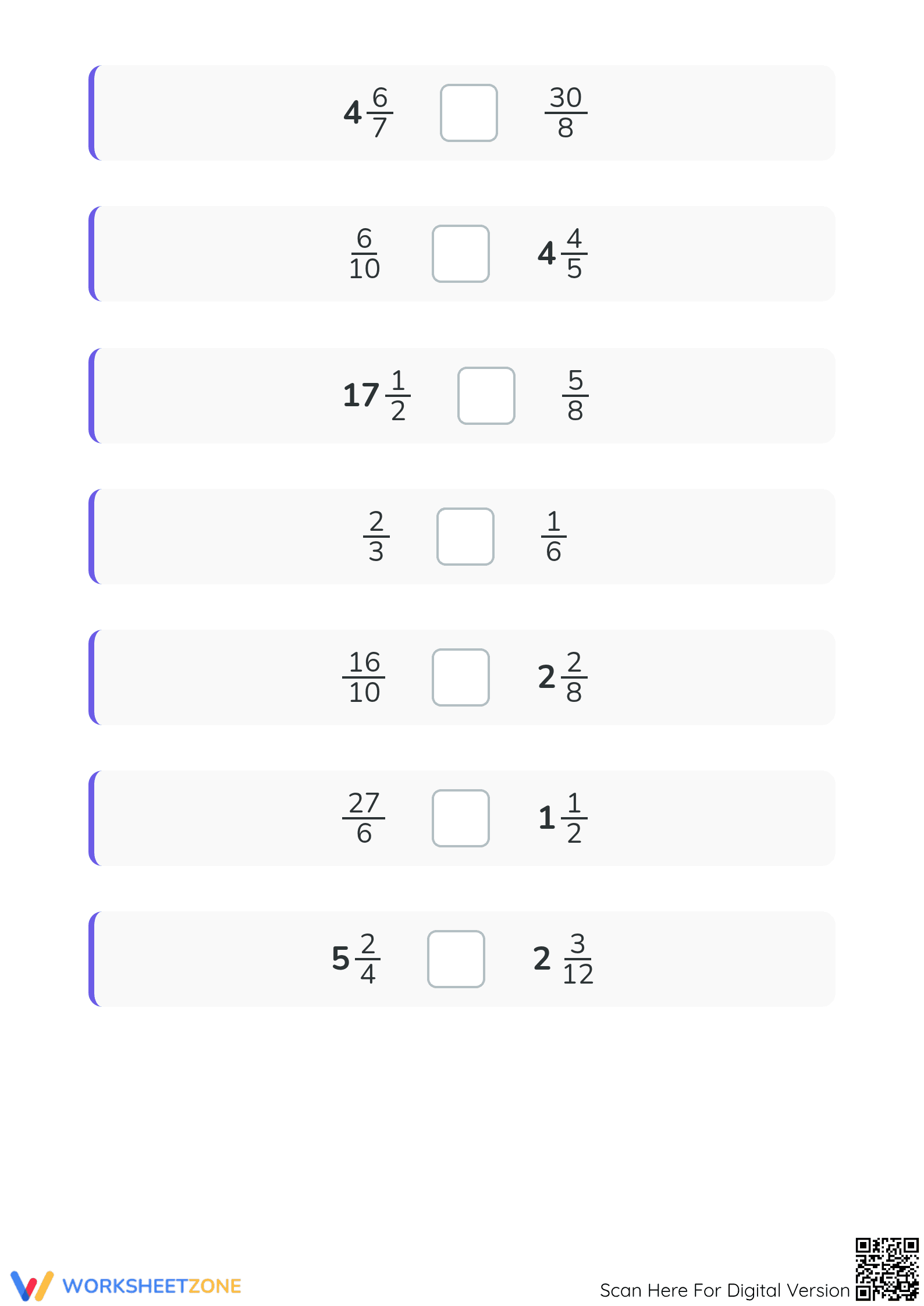
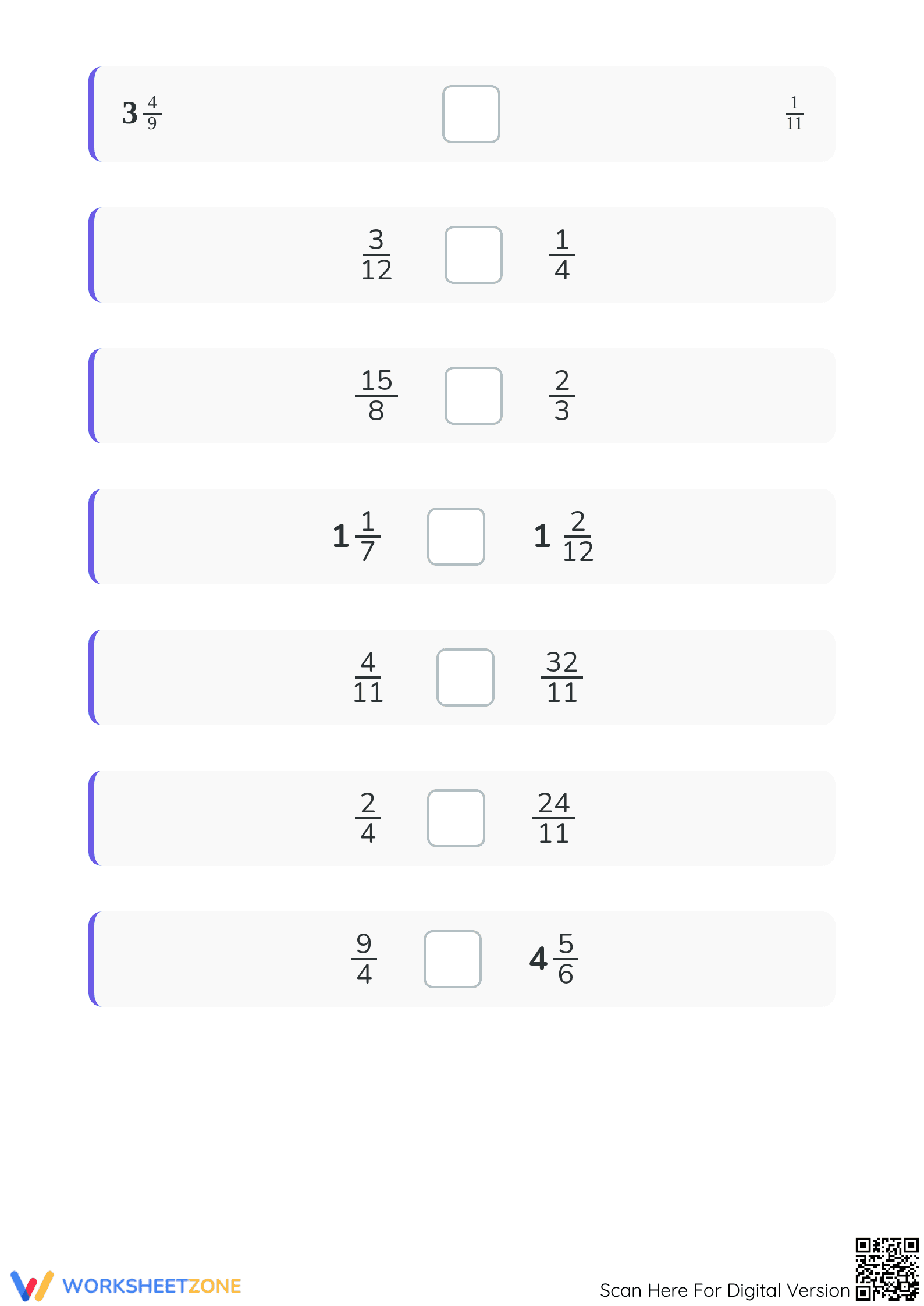

Essential Fractions Worksheet | Grade 4 Printable
Paste this activity's link or code into your existing LMS (Google Classroom, Canvas, Teams, Schoology, Moodle, etc.).
Students can open and work on the activity right away, with no student login required.
You'll still be able to track student progress and results from your teacher account.
Mastering the comparison of complex fractions is a critical milestone for middle-grade students. This comprehensive worksheet packet provides rigorous practice in identifying relationships between proper fractions, improper fractions, and mixed numbers using standard inequality symbols. Students will develop the fluency needed to visualize and calculate fractional values accurately across various formats.
At a Glance
- Grade: 4 · Subject: Math
- Standard:
CCSS.MATH.CONTENT.4.NF.A.2— Compare two fractions with different numerators and denominators using symbols- Skill Focus: Comparing Proper, Improper, and Mixed Fractions
- Format: 5 pages · 33 problems · Answer key included · PDF
- Best For: Independent fluency practice and skills review
- Time: 25–40 minutes
Inside this 5-page resource, educators will find 33 structured comparison tasks. Each page introduces a mix of simple proper fractions, improper fractions, and mixed numbers to ensure students handle different representations of value. The layout includes clean boxes for inequality signs, making it ideal for pencil-and-paper work or digital annotation. A comprehensive answer key is provided for rapid grading.
The zero-prep workflow for this packet is designed for maximum efficiency. Teachers can print the entire 5-page set in under 30 seconds or distribute individual pages as targeted daily warm-ups. Distribution to a full class takes less than a minute, and with the included answer key, students can even engage in self-checking or peer-grading activities, reducing the teacher's administrative burden to near zero.
This resource aligns strictly with CCSS.MATH.CONTENT.4.NF.A.2, which requires students to compare two fractions with different numerators and different denominators by creating common denominators or comparing to a benchmark fraction. It also supports higher-grade standards involving rational number operations. The standard code can be copied directly into lesson plans, IEP goals, or district curriculum mapping tools.
Use this packet as a summative assessment after a unit on fraction equivalence or as a station activity during math rotations. For a formative assessment tip, observe whether students are converting mixed numbers to improper fractions or using mental benchmarks like one-half to solve the problems. The expected completion time for the full 33-task set is approximately 35 minutes for most students.
This worksheet is designed for Grade 4 students moving beyond basic fraction recognition. It is effective for learners who require high-repetition practice to solidify understanding of magnitude. Pair this resource with a visual number line or fraction tiles for students who benefit from concrete representations before transitioning to abstract symbolic comparison.
According to a ScienceDirect TpT Analysis (2024), high-volume retrieval practice is essential for stabilizing the cognitive schema required for comparing non-integer values. This worksheet addresses CCSS.MATH.CONTENT.4.NF.A.2 by requiring students to evaluate the relative magnitude of fractions, mixed numbers, and improper fractions—a skill foundational to algebraic readiness. Research from EdReports (2024) emphasizes that standard-aligned materials must balance procedural fluency with conceptual depth. By providing 33 distinct tasks, this resource ensures that students encounter enough variety to prevent rote memorization while building the stamina needed for standardized testing environments. The inclusion of mixed numbers alongside improper fractions forces students to engage in multi-step mental translations, strengthening their numerical literacy. This tool serves as a reliable instrument for measuring progress in fractions, which NAEP identifies as a primary indicator of long-term mathematical success in secondary education.


