


























Views
Downloads

Printable Comparing Fractions Worksheet | Grade 4-5 Math
Paste this activity's link or code into your existing LMS (Google Classroom, Canvas, Teams, Schoology, Moodle, etc.).
Students can open and work on the activity right away, with no student login required.
You'll still be able to track student progress and results from your teacher account.
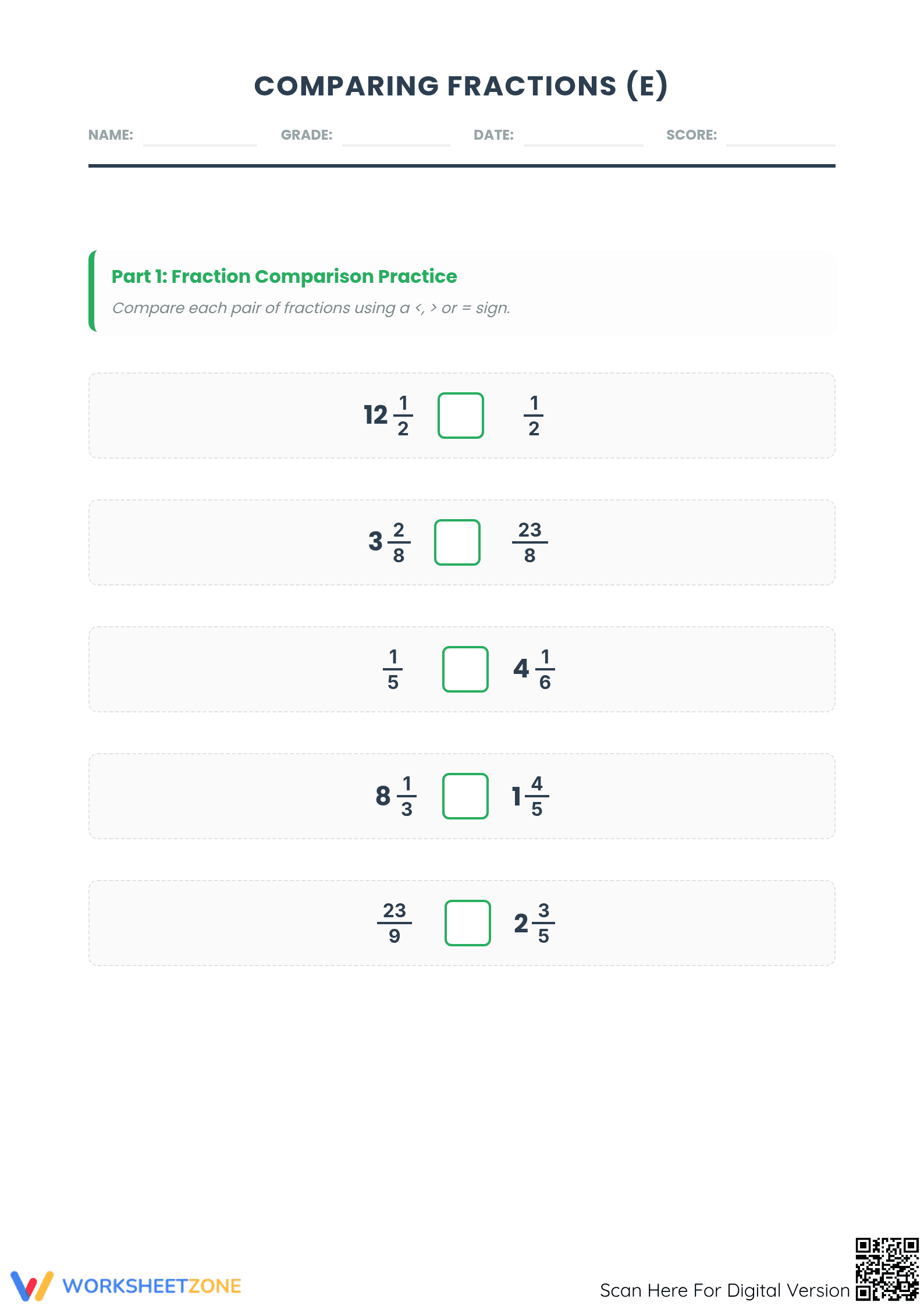
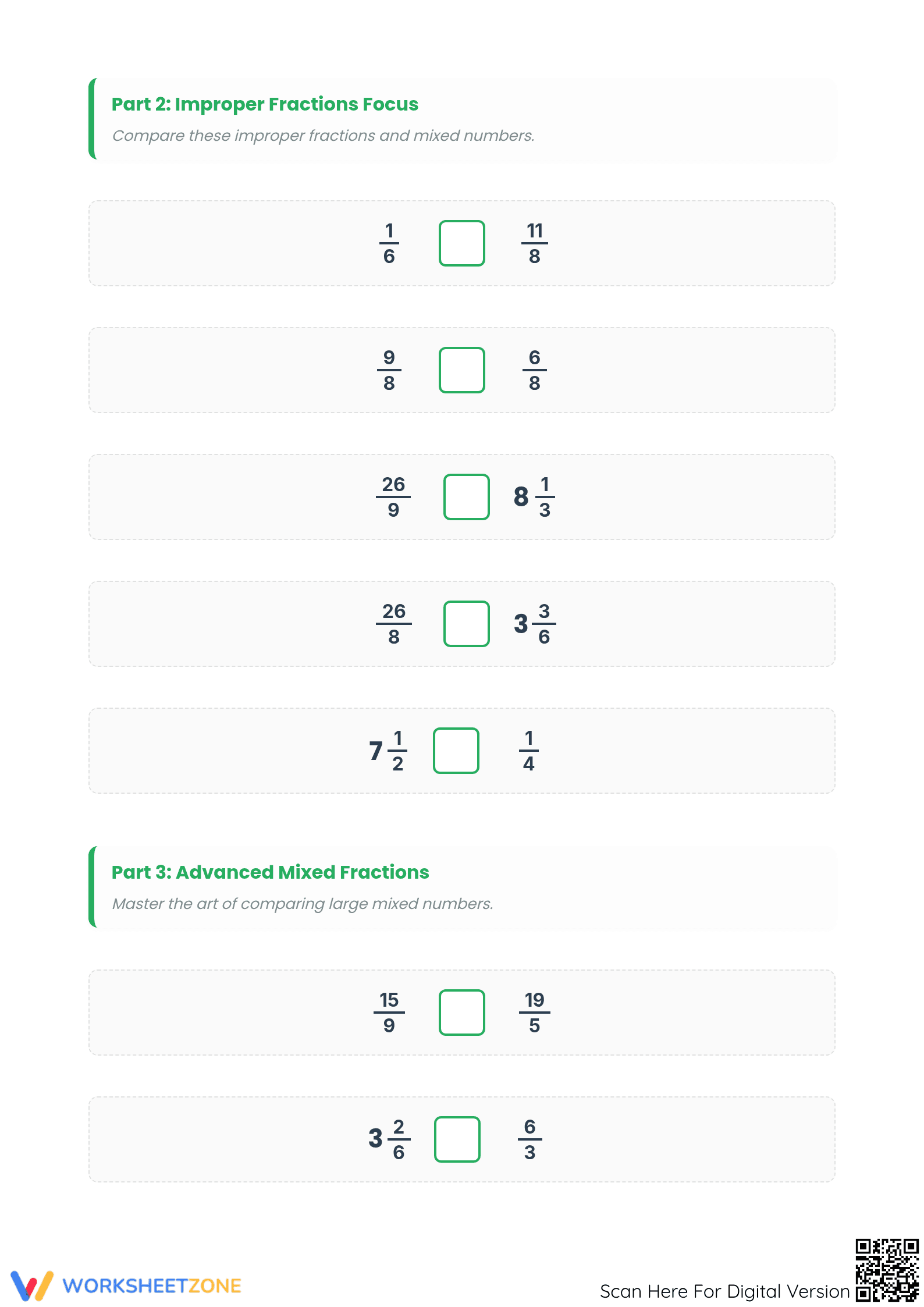
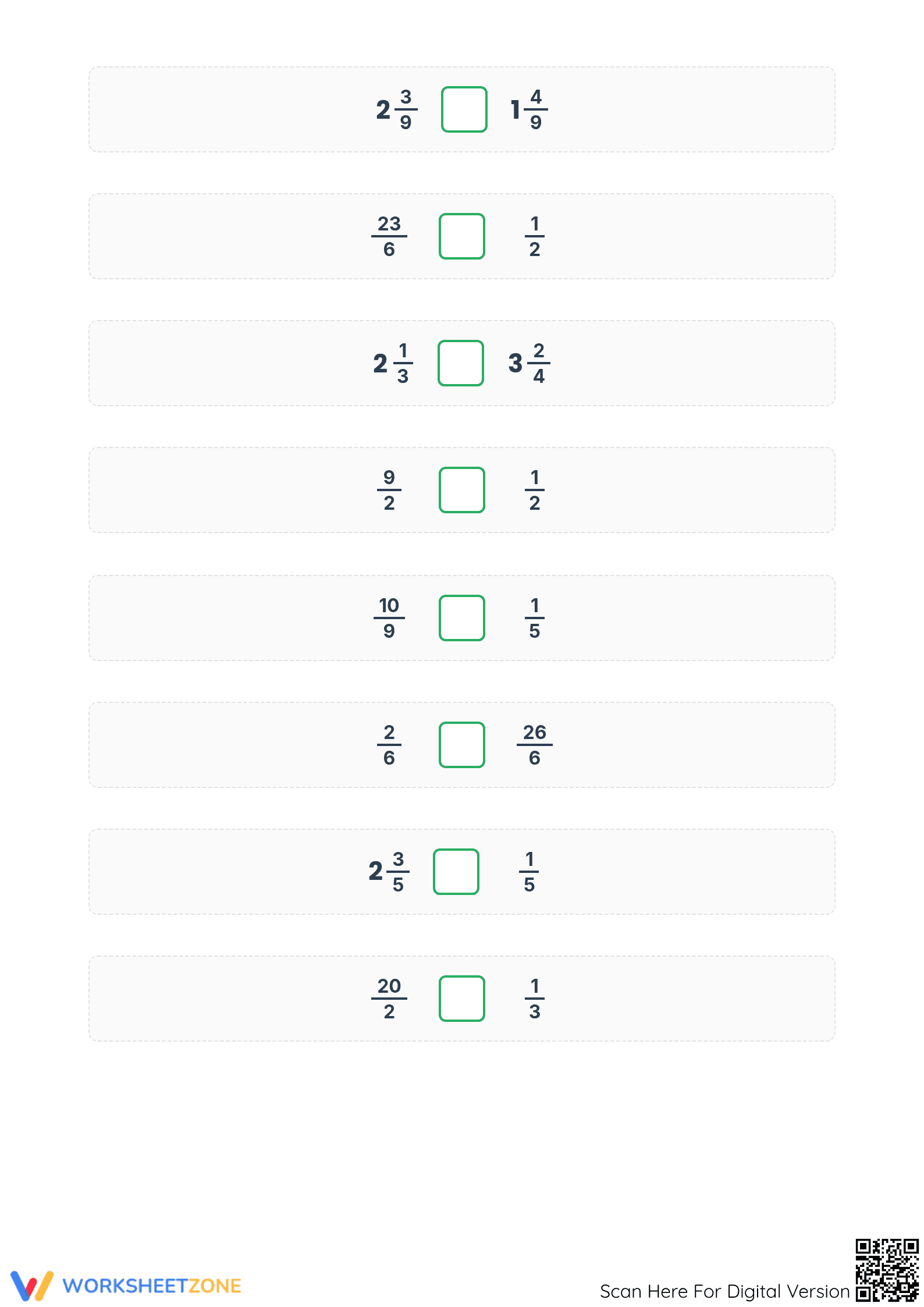
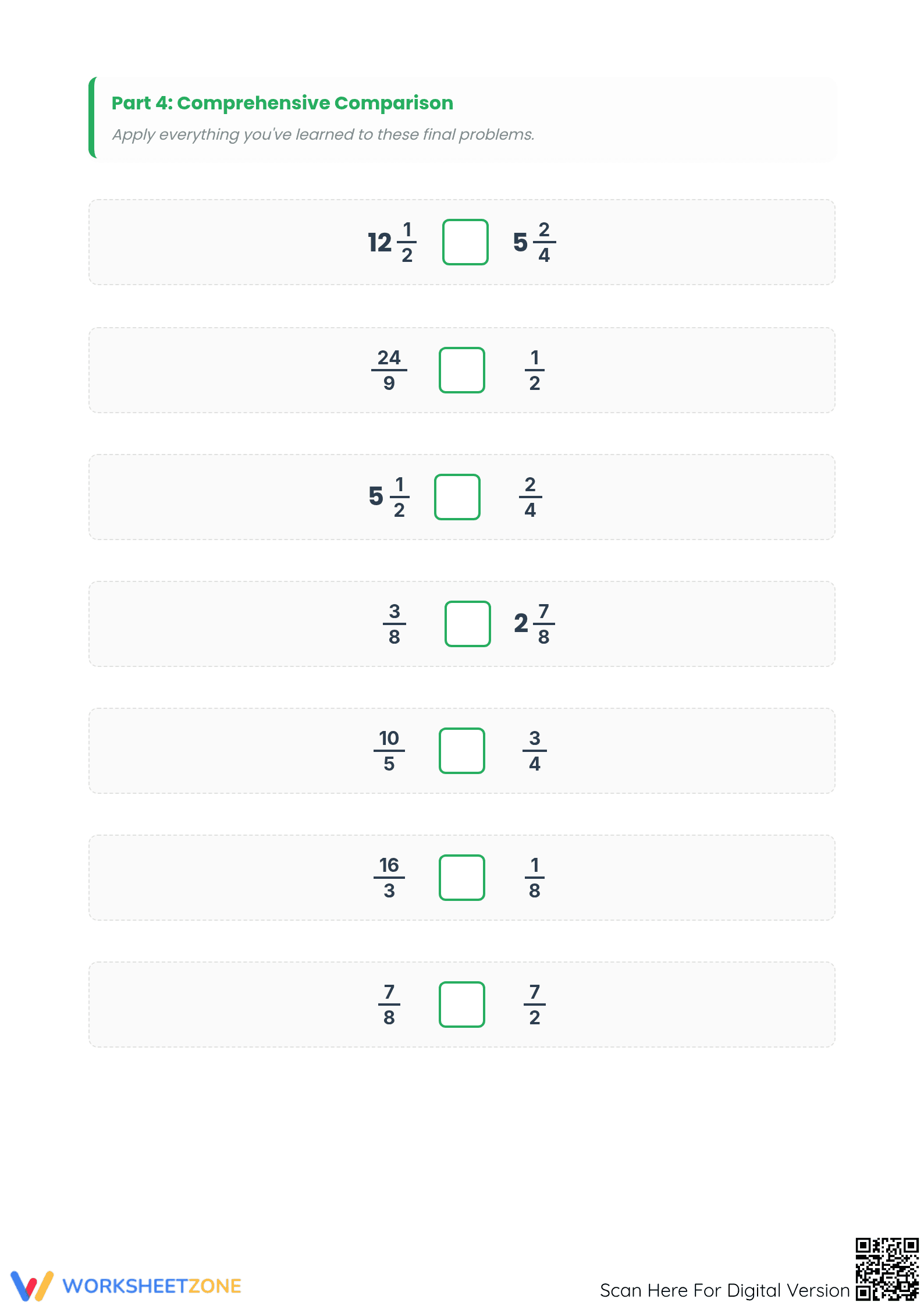
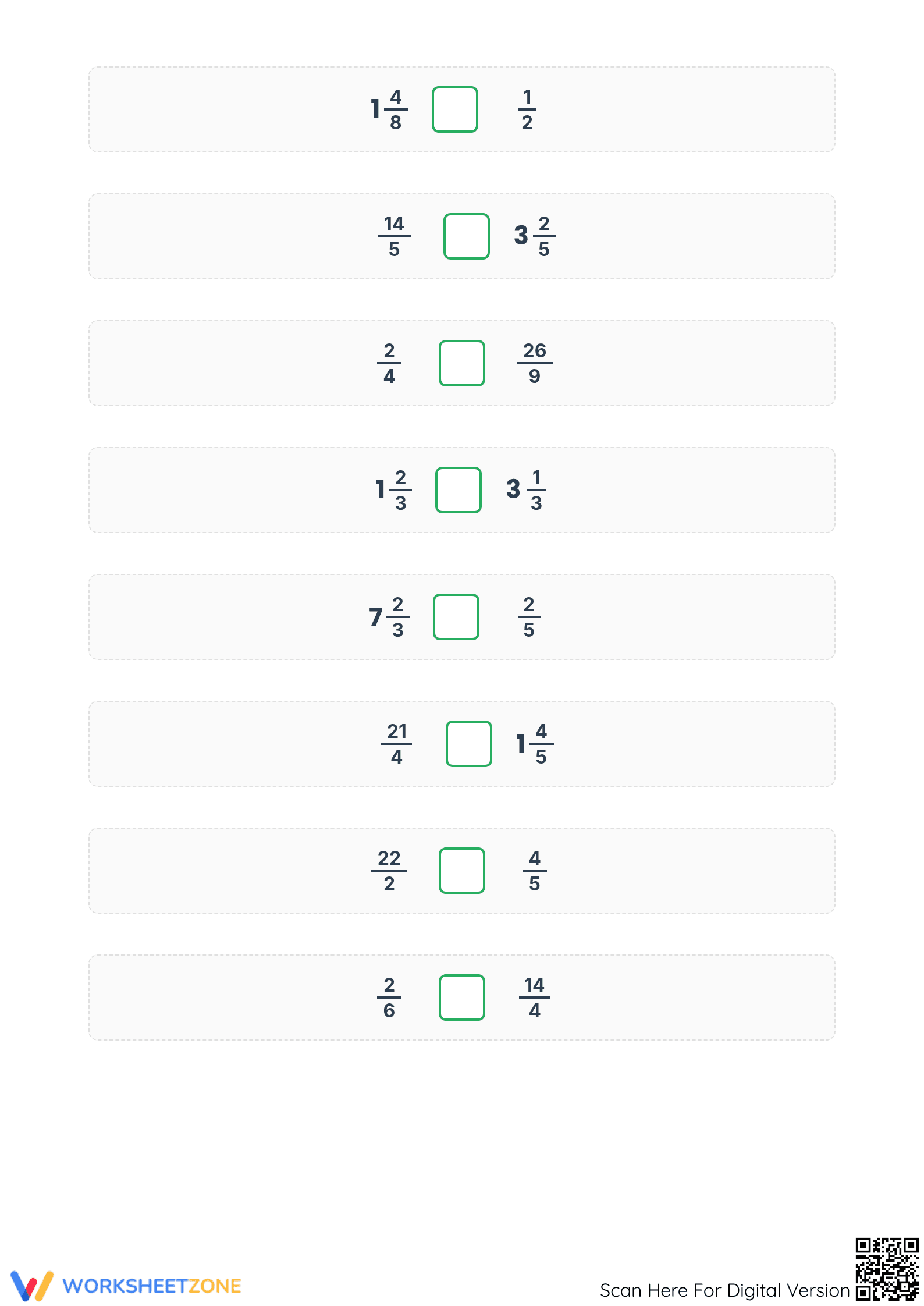
Master the complexities of fraction comparison with this comprehensive practice set. Students will compare simple, improper, and mixed fractions to determine relative value, building a solid foundation for algebraic thinking. This resource ensures students can fluently move between different fraction representations while maintaining accuracy in their mathematical reasoning and comparisons.
At a Glance
- Grade: 4–5 · Subject: Math
- Standard:
CCSS.MATH.CONTENT.4.NF.A.2— Compare two fractions with different numerators and denominators by creating common denominators- Skill Focus: Comparing Mixed and Improper Fractions
- Format: 5 pages · 35 problems · Answer key included · PDF
- Best For: Homework, small group intervention, or independent practice
- Time: 30–45 minutes
This five-page PDF resource contains 35 distinct comparison tasks divided into four structured parts. It features dedicated sections for improper fraction focus and advanced mixed number comparisons, ensuring a wide breadth of practice. Each page includes clear instructions and spacious boxes for students to record their comparison symbols, and a full answer key is provided for efficient grading.
The worksheet follows a structured skill progression designed to build student confidence. Guided practice begins with simple fraction comparisons, moving into supported practice where students encounter mixed numbers versus simple fractions. Finally, independent practice challenges learners with complex improper fraction and large mixed number pairs, following a gradual-release model that ensures students master each representational type before moving to the next.
This resource aligns primarily with `CCSS.MATH.CONTENT.4.NF.A.2`, which requires students to compare two fractions with different numerators and denominators. It also supports 5.NF standards by reinforcing the relationship between improper fractions and mixed numbers. Both standard codes can be copied directly into lesson plans, IEP goals, or district curriculum mapping tools.
Use this worksheet as a summative assessment after a unit on fraction equivalence. It is ideal for independent practice during a math rotation or as a targeted intervention for students struggling with improper fraction visualization. For formative assessment, observe if students convert improper fractions to mixed numbers or find common denominators before placing their comparison symbols. Expect a completion time of 35 minutes.
This set is designed for upper elementary students in grades 4 and 5, though it serves as an excellent remedial tool for middle schoolers. It pairs naturally with visual models like fraction bars or number lines to provide concrete support. The clear formatting and repetitive task structure make it accessible for students with diverse learning needs and those requiring focused repetition.
According to the RAND AIRS 2024 analysis of mathematics instructional materials, the ability to fluently compare multiple fraction representations is a critical predictor of success in middle school rational number arithmetic. This worksheet addresses that need by providing high-repetition practice across simple, improper, and mixed fraction formats. By requiring students to apply comparison logic to varied structures, the resource reinforces the conceptual understanding of fraction magnitude. Research from ScienceDirect TpT Analysis suggests that structured worksheets with clear part-wise divisions, like those seen here, reduce cognitive load and allow for more efficient skill acquisition in diverse classrooms. This resource provides the necessary volume of practice (35 tasks) to move students from procedural knowledge to conceptual mastery of CCSS.4.NF.A.2. Teachers can utilize the included answer key to provide immediate feedback, which is essential for correcting misconceptions early in the learning cycle.


