


























Views
Downloads


Printable Comparing Fractions Worksheet | Grade 4-6 Math
Paste this activity's link or code into your existing LMS (Google Classroom, Canvas, Teams, Schoology, Moodle, etc.).
Students can open and work on the activity right away, with no student login required.
You'll still be able to track student progress and results from your teacher account.
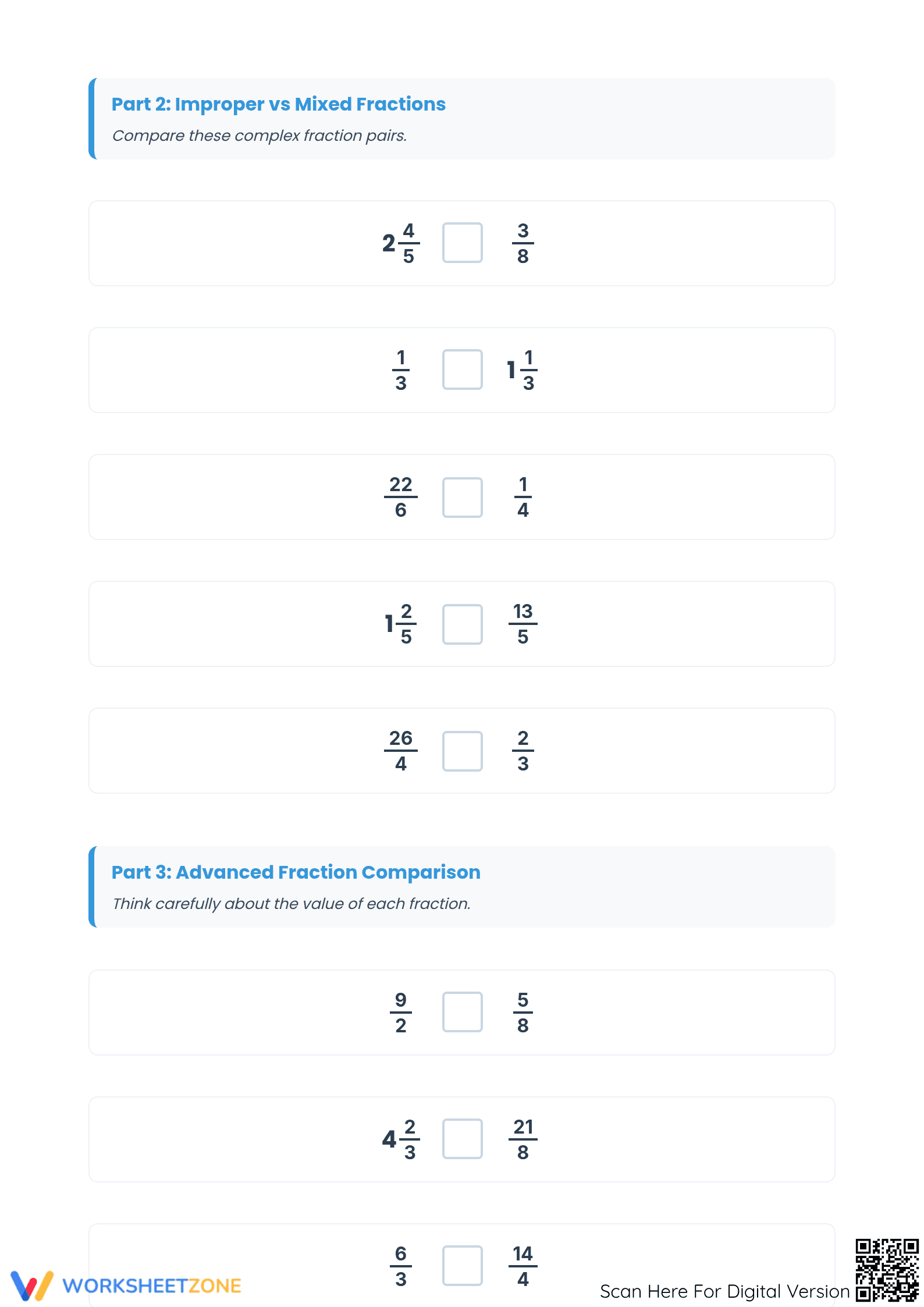
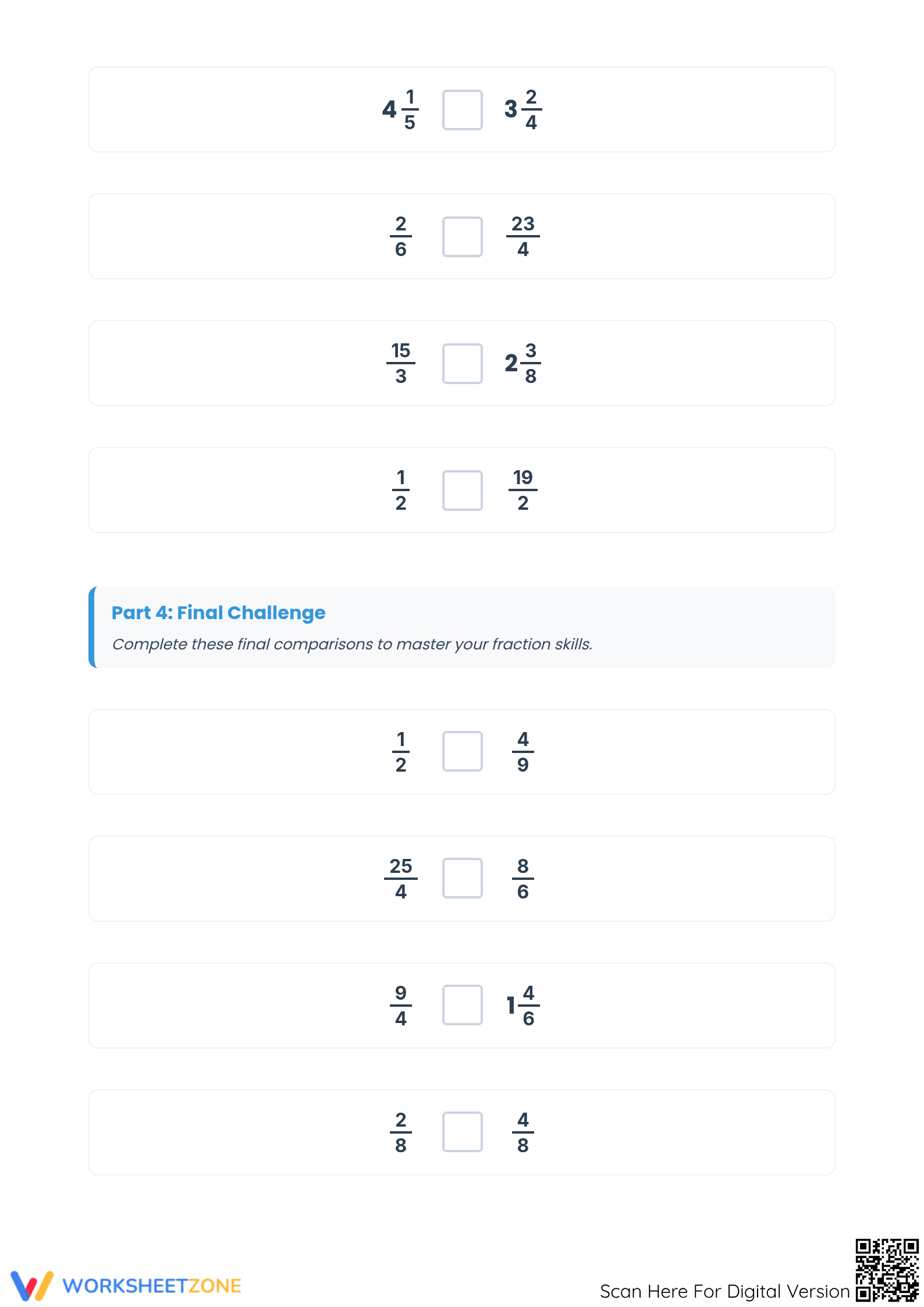
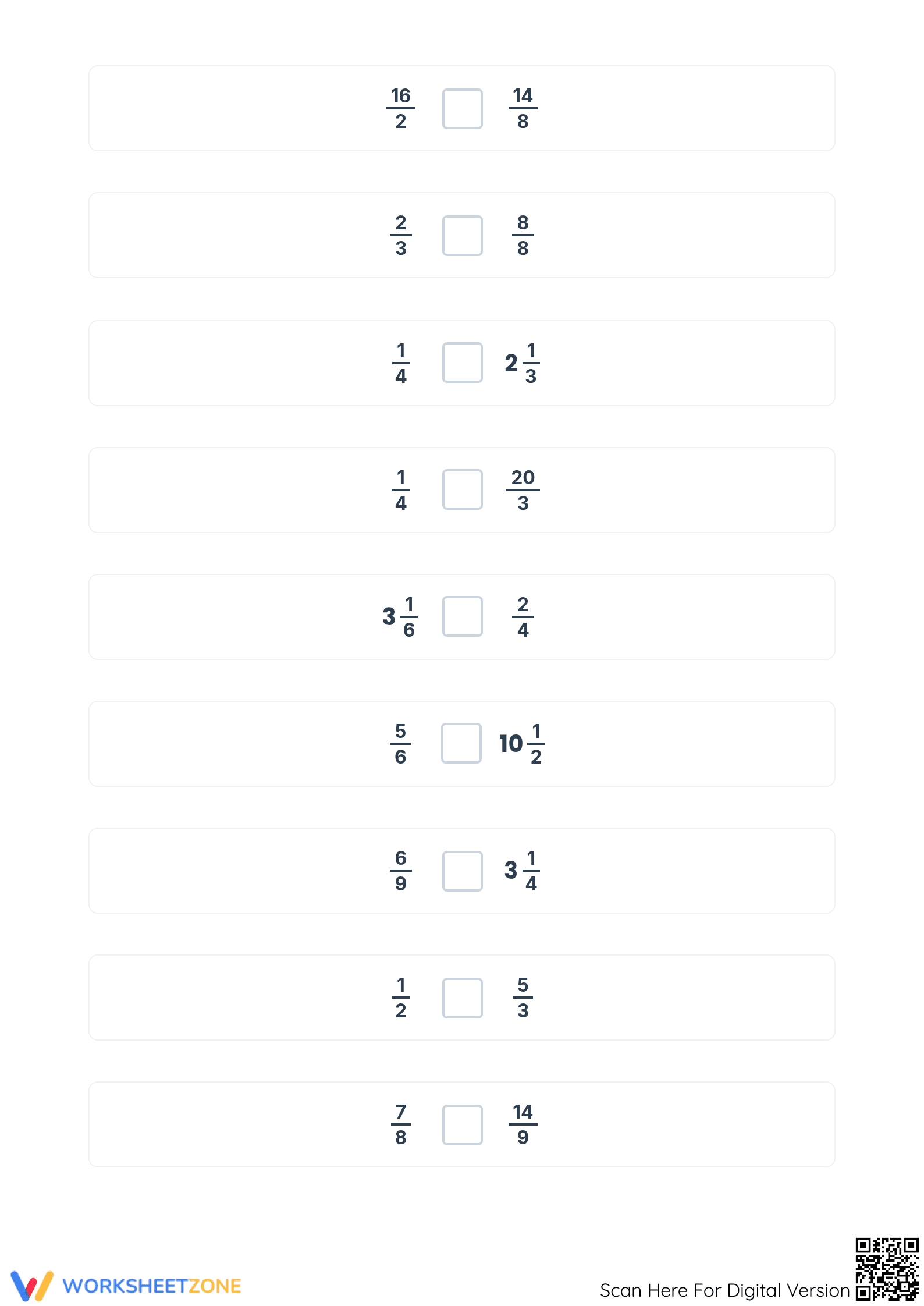
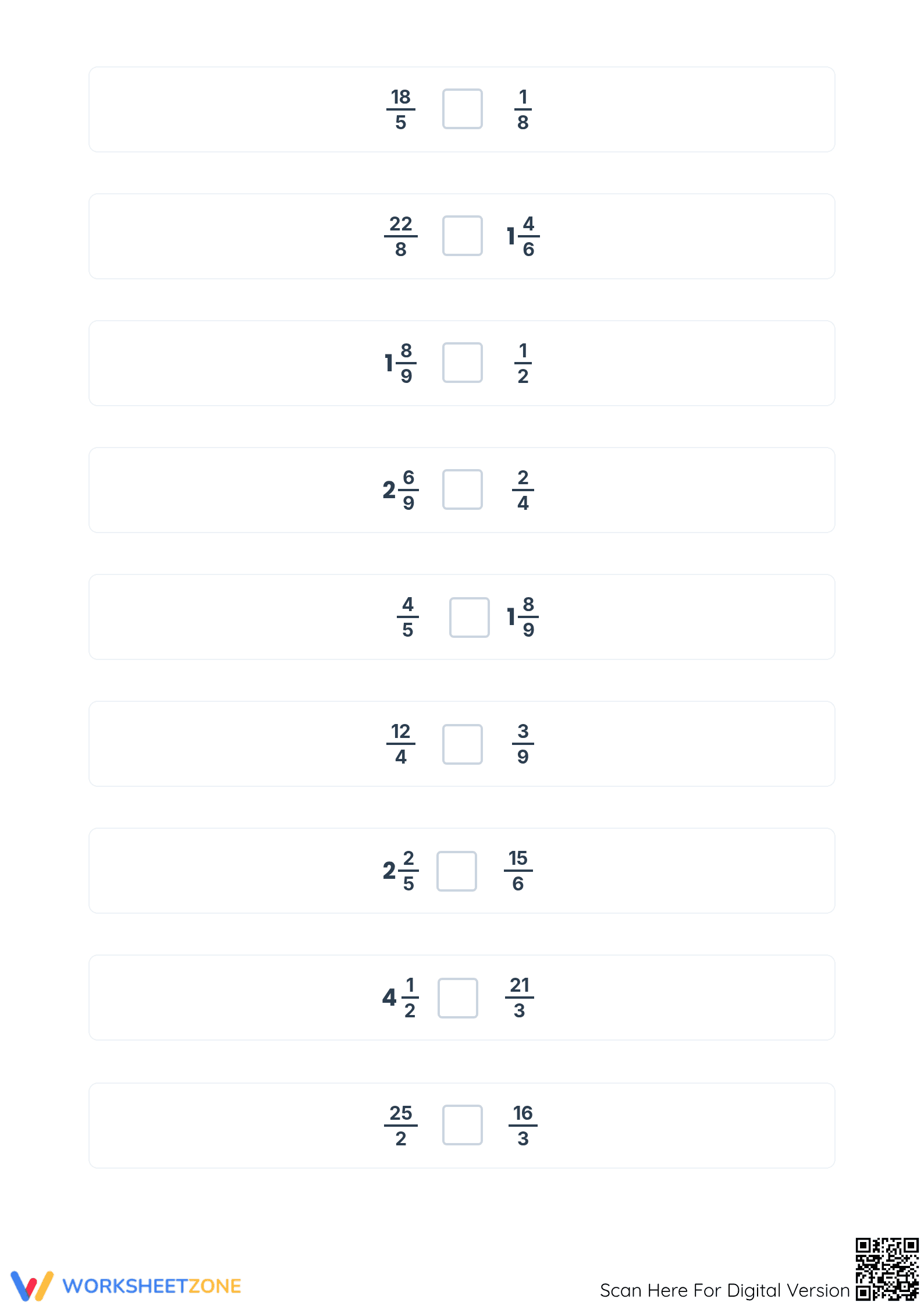
This comprehensive 5-page worksheet provides intensive practice in comparing various fraction types, including proper, improper, and mixed numbers. Students develop fluency in determining relationships between values by applying benchmark fractions and common denominator strategies. Mastering these comparisons is a critical bridge to complex rational number operations in middle school.
At a Glance
- Grade: 4–6 · Subject: Math
- Standard:
CCSS.MATH.CONTENT.4.NF.A.2— Compare two fractions with different numerators and denominators using symbols- Skill Focus: Multi-type fraction comparison
- Format: 5 pages · 39 problems · Answer key included · PDF
- Best For: Fraction fluency and assessment preparation
- Time: 30–45 minutes
What's Inside
This resource contains 39 structured tasks spread across five pages. The worksheet features four distinct sections: basic comparisons, improper versus mixed fractions, advanced comparisons, and a final challenge. Each task provides a clear box for students to insert the correct symbol. A complete, page-by-page answer key facilitates rapid grading and student self-correction.
Skill Progression
- Guided practice: The first section features basic comparisons to build initial confidence with simple fraction pairs and similar denominators.
- Supported practice: Students transition to comparing complex pairs, specifically improper fractions against mixed numbers, requiring active conversion strategies.
- Independent practice: The final challenge removes scaffolding, requiring students to compare disparate values using mental math or scratch work.
This sequence follows a gradual-release model, moving from predictable pairings to diverse, multi-step value comparisons. This ensures students master the underlying logic of fraction magnitude before tackling the most difficult problems.
Standards Alignment
This worksheet aligns with CCSS.MATH.CONTENT.4.NF.A.2, requiring students to compare two fractions with different numerators and denominators by creating common denominators or comparing to benchmarks. It also supports CCSS.MATH.CONTENT.5.NF.A.1 by strengthening the conversion skills necessary for fraction operations. Both standard codes can be copied directly into lesson plans or curriculum mapping tools.
How to Use It
Use this worksheet as a summative assessment after teaching conversion between mixed numbers and improper fractions. During completion, observe if students are converting values to a common format or using benchmarks for faster estimation. This practice set typically takes 35 minutes to complete and serves as a diagnostic tool for identifying misconceptions about fraction magnitude.
Who It's For
Designed for students in Grades 4 through 6 who are refining their understanding of rational number values. It is particularly beneficial for learners who struggle with the conceptual difference between improper fractions and mixed numbers. This resource pairs naturally with visual fraction models or number lines to provide a concrete representation of the abstract comparisons.
The development of fraction magnitude understanding is a pivotal moment in elementary mathematics, as noted by NAEP results which often highlight fraction comparison as a significant hurdle for students. This worksheet targets the specific cognitive load associated with switching between mixed and improper representations. According to Fisher & Frey (2014), providing intensive, structured practice in comparing varied mathematical representations builds the representational fluency required for higher-order algebraic thinking. By presenting 39 varied tasks, this resource ensures that students encounter enough cases—such as fractions that are nearly equivalent—to move beyond rote procedures. Aligned to CCSS.MATH.CONTENT.4.NF.A.2, this tool helps students internalize that the denominator represents the size of the parts, while the numerator represents the count. This rigorous approach reduces the whole number bias often seen when students first encounter rational numbers.


