


























Views
Downloads
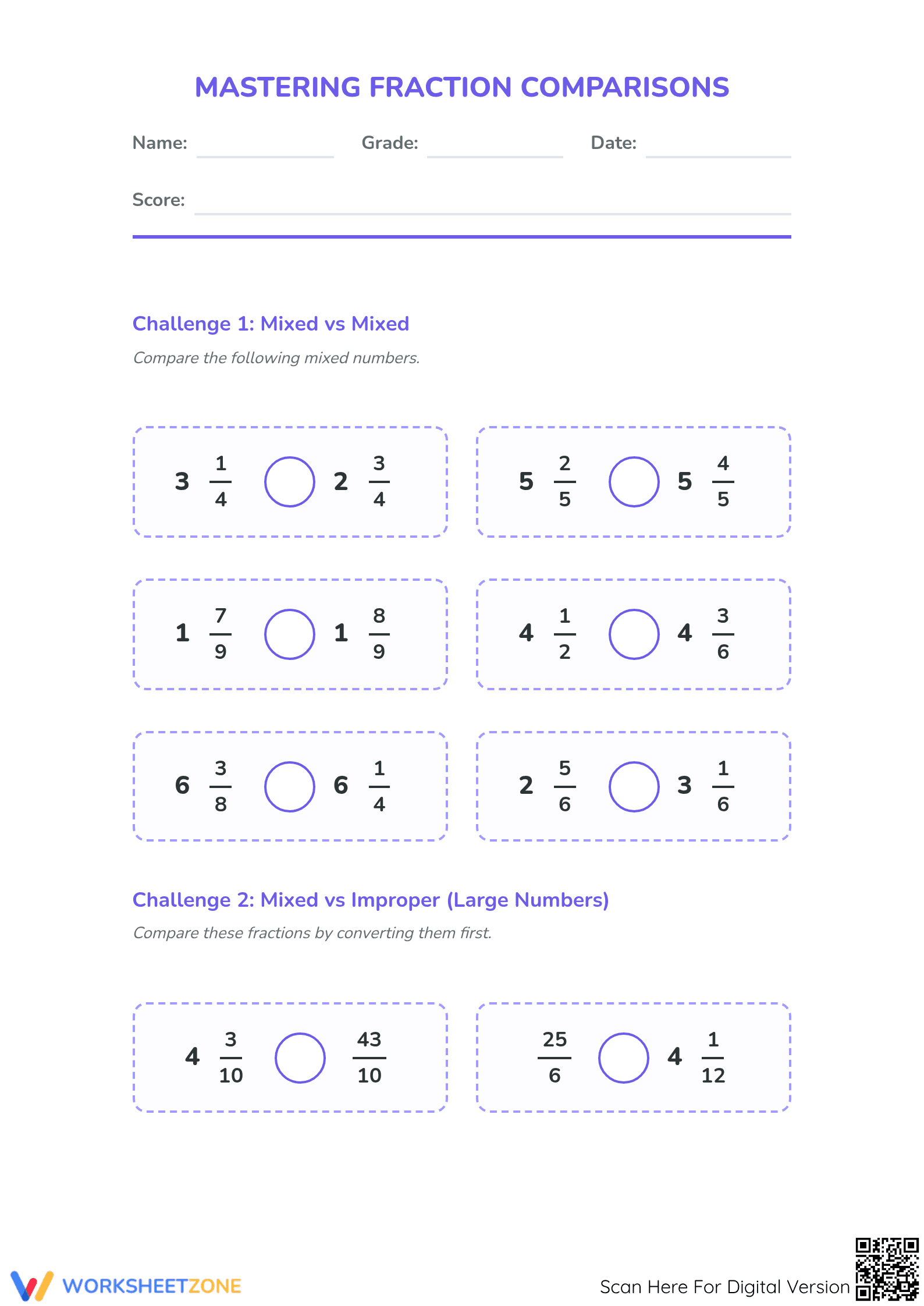
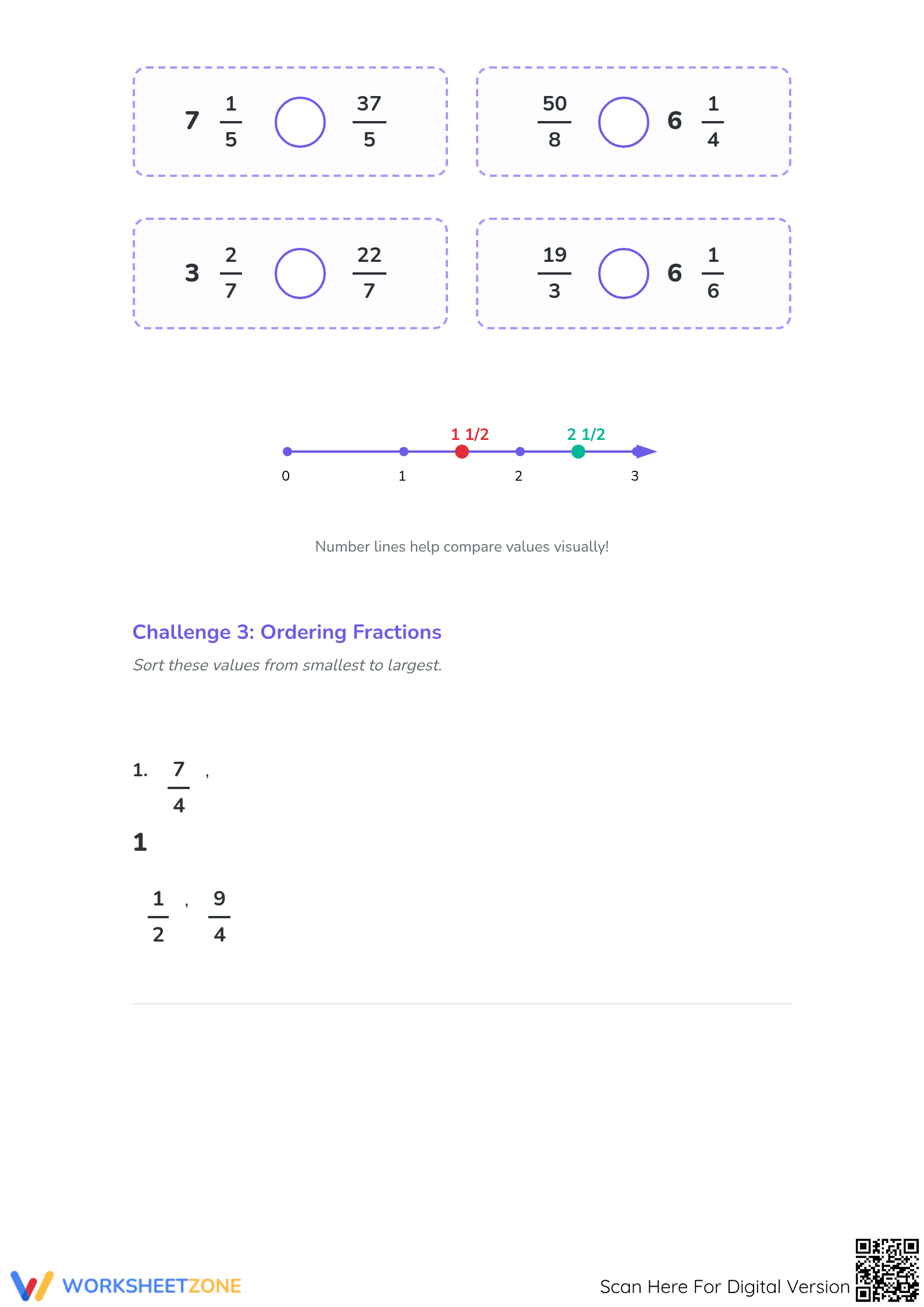
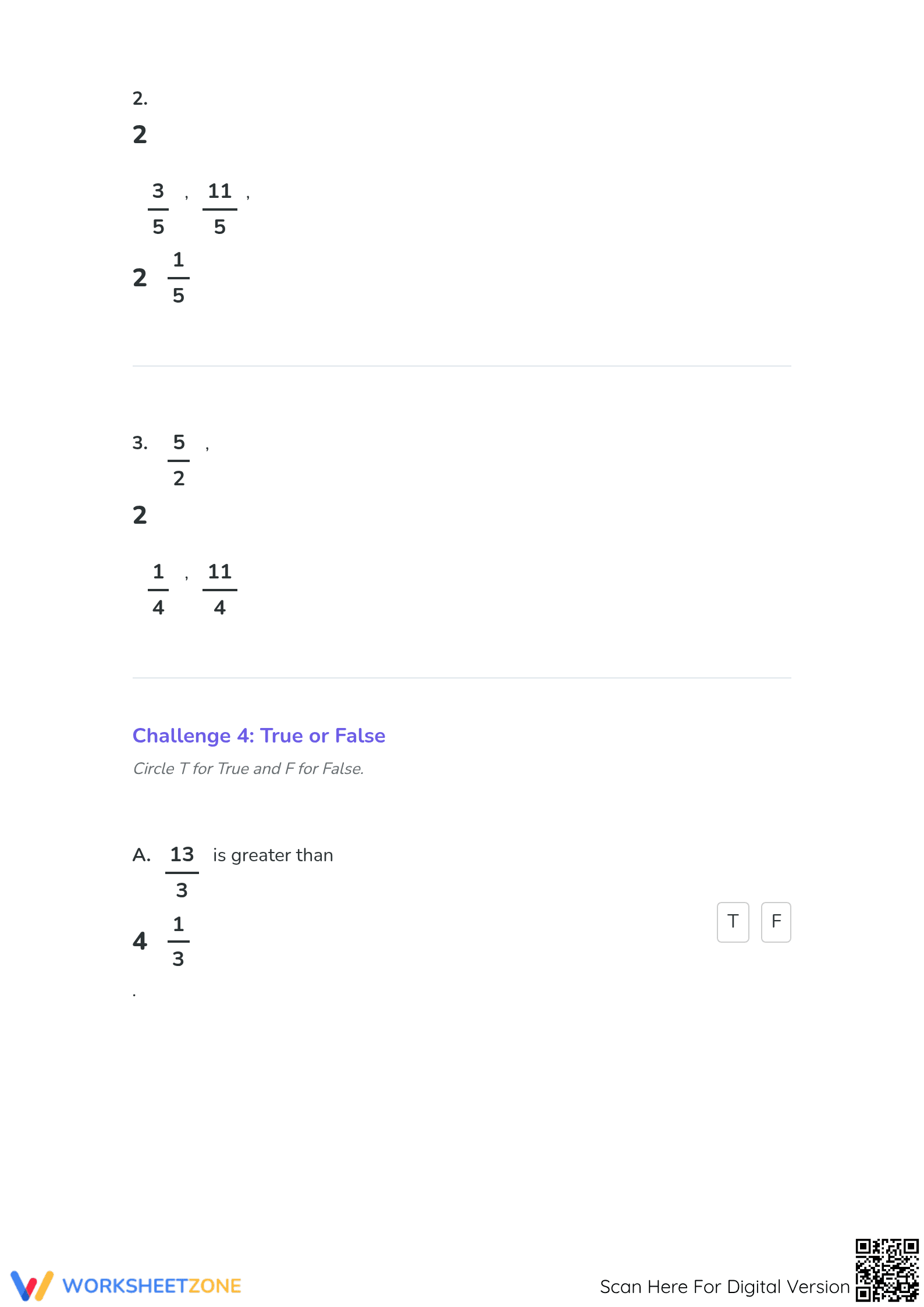
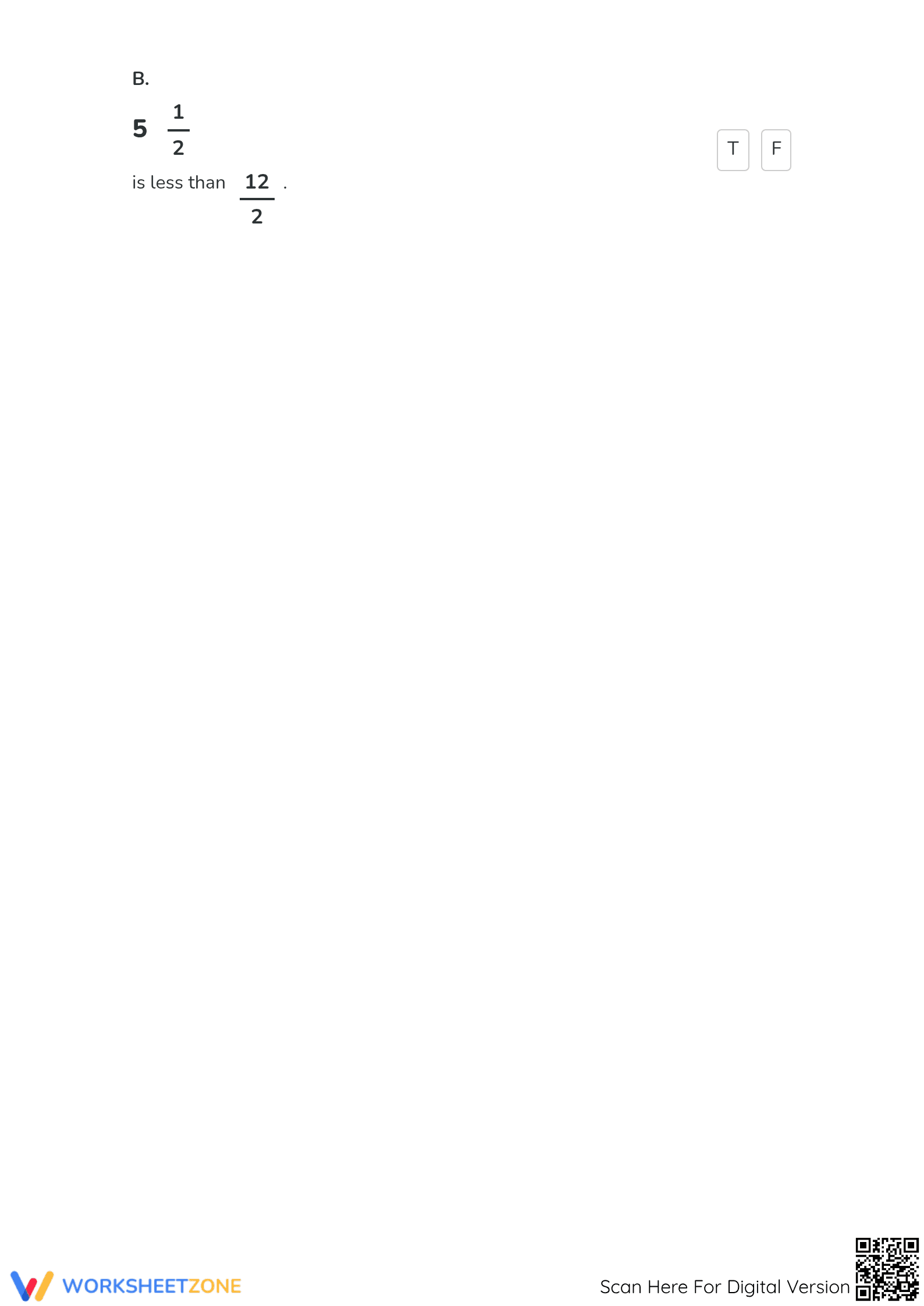

Essential Mixed and Improper Fractions Comparison Worksheet
Paste this activity's link or code into your existing LMS (Google Classroom, Canvas, Teams, Schoology, Moodle, etc.).
Students can open and work on the activity right away, with no student login required.
You'll still be able to track student progress and results from your teacher account.
This Grade 4 Math worksheet provides essential practice for students learning to compare and order simple, improper, and mixed fractions. By mastering these conversions and comparisons, students develop a deep conceptual understanding of fractional values on a number line. This resource ensures students can confidently evaluate different fraction formats, a critical step toward algebraic readiness.
At a Glance
- Grade: 4 · Subject: Math (Fractions)
- Standard:
CCSS.MATH.CONTENT.4.NF.A.2— Compare two fractions with different numerators and different denominators by creating common denominators- Skill Focus: Mixed and Improper Fraction Comparison
- Format: 4 pages · 17 problems · Answer key included · PDF
- Best For: Fraction revision and independent practice
- Time: 25–35 minutes
This comprehensive 4-page PDF set includes 17 structured problems divided into four progressive "Challenges." Students move from comparing basic mixed numbers to evaluating large improper fractions against mixed numbers. The worksheet includes a visual number line as a scaffold, a dedicated section for ordering multiple values from smallest to largest, and a concluding True/False assessment. Answer key included.
The zero-prep workflow allows teachers to implement this resource in under two minutes total. Step one: Print the four-page PDF (30 seconds). Step two: Distribute the sets to students for independent work (30 seconds). Step three: Review the Challenge answers using the included key (1 minute). This streamlined process makes the worksheet an ideal sub-plan for emergency absences or a reliable last-minute revision activity.
Standards Alignment
The primary focus is `CCSS.MATH.CONTENT.4.NF.A.2`, which requires students to compare two fractions with different numerators and denominators. This resource also supports Grade 5 standards by reinforcing the conversion between improper and mixed numbers necessary for operations. Both standard codes can be copied directly into lesson plans, IEP goals, or district curriculum mapping tools to demonstrate rigorous alignment with national requirements.
How to Use It
Use this worksheet as a summative revision tool after completing a unit on fraction conversions. It serves as an excellent "Plan B" sub-plan because it is self-contained and requires no teacher intervention. During independent work time, observe whether students are finding common denominators or converting mixed numbers to improper fractions to solve the "Mixed vs Improper" challenge. This observation provides immediate formative data on their preferred strategy.
Who It's For
This resource is designed for Grade 4 and Grade 5 students who are refining their understanding of non-unit fractions. It is particularly effective for students requiring extra practice with larger values or those preparing for standardized testing. Pair this worksheet with a physical number line or fraction tiles for students who benefit from concrete representations before transitioning to the abstract comparisons provided here.
The ability to compare varied fraction formats, including mixed and improper fractions, is a cornerstone of middle school mathematics as defined by `CCSS.MATH.CONTENT.4.NF.A.2`. According to the RAND AIRS 2024 report, students who achieve early proficiency in fraction equivalence and comparison demonstrate significantly higher success rates in introductory algebra. This 4-page worksheet addresses this need by providing 17 focused tasks that require students to convert and evaluate values across different representations. Research from Fisher & Frey (2014) emphasizes that a gradual release of responsibility—moving from scaffolded "Mixed vs Mixed" tasks to independent "Ordering" challenges—builds the cognitive persistence required for complex problem-solving. By integrating visual number line cues with abstract comparison problems, this resource aligns with best practices for multi-modal mathematical instruction. Educators can utilize these tasks to identify specific misconceptions regarding numerator-denominator relationships before advancing to fractional operations.


