


























Views
Downloads
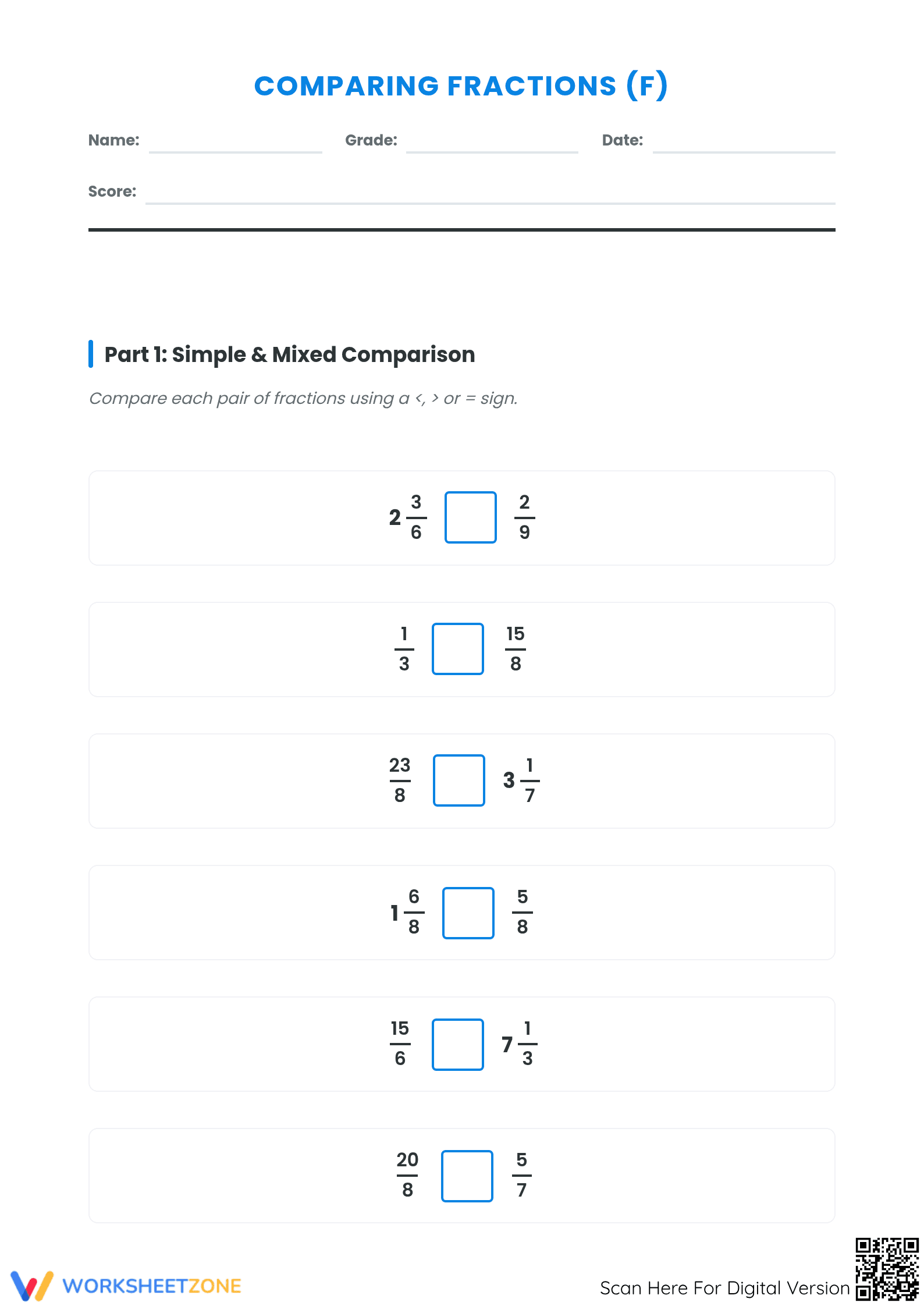
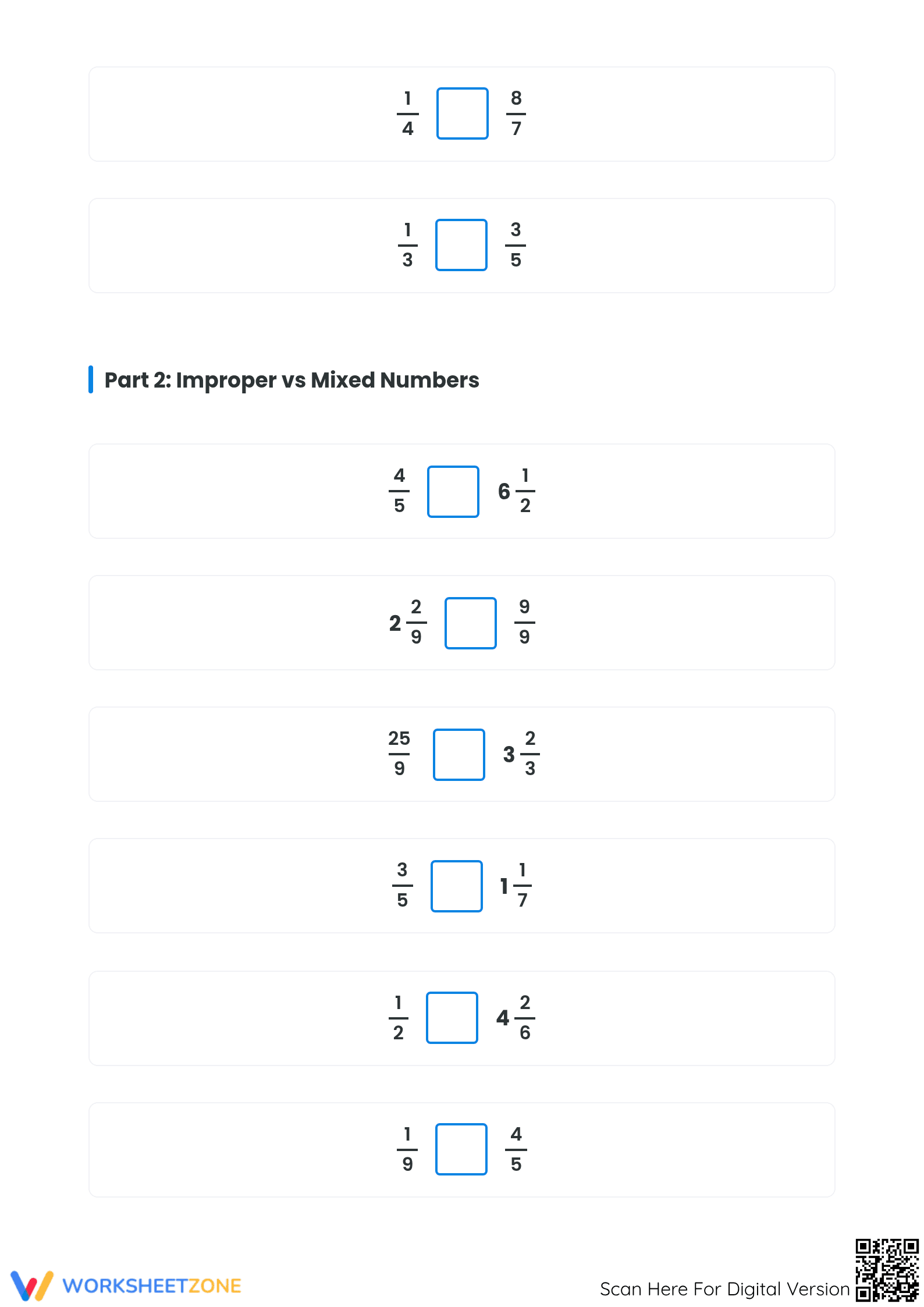
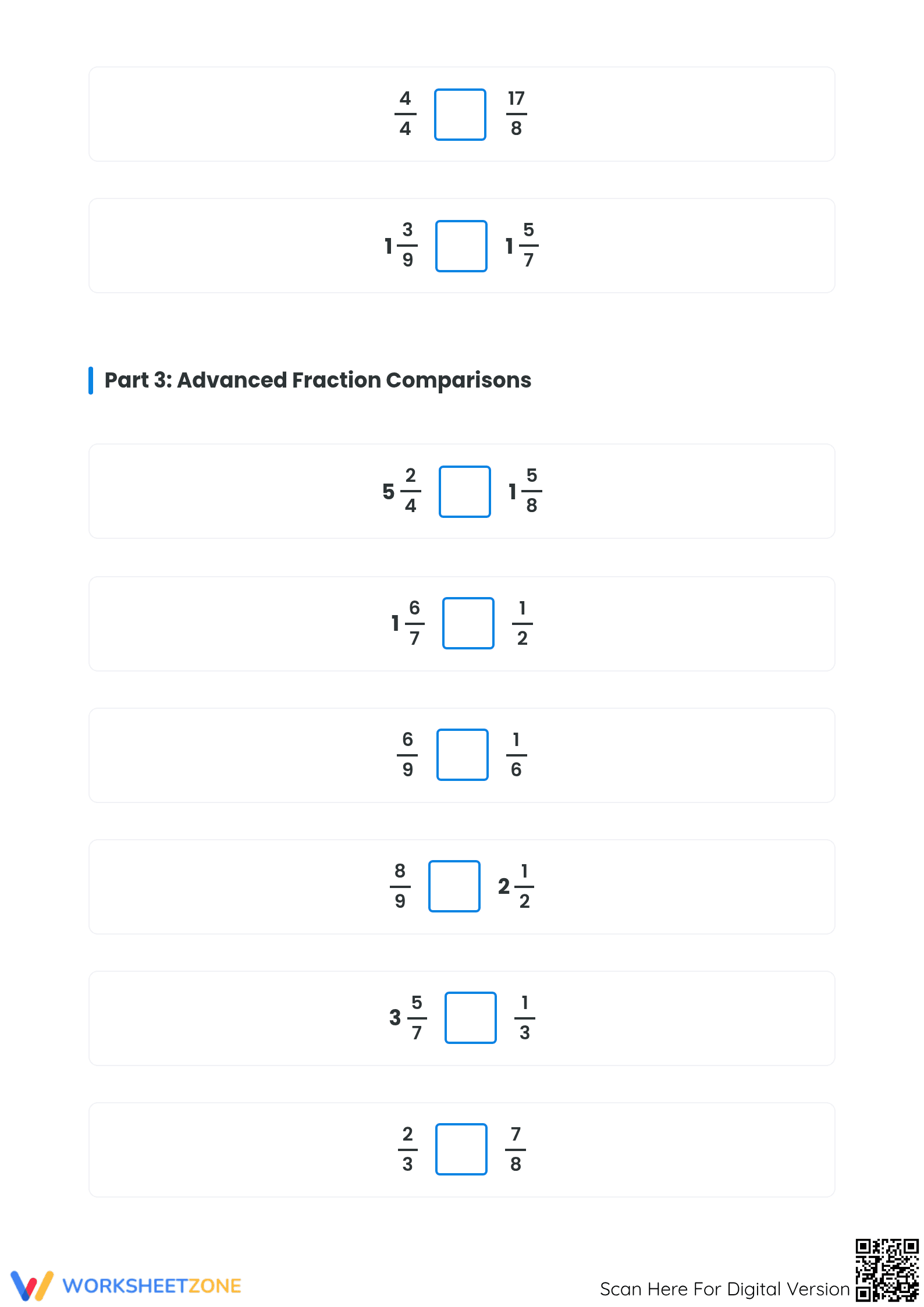
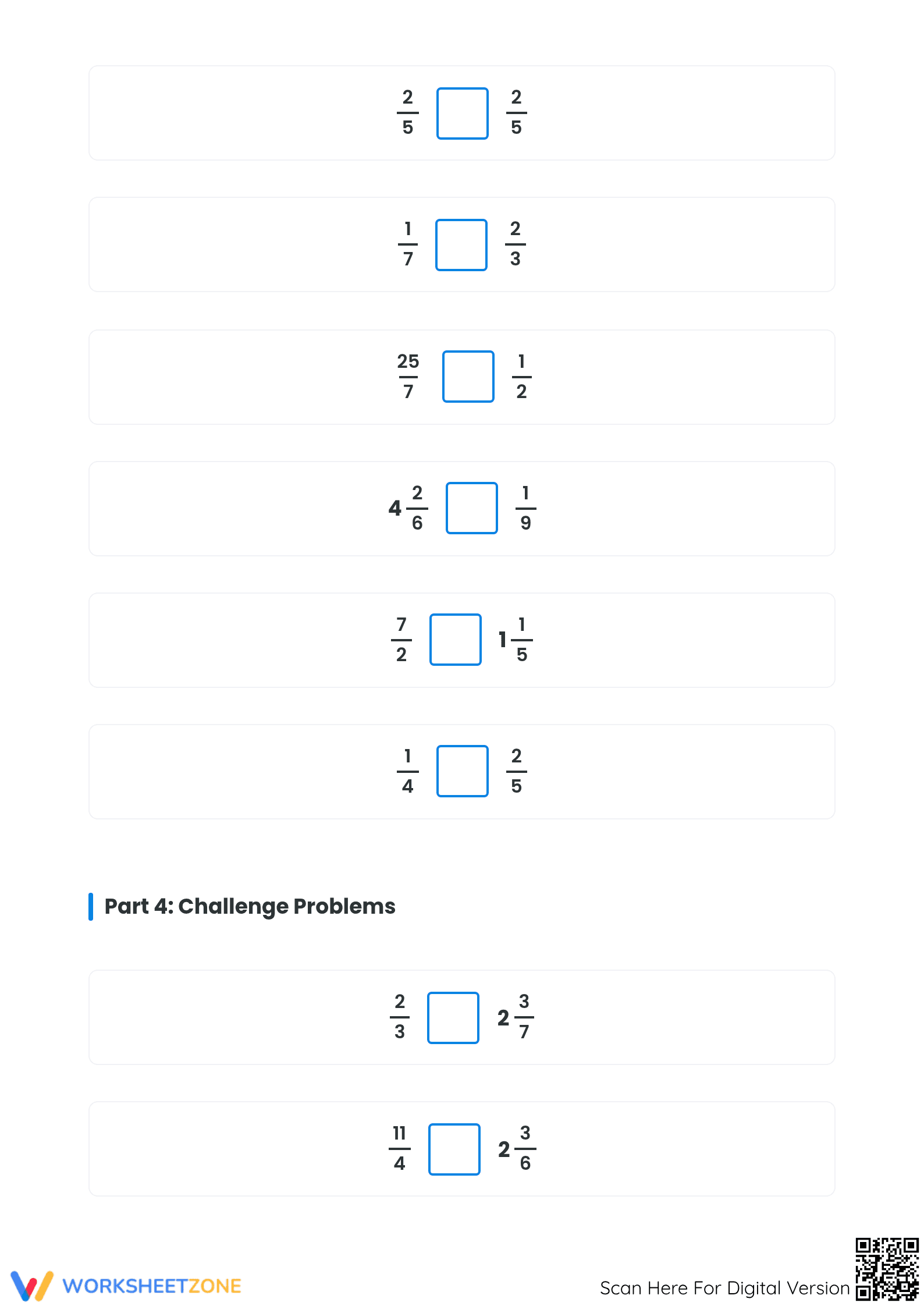
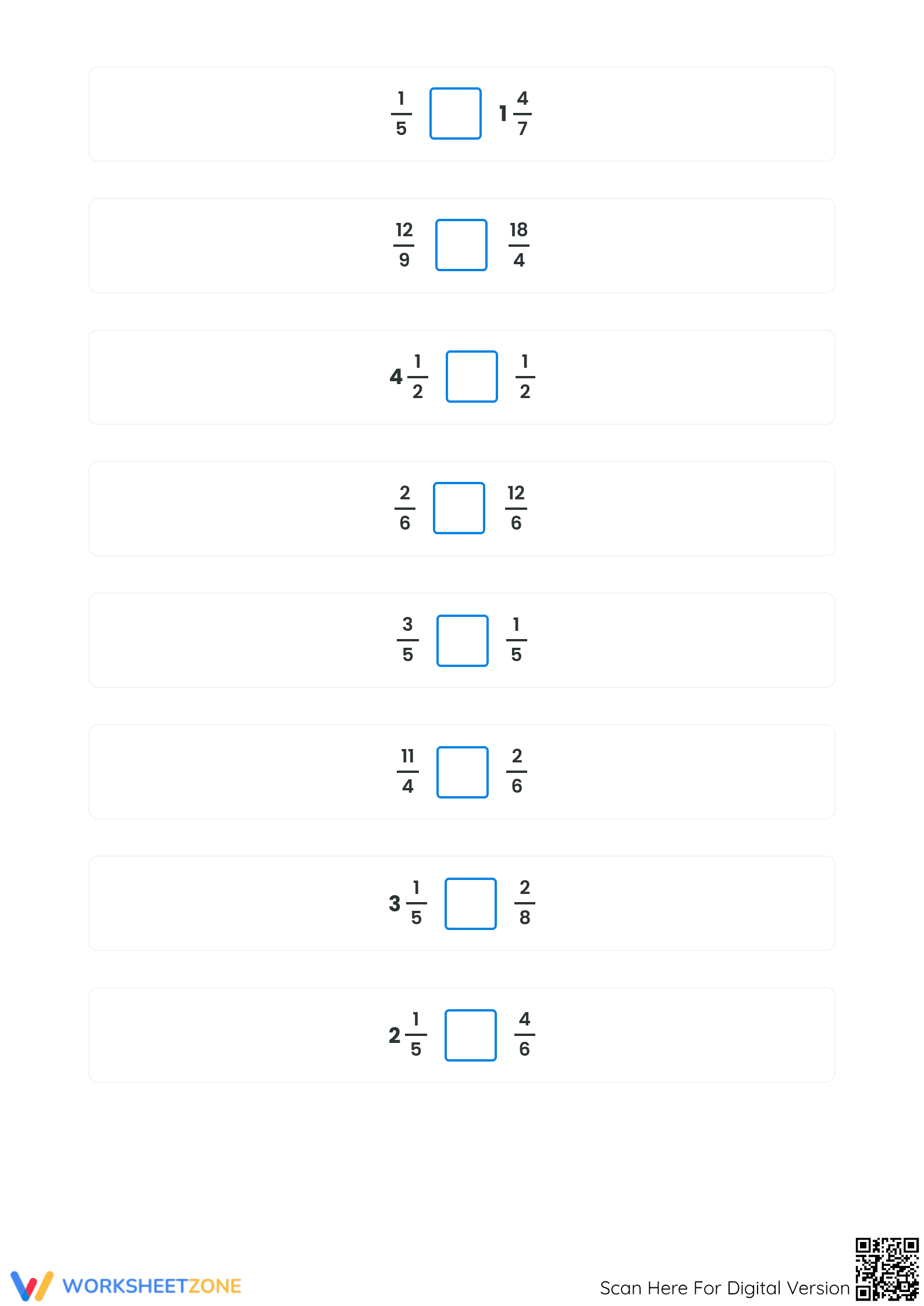

Essential Comparing Fractions Worksheet: Simple to Mixed
Paste this activity's link or code into your existing LMS (Google Classroom, Canvas, Teams, Schoology, Moodle, etc.).
Students can open and work on the activity right away, with no student login required.
You'll still be able to track student progress and results from your teacher account.
Master the complexities of fractional relationships with this comprehensive set of comparison worksheets. Designed for upper elementary students, these exercises guide learners through the essential process of evaluating simple, improper, and mixed numbers. By identifying common denominators or using benchmark fractions, students develop the mathematical fluency required for advanced rational number operations and algebraic readiness.
At a Glance
- Grade: 4–5 · Subject: Math
- Standard:
CCSS.MATH.CONTENT.4.NF.A.2— Compare two fractions with different numerators and denominators using symbols- Skill Focus: Fraction Comparison & Equivalence
- Format: 5 pages · 42 problems · Answer key included · PDF
- Best For: Independent practice and skills revision
- Time: 30–45 minutes
This five-page PDF provides 42 structured tasks divided into four progressive sections: Simple & Mixed Comparison, Improper vs. Mixed Numbers, Advanced Comparisons, and Challenge Problems. The clean layout features large comparison boxes and clear typography to reduce cognitive load. A full answer key is provided, ensuring that students receive immediate feedback on their mathematical reasoning and accuracy across every problem type.
The zero-prep workflow is optimized for busy educators in three simple steps. First, print the desired number of copies (10 seconds). Second, distribute the worksheets for independent or small-group work (1 minute). Finally, use the included answer key for rapid grading or student self-correction (5 minutes). With a total teacher prep time of under 2 minutes, this resource is an ideal choice for emergency sub plans or last-minute instructional shifts.
Aligned strictly to CCSS.MATH.CONTENT.4.NF.A.2, students must compare two fractions with different numerators and different denominators, e.g., by creating common denominators or numerators, or by comparing to a benchmark fraction such as 1/2. They record the results of comparisons with symbols >, =, or <, and justify the conclusions. This standard code can be copied directly into lesson plans, IEP goals, or district curriculum mapping tools to ensure instructional compliance.
Integrate this resource as a mid-unit formative assessment to gauge student understanding before moving into fraction addition and subtraction. For a collaborative use case, have students work in pairs to verbalize their comparison strategies before writing the symbols. Expected completion time ranges from 30 to 45 minutes depending on the student's familiarity with finding common denominators. Observe if students rely on cross-multiplication or benchmark reasoning during the challenge section.
This resource is specifically designed for Grade 4 and 5 students who are transitioning from basic fraction concepts to more complex rational number comparisons. It provides necessary scaffolding for English Language Learners and students with IEPs through the use of clear visual structures. For a high-impact lesson, pair this worksheet with a visual fraction wall or a set of physical fraction tiles to help concrete learners bridge the gap to abstract symbolic comparison.
According to a ScienceDirect TpT Analysis, structured practice in fractional comparison is a critical indicator of future success in middle school algebra and proportional reasoning. This resource addresses the common misconception that larger denominators always represent larger values by providing 42 targeted comparisons across simple, improper, and mixed forms. By standardizing the format and focusing on CCSS.MATH.CONTENT.4.NF.A.2, the worksheet ensures that students build the mental models necessary for evaluating magnitude without relying solely on procedural tricks. Research in mathematical cognition suggests that repeated exposure to varied fractional forms, as provided in this five-page set, strengthens the internal number line and improves overall numerical estimation skills. This makes the resource an essential component of any evidence-based elementary math curriculum focused on long-term mastery and retention of rational number properties.


