


























Views
Downloads
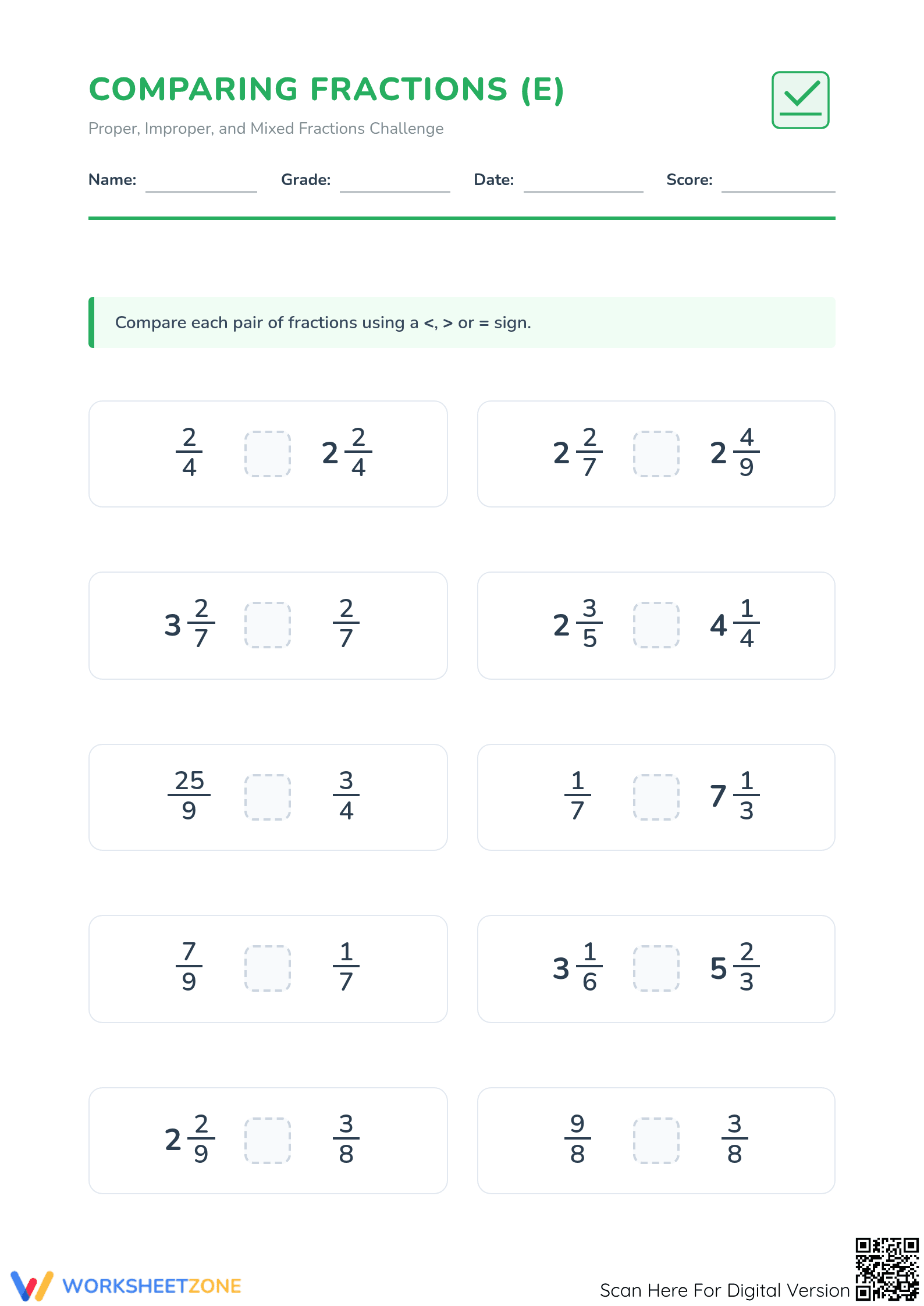
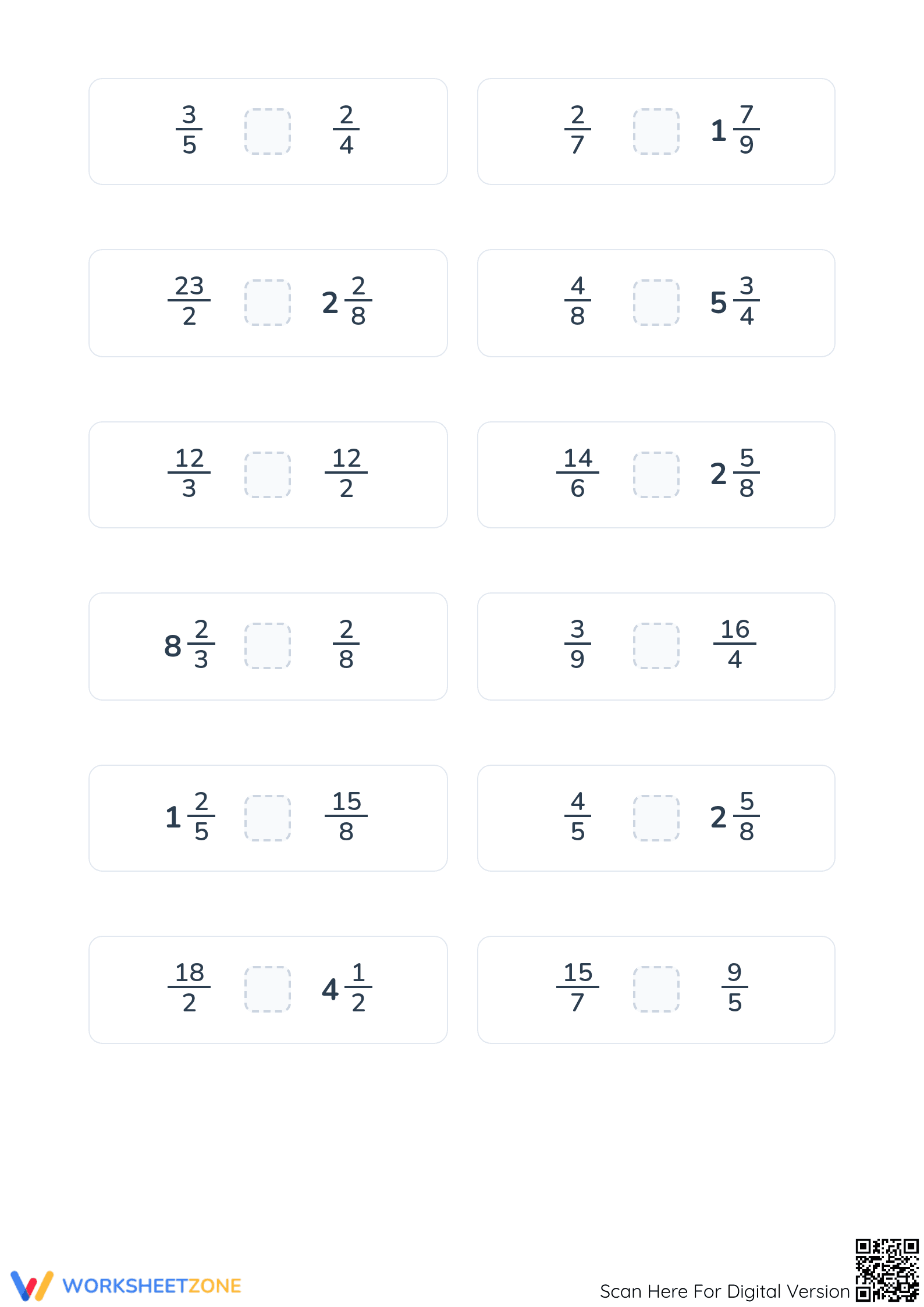
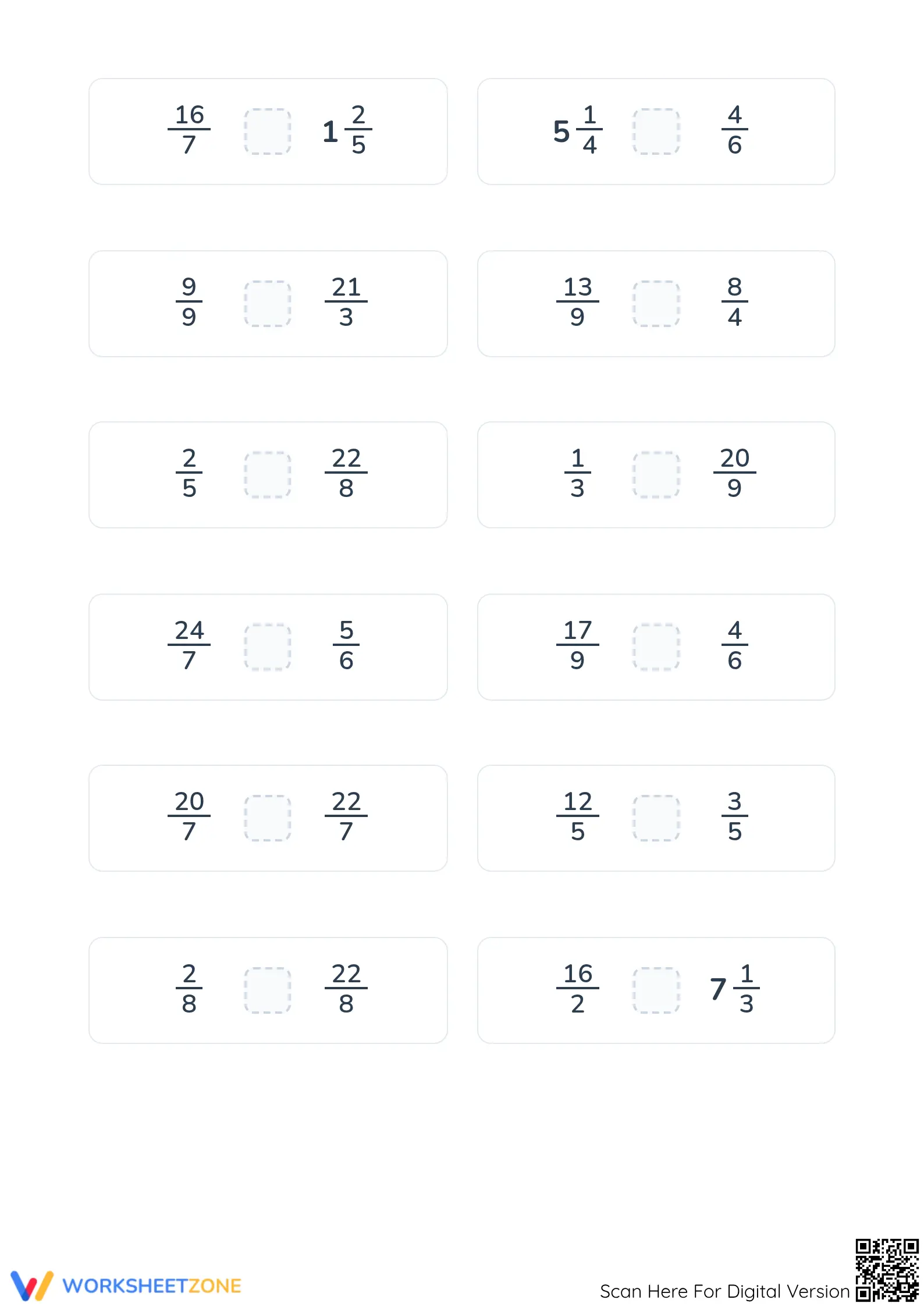
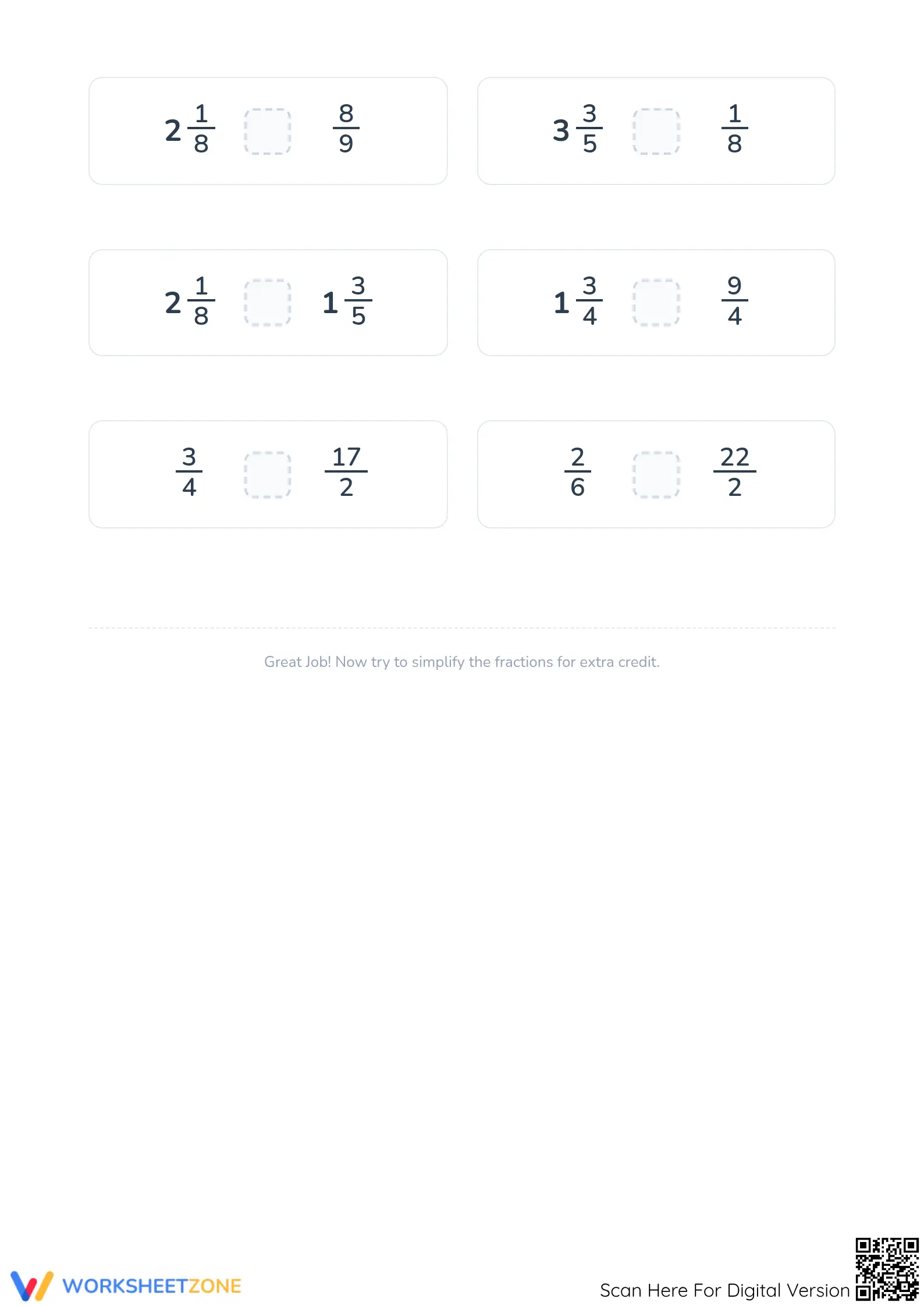

Printable Comparing Fractions Challenge: Improper & Mixed
Paste this activity's link or code into your existing LMS (Google Classroom, Canvas, Teams, Schoology, Moodle, etc.).
Students can open and work on the activity right away, with no student login required.
You'll still be able to track student progress and results from your teacher account.
This comprehensive fraction pack empowers students to master comparing proper, improper, and mixed fractions through rigorous practice. By evaluating numerators and denominators across forty problems, learners build the essential fluency needed to order rational numbers. This printable resource ensures immediate student engagement and measurable mathematical growth.
At a Glance
- Grade: 4–6 · Subject: Math: Fractions
- Standard:
CCSS.MATH.CONTENT.4.NF.A.2— Compare two fractions with different numerators and different denominators- Skill Focus: Comparing improper and mixed fractions
- Format: 4 pages · 40 problems · Answer key included · PDF
- Best For: Fraction review or sub plan resource
- Time: 30–45 minutes
What's Inside
Students will encounter a robust four-page challenge containing forty distinct comparison tasks. The layout provides clear boxes for inequality symbols, facilitating easy review. Problems span various denominators, requiring students to apply benchmark reasoning or common denominator conversions. A full answer key is provided, allowing for rapid grading or student-led self-correction, which is ideal for independent work stations.
Zero-Prep Workflow
- Print: Print the four-page PDF set for each student in under 30 seconds.
- Distribute: Hand out the materials along with a quick reminder of benchmark fraction strategies or conversion methods.
- Review: Use the included answer key to review work in real-time or as a cumulative assessment of the unit.
This streamlined process makes the worksheet an excellent candidate for emergency sub plans or last-minute lesson extensions during your math block.
Standards Alignment
The primary focus is `CCSS.MATH.CONTENT.4.NF.A.2`, which requires students to compare two fractions with different numerators and denominators. This resource provides the volume of practice necessary for students to internalize these logical steps. This standard code can be copied directly into lesson plans, IEP goals, or district curriculum mapping tools to ensure alignment with rigorous state and national frameworks.
How to Use It
Use these pages as a "Fast Finisher" packet during your fractions unit to keep students engaged while providing small-group support. Alternatively, assign one page per day as a formative assessment to gauge progress in comparing mixed numbers. A useful tip for teachers is to observe if students are converting improper fractions to mixed numbers; this diagnostic insight reveals their level of conceptual understanding regarding complex fraction values and relative magnitude.
Who It's For
This resource is designed for Grade 4 through Grade 6 students ready for higher-level comparisons. It is effective for learners requiring additional repetition to solidify the relationship between improper fractions and mixed number equivalents. Pair this with a visual fraction wall or circular manipulatives for students needing concrete support during independent practice.
Mathematical proficiency in middle elementary grades relies heavily on a student's ability to manipulate and compare rational numbers. The "Comparing Fractions (E) Challenge" addresses this developmental hurdle by providing forty targeted exercises that bridge the gap between simple identification and complex reasoning. According to a RAND AIRS 2024 analysis, high-volume practice in comparing mixed and improper fractions is a leading indicator for success in subsequent ratios and proportions units. By requiring students to evaluate the relative size of improper fractions against mixed numbers, this resource forces the mental retrieval of multiplication facts, reinforcing foundational numeracy. This worksheet aligns with the "Deep Practice" model, ensuring that the CCSS.MATH.CONTENT.4.NF.A.2 skill becomes an automated part of the student's toolkit, allowing for advanced problem-solving in future grades.


