


























Views
Downloads

Comparing Fractions Worksheet | Essential Grade 4-5 Math
Paste this activity's link or code into your existing LMS (Google Classroom, Canvas, Teams, Schoology, Moodle, etc.).
Students can open and work on the activity right away, with no student login required.
You'll still be able to track student progress and results from your teacher account.
Students will master the ability to evaluate the relative size of different fraction types with this comprehensive practice set. This resource focuses on the conceptual understanding and procedural fluency required to compare simple, improper, and mixed fractions. By moving from visual representations to abstract calculations, learners develop a robust sense of fraction magnitude and equivalence.
At a Glance
- Grade: 4–5 · Subject: Math
- Standard:
CCSS.MATH.CONTENT.4.NF.A.2— Compare two fractions with different numerators and denominators- Skill Focus: Comparing Improper and Mixed Fractions
- Format: 5 pages · 40 problems · Answer key included · PDF
- Best For: Mastery of fraction magnitude comparison
- Time: 30–45 minutes
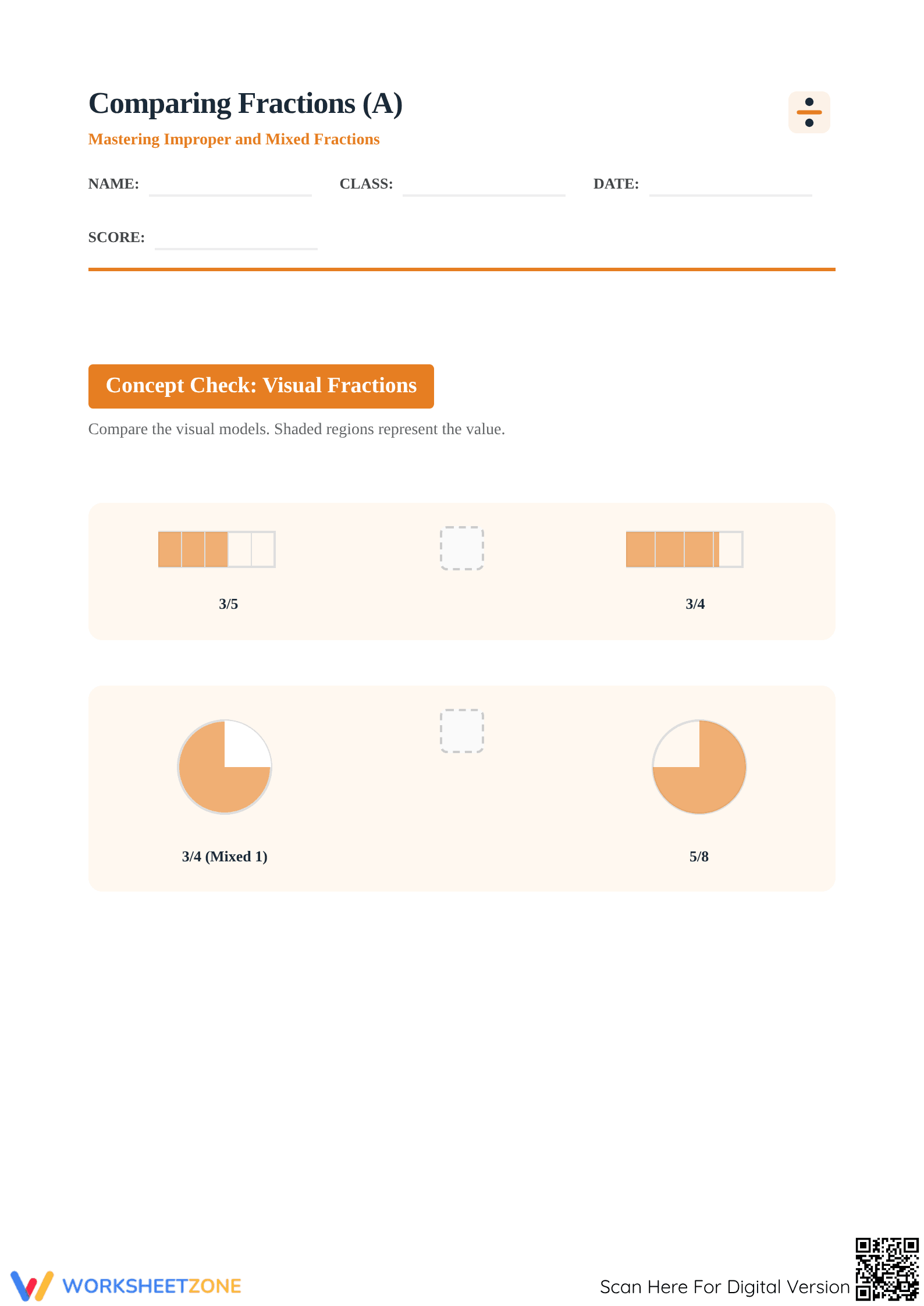
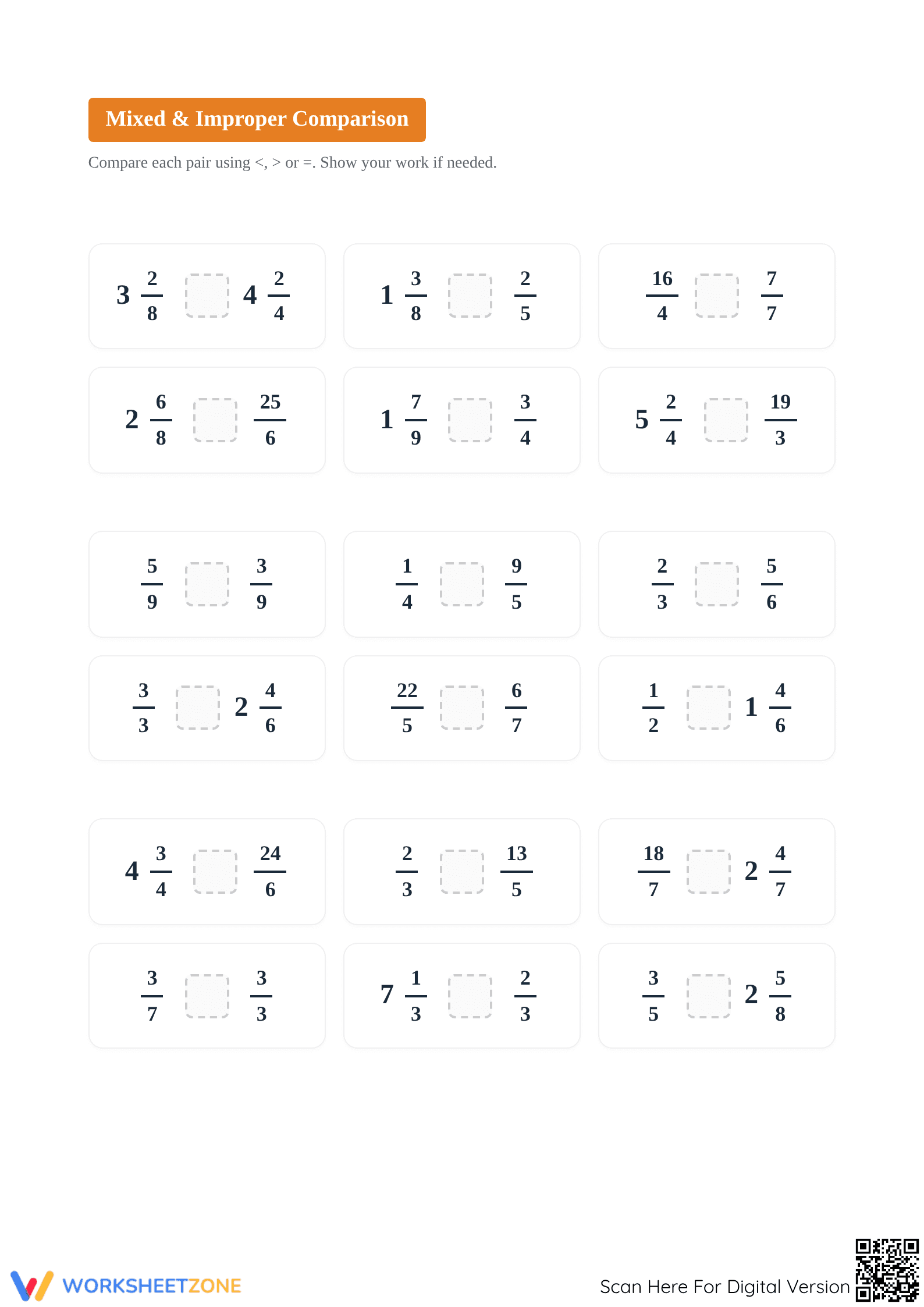
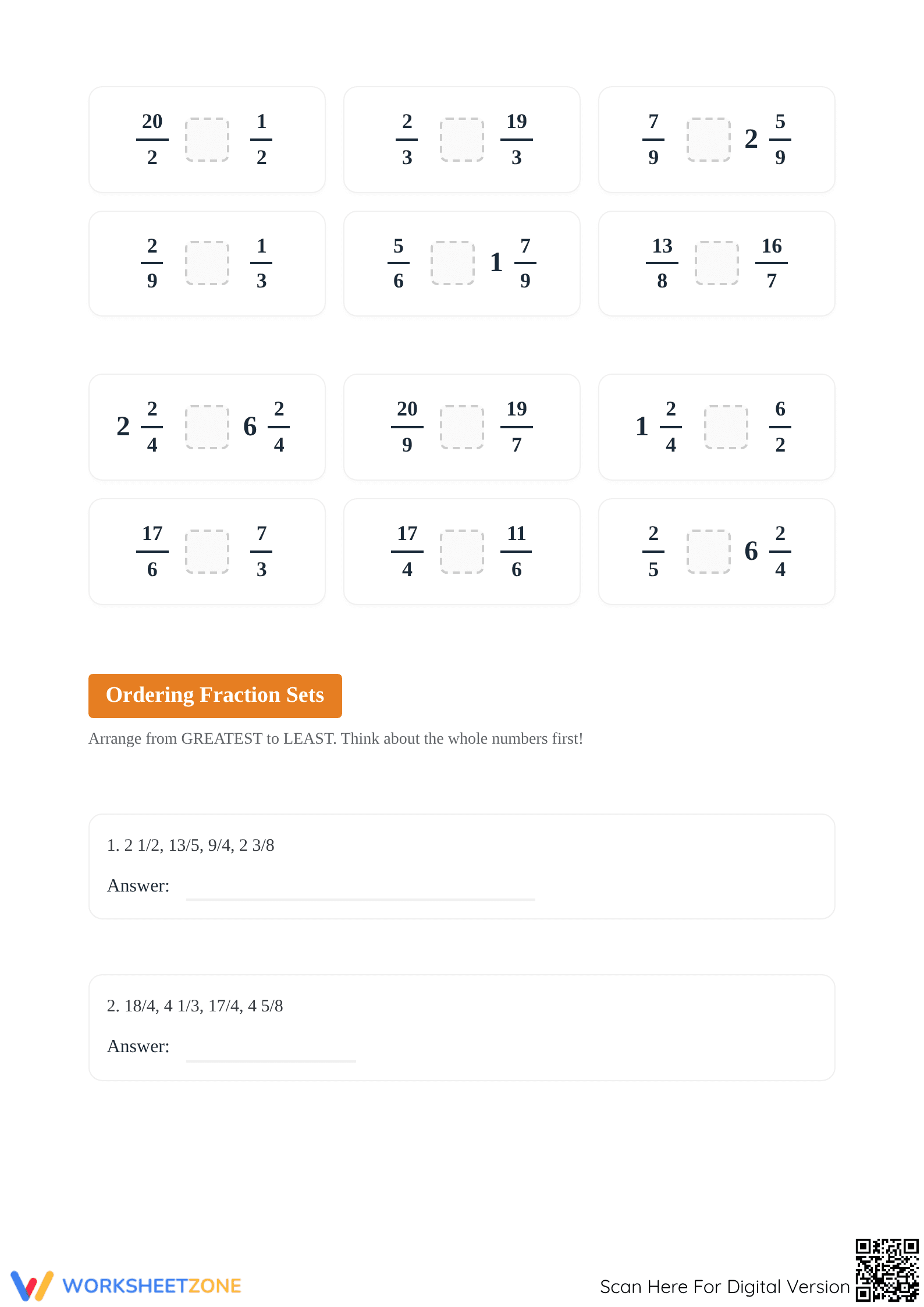
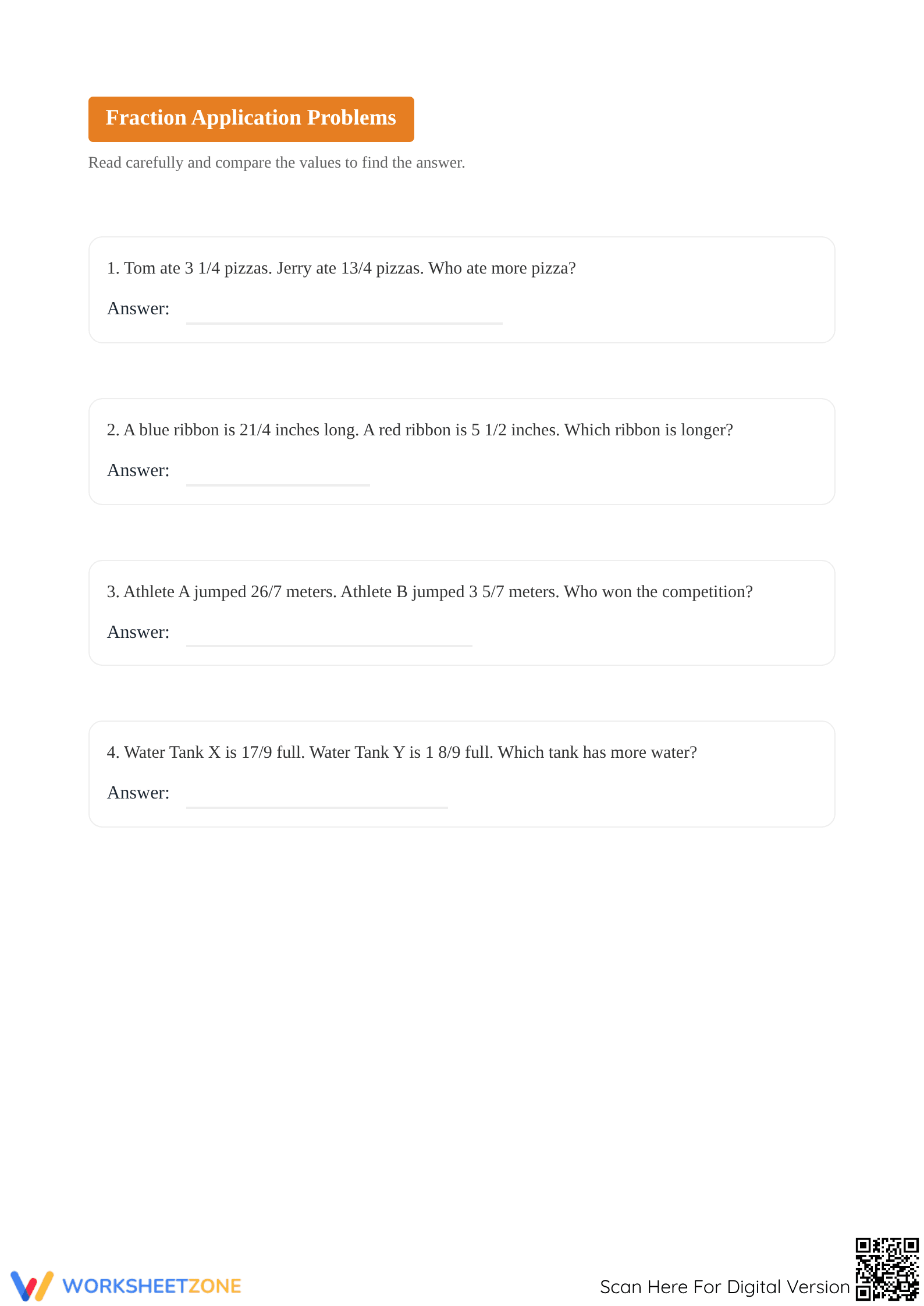
This 5-page worksheet set contains 40 structured problems designed to build confidence in comparing complex fraction pairs. The packet includes a variety of task types, including visual shaded models, numerical comparison expressions using symbols, ordering sets from greatest to least, and multi-step word problems. A full answer key is provided to ensure quick grading and immediate student feedback.
Skill Progression
- Guided Practice: Page 1 uses visual shaded models to build benchmark intuition and concrete comparison skills.
- Supported Practice: Pages 2 and 3 provide 30 comparison expressions and ordering tasks to develop numerical fluency.
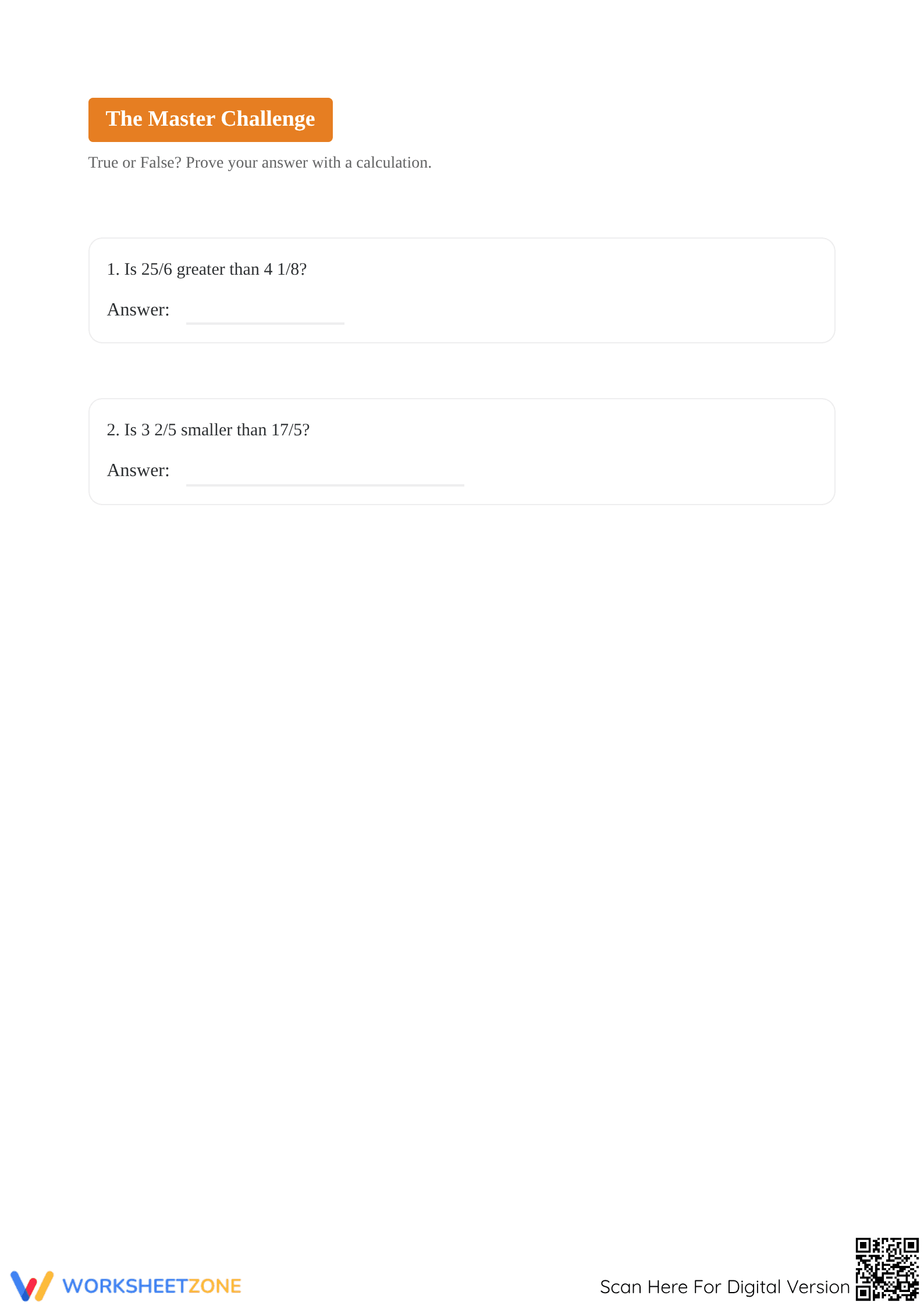
- Independent Practice: Pages 4 and 5 challenge students with word problems and true-false reasoning tasks for higher-order application.
This sequence ensures a gradual-release transition from basic identification to independent mathematical mastery.
Standards Alignment
This resource is aligned to CCSS.MATH.CONTENT.4.NF.A.2: Compare two fractions with different numerators and different denominators by creating common denominators or comparing to a benchmark fraction. The problems specifically target the ability to record results with symbols >, =, or < and justify conclusions. This standard code can be copied directly into lesson plans, IEP goals, or district curriculum mapping tools.
How to Use It
Use this packet as a primary practice tool after direct instruction on converting mixed numbers to improper fractions. For formative assessment, observe students as they work through the ordering tasks on Page 3 to identify misconceptions regarding whole-number magnitude. The set is also ideal for small-group remediation or as a comprehensive homework assignment over a two-day period, requiring approximately 40 minutes for complete mastery.
Who It's For
This resource is designed for Grade 4 and 5 students who are transitioning from basic fraction identification to complex comparisons. It provides necessary scaffolding for struggling learners through visual aids while offering a "Master Challenge" for advanced students. It pairs naturally with fraction tiles or virtual manipulatives for a multi-sensory instructional experience.
According to the NAEP 2024 Mathematics Framework, the ability to compare fraction magnitudes is a critical predictor of later success in algebra and proportional reasoning. This resource targets standard CCSS.MATH.CONTENT.4.NF.A.2, requiring students to evaluate the relative size of simple, improper, and mixed fractions using benchmark comparison and common denominators. By integrating visual models with abstract numerical expressions and contextualized word problems, the worksheet facilitates a comprehensive understanding of fraction equivalence and inequality. Research by Fisher & Frey (2014) highlights that such multi-modal approaches assist in moving students from concrete representations to abstract mathematical mastery. This specific problem set provides 40 opportunities for students to justify their comparisons, ensuring that the conceptual bridge between mixed numbers and improper fractions is solidified through rigorous practice. The inclusion of word problems and a master challenge ensures that students can apply these skills in non-routine contexts, a key requirement for achieving proficiency in mid-elementary mathematics standards.


