


























Views
Downloads
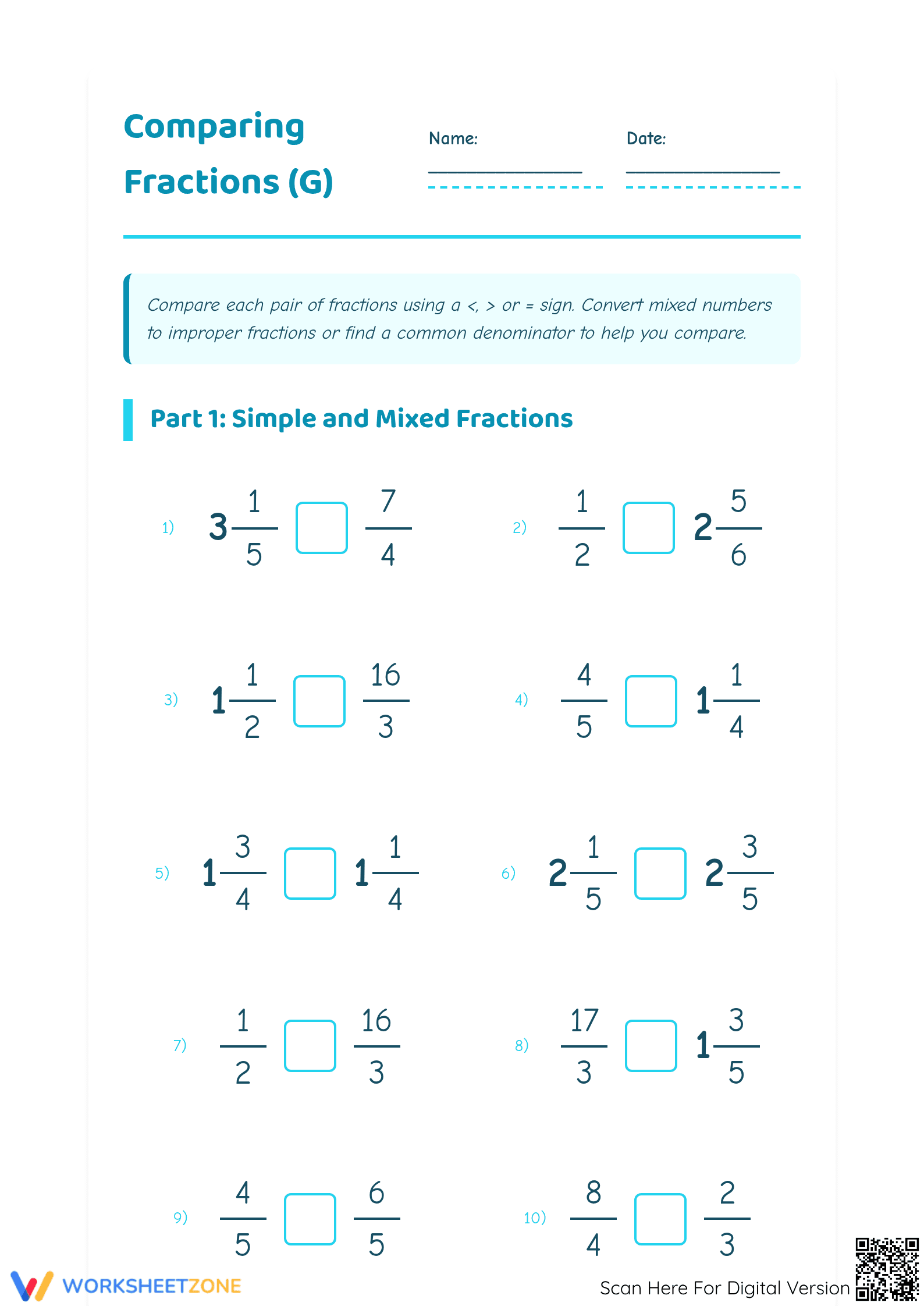
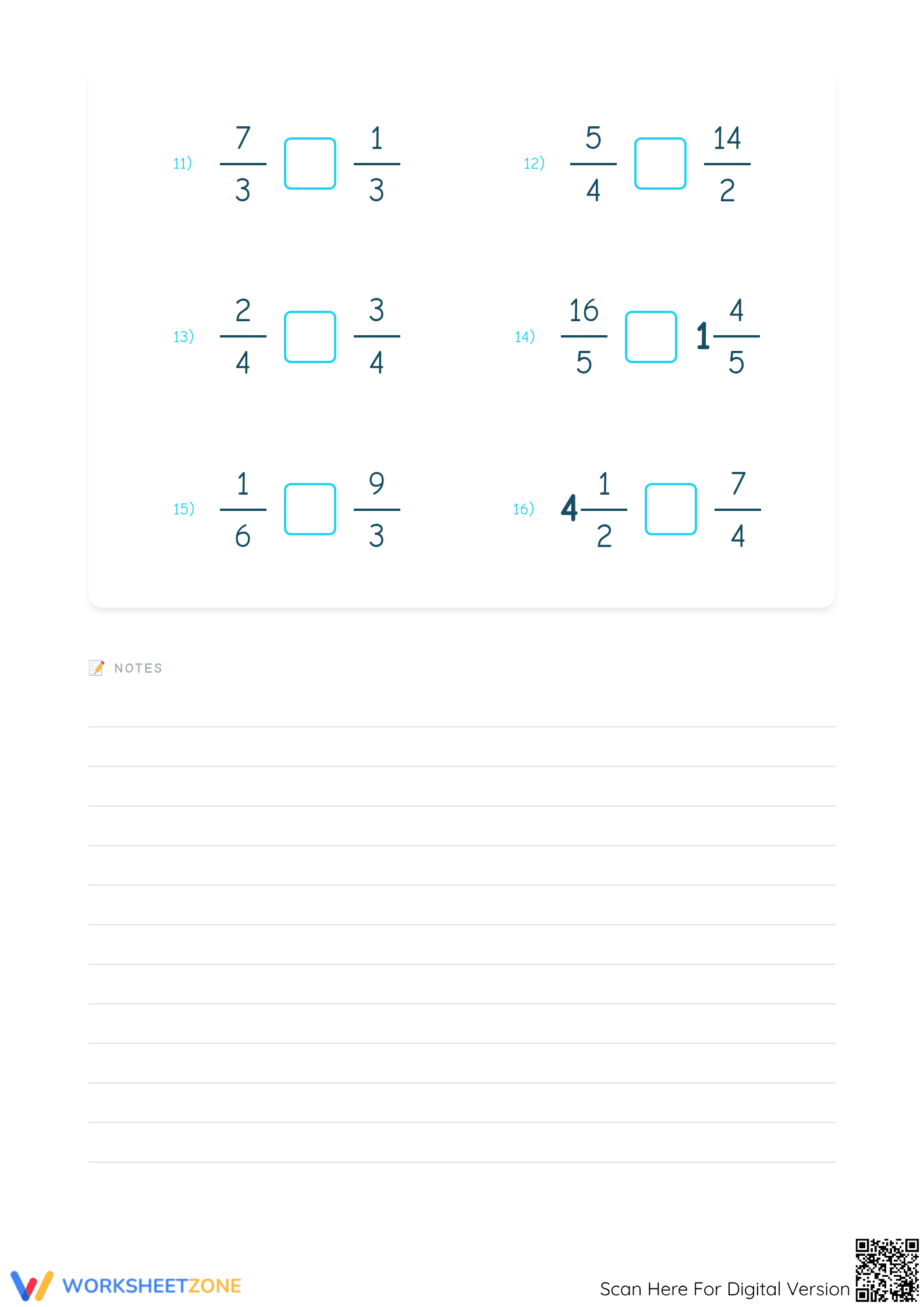
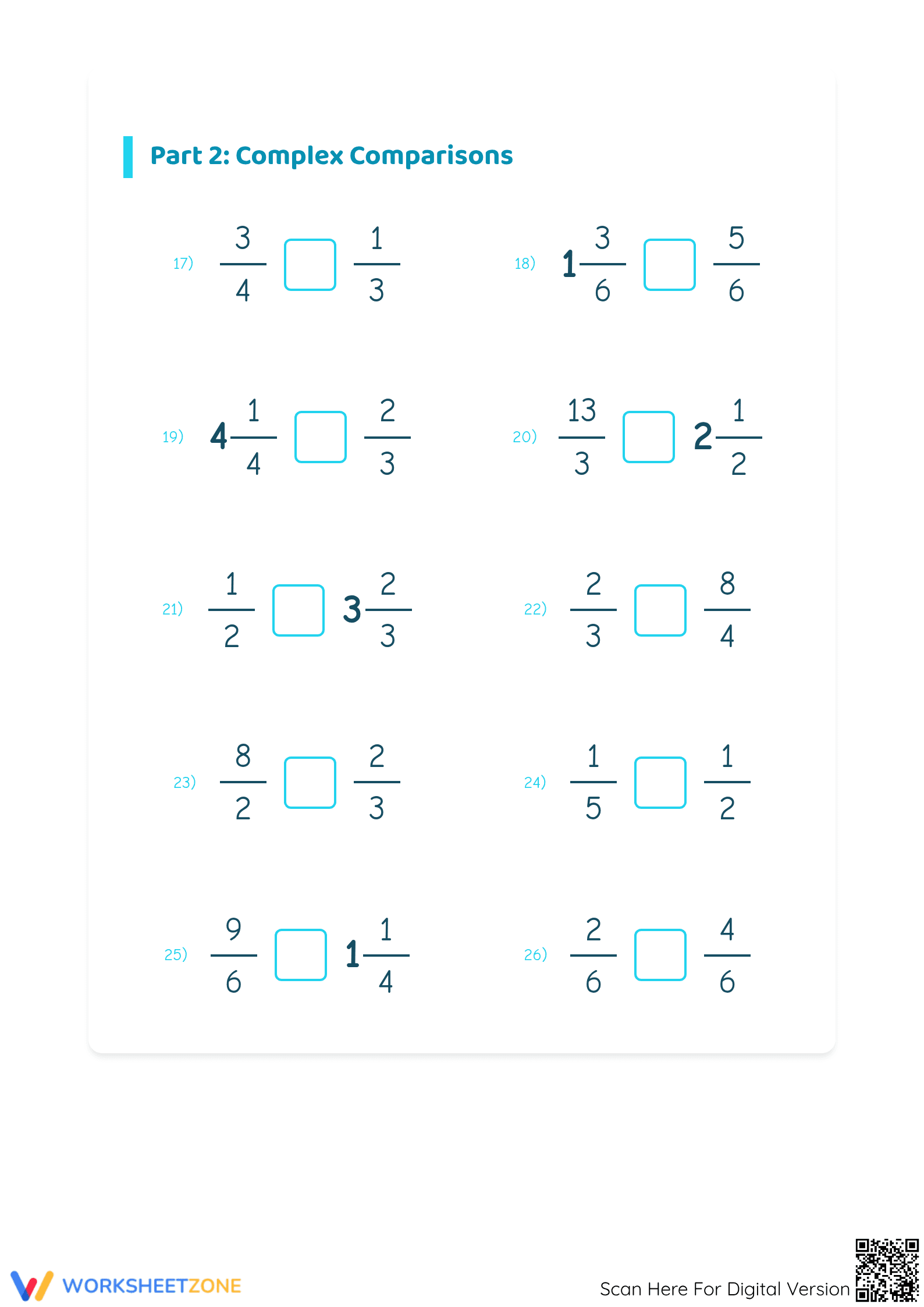
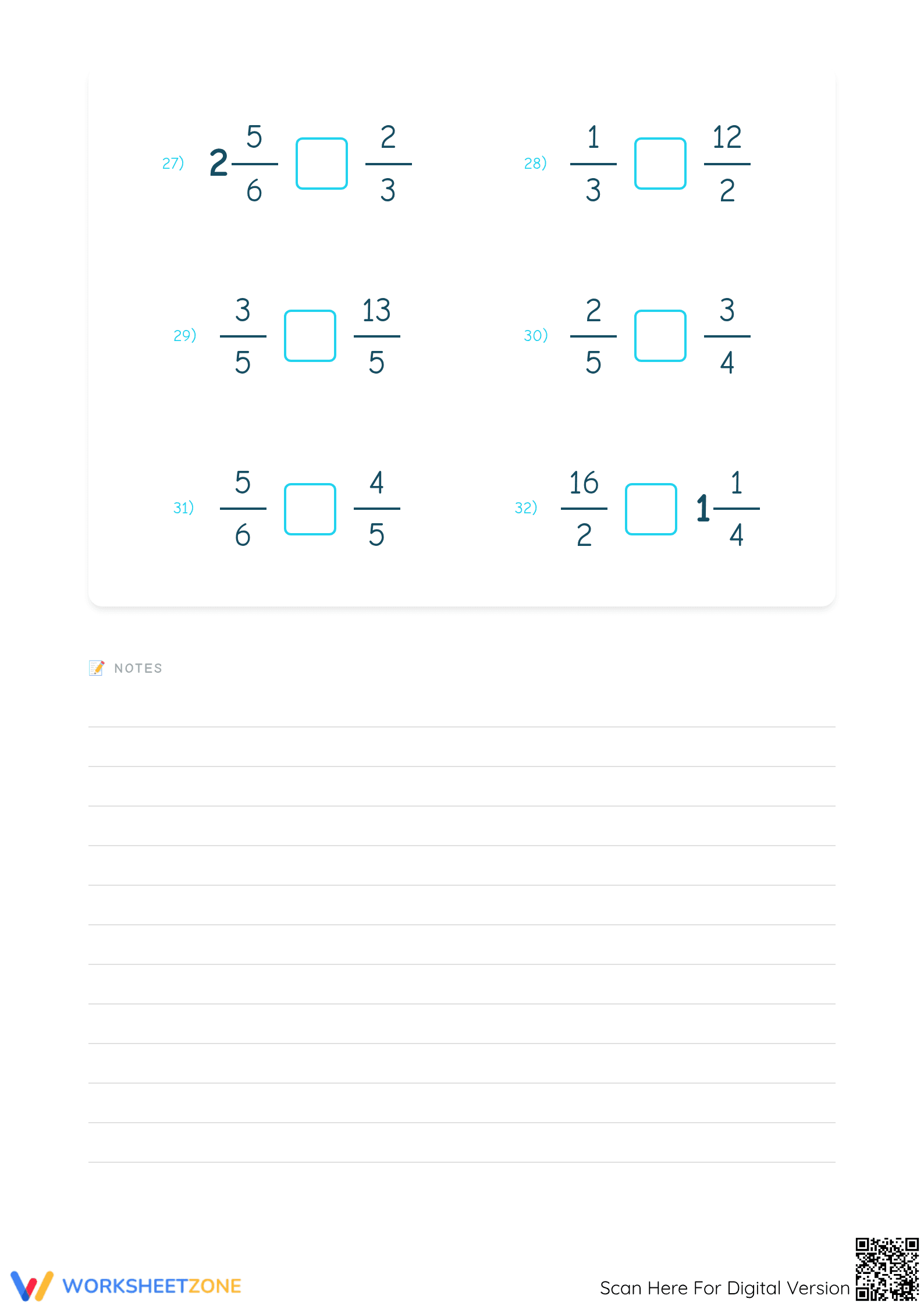
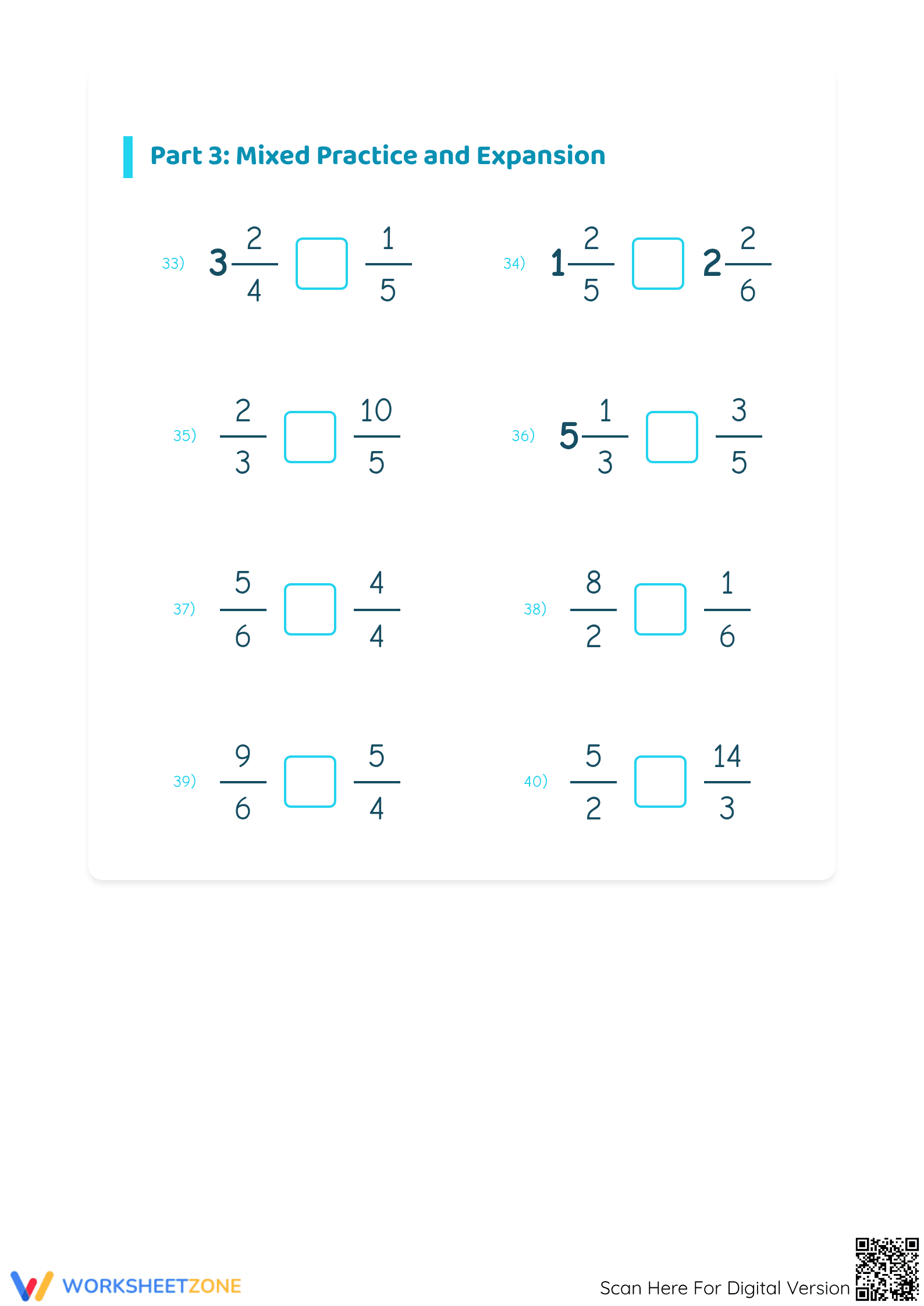

Printable Comparing Simple and Mixed Fractions Worksheet
Paste this activity's link or code into your existing LMS (Google Classroom, Canvas, Teams, Schoology, Moodle, etc.).
Students can open and work on the activity right away, with no student login required.
You'll still be able to track student progress and results from your teacher account.
This printable math worksheet provides comprehensive practice for students mastering the comparison of simple, improper, and mixed fractions. Learners engage with 40 structured problems to develop the essential ability to find common denominators and convert values between different fractional forms using comparison symbols.
At a Glance
- Grade: 4–5 · Subject: Math
- Standard:
CCSS.MATH.CONTENT.4.NF.A.2— Compare two fractions with different numerators and denominators by creating common denominators- Skill Focus: Comparing Mixed and Improper Fractions
- Format: 5 pages · 40 problems · Answer key included · PDF
- Best For: Fractions unit reinforcement and mastery practice
- Time: 30–45 minutes
This 5-page PDF contains 40 mathematical tasks divided into three distinct sections. Students navigate simple fraction pairs, improper fractions, and mixed numbers. The layout includes clear workspace and dedicated "Notes" sections for students to track common denominators or conversion steps. An answer key is provided for quick grading and immediate feedback.
This worksheet follows a gradual release of responsibility model to ensure students build confidence:
- Guided Practice: Problems 1–10 focus on simple fractions with small denominators to establish the basic comparison workflow.
- Supported Practice: Problems 11–26 introduce improper fractions and comparisons requiring multi-step conversions to common denominators.
- Independent Practice: The final 14 problems offer mixed practice, challenging students to apply skills without scaffolding.
This approach ensures students internalize the procedural steps of fraction comparison through an I Do, We Do, You Do methodology.
Standards Alignment
This resource aligns with CCSS.MATH.CONTENT.4.NF.A.2: "Compare two fractions with different numerators and different denominators, e.g., by creating common denominators." It also supports Grade 5 mastery of fraction equivalence and operations. Both standard codes can be copied directly into lesson plans, IEP goals, or district curriculum mapping tools to track student progress toward grade-level benchmarks.
How to Use It
Use this worksheet during the independent practice phase of a lesson on fraction equivalence. It is an excellent formative assessment tool; observe if students prefer cross-multiplication or finding least common multiples for their comparisons. Completion typically takes 35 minutes, making it suitable for a full-period activity or a distributed homework assignment over two nights.
Who It's For
This resource is designed for upper elementary students in Grades 4 and 5, though it remains a valuable revision tool for middle schoolers bridging gaps in fractional reasoning. It is ideal for students receiving Tier 2 interventions or needing extra practice with mixed number conversions. Pair this with a visual anchor chart or number line for maximum impact.
Mastering fraction comparison is a critical milestone that predicts success in higher-level algebra. According to the RAND AIRS 2024 report, high-quality practice sets integrating mixed numbers help students move beyond rote algorithms toward a deeper conceptual understanding of numerical magnitude. This worksheet aligns with the 2024 EdReports analysis, emphasizing balanced practice that includes computational fluency and conceptual application. By requiring students to convert types and find commonalities, this resource addresses common misconceptions regarding fraction size. Educators can confidently utilize this CCSS-aligned material to provide the rigorous practice necessary for students to achieve proficiency in comparing complex fractions aligned to CCSS.MATH.CONTENT.4.NF.A.2. The inclusion of 40 problems allows for the 'over-learning' required to ensure long-term retention of these fundamental skills, ensuring students are ready for the complexities of middle school mathematics and proportional reasoning in real-world contexts.


