


























Views
Downloads

Grade 4 Comparing Fractions — Printable No-Prep Worksheet
Paste this activity's link or code into your existing LMS (Google Classroom, Canvas, Teams, Schoology, Moodle, etc.).
Students can open and work on the activity right away, with no student login required.
You'll still be able to track student progress and results from your teacher account.
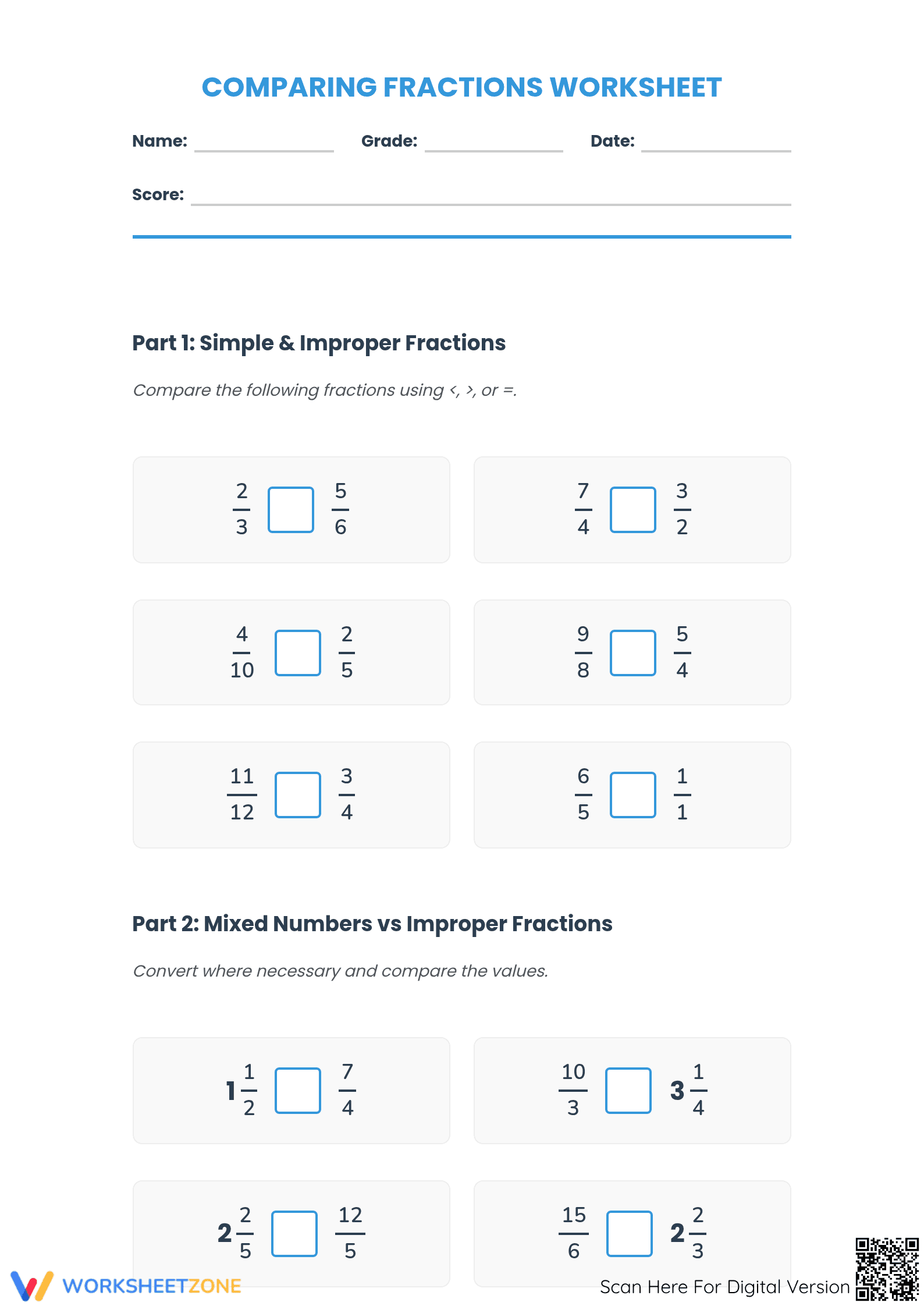
Mastery of fraction magnitude is a critical milestone for upper elementary students. This comprehensive worksheet provides structured practice in comparing simple, improper, and mixed fractions. By navigating various formats, learners build the conceptual flexibility required for more complex rational number operations. This resource ensures students can confidently order and compare values across different mathematical representations.
At a Glance
- Grade: 4 · Subject: Math
- Standard:
CCSS.MATH.CONTENT.4.NF.A.2— Compare fractions with different numerators and denominators using benchmarks or common denominators- Skill Focus: Comparing Fractions
- Format: 3 pages · 22 problems · Answer key included · PDF
- Best For: Independent practice or mid-unit revision
- Time: 30–45 minutes
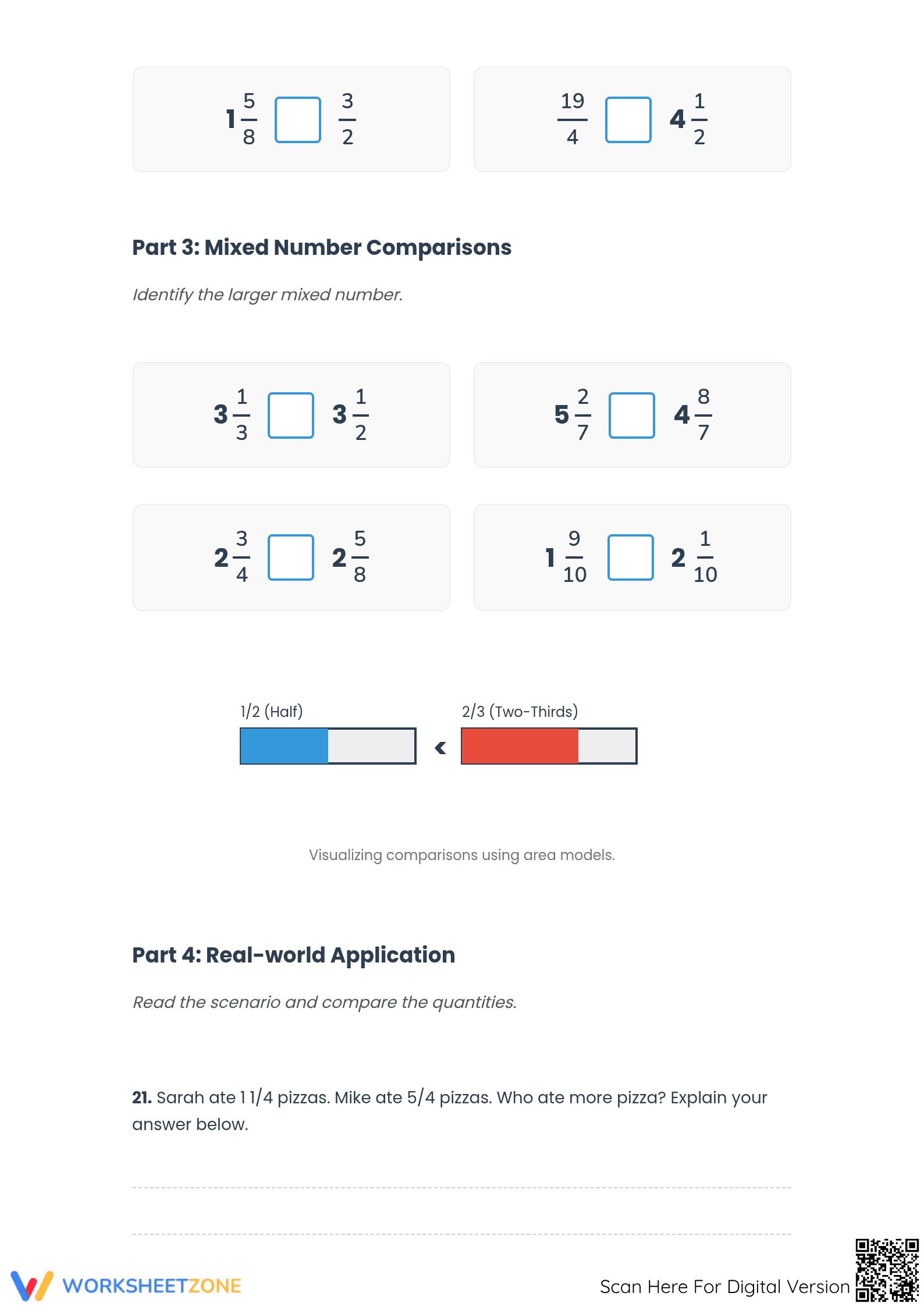
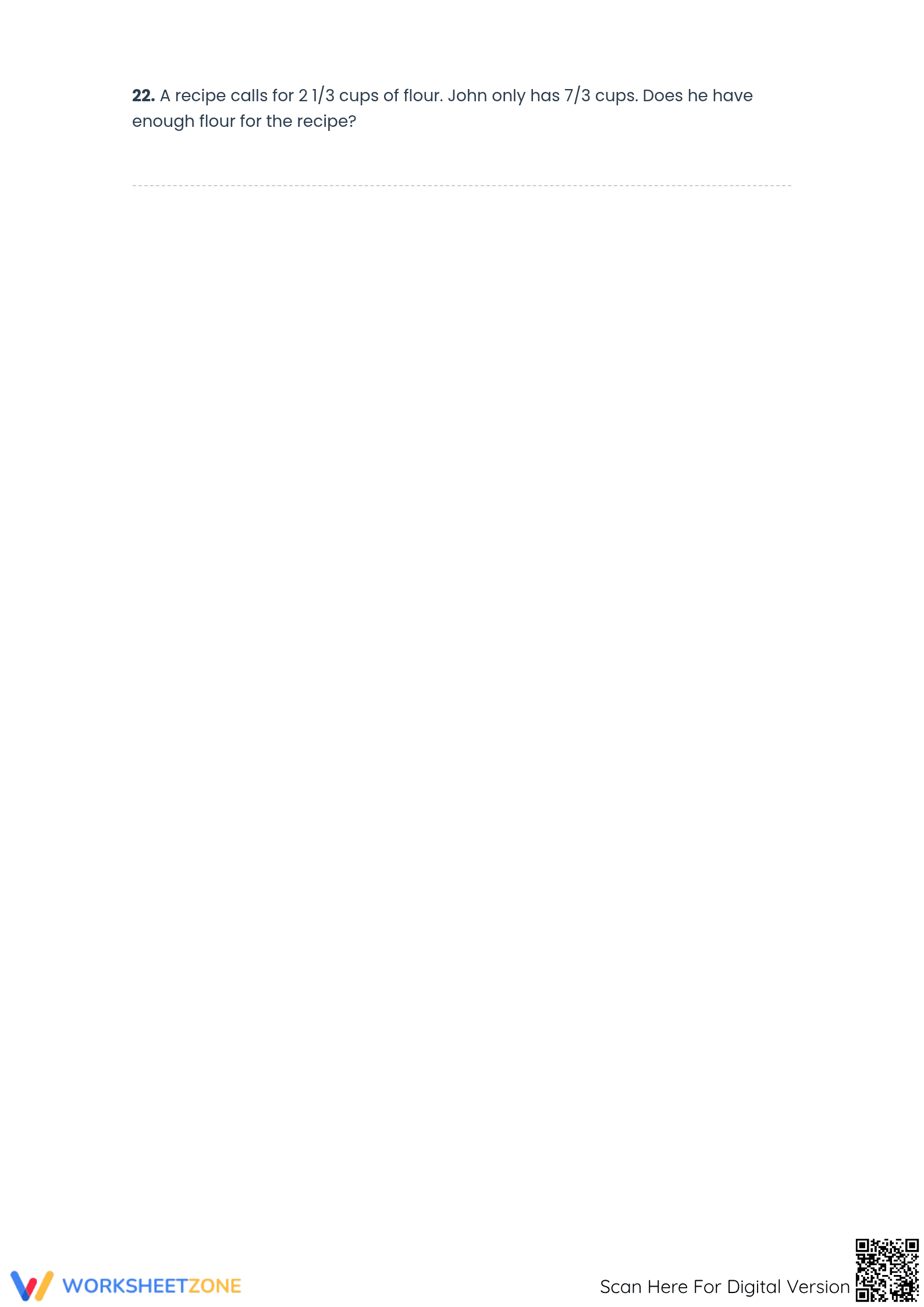
This three-page PDF contains 22 problems across four sections. Part one focuses on simple and improper fractions, while part two transitions into mixed numbers. The third section challenges students with mixed number comparisons, supported by area model visualizations. Finally, two real-world application word problems require students to explain their reasoning, ensuring depth of knowledge. A complete answer key is provided for immediate feedback.
Zero-Prep Workflow
- Print: This worksheet requires minimal teacher preparation; simply print the three-page PDF or upload it to your learning management system (1 minute).
- Distribute: Hand out the materials to students for independent practice, small-group revision, or as a structured homework assignment (1 minute).
- Review: Use the included answer key for rapid grading or facilitate a peer-review session to identify common misconceptions in fraction comparison strategies.
Standards Alignment
This resource aligns primarily with CCSS.MATH.CONTENT.4.NF.A.2. This standard requires students to compare two fractions with different numerators and different denominators by creating common denominators or numerators, or by comparing to a benchmark fraction such as 1/2. Both standard codes can be copied directly into lesson plans, IEP goals, or district curriculum mapping tools.
How to Use It
This worksheet is an ideal summative revision tool after completing a unit on fraction types. It serves as an excellent mid-unit check-in to identify students who struggle with the transition between improper fractions and mixed numbers. During completion, observe if students are using cross-multiplication or benchmark strategies, which can inform your next instructional steps. Completion time is typically 30 to 45 minutes.
Who It's For
This practice is designed for Grade 4 and Grade 5 students mastering fraction comparisons. It is ideal for students needing scaffolding in visualizing improper fractions versus mixed numbers. Pair this resource with a set of fraction tiles or an anchor chart displaying common benchmarks like 1/2 and 3/4 to support diverse learning needs in the inclusive classroom.
According to the RAND AIRS 2024 report, providing students with multiple representational models—including abstract notation, area models, and contextual word problems—significantly enhances their ability to generalize mathematical concepts across different problem types. This worksheet directly implements this research-based approach by guiding learners through four distinct phases of fraction comparison. By starting with simple fractions and progressing to mixed numbers and real-world scenarios, the resource supports the development of a robust mental number line. The explicit inclusion of standard CCSS.MATH.CONTENT.4.NF.A.2 ensures that the practice remains rigorous and aligned with national expectations for Grade 4 proficiency. Educators can use these tasks to foster mathematical discourse, particularly when students are asked to explain their reasoning in the final application section, a practice proven to deepen conceptual understanding and retention.


