


























Views
Downloads

Printable Comparing Simple Fractions Worksheet | Grade 4
Paste this activity's link or code into your existing LMS (Google Classroom, Canvas, Teams, Schoology, Moodle, etc.).
Students can open and work on the activity right away, with no student login required.
You'll still be able to track student progress and results from your teacher account.
Comparing simple fractions is a foundational skill that allows students to develop strong numerical fluency and spatial reasoning. This comprehensive practice set provides students with multiple opportunities to evaluate fraction magnitudes using both visual models and abstract symbols. By mastering these comparisons, learners build the conceptual bridge necessary for more complex operations like addition and subtraction of unlike denominators.
At a Glance
- Grade: 4 · Subject: Math
- Standard:
CCSS.MATH.CONTENT.4.NF.A.2— Compare two fractions with different numerators and different denominators using comparison symbols- Skill Focus: Comparing fractions with unlike denominators
- Format: 5 pages · 42 problems · Answer key included · PDF
- Best For: Independent practice and small group intervention
- Time: 25–40 minutes
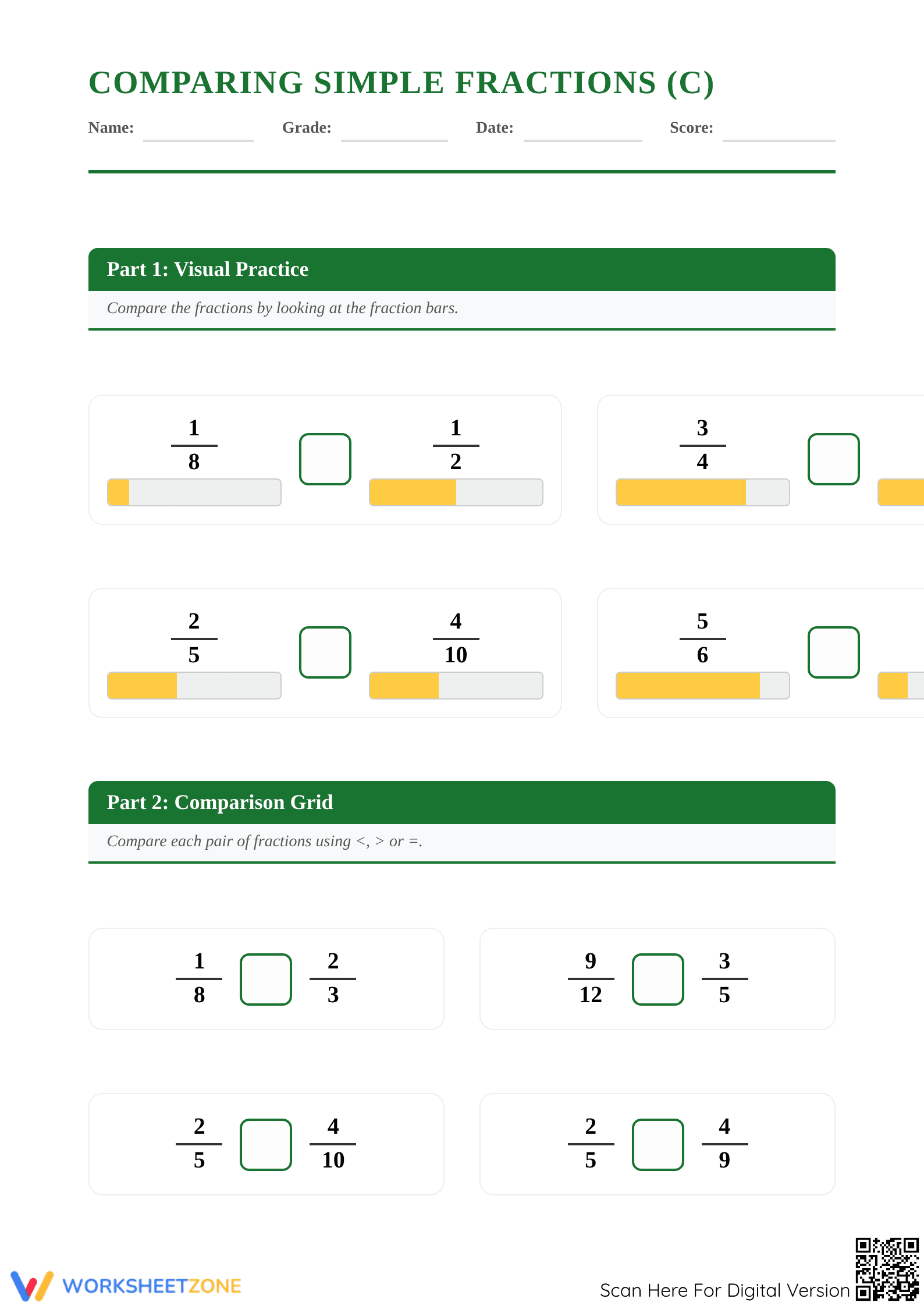
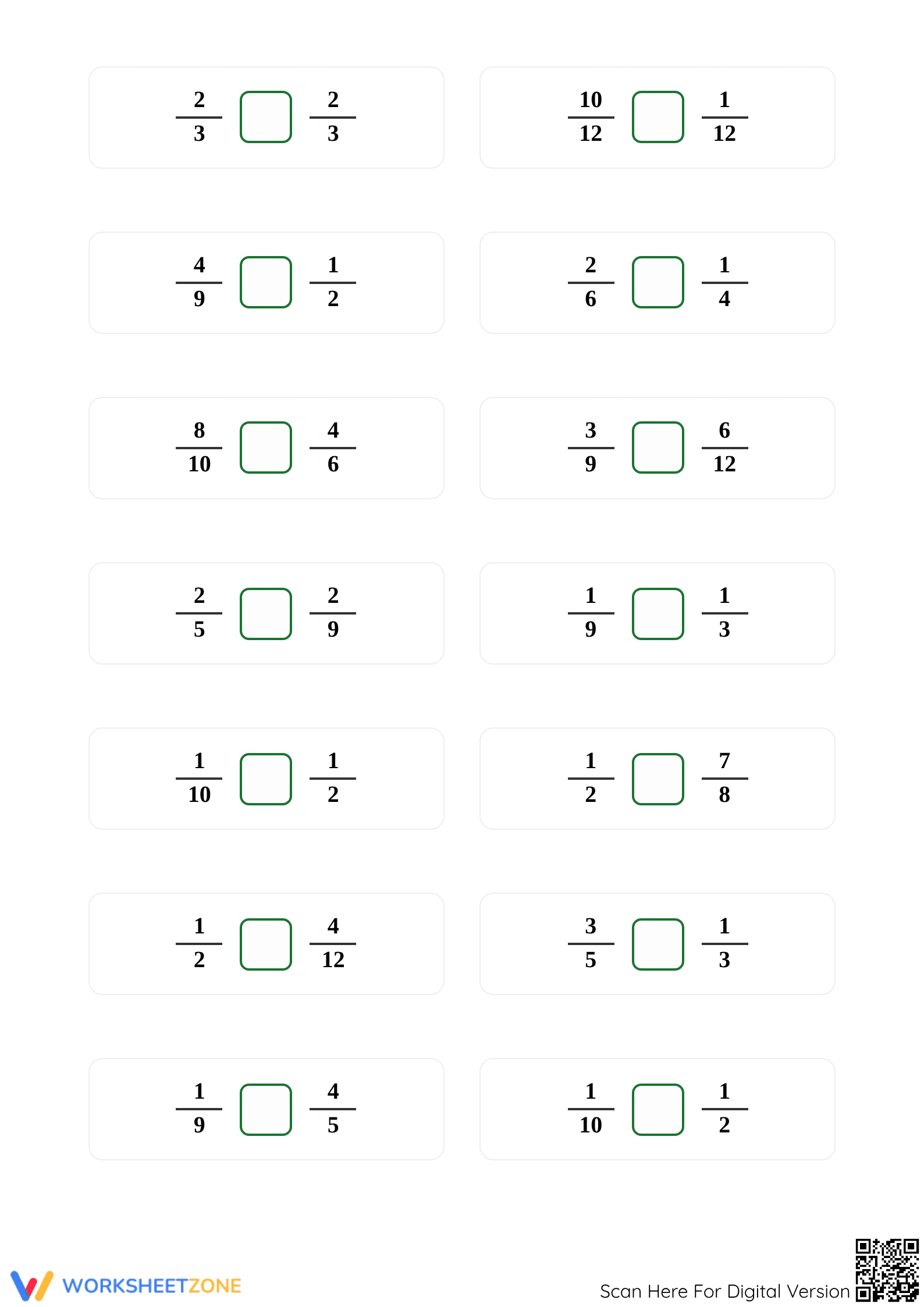
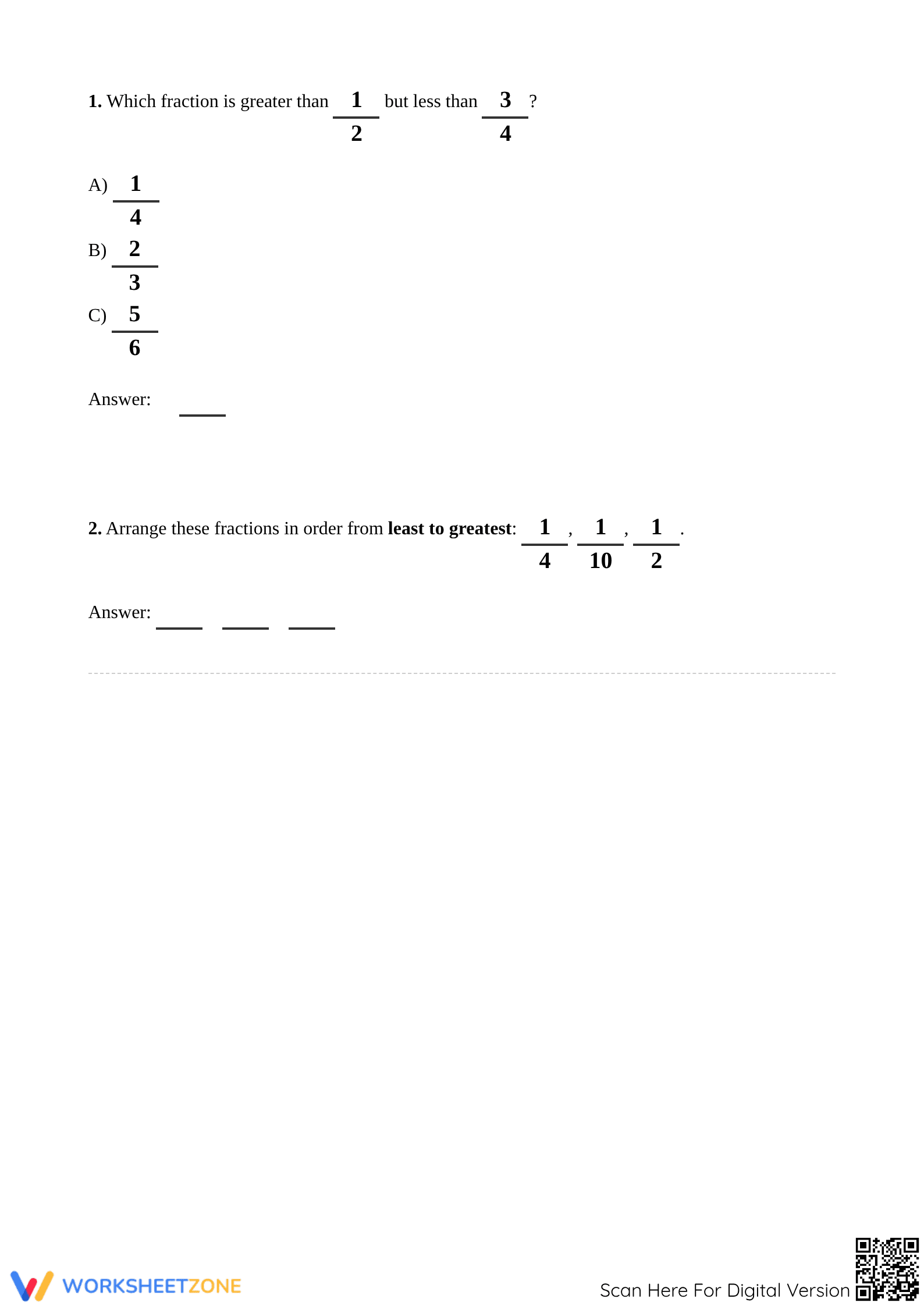
This extensive five-page packet contains 42 structured problems designed to guide students toward mastery. The resource begins with visual fraction bars that provide immediate scaffolding for early learners. Following the visual section, the worksheet transitions into an organized comparison grid featuring a diverse range of denominators. The set concludes with critical thinking challenges that require students to order multiple fractions and identify values within specific ranges.
Skill Progression
- Guided practice: The first section uses shaded fraction bars, allowing students to physically see the difference in magnitudes for 4 problems.
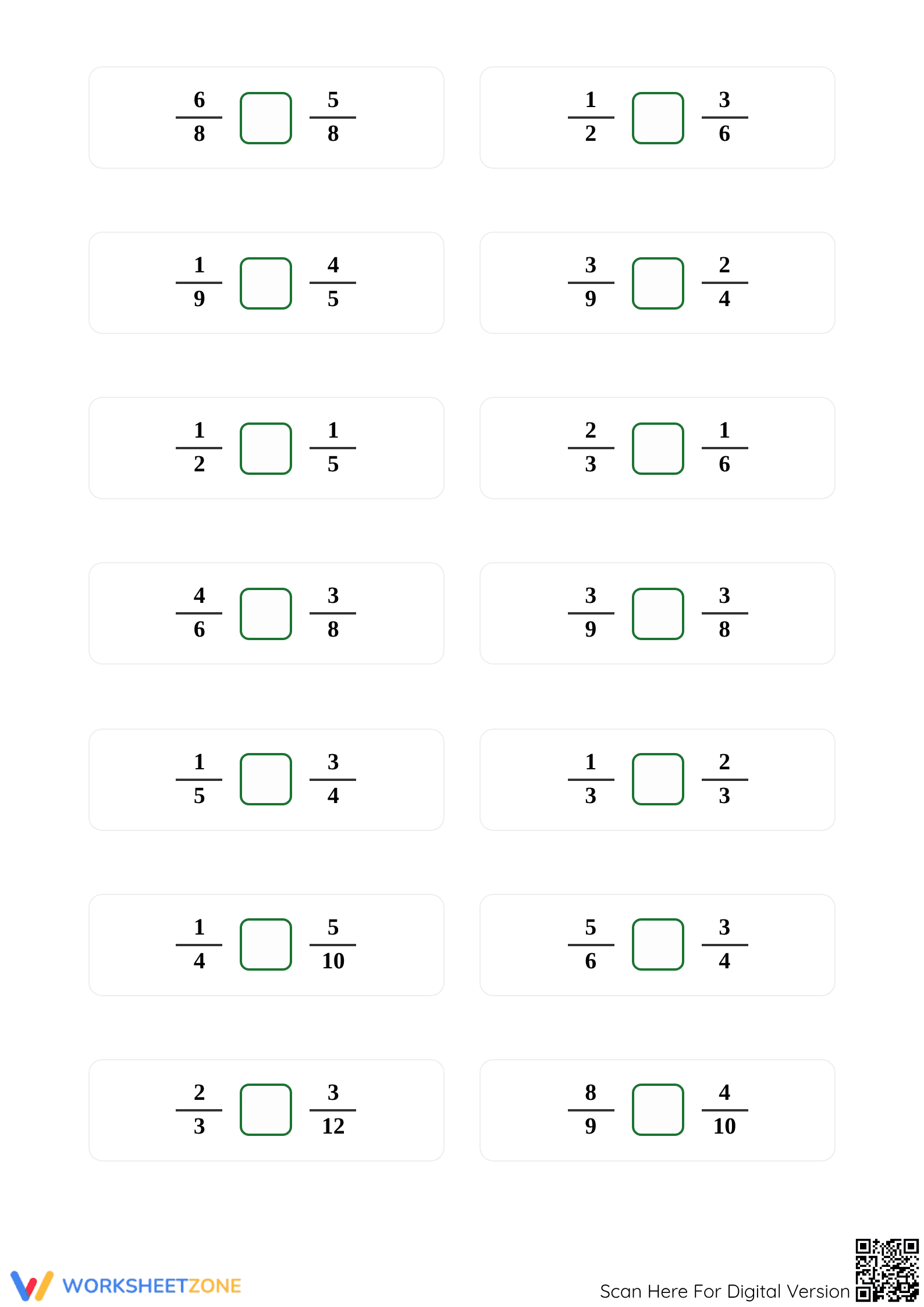
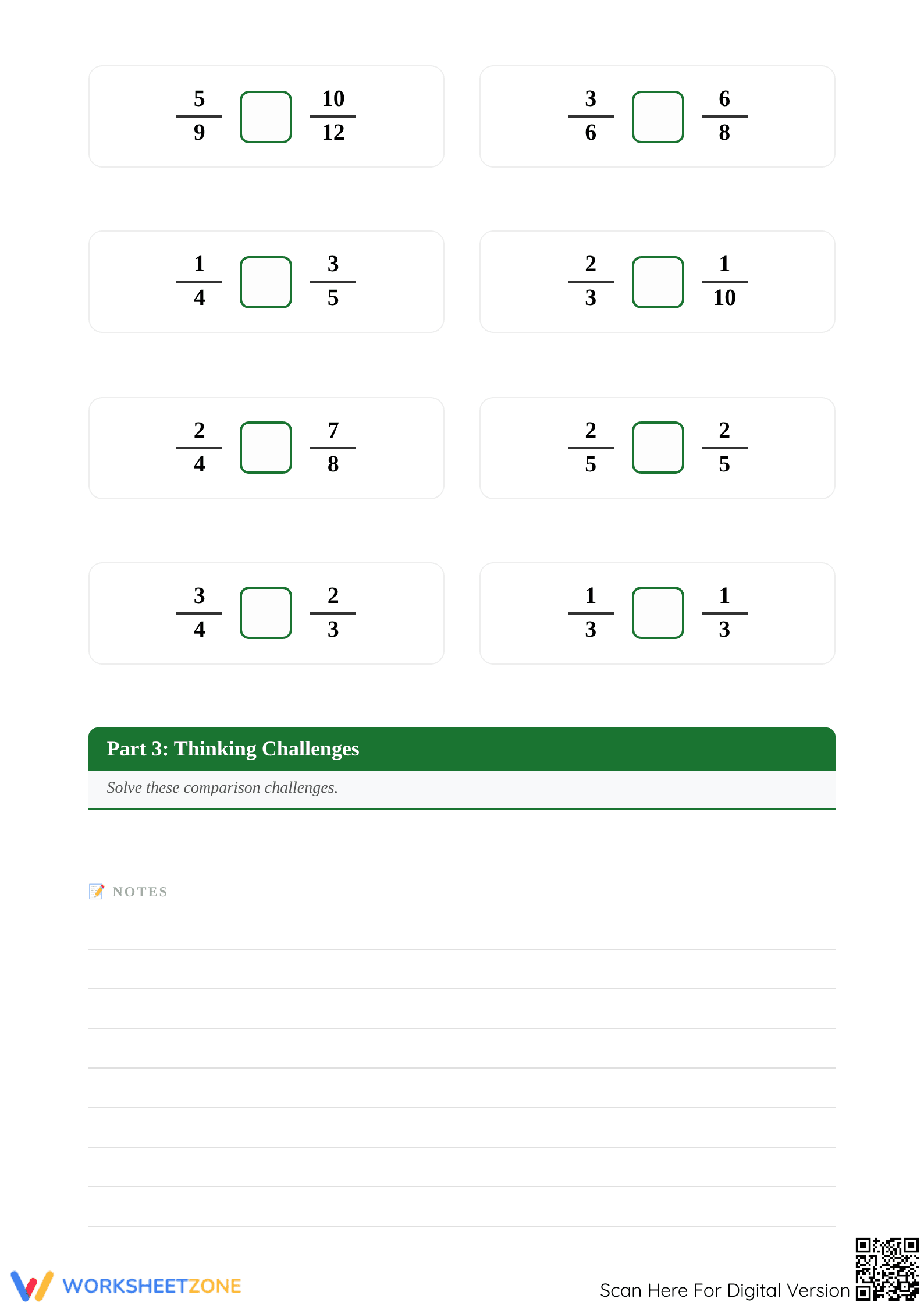
- Supported practice: The comparison grid contains 36 problems, providing repetitive practice that solidifies the use of greater than, less than, and equal to symbols.
- Independent practice: Two higher-order thinking challenges require students to apply their knowledge to solve word-based constraints and ordering tasks.
This "I Do, We Do, You Do" approach builds confidence before students tackle abstract reasoning.
Standards Alignment
The primary alignment is CCSS.MATH.CONTENT.4.NF.A.2, which states that students should compare two fractions with different numerators and different denominators. This includes recognizing that comparisons are valid only when the two fractions refer to the same whole. Both standard codes can be copied directly into lesson plans, IEP goals, or district curriculum mapping tools.
How to Use It
This worksheet is ideal for use after a direct instruction lesson on finding common denominators or using benchmark fractions. For a formative assessment, teachers should observe which students rely heavily on the visual bars versus those who can solve the grid problems mentally. The packet can be completed in one sitting or divided into separate daily warm-ups. Expect a completion time of 30 minutes.
Who It's For
The resource is primarily designed for Grade 4 students, though it serves as an excellent review for Grade 5 learners or an intensive intervention for middle schoolers struggling with fraction concepts. It pairs naturally with a fraction tiles manipulative set or a digital interactive number line to help students visualize the "closeness" of different fractions.
According to the RAND AIRS 2024 analysis of mathematical proficiency, the ability to compare fractions with unlike denominators is a high-leverage indicator for future success in algebraic thinking. This worksheet directly addresses CCSS.MATH.CONTENT.4.NF.A.2 by requiring students to evaluate the magnitude of simple fractions through a multi-modal approach. Research from Fisher & Frey (2014) emphasizes that "gradual release of responsibility" is essential for students to transition from visual scaffolding to abstract symbolic logic. By providing 42 distinct tasks that move from visual fraction bars to complex thinking challenges, this resource ensures that learners do not simply memorize procedures but develop a robust conceptual understanding of fractional parts. This alignment ensures that the practice is not only rigorous but also developmentally appropriate for the Grade 4 curriculum. Educators can confidently cite this resource as evidence of standards-aligned practice in performance reviews or instructional audits.


