


























Views
Downloads

Comparing Fractions Grade 4 Worksheet: Essential 4.NF.A.2
Paste this activity's link or code into your existing LMS (Google Classroom, Canvas, Teams, Schoology, Moodle, etc.).
Students can open and work on the activity right away, with no student login required.
You'll still be able to track student progress and results from your teacher account.
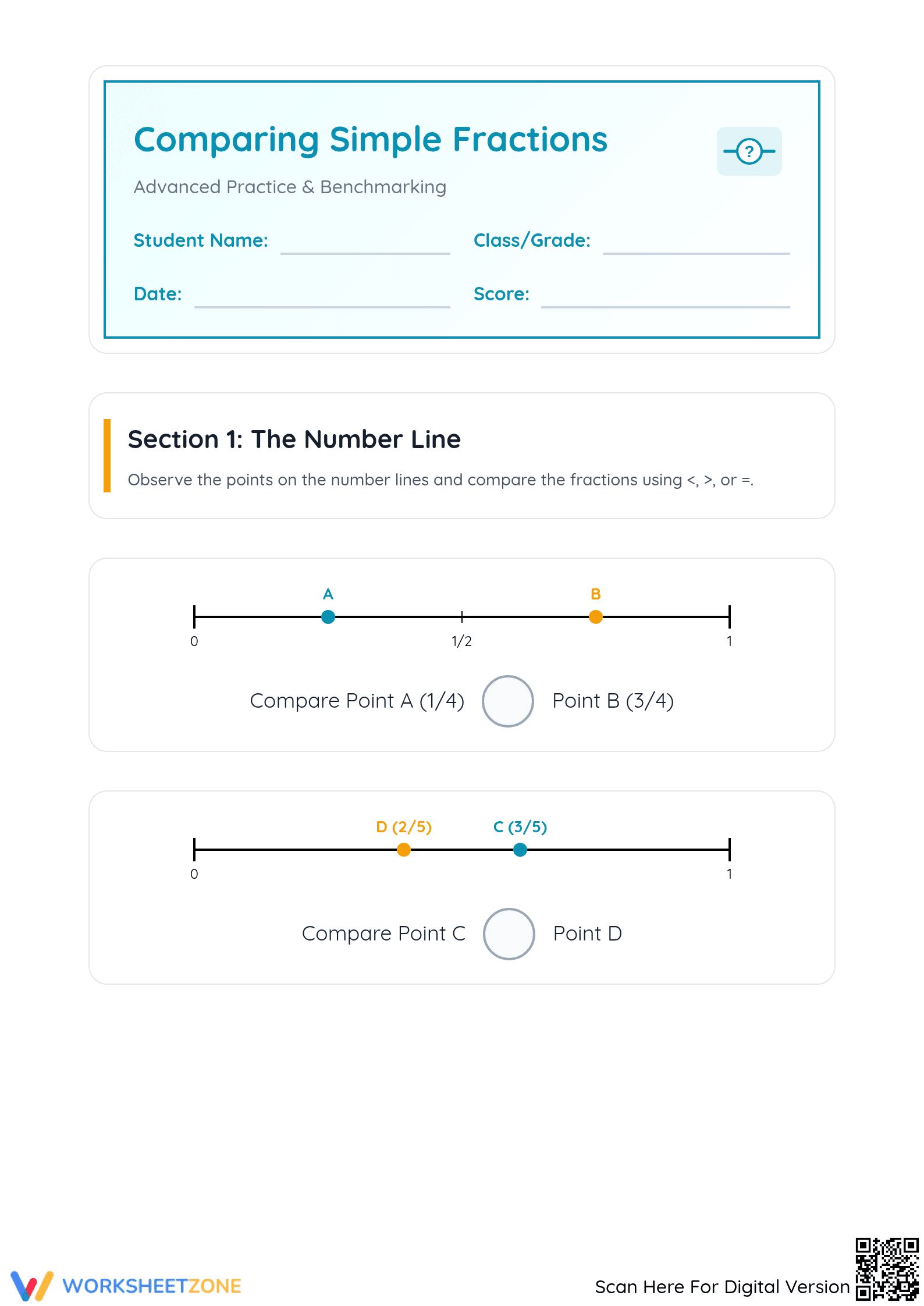
Build fraction comparison fluency with this comprehensive benchmarking worksheet. This resource provides students with structured opportunities to analyze, compare, and order simple fractions using multiple mathematical models. By progressing from visual number line representations to abstract reasoning and real-world application, students develop a deep conceptual understanding of fraction magnitude and relationship.
At a Glance
- Grade: 4 · Subject: Math
- Standard:
4.NF.A.2— Compare two fractions with different numerators and denominators using symbols and reasoning- Skill Focus: Multi-strategy fraction comparison
- Format: 5 pages · 23 problems · Answer key included · PDF
- Best For: Mastery assessment and progress monitoring
- Time: 30–45 minutes
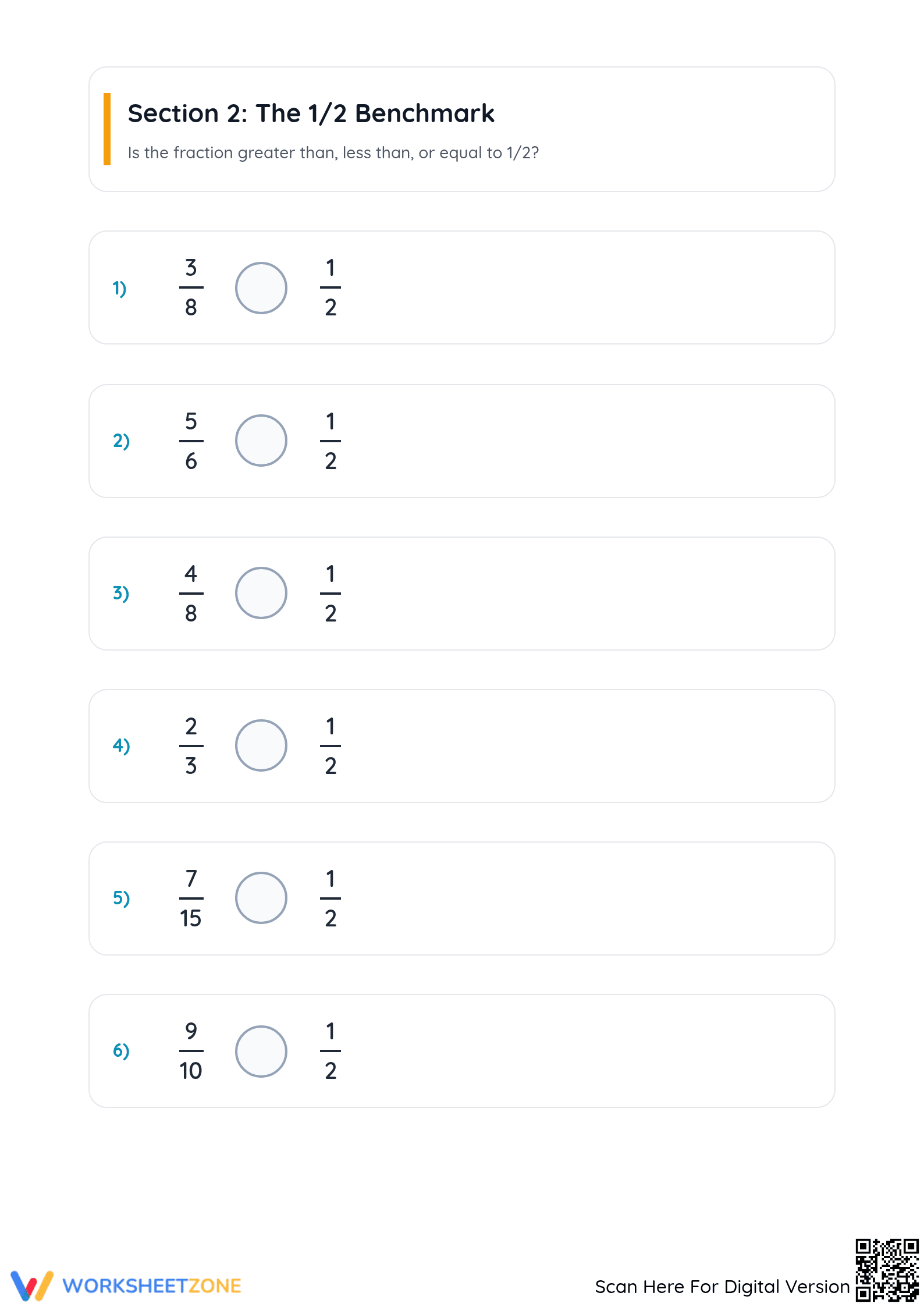
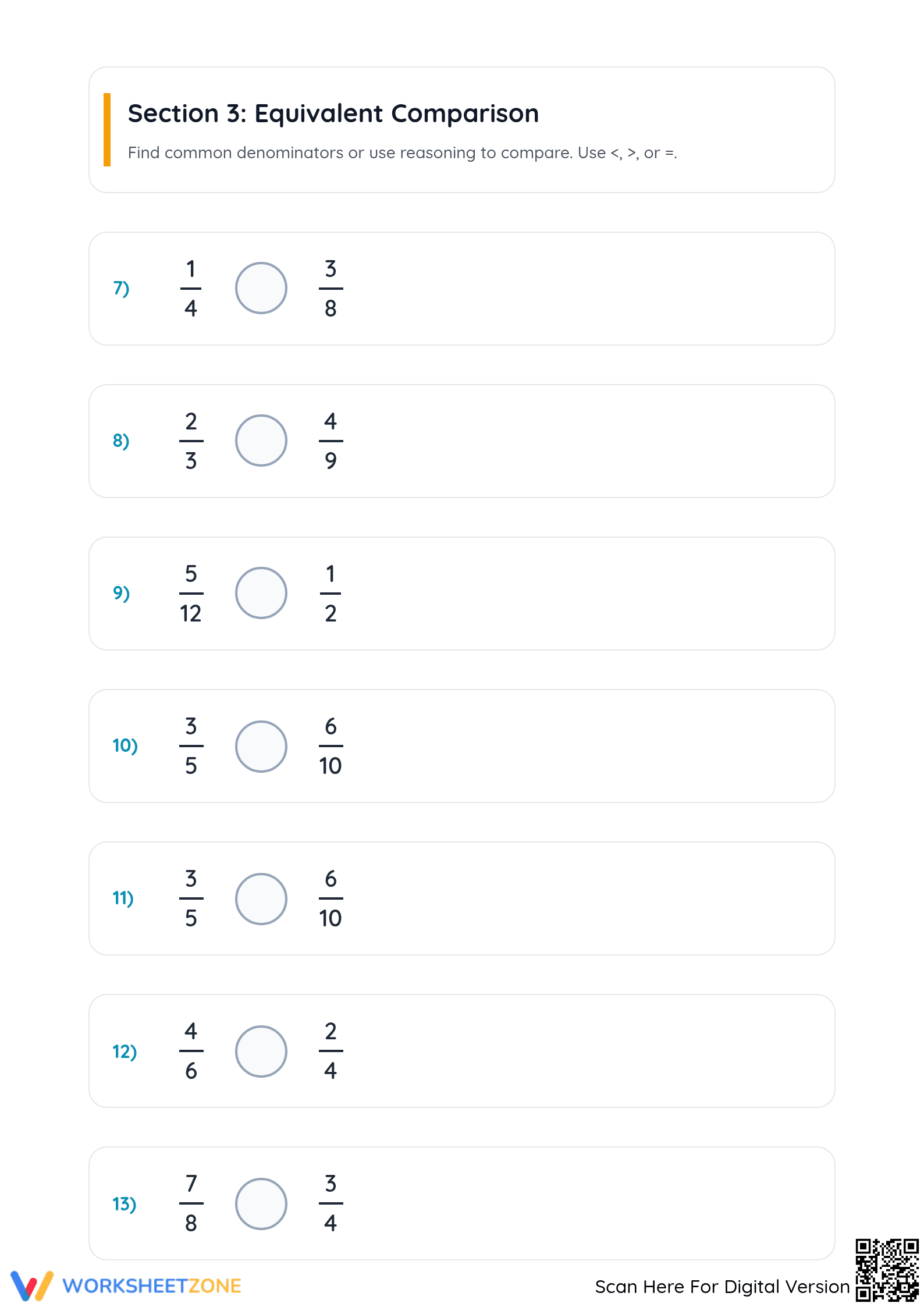
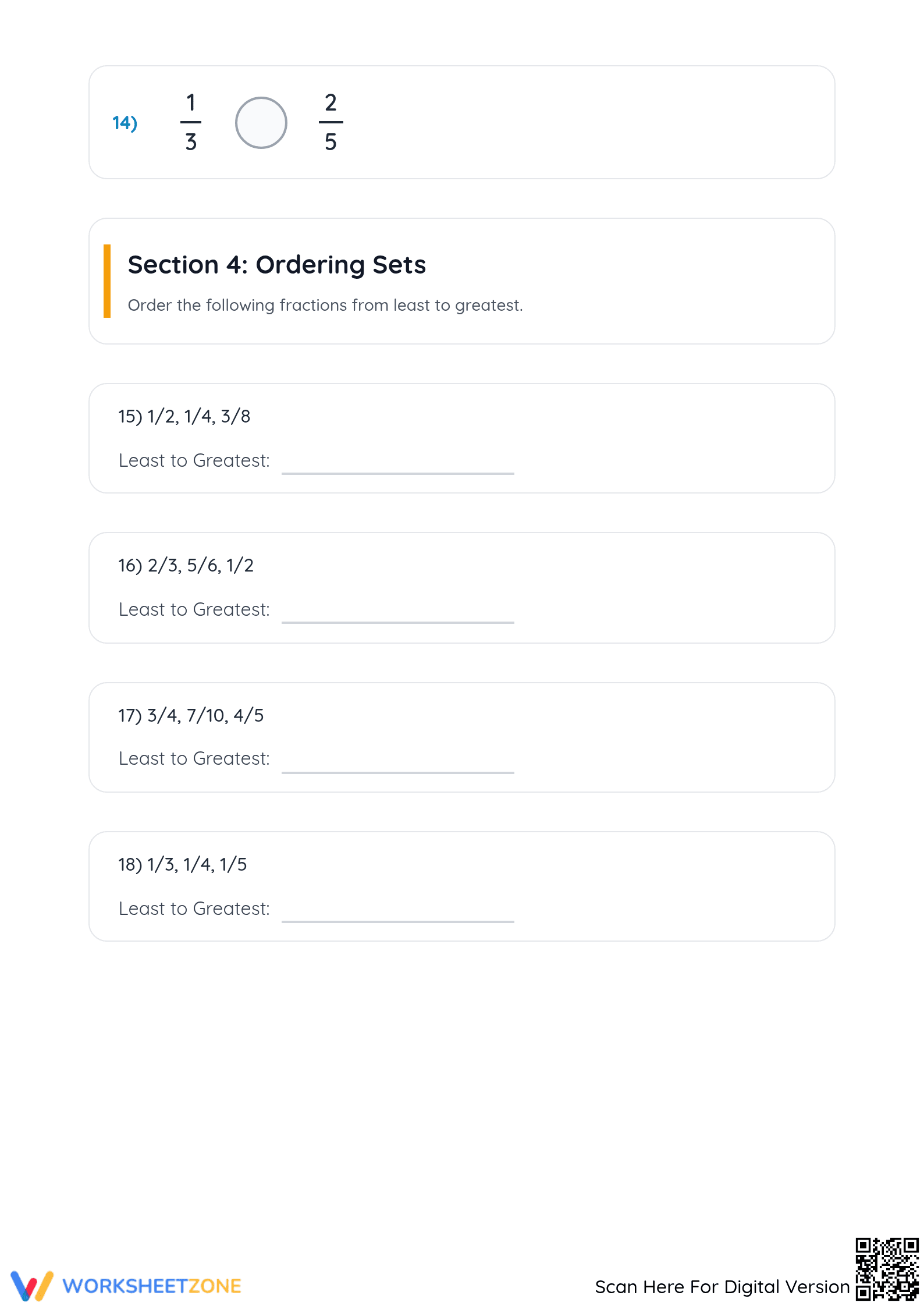
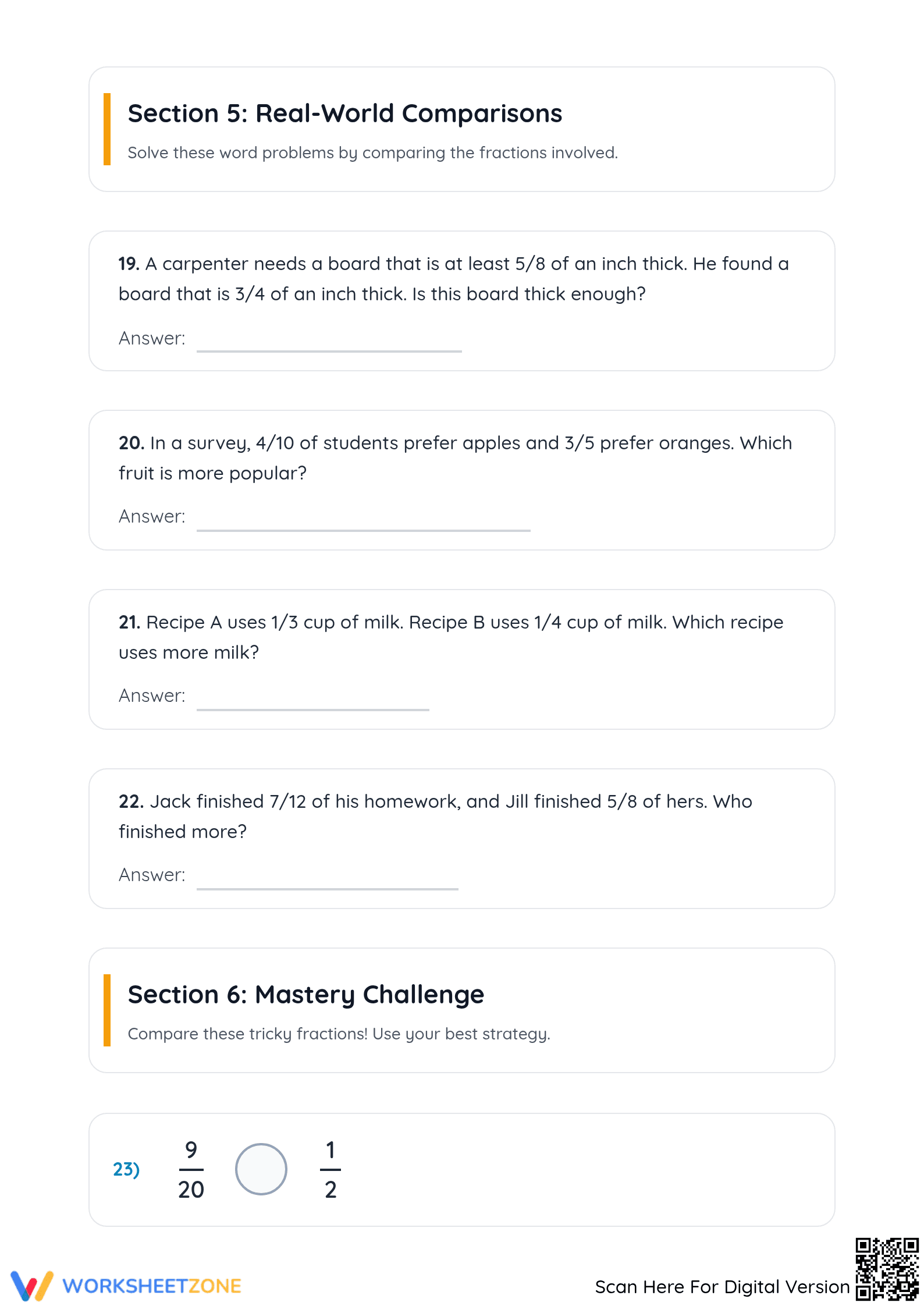
This 5-page packet contains 23 high-quality problems organized into six logical sections: number line observation, benchmark comparison, equivalent fraction reasoning, set ordering, word problems, and a mastery challenge. The inclusion of a full answer key ensures immediate feedback for students and efficient grading for educators, while the clear section headers facilitate targeted instruction for specific sub-skills.
Mastery Evidence and Progression
Each section of this worksheet maps to a specific mastery tier within the 4.NF.A.2 standard. Section 1 focuses on visual identification, while Section 2 builds efficiency through benchmark reasoning. Sections 3 and 4 move into abstract computation and multi-fraction ordering, requiring higher cognitive demand. Educators can use Section 5 (word problems) to assess real-world application, allowing for precise tracking of whether a student is Approaching, Meeting, or Exceeding grade-level expectations. Performance data from these sections can be entered directly into gradebooks or used to inform IEP progress notes.
Standards Alignment
The primary focus is `CCSS.MATH.CONTENT.4.NF.A.2`: "Compare two fractions with different numerators and different denominators, e.g., by creating common denominators or numerators, or by comparing to a benchmark fraction such as 1/2." The worksheet also supports foundational understanding for `CCSS.MATH.CONTENT.3.NF.A.3.D` regarding same-numerator or same-denominator comparisons. Both standard codes can be copied directly into lesson plans, IEP goals, or district curriculum mapping tools.
Instructional Implementation
Use this resource as a formal summative assessment after a unit on fractions or as a benchmarking tool to identify gaps in understanding. During direct instruction, teachers can use the number line section to model visual reasoning before assigning the equivalent comparison section for independent practice. A powerful formative-assessment tip is to observe students during Section 2; those who can explain why a fraction is greater than 1/2 without drawing a model have achieved benchmark fluency. Completion typically ranges from 30 minutes for advanced learners to 45 minutes for those requiring scaffolding.
Target Student Population
While designed for Grade 4 mastery, this worksheet is an excellent intervention tool for Grade 5 and 6 students who struggle with fraction magnitude. It also serves as an enrichment activity for advanced 3rd graders. To maximize impact, pair this resource with a physical number line or a fraction circle anchor chart to support visual learners who are still transitioning to abstract numerical comparison.
The development of fraction comparison skills is a critical predictor of later success in algebra and higher-level mathematics. This worksheet specifically addresses the cognitive shift required to compare fractions with unlike denominators by providing a clear progression of difficulty. By integrating benchmark reasoning and real-world word problems, the resource ensures that students are not merely memorizing cross-multiplication tricks but are building a genuine sense of number magnitude. The 23 unique tasks provide sufficient data points for educators to determine mastery of CCSS 4.NF.A.2 with high confidence, supporting data-driven instructional decisions in diverse classroom settings. This structured approach aligns with recommendations for improving fraction knowledge.


