


























Views
Downloads

Comparing Fractions Worksheet | Printable Grade 4 Math
Paste this activity's link or code into your existing LMS (Google Classroom, Canvas, Teams, Schoology, Moodle, etc.).
Students can open and work on the activity right away, with no student login required.
You'll still be able to track student progress and results from your teacher account.
This comprehensive comparing fractions worksheet empowers Grade 4 students to master fraction magnitudes through four distinct phases of learning. By transitioning from visual models to abstract comparisons, learners develop a deep conceptual understanding of parts and wholes. Students will accurately use inequality symbols to compare fractions with common denominators, common numerators, and unlike terms.
At a Glance
- Grade: 4 · Subject: Math (Fractions)
- Standard:
CCSS.MATH.CONTENT.4.NF.A.2— Compare two fractions with different numerators and different denominators using symbols- Skill Focus: Comparing Fraction Magnitudes
- Format: 5 pages · 30 problems · Answer key included · PDF
- Best For: Scaffolded independent practice or formative assessment
- Time: 25–40 minutes
What's Inside
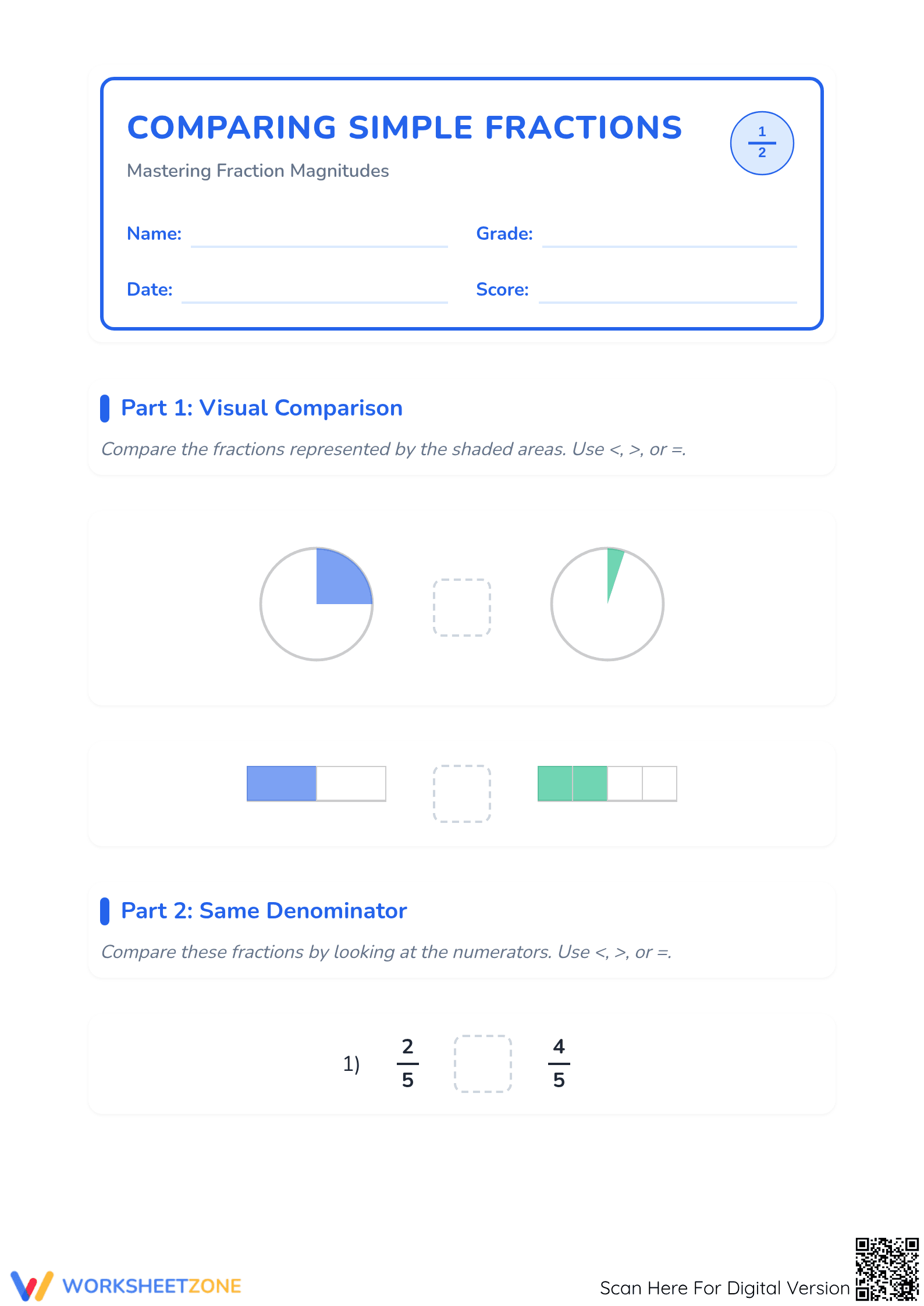
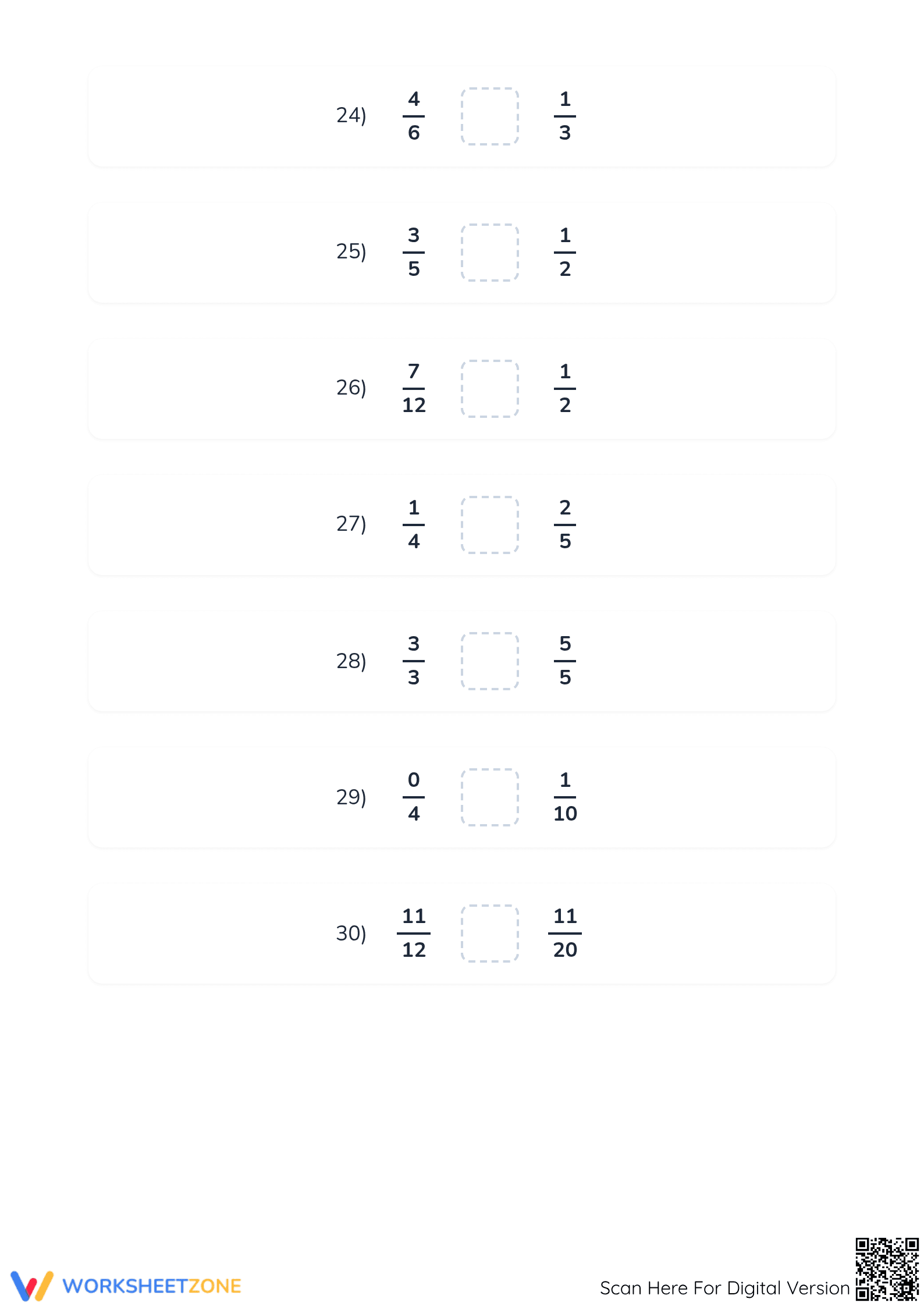
This extensive five-page PDF resource provides 30 structured problems designed to guide students toward mastery. The collection includes visual area models (circles and bars) for immediate feedback, followed by numerical comparisons grouped by logical strategies. A full answer key is provided for every page, ensuring easy grading and the opportunity for student self-correction during independent work.
Skill Progression
- Guided Practice (Visuals): Two introductory tasks use shaded area models to ground abstract concepts in concrete visuals before moving to numbers.
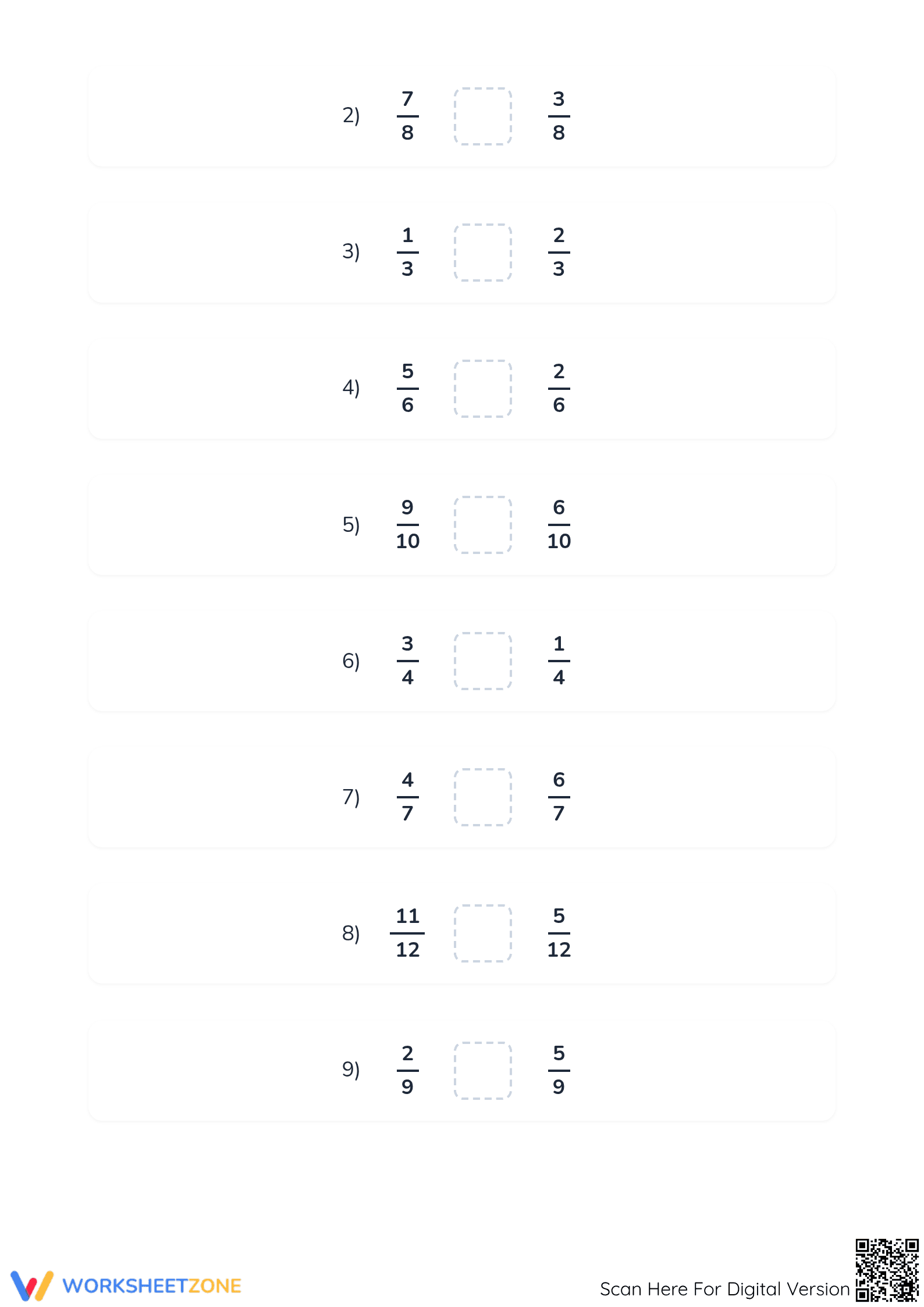
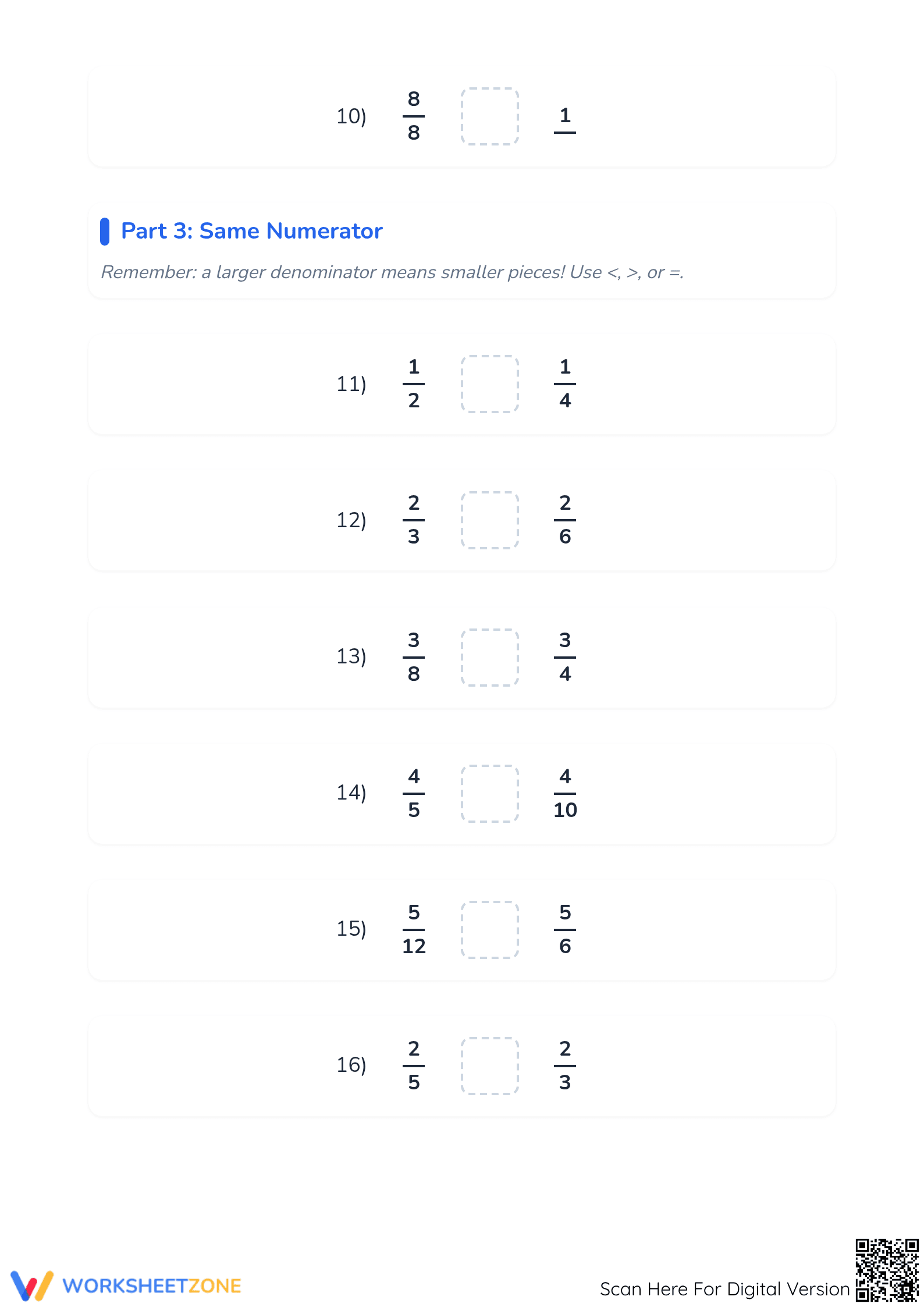
- Supported Practice (Rule-Based): 20 problems focus on specific magnitude rules for fractions with like denominators or like numerators to build foundational fluency.
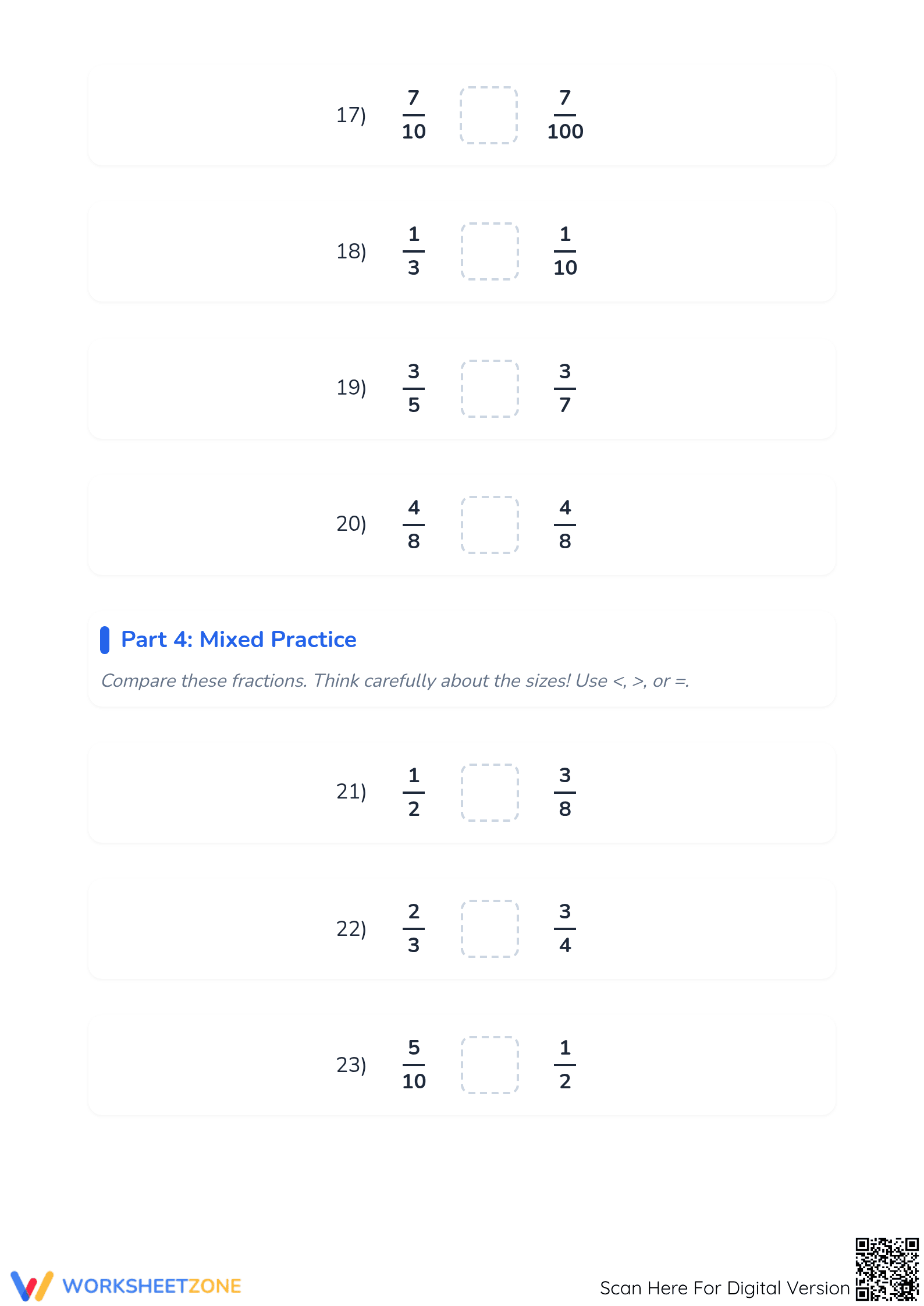
- Independent Practice (Mixed): 10 final problems challenge students to apply cross-multiplication or common denominator strategies to compare fractions with different components.
This gradual release structure follows an I Do, We Do, You Do sequence, ensuring students internalize comparison methods before tackling complex sets.
Standards Alignment
The primary alignment is CCSS.MATH.CONTENT.4.NF.A.2: "Compare two fractions with different numerators and different denominators, e.g., by creating common denominators or numerators, or by comparing to a benchmark fraction such as 1/2." It also supports Grade 3 benchmarks regarding like-denominator comparisons. Both standard codes can be copied directly into lesson plans, IEP goals, or district curriculum mapping tools.
How to Use It
Deploy this worksheet after direct instruction on fraction comparison strategies. Use the visual section as a quick check for understanding during the lesson's guided practice phase. For the mixed practice section, encourage students to show their calculation work in the margins. As a formative tip, observe if students mistakenly apply whole-number logic to denominators, which indicates a need for targeted intervention with the visual models.
Who It's For
This resource is tailored for Grade 4 students during their fractions unit. It also serves as an excellent intervention tool for Grade 5 learners who require additional support with magnitude concepts. Pair this with fraction tiles or a benchmark anchor chart to provide additional scaffolding for English Language Learners or students with specific learning accommodations in mathematics.
Effective instruction in fraction comparison requires moving beyond rote memorization of algorithms toward a relational understanding of number magnitude. According to research published in a ScienceDirect TpT Analysis, scaffolded materials that bridge the gap between visual area models and abstract numerical comparison significantly reduce the cognitive load for elementary learners. This worksheet addresses the common misconception that larger denominators always represent larger values by explicitly grouping same-denominator and same-numerator tasks. By practicing the CCSS.MATH.CONTENT.4.NF.A.2 standard through these discrete strategy phases, students build the fraction sense necessary for later success with operations. The inclusion of thirty targeted problems allows for enough repetition to achieve fluency without overwhelming the student's working memory. Educational data suggests that structured, multi-page practice sessions like this are superior to isolated worksheets for long-term retention of mathematical concepts and higher-order reasoning skills during standardized testing environments.


