


























Views
Downloads
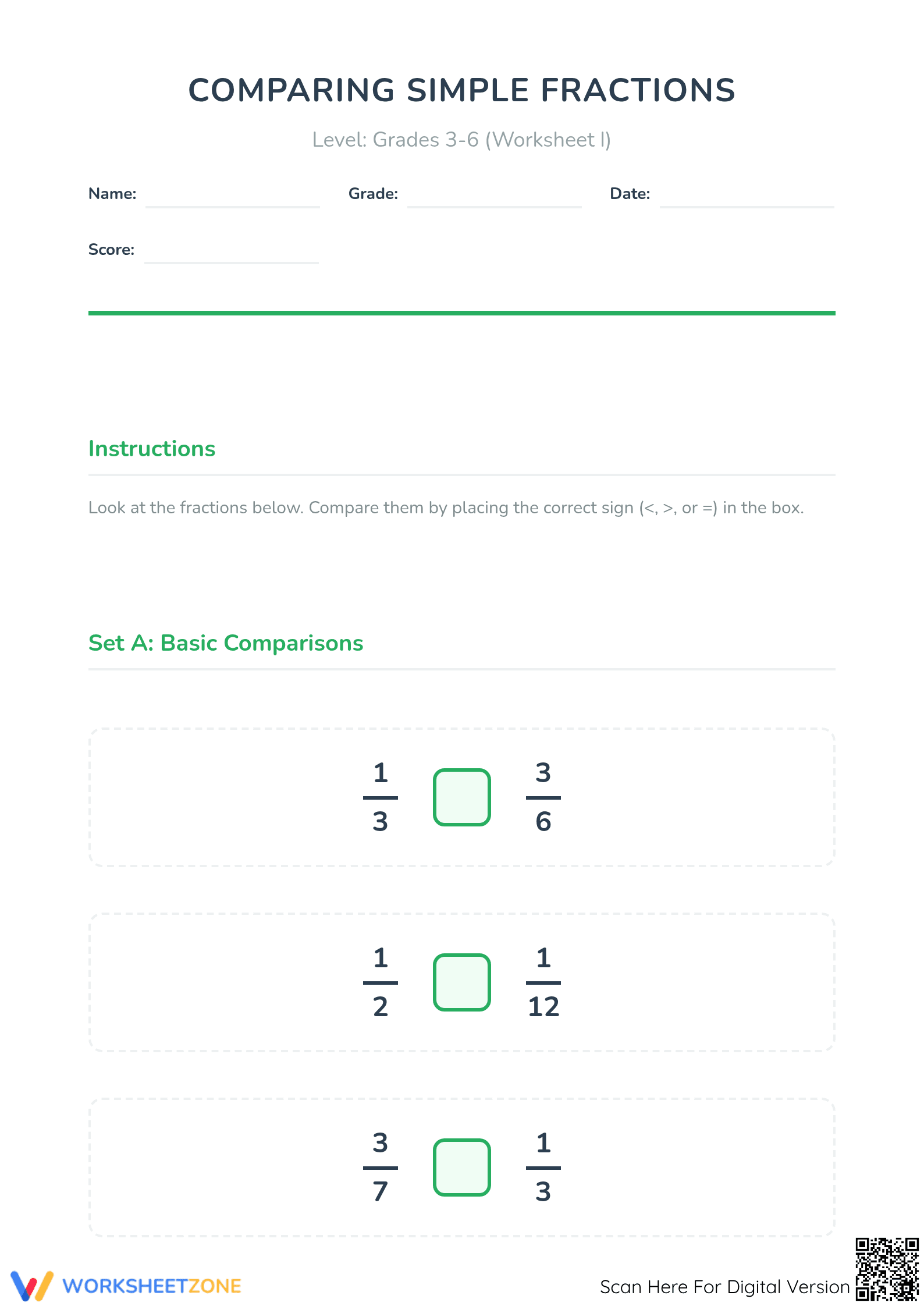
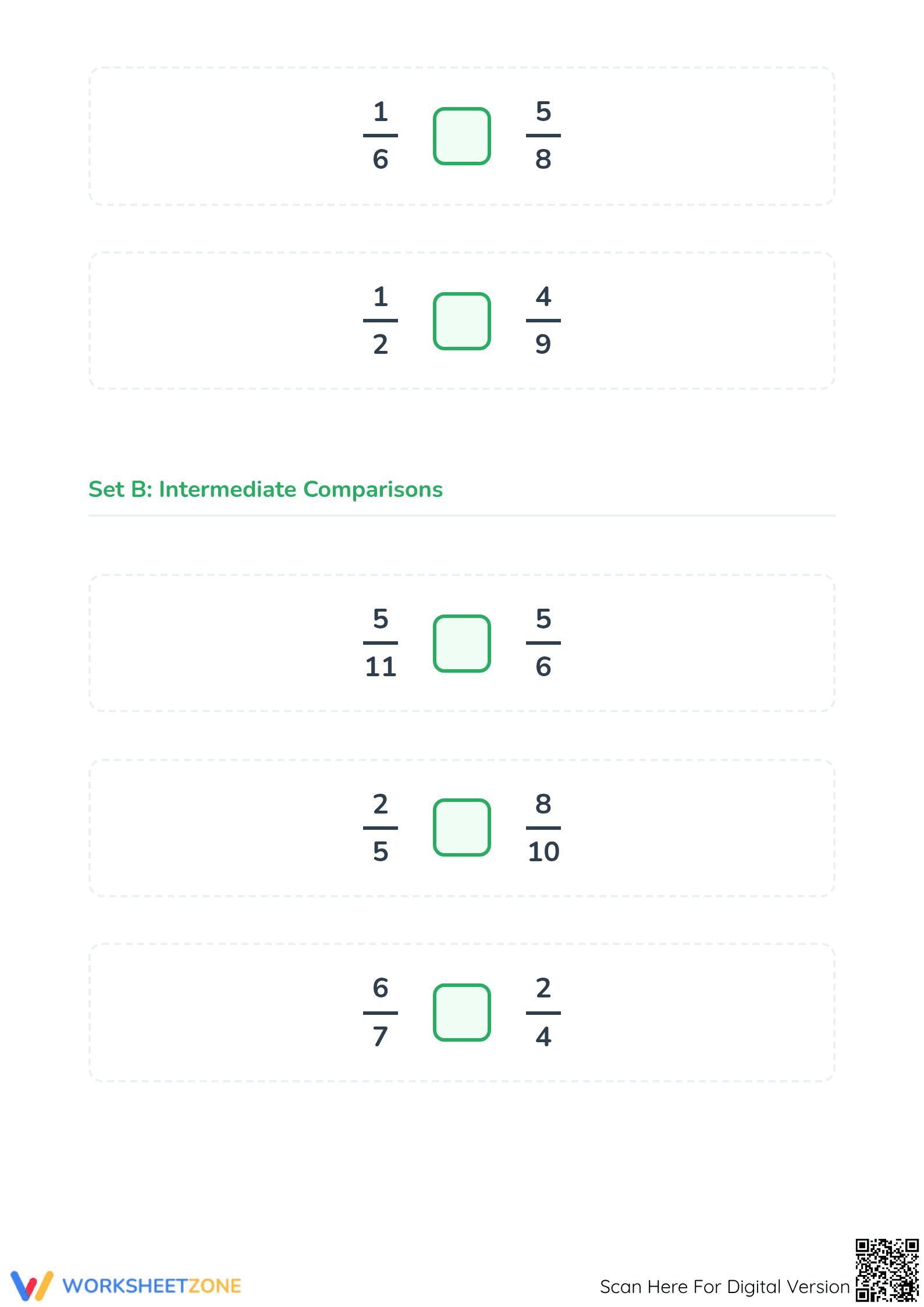
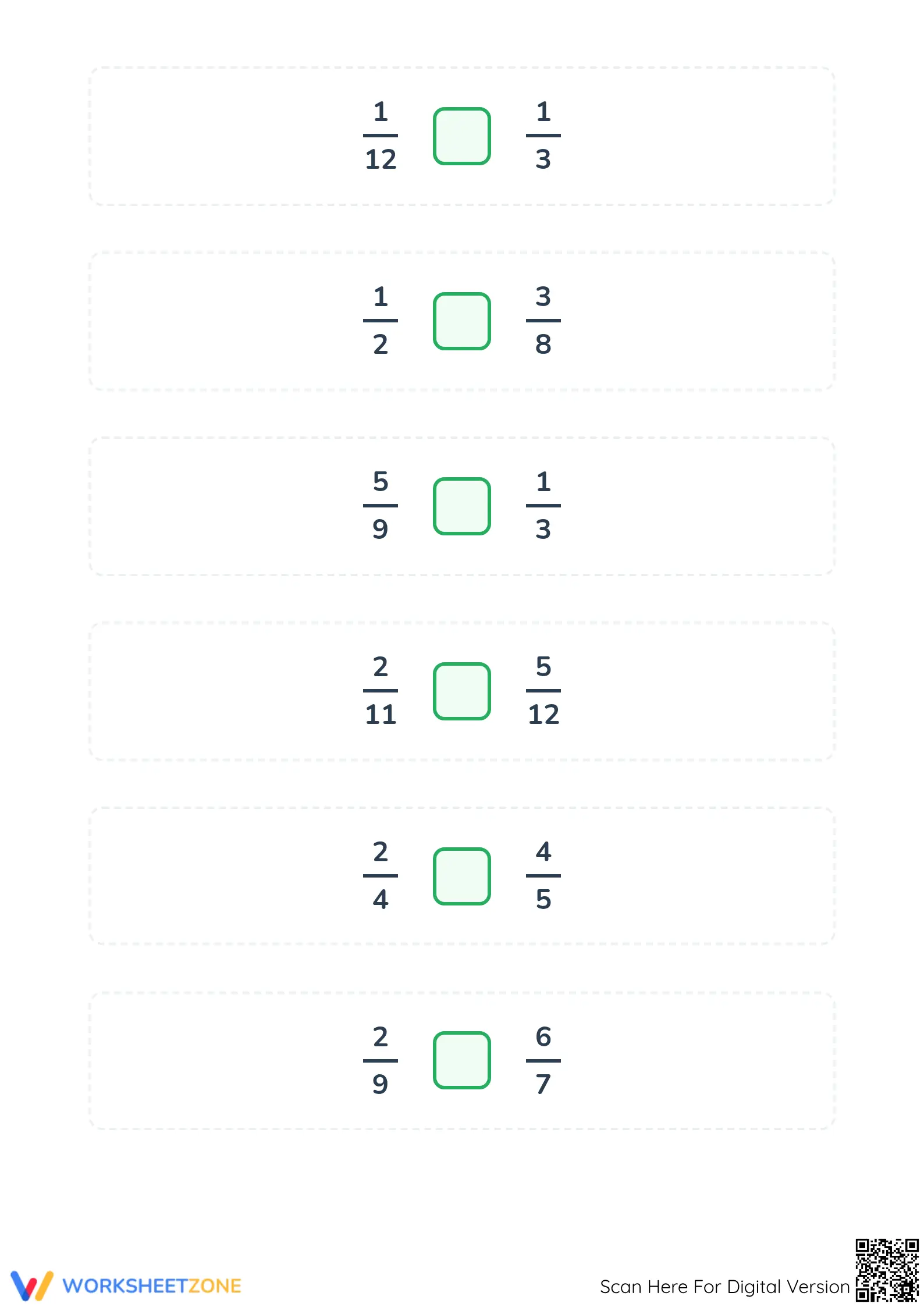
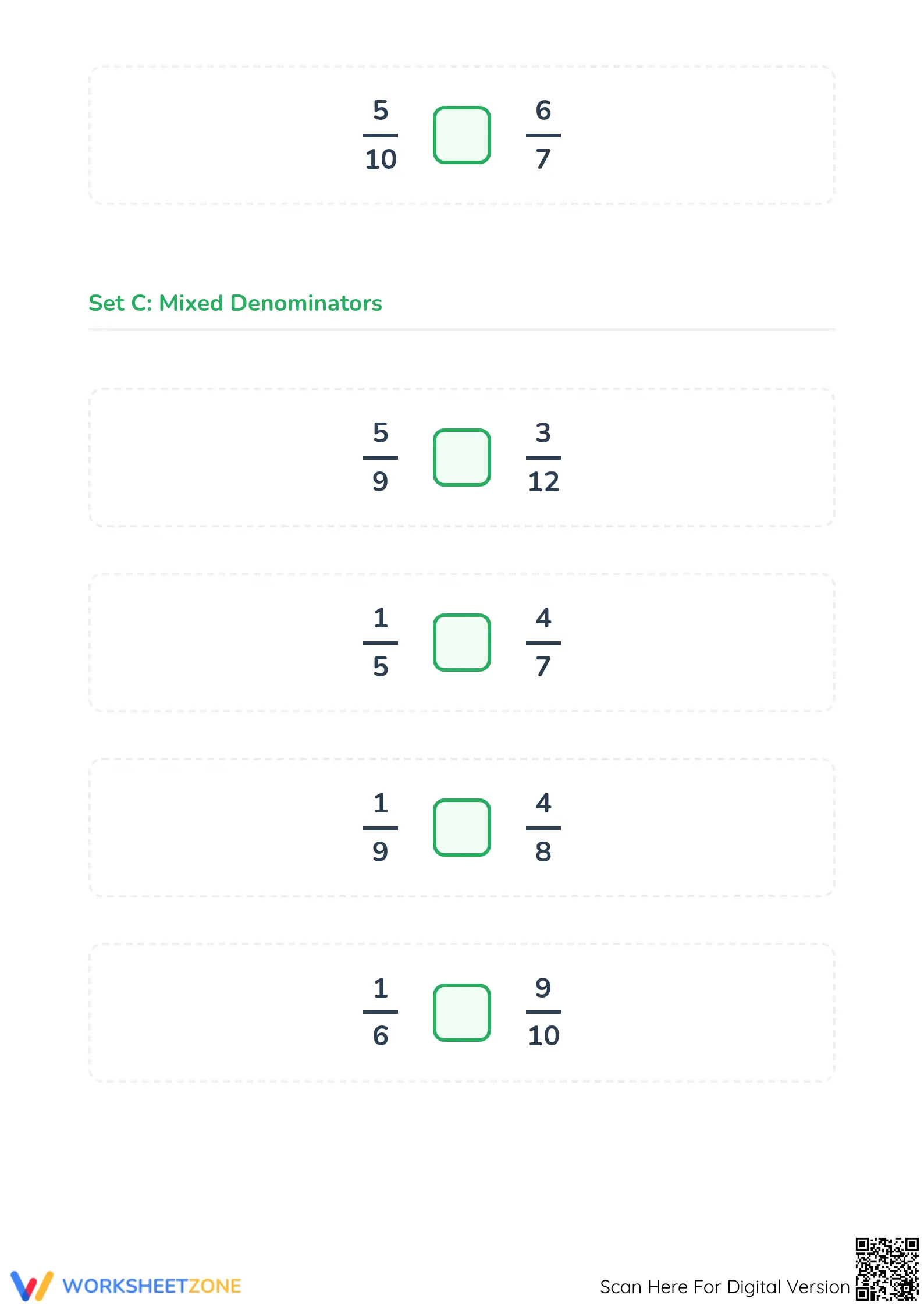
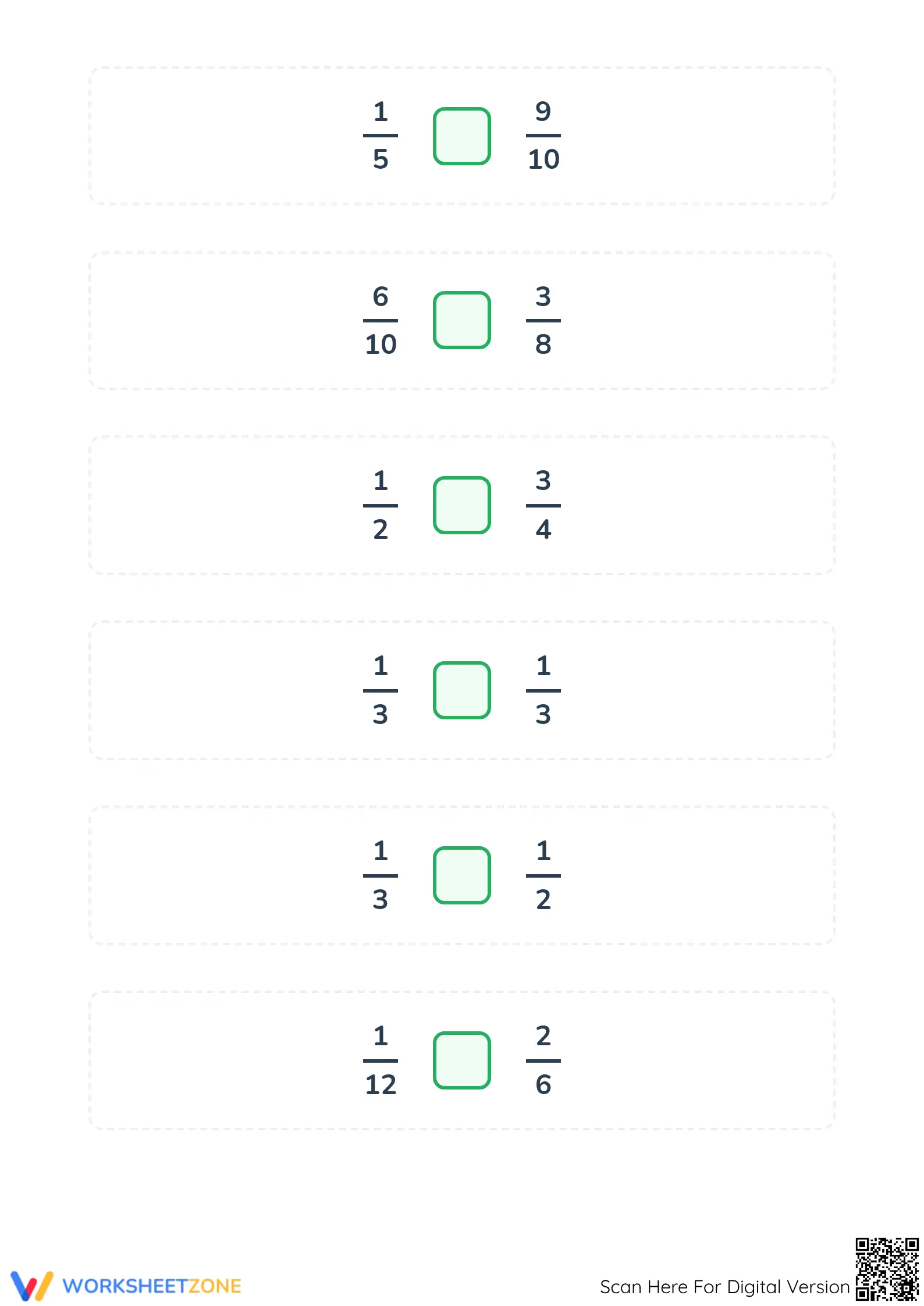

Printable Grade 4 Math: Comparing Simple Fractions
Paste this activity's link or code into your existing LMS (Google Classroom, Canvas, Teams, Schoology, Moodle, etc.).
Students can open and work on the activity right away, with no student login required.
You'll still be able to track student progress and results from your teacher account.
Master the essential skill of comparing fractions with this comprehensive practice set. Students often struggle with visualizing fraction magnitude when denominators differ, but these 25 problems provide the structured repetition needed for confidence. By moving from basic to complex comparisons, students develop a deep conceptual understanding of numerical relationships.
At a Glance
- Grade: 4 · Subject: Math
- Standard:
4.NF.A.2— Compare two fractions with different numerators and different denominators using symbols- Skill Focus: Fraction comparison with unlike denominators
- Format: 5 pages · 25 problems · Answer key included · PDF
- Best For: Independent practice and formative assessment
- Time: 20–30 minutes
This high-quality PDF resource contains five distinct pages of fraction comparison tasks. The worksheet is organized into three progressive sections: Basic, Intermediate, and Mixed Denominators. Each page features clear, oversized boxes for students to input inequality symbols, ensuring that the focus remains on mathematical reasoning rather than handwriting constraints. A full answer key is provided for rapid grading.
- Guided practice: Set A begins with basic comparisons where one denominator is a multiple of the other, allowing students to apply simple scaling strategies across 8 initial tasks.
- Supported practice: Set B introduces intermediate tasks with larger denominators, requiring students to find common denominators to verify their symbol placement correctly.
- Independent practice: Set C presents mixed denominator challenges where no obvious scaling exists, forcing students to employ robust cross-multiplication or benchmark strategies for final mastery.
The worksheet follows a gradual-release model, transitioning students from teacher-led demonstrations to independent mastery of abstract fraction values.
This resource is specifically aligned to 4.NF.A.2. Students compare two fractions with different numerators and different denominators by creating common denominators or numerators, or by comparing to a benchmark fraction such as 1/2. They record the results of comparisons with symbols and justify the conclusions. This standard code can be copied directly into lesson plans, IEP goals, or district curriculum mapping tools.
Deploy this worksheet as a mid-unit formative assessment to identify students who may need additional scaffolding with common denominators. It also serves as an excellent enrichment activity for third-grade students who have mastered basic like-denominator comparisons. Use the results to group students for targeted small-group instruction based on which section caused the most errors.
This material is designed for fourth-grade general education students, but its clear layout makes it an ideal accommodation for fifth-grade students with IEP goals focused on fraction operations. It pairs naturally with visual area models or number line anchor charts to help students bridge the gap between pictorial and symbolic math.
According to the Fisher & Frey (2014) framework for productive struggle, students maximize their mathematical growth when tasks are scaffolded from low to high cognitive demand. This worksheet achieves that balance by systematically increasing the complexity of the denominators across 25 focused tasks. The alignment to the 4.NF.A.2 standard ensures that students are not just performing rote calculations but are developing the number sense required for more advanced algebraic concepts. Research indicates that mastery of fraction comparison is a critical gatekeeper for high school math success, as noted in recent NAEP trend analyses. By providing clear sections for basic, intermediate, and mixed comparisons, teachers can pinpoint exactly where a student's conceptual model of fractions begins to break down. This printable resource offers a complete solution for classroom teachers and tutors seeking to solidify this foundational Grade 4 skill through proven instructional design.


