


























Views
Downloads



Essential Comparing Fractions Worksheet | Grade 4 Math
Paste this activity's link or code into your existing LMS (Google Classroom, Canvas, Teams, Schoology, Moodle, etc.).
Students can open and work on the activity right away, with no student login required.
You'll still be able to track student progress and results from your teacher account.
Master the art of fractional comparison with this comprehensive practice packet. This worksheet helps students develop a deep conceptual understanding of fraction values by comparing pairs using inequality symbols. By completing these exercises, students build the fluency needed for advanced rational number operations and proportional reasoning in subsequent mathematical studies.
At a Glance
- Grade: 4 · Subject: Math
- Standard:
4.NF.A.2— Compare two fractions with different numerators and denominators by creating common denominators- Skill Focus: Comparing fraction values using inequality signs
- Format: 5 pages · 28 problems · Answer key included · PDF
- Best For: Independent practice and formal formative assessment
- Time: 25–40 minutes
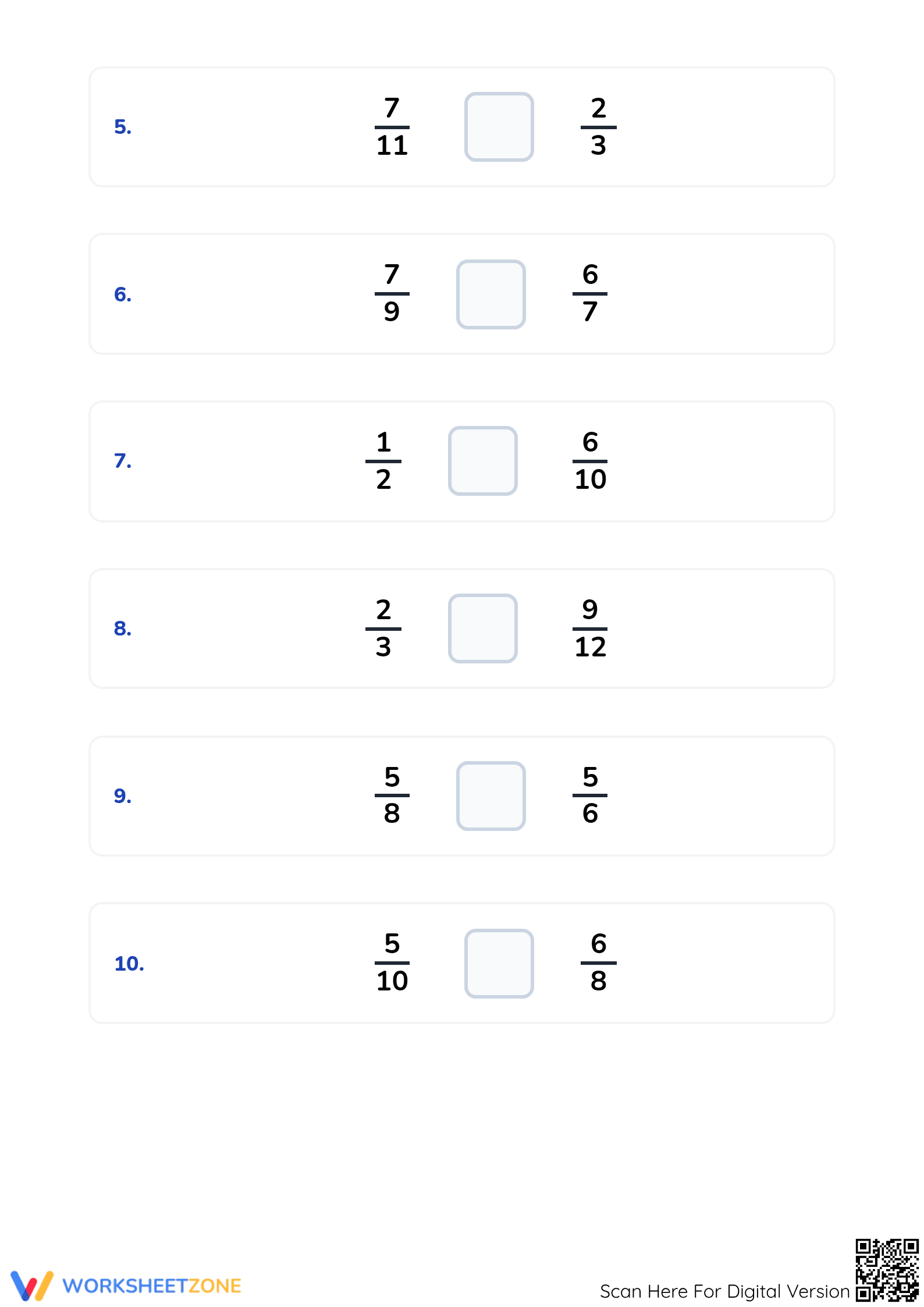
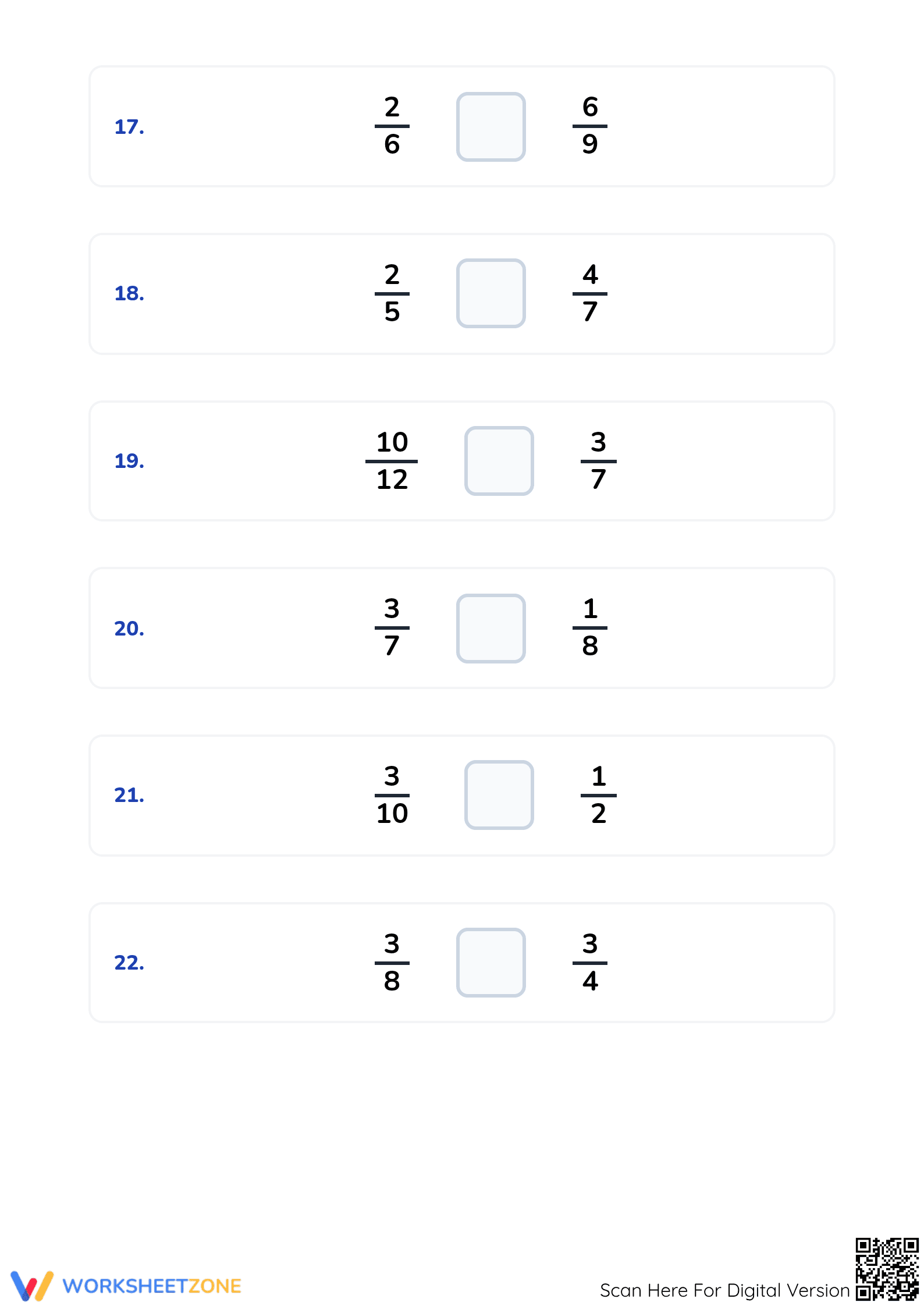
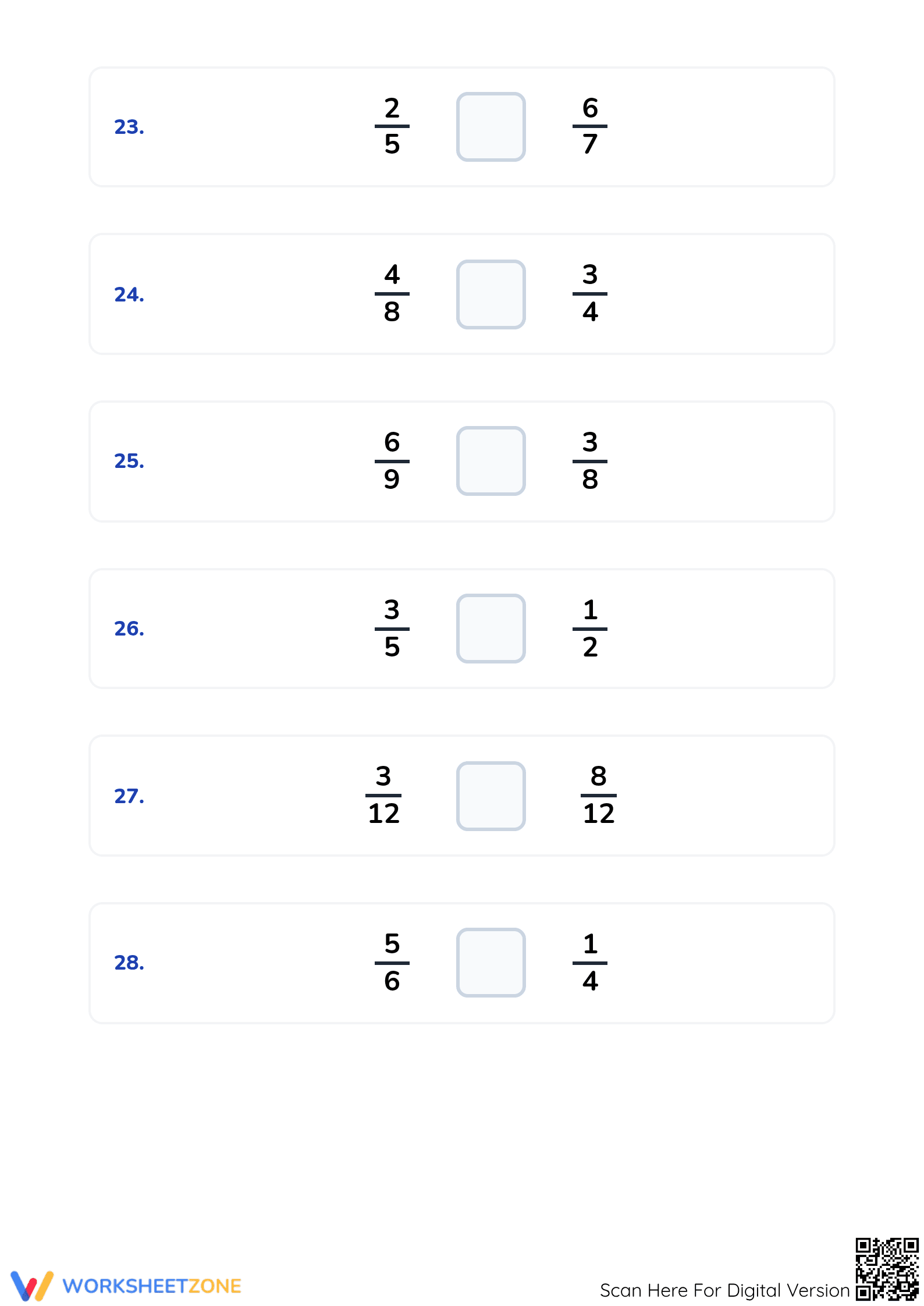
This robust 5-page PDF resource contains 28 unique comparison problems designed to challenge student thinking. Each page features clear, large-print fractions with a dedicated response box for the <, >, or = signs. The layout is intentionally spacious to allow for scratch work or visual modeling, such as drawing area models or number lines. A complete, easy-to-read answer key is provided for rapid grading or student self-correction.
- Guided Practice: Tasks 1-4 allow teachers to model strategies like cross-multiplication or finding common denominators while working with familiar fraction pairs.
- Supported Practice: Problems 5-16 introduce varying denominators, encouraging students to apply comparison strategies with increasing independence and confidence.
- Independent Practice: The final 12 problems require students to demonstrate mastery of comparing non-standard fraction values without teacher intervention or additional scaffolds.
This sequence follows a gradual-release model, transitioning from teacher-led observation to independent mastery.
This resource is strictly aligned to 4.NF.A.2: "Compare two fractions with different numerators and different denominators, e.g., by creating common denominators or numerators, or by comparing to a benchmark fraction such as 1/2." It also supports 3.NF.A.3.D standards. These standard codes can be copied directly into lesson plans, IEP goals, or district curriculum mapping tools.
Assign this packet as a focused independent practice session following a direct instruction lesson on common denominators. Teachers should monitor students to ensure they can find a common multiple, using this as a formative observation point. Alternatively, use single pages as exit tickets to monitor progress and adjust the pace of the fractions unit accordingly.
This resource is ideal for Grade 4 students working on state standards, but also serves as an excellent remedial tool for Grade 5 and 6 learners who need to solidify their understanding of rational number magnitude. It pairs naturally with fraction tiles or virtual manipulatives for students who require concrete scaffolding before moving to abstract numerical comparison.
Research by RAND AIRS (2024) emphasizes that fractional magnitude comparison is one of the most significant predictors of future algebra success. Students who move beyond rote procedures to develop conceptual number sense—such as recognizing that 6/8 is larger than 6/12 because the eighths are larger parts—show increased retention of mathematical concepts over time. This worksheet provides the repetitive, high-quality practice required to move these skills from working memory into long-term cognitive storage. By requiring the consistent use of inequality symbols, the task reinforces the relational nature of numbers, which is a core tenet of the Common Core State Standards. Providing 28 structured problems ensures that students encounter enough variety to generalize their comparison strategies across different denominator types. This alignment with evidence-based instructional design helps educators bridge the gap between initial introduction and fluent application of the 4.NF.A.2 standard in diverse modern classrooms.


