


























Views
Downloads
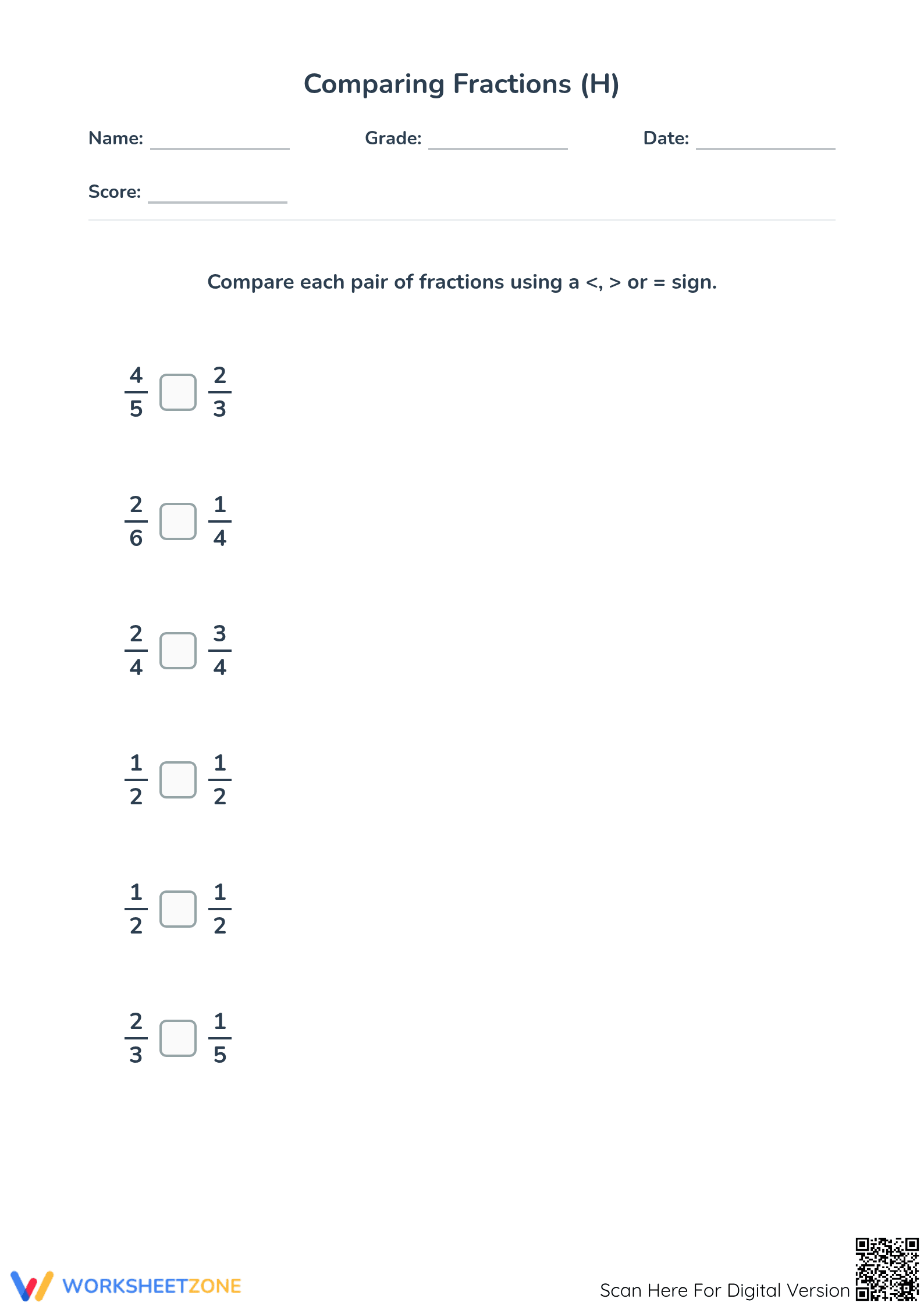
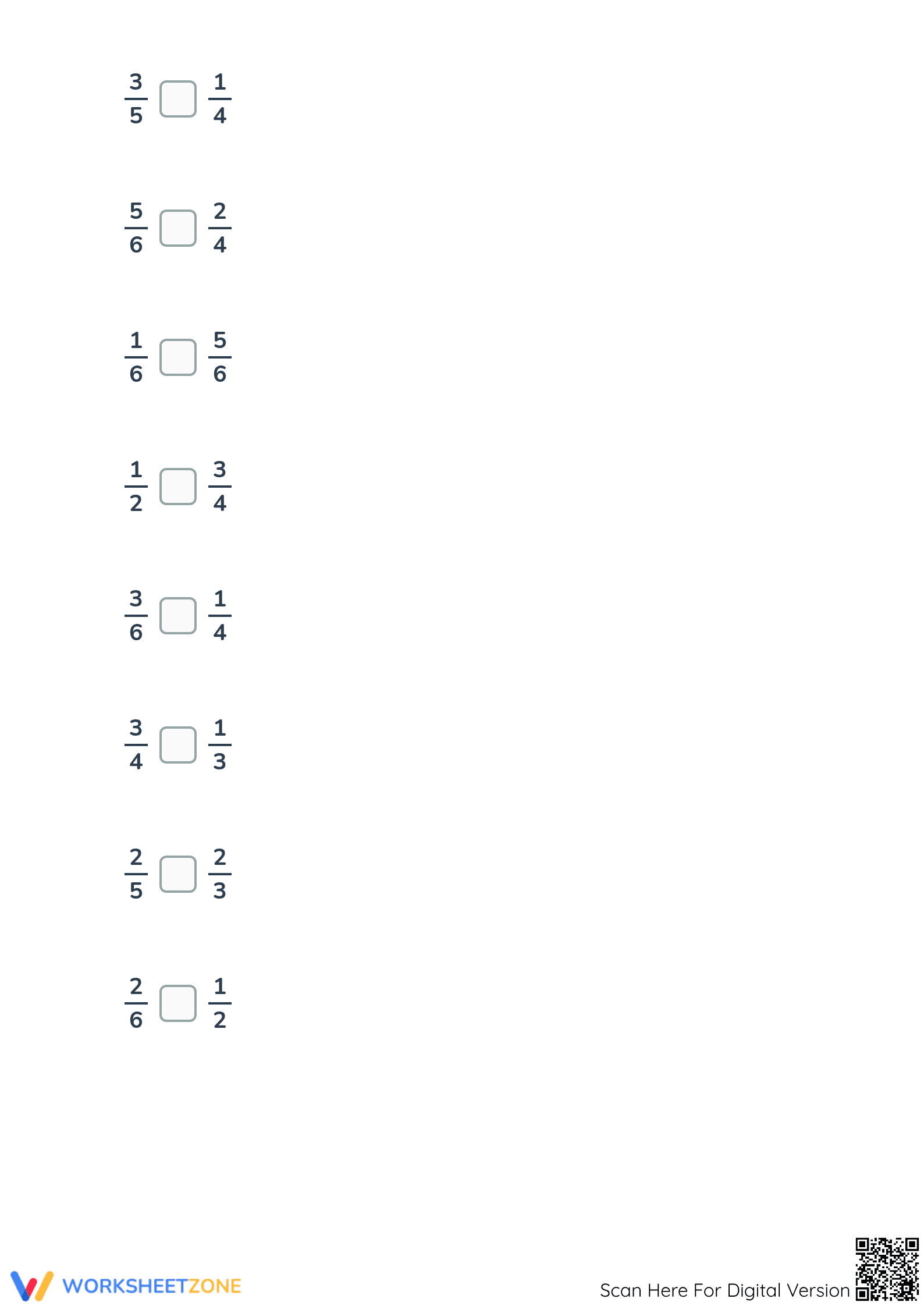

Essential Grade 4 Math: Comparing Simple Fractions Worksheet
Paste this activity's link or code into your existing LMS (Google Classroom, Canvas, Teams, Schoology, Moodle, etc.).
Students can open and work on the activity right away, with no student login required.
You'll still be able to track student progress and results from your teacher account.
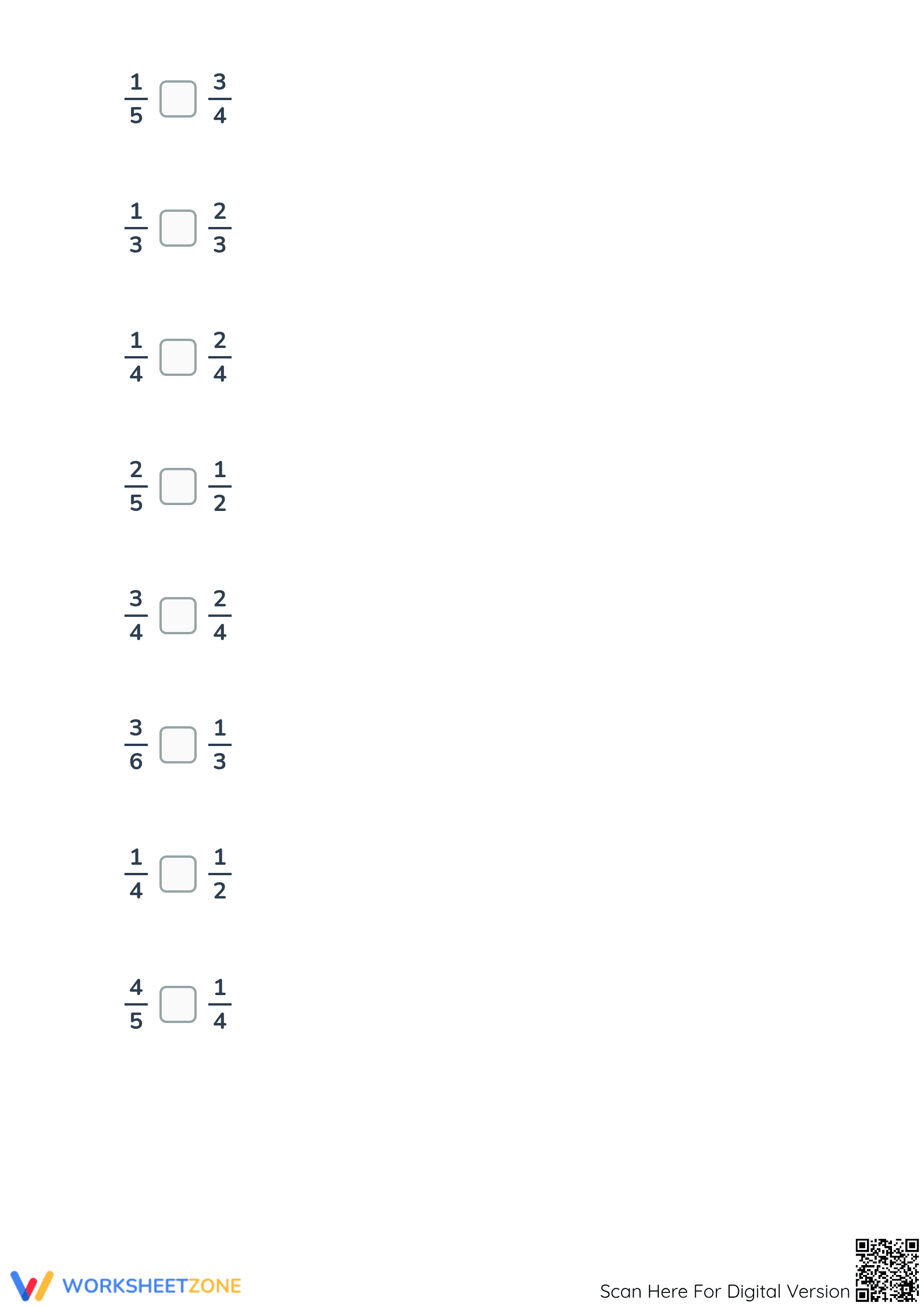
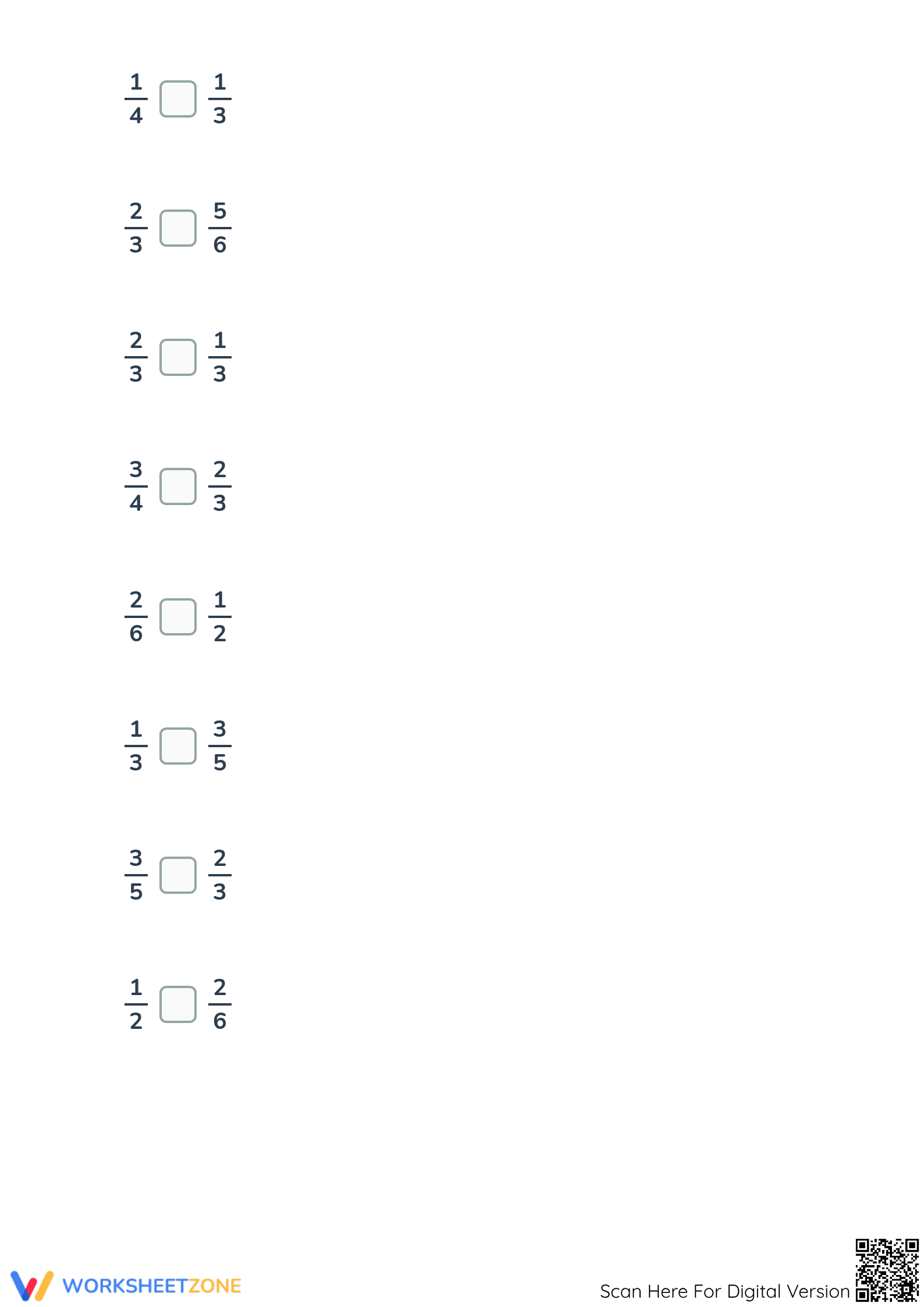
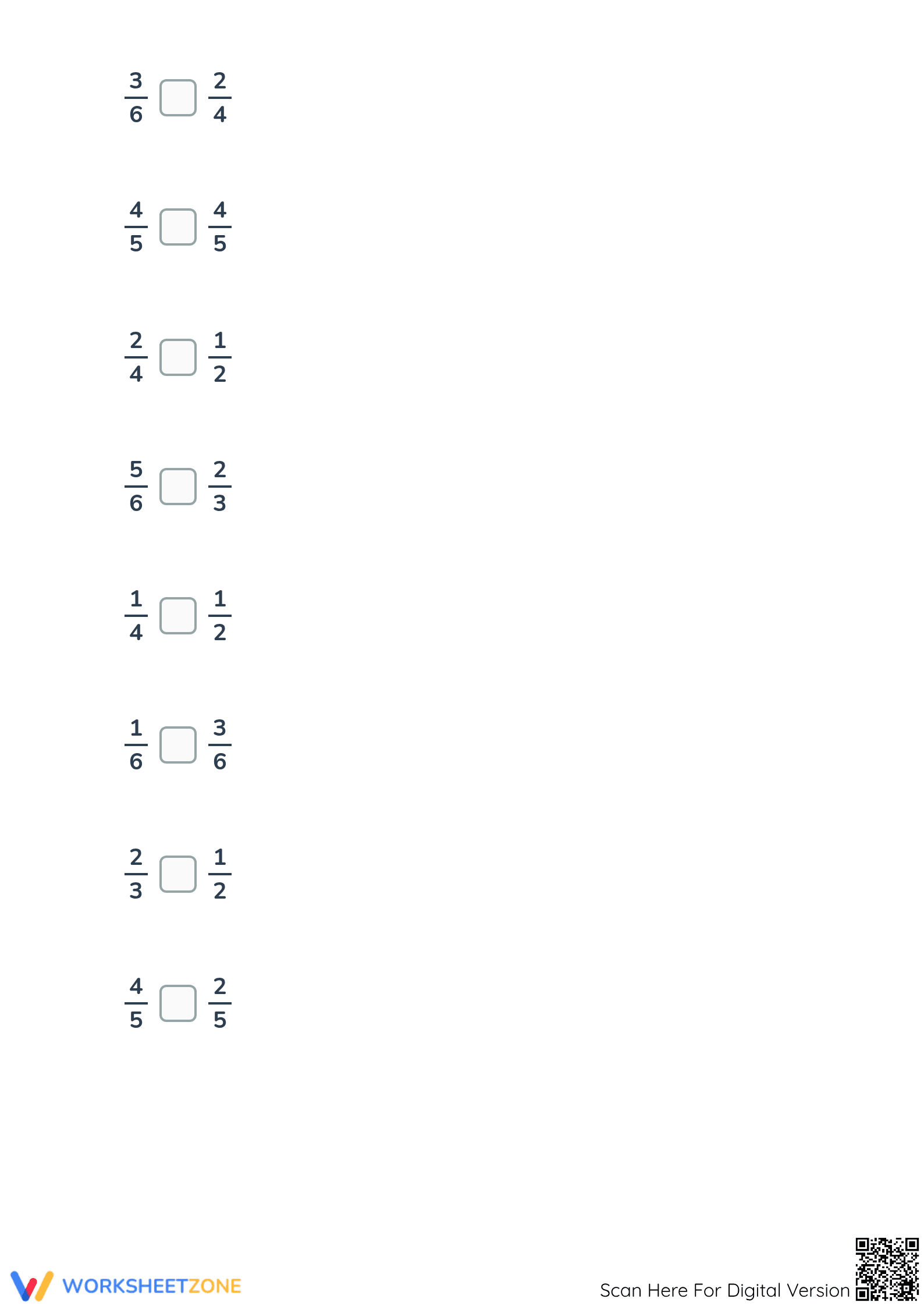
This comprehensive practice set strengthens a student's ability to compare simple fractions using inequality symbols. By evaluating pairs with both like and unlike denominators, learners develop the essential conceptual understanding required for advanced rational number operations. This five-page resource ensures students move beyond procedural guessing to meaningful mathematical reasoning and mastery.
At a Glance
- Grade: 4 · Subject: Math
- Standard:
CCSS.MATH.CONTENT.4.NF.A.2— Compare two fractions with different numerators and denominators by finding common denominators- Skill Focus: Comparing fractions with <, >, or =
- Format: 5 pages · 38 problems · Answer key included · PDF
- Best For: Independent practice and formative assessment
- Time: 20–30 minutes
The packet contains five distinct pages of practice, totaling 38 rigorous comparison tasks. Each page features a clean, distraction-free layout with clear boxes for students to input their comparison signs. A complete five-page answer key is included, allowing for immediate feedback or self-grading. The structured format supports multiple instructional sessions without the need for additional teacher formatting or resource gathering.
Zero-Prep Workflow
Teachers can implement this resource in under two minutes using a simple three-step process. First, print the required number of copies for the class (approx. 1 minute). Second, distribute the packets to students along with a brief reminder of comparison strategies like cross-multiplication or finding common denominators (approx. 30 seconds). Finally, review the completed work using the provided key (approx. 30 seconds for spot-checking). This streamlined workflow makes the worksheet ideal for emergency sub plans or busy morning work rotations.
Standards Alignment
The primary focus is CCSS.MATH.CONTENT.4.NF.A.2: "Compare two fractions with different numerators and different denominators, e.g., by creating common denominators or numerators, or by comparing to a benchmark fraction such as 1/2." Additionally, it supports CCSS.MATH.CONTENT.3.NF.A.3.D for students working with simpler pairs. Both standard codes can be copied directly into lesson plans, IEP goals, or district curriculum mapping tools.
How to Use It
Use this worksheet as a post-lesson assessment after direct instruction on fraction equivalence. Teachers should observe students during the first page to identify those who rely solely on visual estimation rather than mathematical computation. This resource also serves as an excellent formative tool during small-group rotations, where the repetitive nature of the tasks helps solidify the student's internal logic for fraction magnitude. Completion typically takes between 20 and 30 minutes.
Who It's For
This resource is designed for Grade 4 students but is highly effective for Grade 5 and 6 learners requiring remedial support with rational numbers. It provides the necessary volume of practice for students with processing needs who benefit from consistent formatting. This worksheet pairs naturally with visual fraction models or a standard number line anchor chart to bridge the gap between concrete and abstract comparison.
Alignment with CCSS.MATH.CONTENT.4.NF.A.2 ensures that students are developing the requisite skills for higher-level algebraic reasoning. By engaging in the systematic comparison of 38 fraction pairs, learners build the fluency needed to navigate complex mathematical landscapes. Research from Fisher & Frey (2014) emphasizes that high-volume, focused practice within the gradual release of responsibility framework is critical for students to internalize abstract concepts like fraction magnitude. This worksheet provides that specific practice, moving students from guided observation to independent mastery. The inclusion of a comprehensive answer key facilitates the immediate feedback loops necessary for correcting misconceptions early in the learning cycle. Such structured repetitions are identified by NAEP data as a key differentiator in student performance regarding rational number sense and proportional reasoning across mid-elementary grades.


