


























Views
Downloads

Printable Comparing Fractions Worksheet | Grade 4 Math
Paste this activity's link or code into your existing LMS (Google Classroom, Canvas, Teams, Schoology, Moodle, etc.).
Students can open and work on the activity right away, with no student login required.
You'll still be able to track student progress and results from your teacher account.
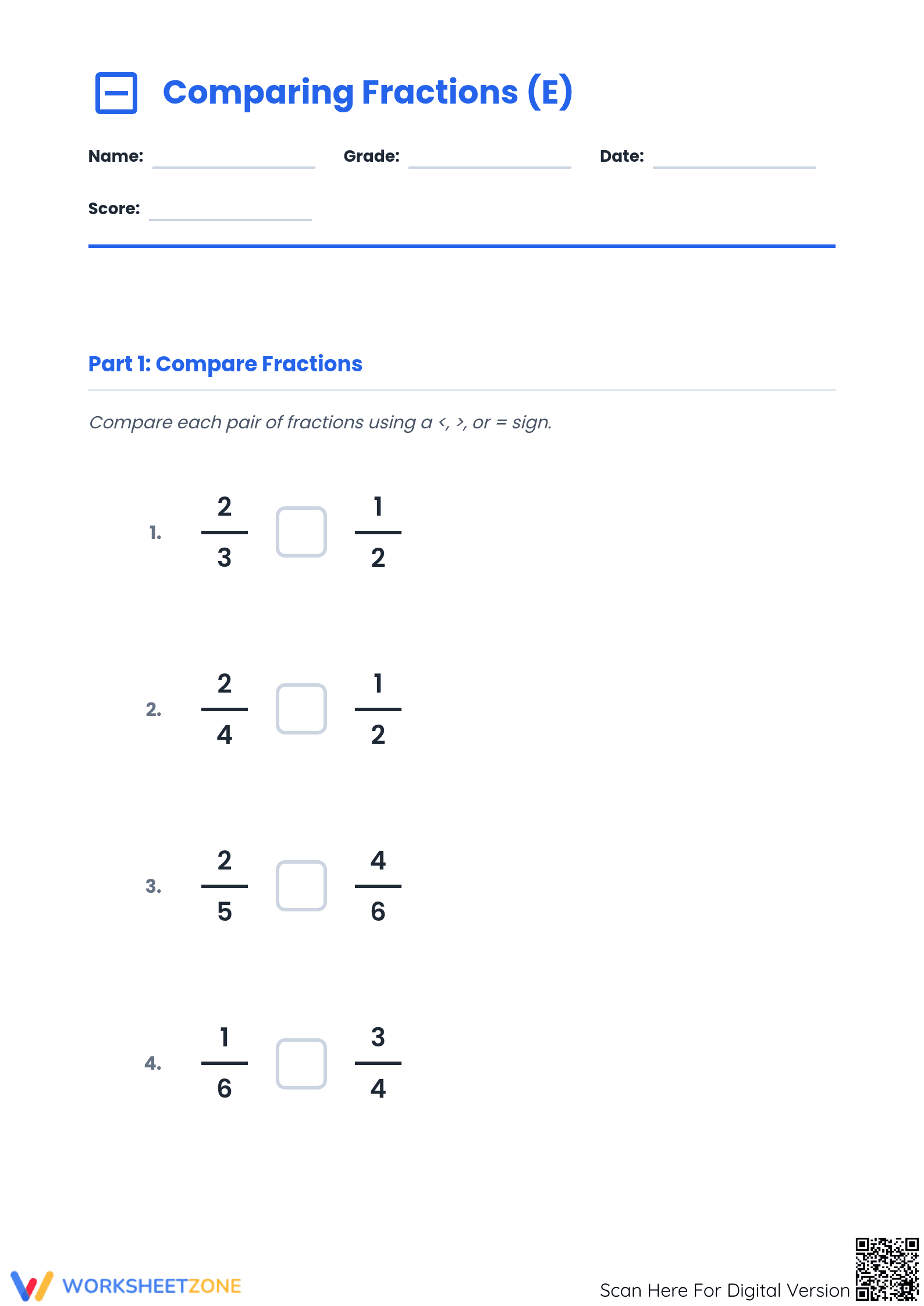
Comparing fractions is a foundational skill that bridges basic number sense with complex algebraic thinking. This printable Grade 4 worksheet provides students with targeted practice in determining the relative value of fractions using inequality symbols. By completing these exercises, learners develop the mathematical fluency required to master fractional relationships in various classroom contexts.
At a Glance
- Grade: 4 · Subject: Math
- Standard:
CCSS.MATH.CONTENT.4.NF.A.2— Compare two fractions with different numerators and different denominators using signs- Skill Focus: Comparing fractions with unequal denominators
- Format: 5 pages · 26 problems · Answer key included · PDF
- Best For: Independent practice and formative assessment
- Time: 25–35 minutes
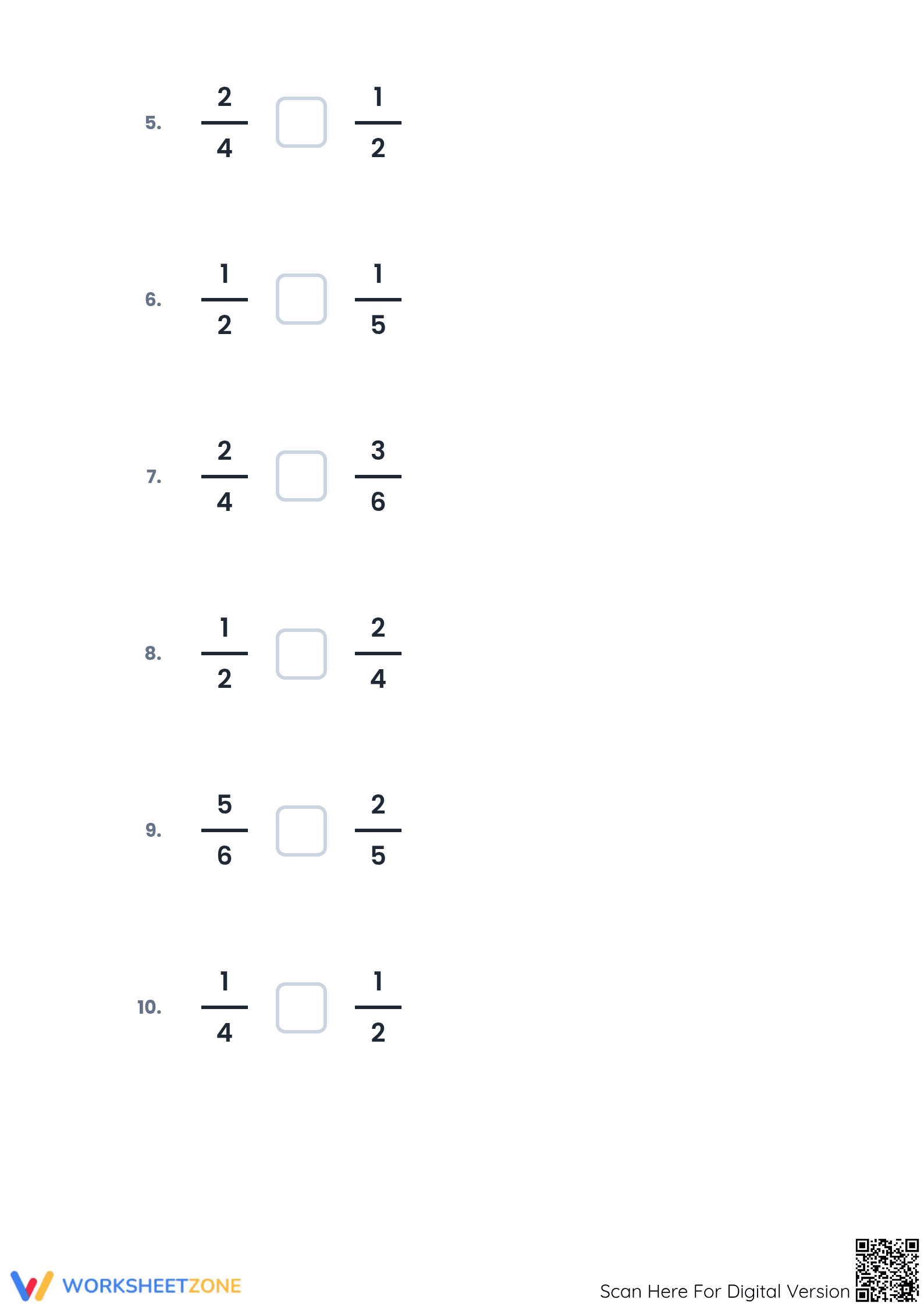
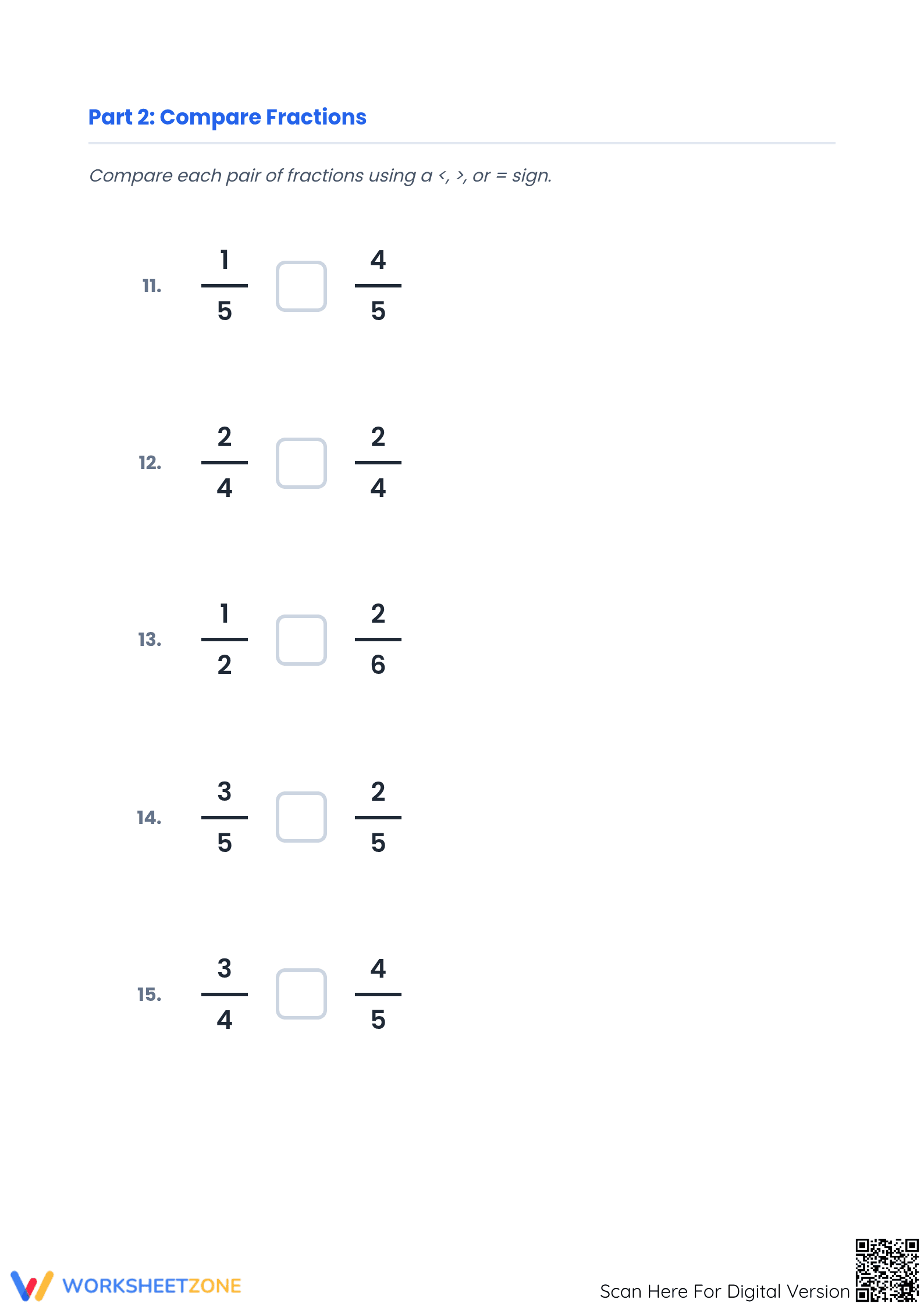
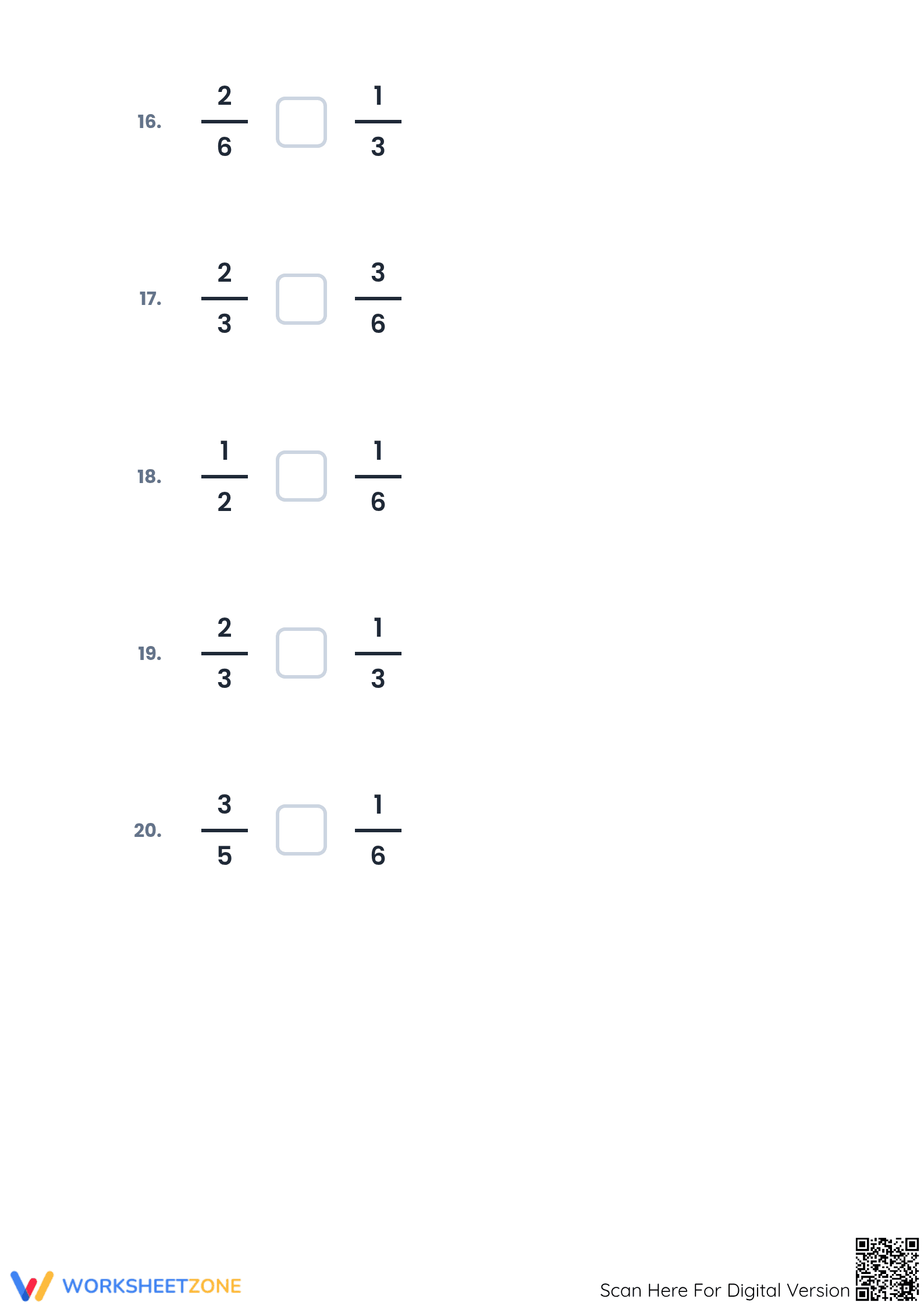
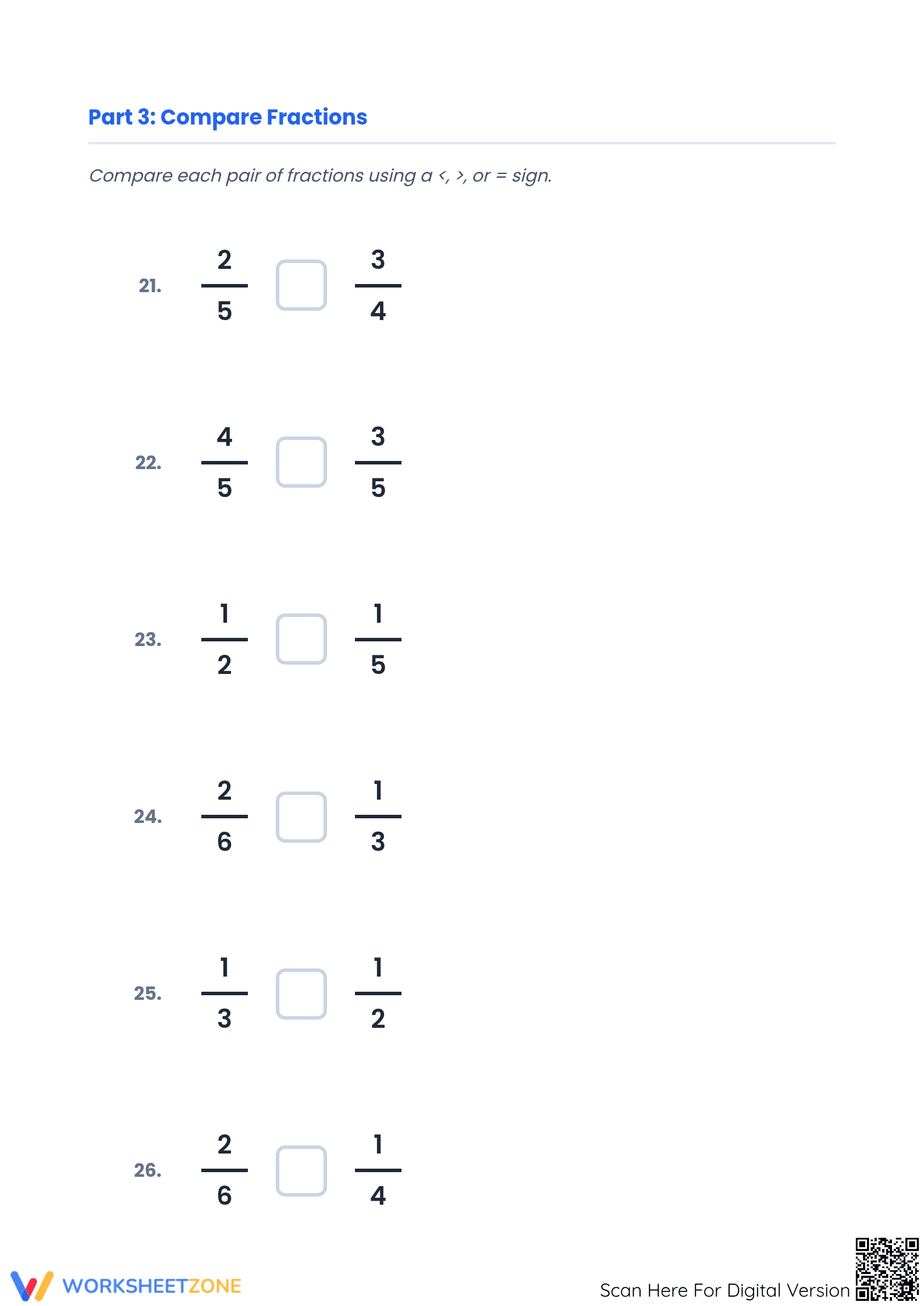
This 5-page PDF features 26 comparison problems designed to challenge and support student understanding. The worksheet is organized into three distinct parts, offering a variety of fraction pairs with unequal numerators and denominators. A complete answer key is included to facilitate quick grading and immediate feedback for both teachers and students.
Skill Progression
- Guided practice: Initial problems feature simpler fractions allowing students to apply benchmarks like one-half to determine relative size.
- Supported practice: Middle sections introduce related denominators, encouraging students to find common multiples to compare values accurately.
- Independent practice: Final sets present complex pairs with unrelated denominators, requiring students to synthesize their knowledge of equivalent fractions.
This structured progression ensures that students build confidence as they move toward mathematical independence during their fraction studies.
Standards Alignment
This worksheet is directly aligned with CCSS.MATH.CONTENT.4.NF.A.2. The standard requires students to: "Compare two fractions with different numerators and different denominators, e.g., by creating common denominators or numerators." Both standard codes can be copied directly into lesson plans, IEP goals, or district curriculum mapping tools to ensure instructional coherence across all learning environments.
How to Use It
This resource is best utilized during the "You Do" phase of a lesson. After instruction on finding common denominators, assign this worksheet as independent practice. Teachers can use the first page as a quick formative check; observe whether students are drawing models or using numerical algorithms. This provides insight into their current level of abstraction. Completion usually takes 35 minutes.
Who It's For
The worksheet is designed for Grade 4 students, but serves as an excellent intervention for Grade 5 learners. It can be naturally paired with visual aids like fraction strips or a number line anchor chart to provide additional scaffolding for students who require concrete representations before moving to symbolic manipulation and abstract comparisons.
Effective mathematics instruction requires a balance of conceptual understanding and procedural fluency. According to the NAEP 2024 framework, students who master fraction comparisons early are significantly more likely to succeed in middle school ratio and proportion units. This worksheet implements research-based practices by providing repetitive, focused practice that reduces cognitive load while building long-term retention of fractional concepts. The inclusion of various denominator types ensures that students do not rely on tricks but instead develop a robust mental model of fraction magnitude. By aligning directly with CCSS.MATH.CONTENT.4.NF.A.2, this resource provides the evidence-based structure necessary for high-quality math instruction. Educators can trust that these 26 tasks meet the rigorous demands of modern state frameworks while remaining accessible to diverse learners. The structured layout and clear objective allow for seamless integration into any Tier 1 or Tier 2 instructional model, supporting both teacher efficiency and student mastery of comparing simple fractions.


