


























Views
Downloads

Printable Comparing Simple Fractions | Grade 4 Aligned
Paste this activity's link or code into your existing LMS (Google Classroom, Canvas, Teams, Schoology, Moodle, etc.).
Students can open and work on the activity right away, with no student login required.
You'll still be able to track student progress and results from your teacher account.
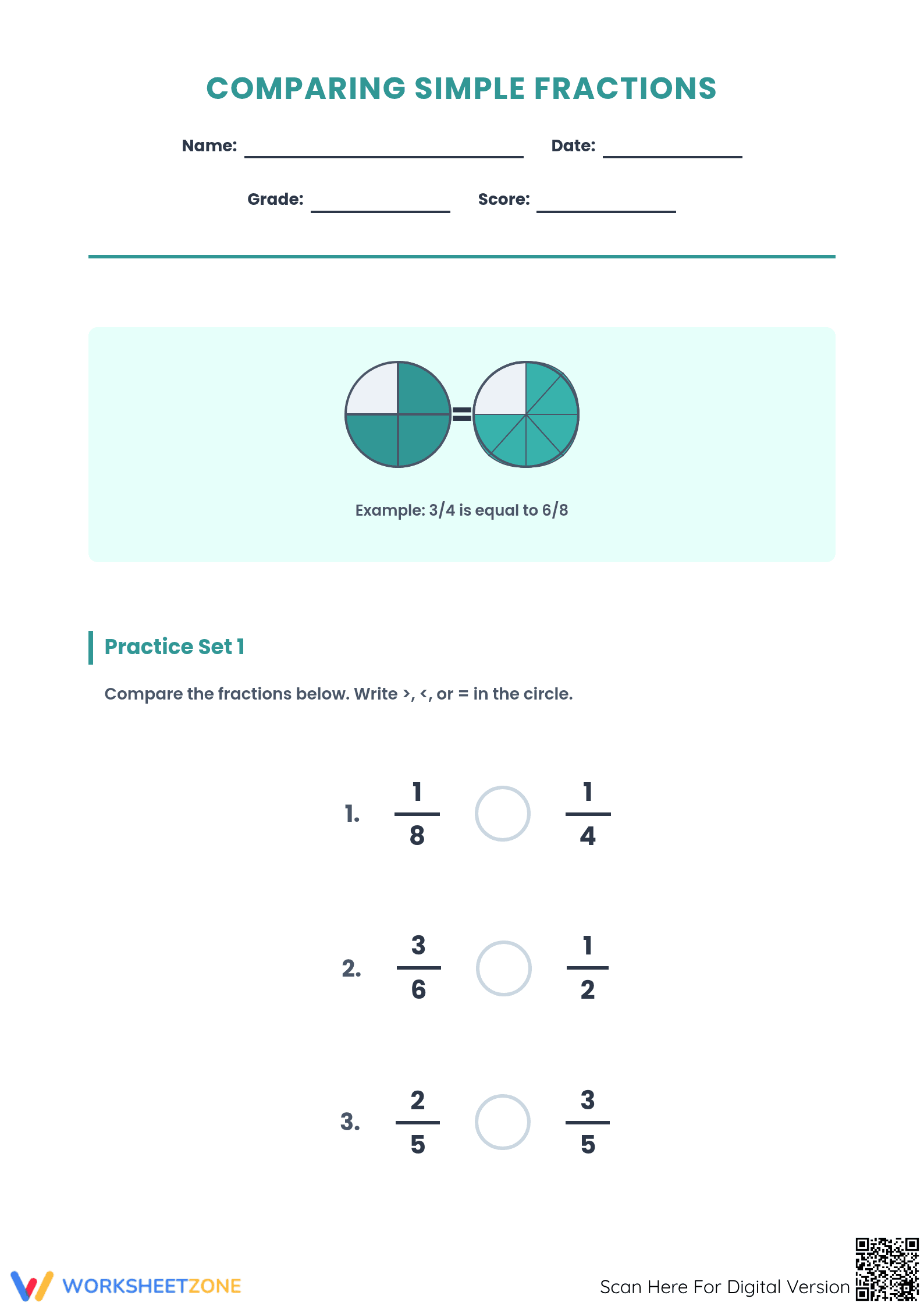
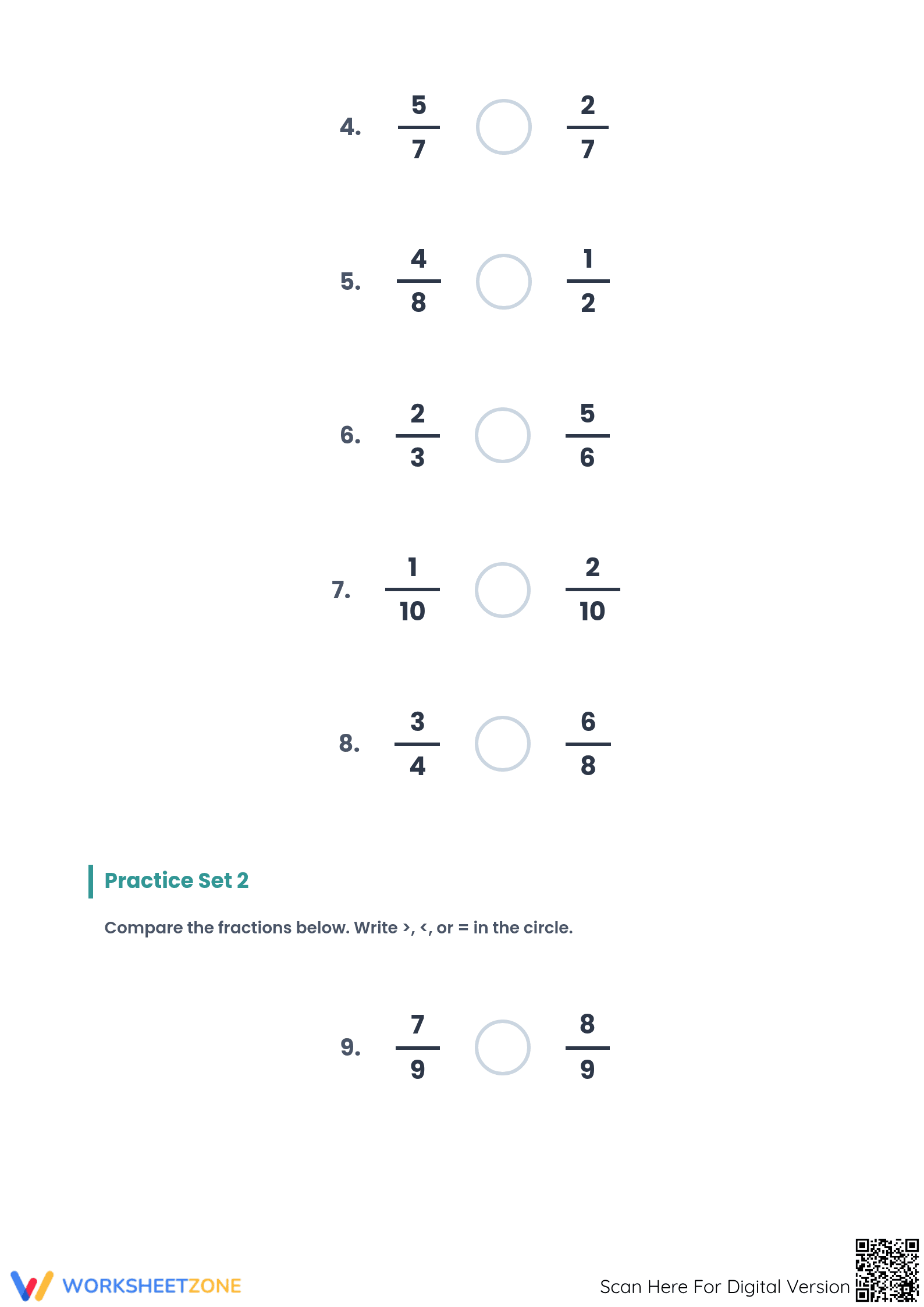
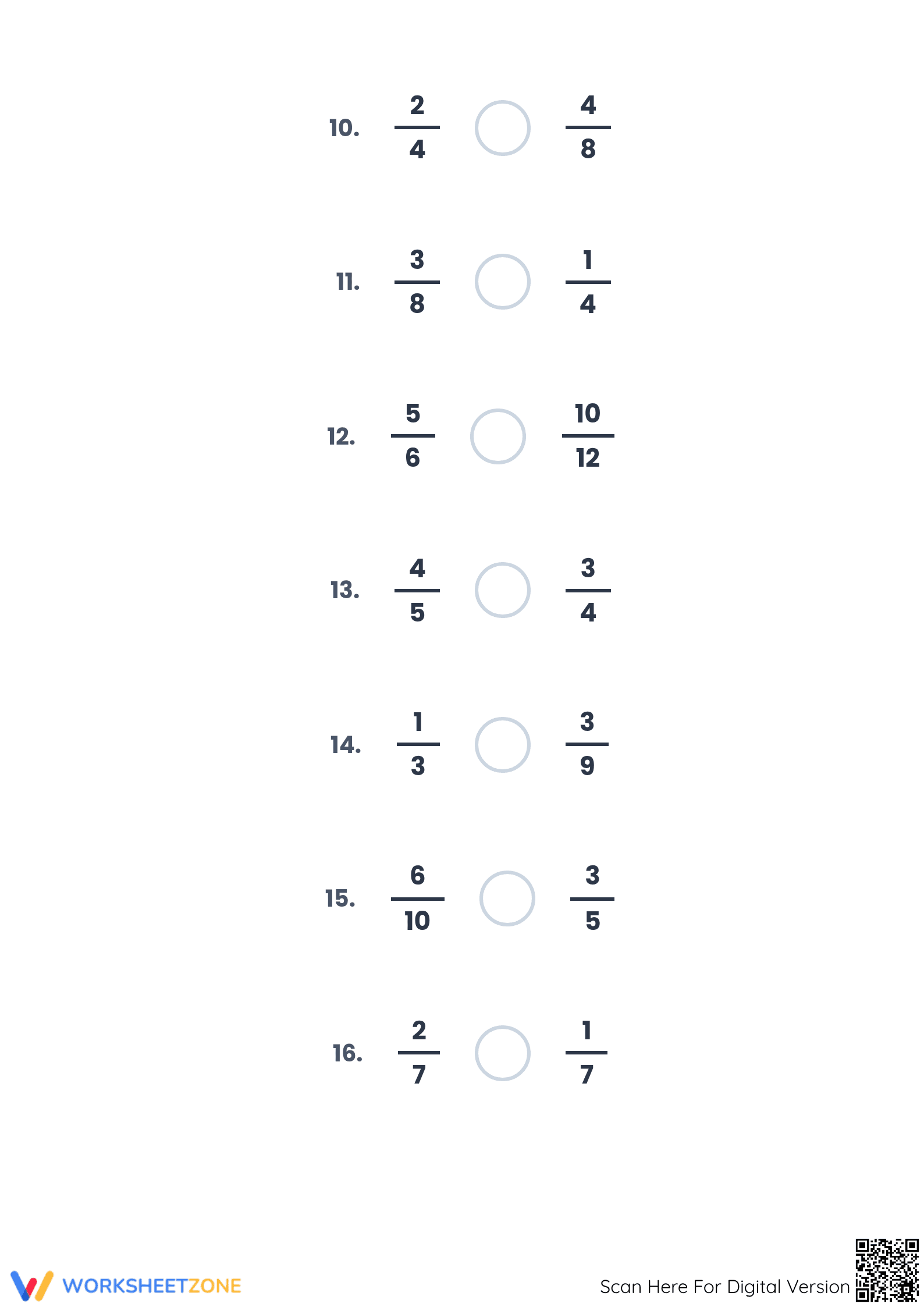
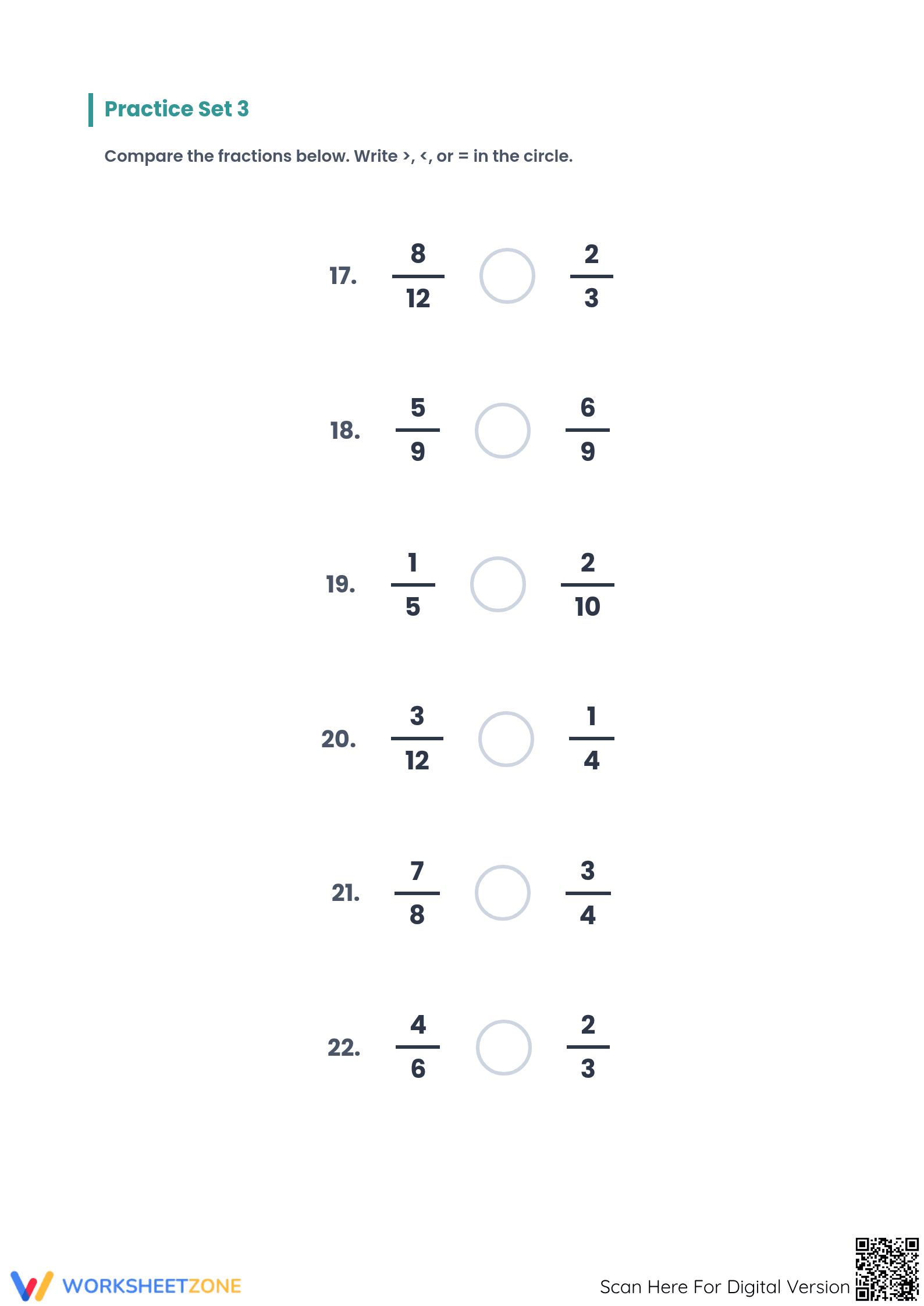
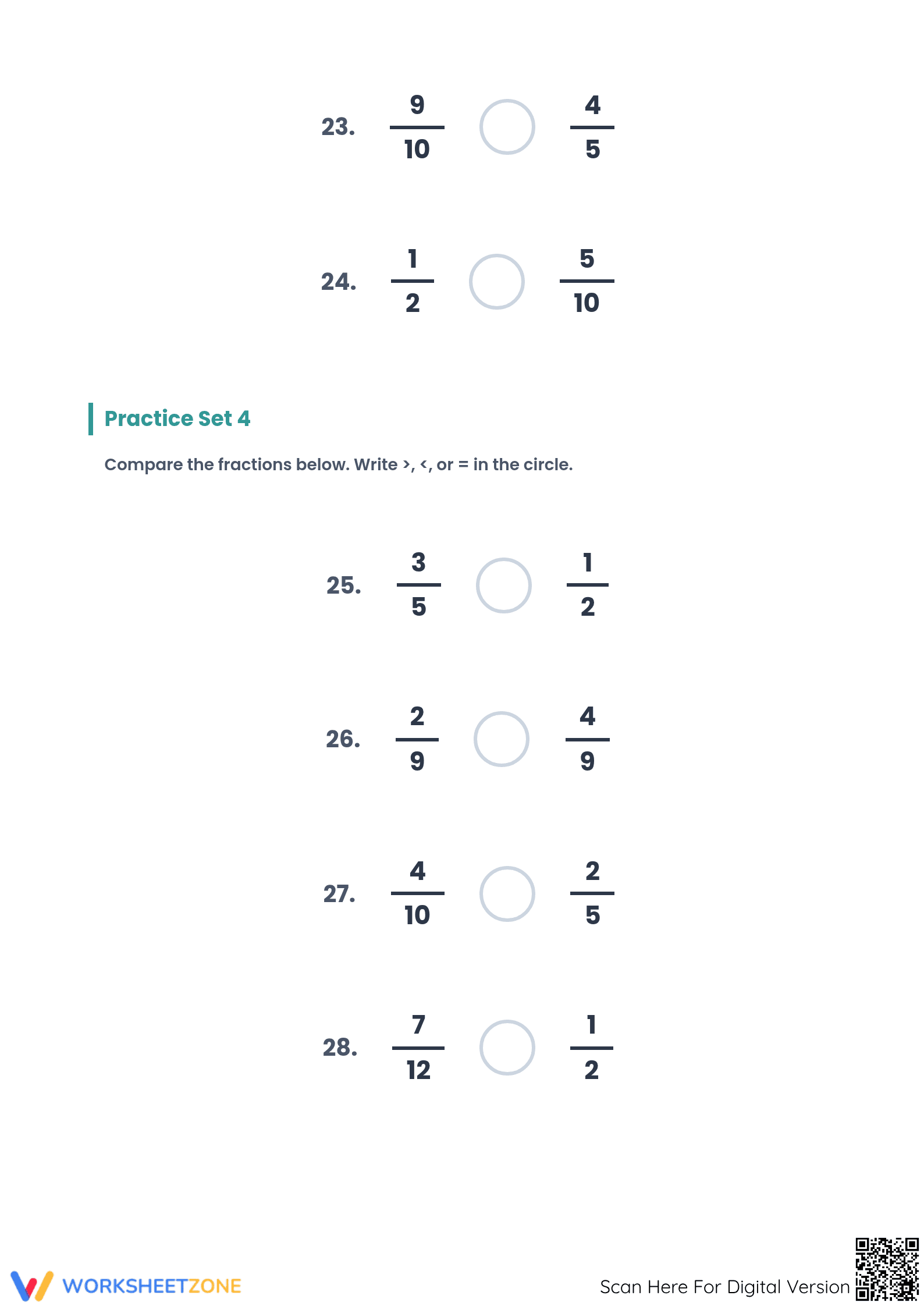
This comprehensive math worksheet provides targeted practice for students mastering the comparison of simple fractions. By engaging with visual models and abstract symbols, learners develop a deep conceptual understanding of fractional values. This resource ensures students can confidently determine relative size using greater than, less than, and equal to signs across multiple practice sets.
At a Glance
- Grade: 4 · Subject: Math
- Standard:
CCSS.MATH.CONTENT.4.NF.A.2— Compare fractions with different numerators and denominators by creating common denominators- Skill Focus: Comparing Simple Fractions
- Format: 5 pages · 28 problems · Answer key included · PDF
- Best For: Independent practice and formative assessment
- Time: 25–35 minutes
What's Inside
Inside this five-page PDF, you will find four distinct practice sets totaling 28 comparison tasks. The first page features a clear visual example using shaded circles to demonstrate that 3/4 is equal to 6/8, providing immediate scaffolding. Each problem presents two fractions separated by a comparison circle, offering ample space for students to record their mathematical reasoning and final symbols.
Zero-Prep Workflow
This worksheet is designed for a seamless, zero-prep workflow in busy classrooms. Teachers can simply print the five-page document (less than 1 minute) and distribute it to students for immediate engagement (1 minute). The included answer key allows for rapid review and grading (under 2 minutes), making this an ideal resource for emergency sub plans or quick bell-ringer activities.
Standards Alignment
This resource is explicitly aligned to CCSS.MATH.CONTENT.4.NF.A.2, which requires students to compare two fractions with different numerators and different denominators. While it supports Grade 3 foundations, it pushes students toward the Grade 4 mastery level of using benchmark fractions or common denominators. This standard code can be copied directly into lesson plans, IEP goals, or district curriculum mapping tools.
How to Use It
Use this worksheet as a post-instructional activity to verify students' grasp of fractional comparisons. During direct instruction, model the use of the visual example on page one before releasing students to work independently. For a formative assessment tip, observe whether students are drawing their own visual models or calculating common denominators to solve the more complex problems in Practice Set 4.
Who It's For
This resource is designed for Grade 4 students but remains highly effective for Grade 5 learners needing remediation or Grade 3 students ready for enrichment. It is best used after a lesson on equivalent fractions. Pair this worksheet with physical manipulatives or a digital fraction bar tool to support visual learners who may struggle with abstract numerical comparisons.
Mathematical fluency in fraction comparison is a critical milestone for middle school readiness. According to a ScienceDirect TpT Analysis, structured practice that combines visual examples with abstract symbol application significantly improves long-term retention of fractional concepts. This worksheet targets the CCSS.MATH.CONTENT.4.NF.A.2 standard, focusing on the plain-English skill of determining the relative size of fractions with differing parts and wholes. By providing 28 varied tasks, the resource aligns with the Fisher & Frey (2014) gradual release of responsibility model, moving from guided visual support to independent numerical reasoning. Educational research consistently highlights that students who master these fundamental comparison skills are more likely to succeed in later algebraic thinking and complex proportional reasoning. This document serves as a verified tool for building the essential cognitive bridges between concrete fraction models and formal mathematical notation required in upper elementary and early middle school curricula.


