


























Views
Downloads
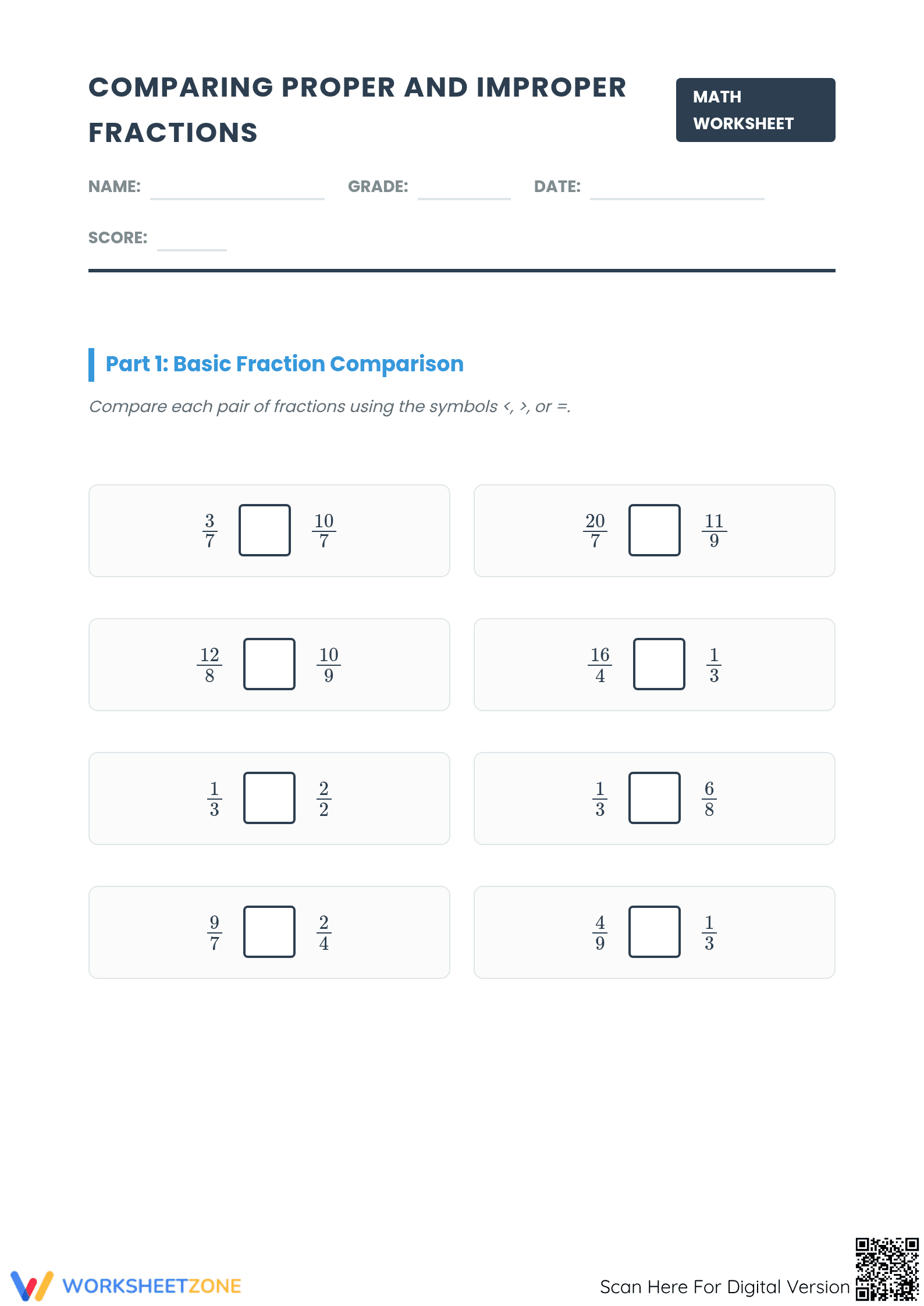
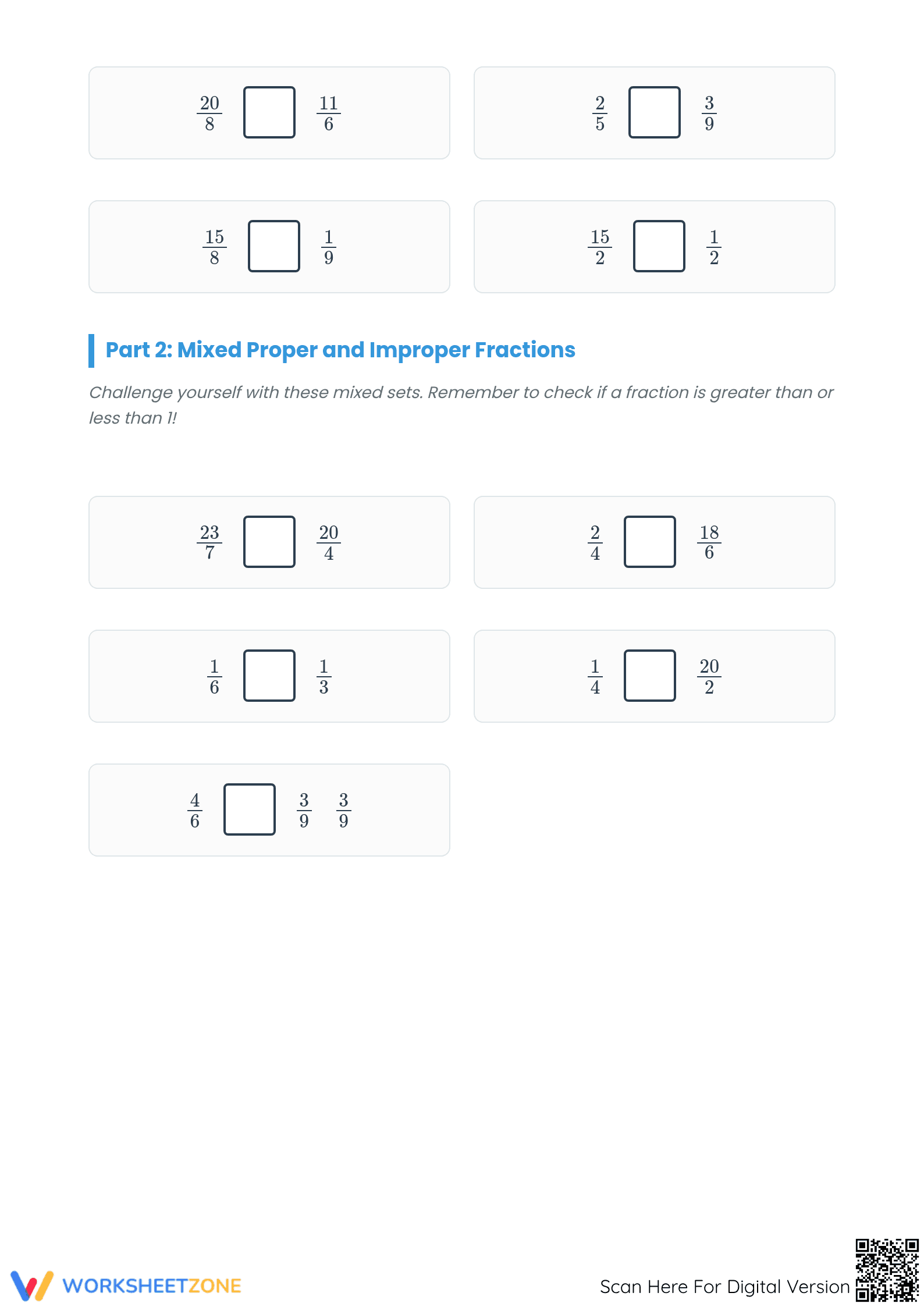
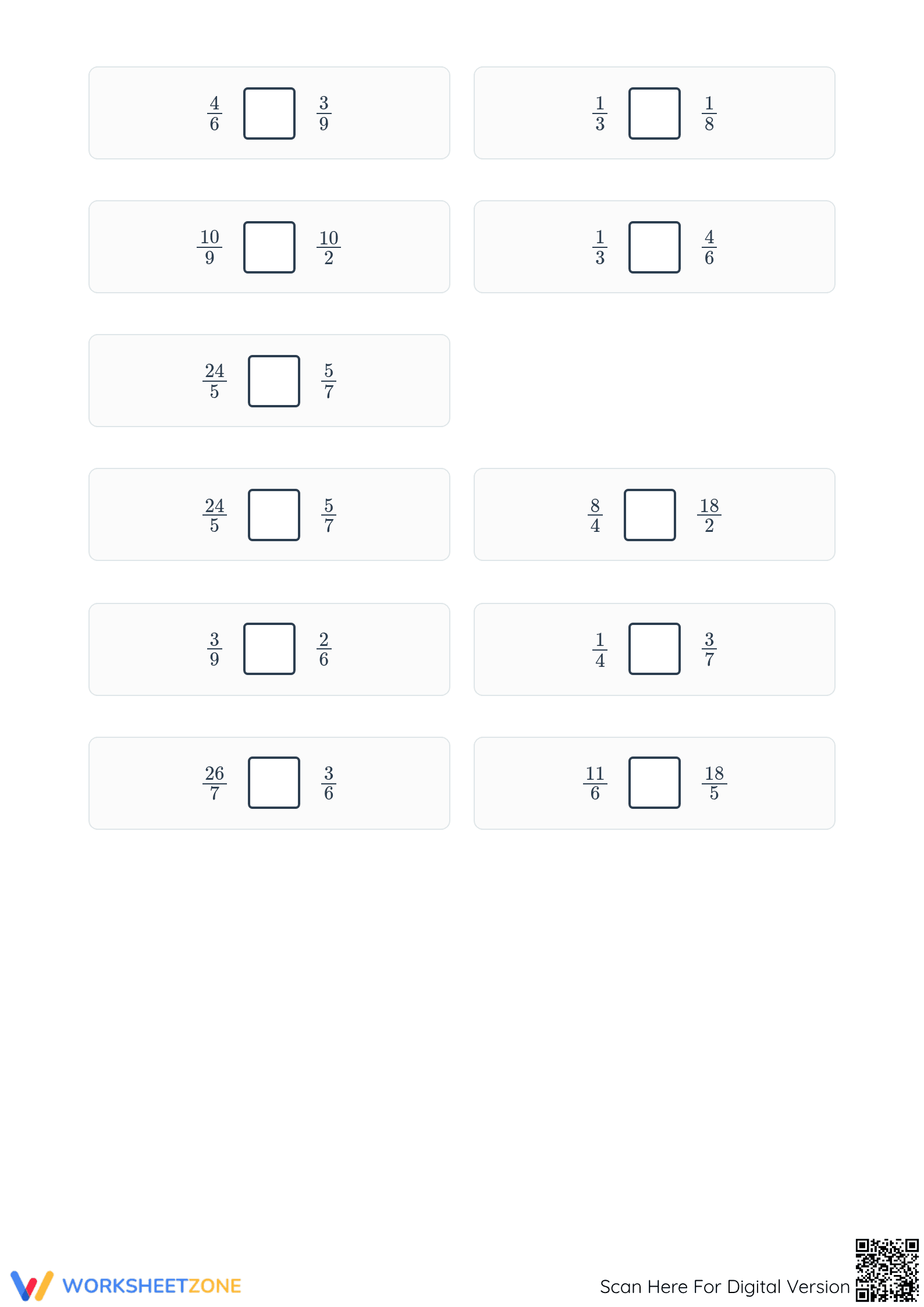
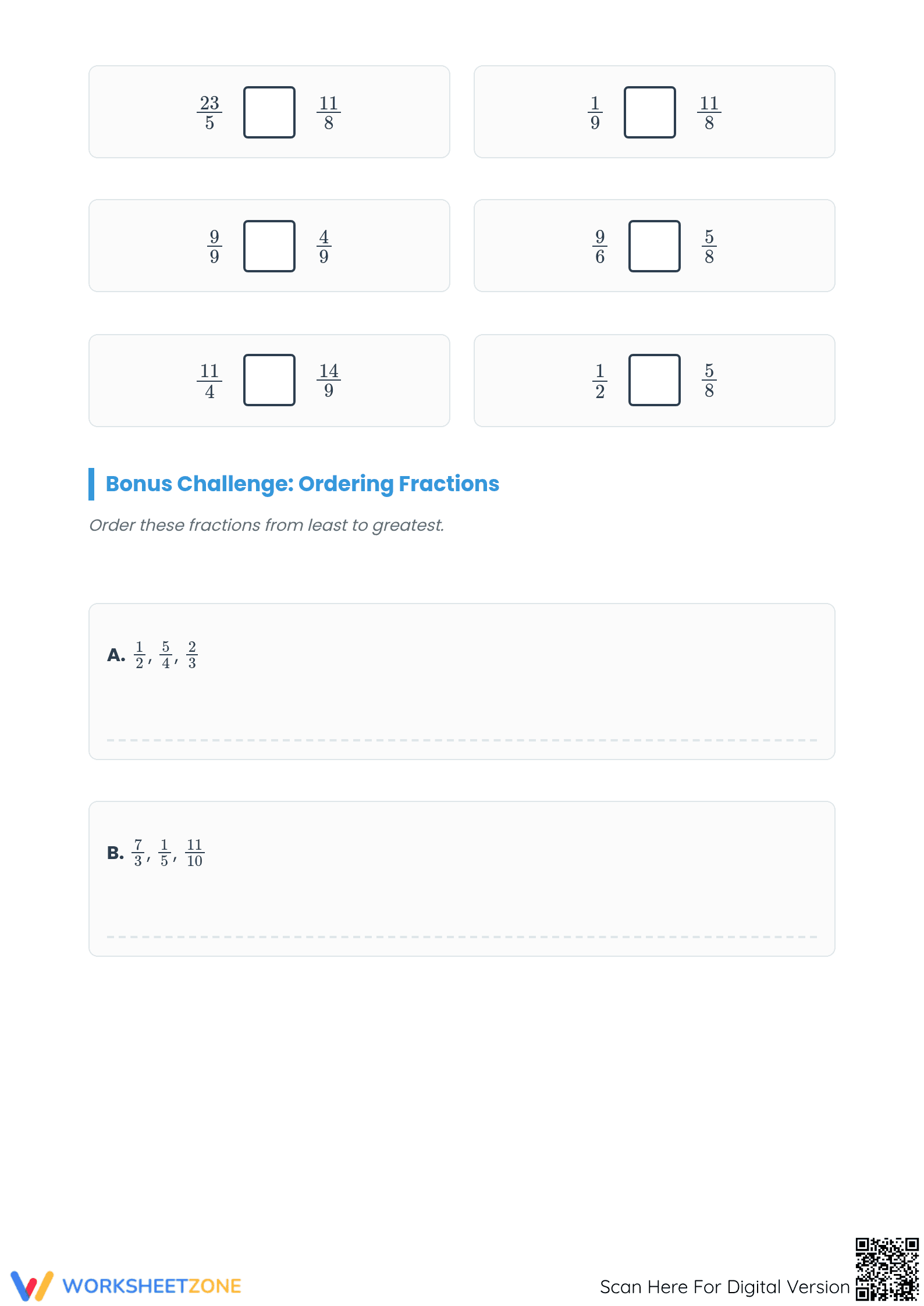

Essential Comparing Proper and Improper Fractions Worksheet
Paste this activity's link or code into your existing LMS (Google Classroom, Canvas, Teams, Schoology, Moodle, etc.).
Students can open and work on the activity right away, with no student login required.
You'll still be able to track student progress and results from your teacher account.
This comprehensive 4-page math worksheet provides essential practice for students learning to compare proper and improper fractions. By working through 35 targeted problems, learners strengthen their ability to evaluate fraction magnitudes and understand the relationship between numerators and denominators. This resource is designed to move students from basic recognition to conceptual mastery of fractional values.
At a Glance
- Grade: 4–8 · Subject: Math (Fractions)
- Standard:
CCSS.MATH.CONTENT.4.NF.A.2— Compare two fractions with different numerators and different denominators using inequality symbols- Skill Focus: Proper vs. Improper Fraction Comparison
- Format: 4 pages · 35 problems · Answer key included · PDF
- Best For: Independent practice and fraction review
- Time: 25–40 minutes
This download features a four-page sequence that systematically builds fraction comparison skills. Part 1 focuses on basic comparisons, while Part 2 introduces more complex mixed sets involving larger improper fractions. The worksheet concludes with a "Bonus Challenge" requiring students to order groups of three fractions from least to greatest. A complete answer key is provided for immediate feedback and grading efficiency.
Skill Progression
- Guided Practice: The first page provides 8 basic comparison boxes where students use mathematical symbols (<, >, =) to relate fractions with smaller denominators and similar benchmarks.
- Supported Practice: Part 2 expands the scope with 21 mixed fraction sets, encouraging students to consider whether fractions are greater than or less than one to aid their logic.
- Independent Practice: The final page presents ordering challenges that require students to synthesize their knowledge by ranking multiple fractional values in a sequence.
This gradual progression supports the standard gradual-release model, ensuring students build the confidence needed for algebraic thinking.
This resource is explicitly aligned with CCSS.MATH.CONTENT.4.NF.A.2, which requires students to compare two fractions with different numerators and different denominators by creating common denominators or comparing to a benchmark fraction. The inclusion of improper fractions extends this to more advanced middle school number system concepts. Both standard codes can be copied directly into lesson plans, IEP goals, or district curriculum mapping tools.
Use this worksheet as a secondary practice set during your fractions unit after students have been introduced to the concept of improper fractions. It serves as an excellent formative assessment tool; observe whether students are finding common denominators or using benchmarks like 1 to make their comparisons. Completion typically takes 35 minutes, making it an ideal choice for a quiet work session or homework assignment.
This activity is designed for upper elementary and middle school students who need additional reinforcement in fraction comparisons. It is particularly effective for students on IEPs or those requiring Tier 2 intervention, as the clear layout minimizes cognitive load. Pair this with a fraction tile manipulative or an anchor chart for maximum instructional impact during small group rotations.
The instructional design of this worksheet aligns with evidence-based practices for mathematical fluency as outlined in the RAND AIRS 2024 report on curriculum materials. Research indicates that frequent, structured practice with varied fraction types—specifically the inclusion of improper fractions alongside proper ones—is critical for developing the rational number sense necessary for algebra readiness. By requiring students to apply comparison logic to values greater than one, this resource addresses common misconceptions regarding fraction size and denominator magnitude. A 2024 analysis from ScienceDirect TpT highlights that high-quality, focused practice sheets like this one significantly reduce teacher prep time while maintaining rigorous alignment with the CCSS.MATH.CONTENT.4.NF.A.2 standard. Providing students with 35 unique opportunities to practice comparison ensures that the skill is moved from short-term memory to long-term procedural fluency, as verified by EdReports 2024 evaluations of effective math intervention tools.


