


























Views
Downloads
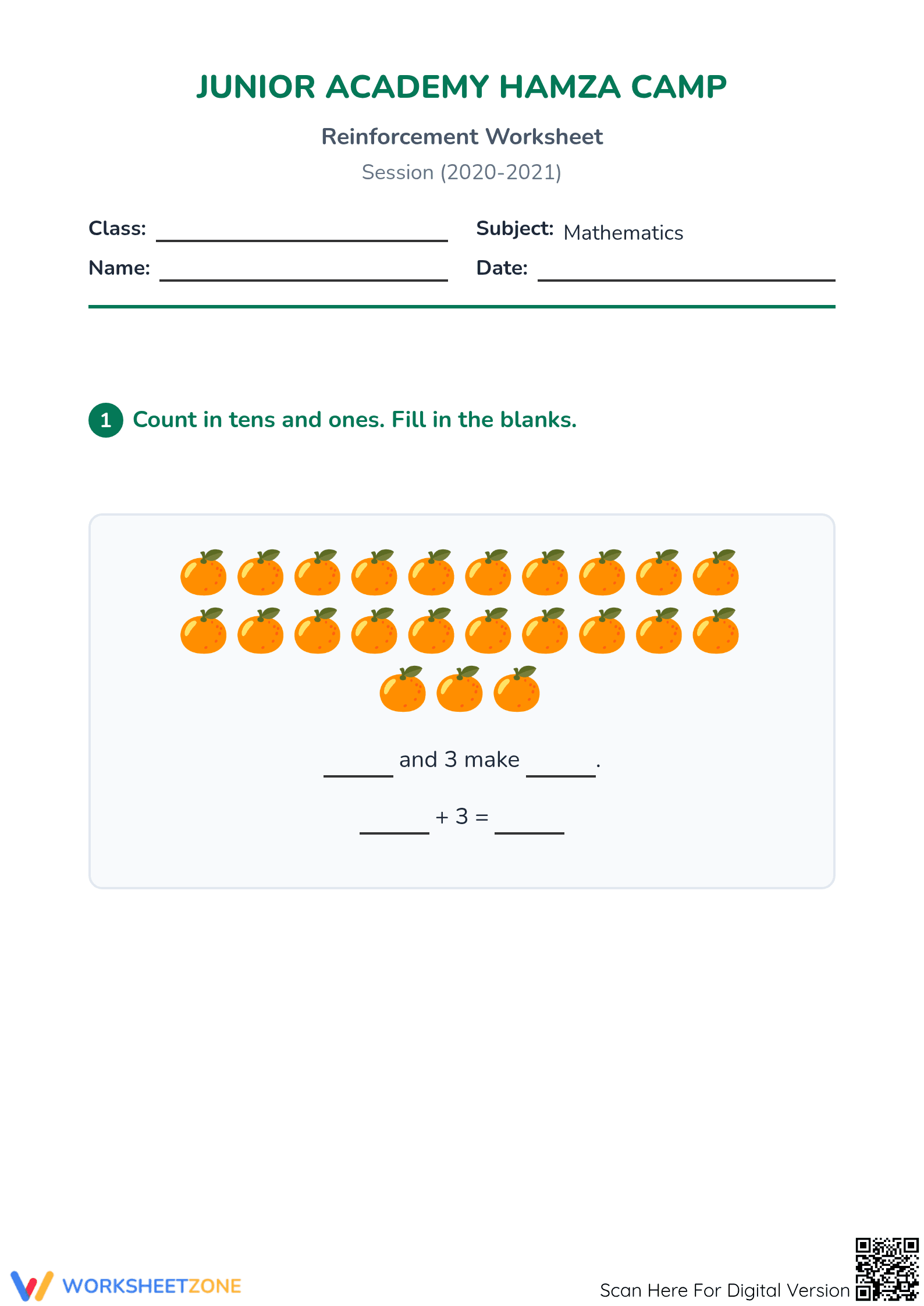
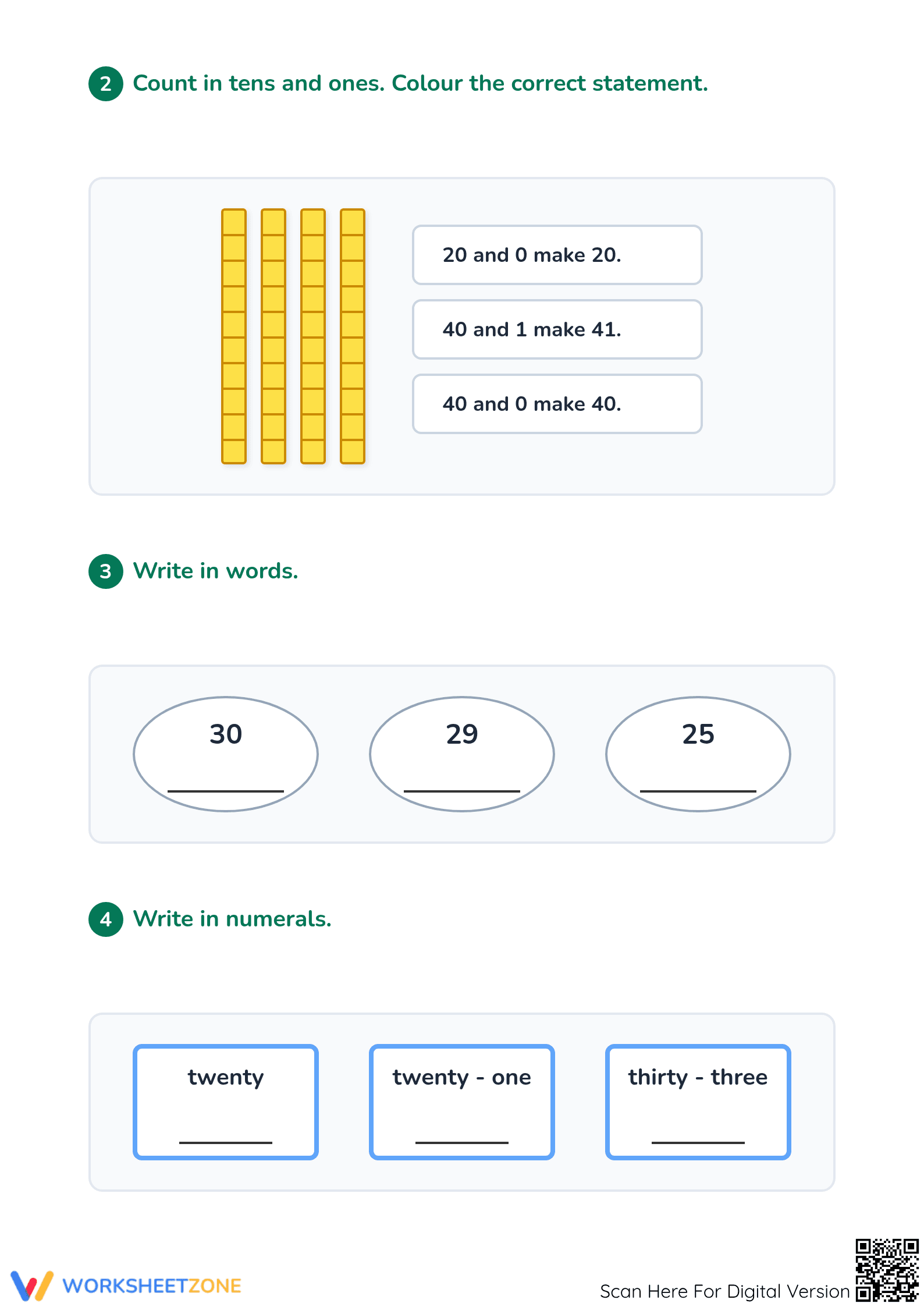
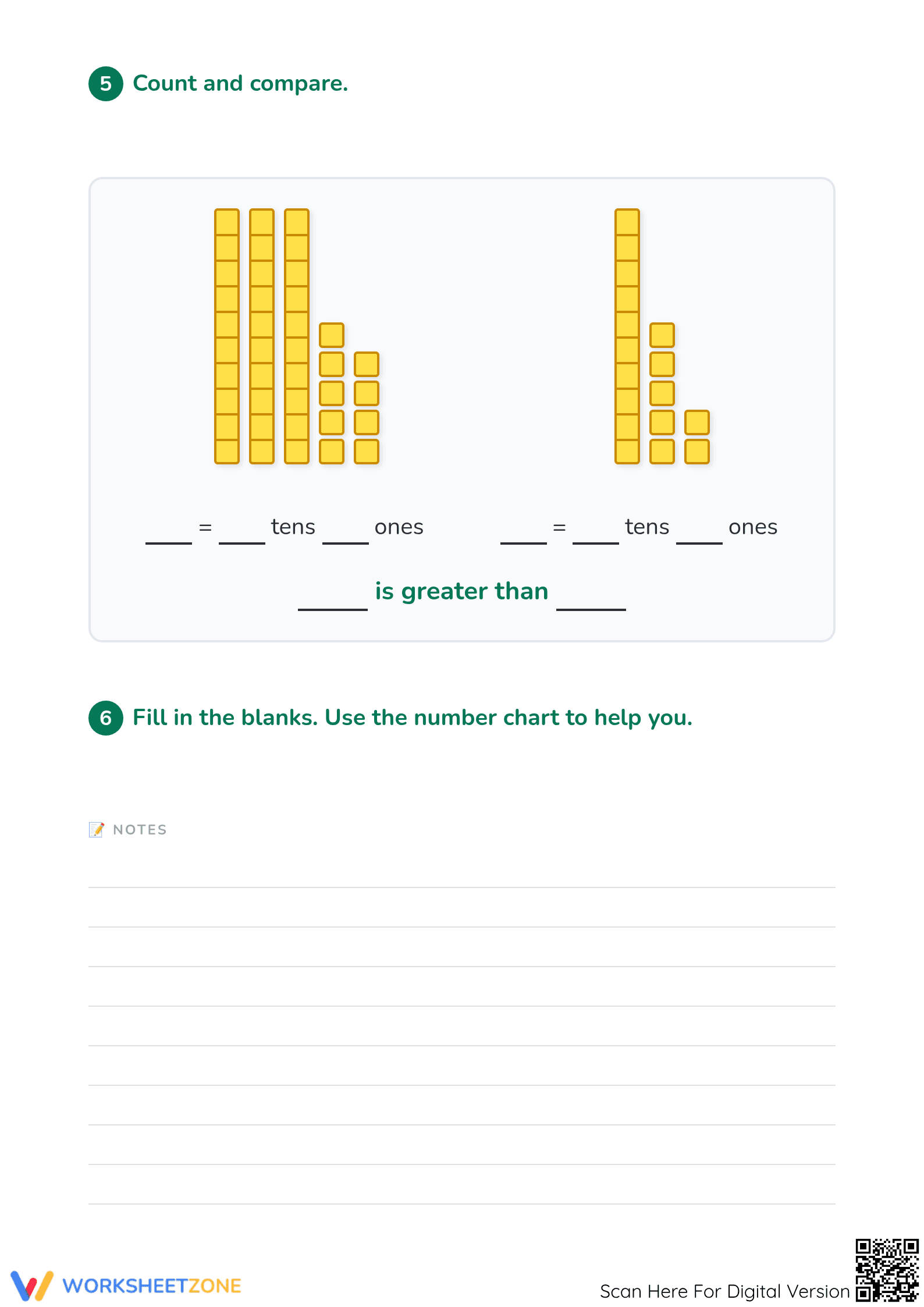
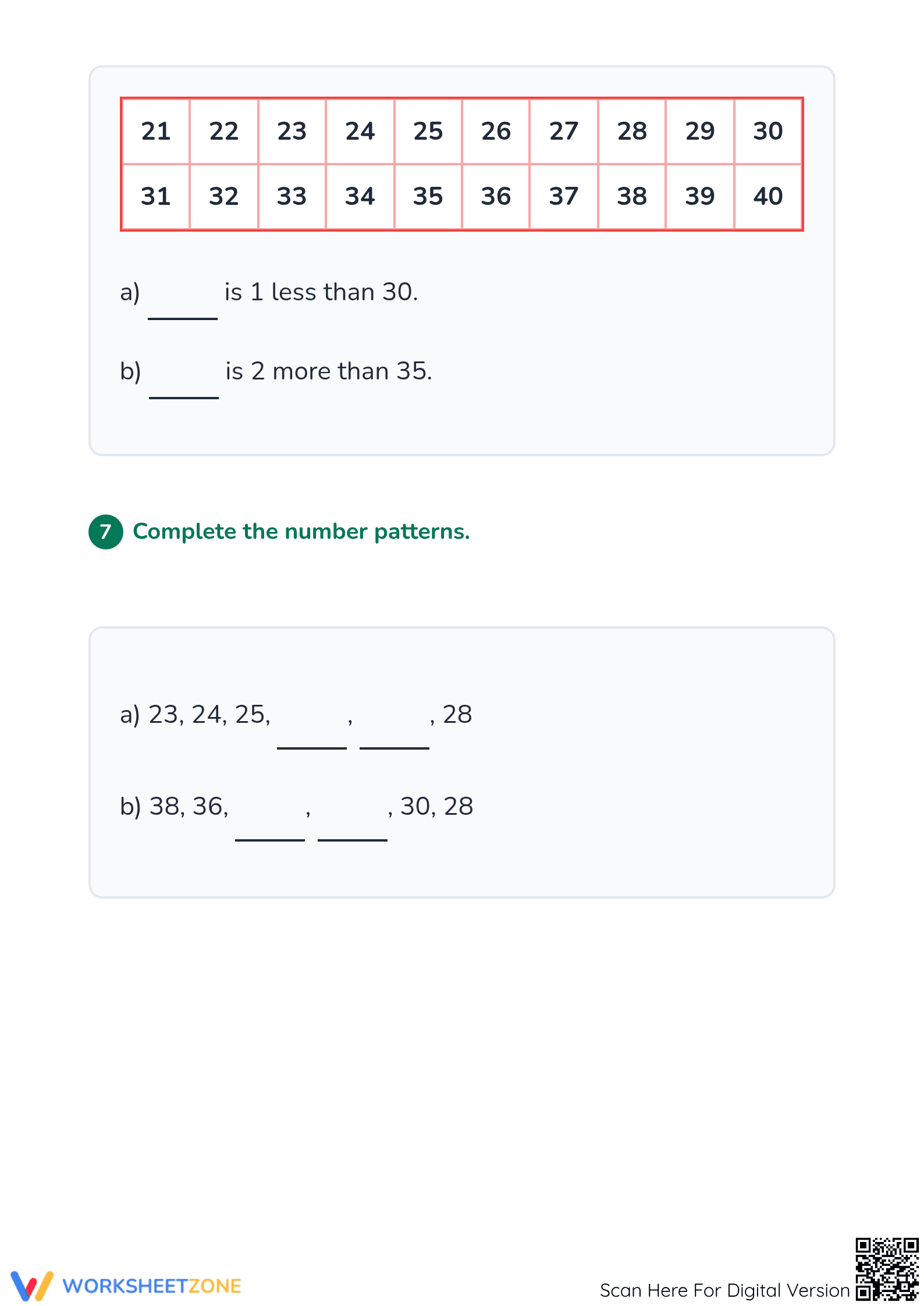

Printable Comparing Numbers Worksheet | Grade 1 Math
Paste this activity's link or code into your existing LMS (Google Classroom, Canvas, Teams, Schoology, Moodle, etc.).
Students can open and work on the activity right away, with no student login required.
You'll still be able to track student progress and results from your teacher account.
Master Comparing and Ordering Numbers
This worksheet helps first-grade students build a foundation in comparing and ordering numbers. Through targeted exercises, learners practice identifying larger and smaller numbers, sequencing them correctly, and recognizing number patterns. It's a key resource for developing number sense and fluency in early mathematics.
At a Glance
- Grade: 1 · Subject: Math
- Standard:
CCSS.MATH.CONTENT.1.NBT.B.3— Compare two two-digit numbers using tens and ones.- Skill Focus: Comparing Numbers, Ordering Numbers, Number Patterns
- Format: 5 pages · 58 problems · Answer key included · PDF
- Best For: Independent practice, math centers, homework
- Time: 25–40 minutes
What's Inside
This five-page packet contains a complete learning sequence for comparing and ordering. It begins with basic number comparison, moves to ordering number sets, and concludes with number pattern activities. A full five-page answer key is provided for easy grading of all 58 problems.
A Clear Path to Mastery
The worksheet uses a gradual-release model to build student skill:
- Guided Practice: The first page starts with 20 simple problems asking students to identify the bigger or smaller number in a pair, reinforcing the core concept.
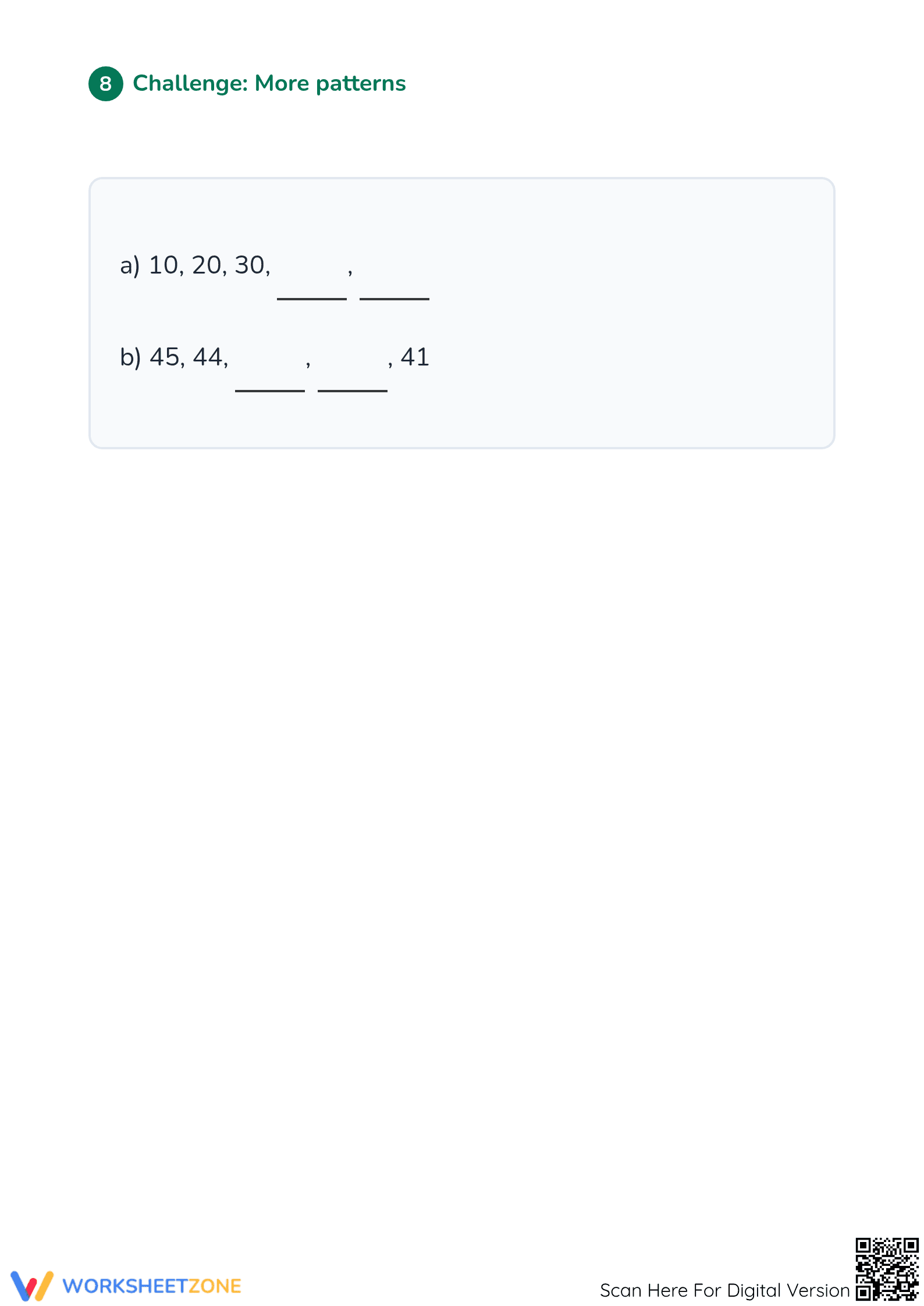
- Supported Practice: The next pages present problems requiring students to order number sets and fill in simple sequences, applying their comparison skills in a more complex format.
- Independent Practice: The final pages feature advanced pattern and sequencing tasks, including number charts, allowing students to demonstrate mastery.
This structure ensures students move from foundational understanding to confident application.
Standards-Aligned for Your Classroom
This resource is directly aligned with Common Core standard CCSS.MATH.CONTENT.1.NBT.B.3, where students compare two-digit numbers. The activities also support foundational counting skills. The standard code can be copied directly into lesson plans, IEP goals, or district curriculum mapping tools.
Flexible for Any Lesson Plan
This worksheet is a versatile tool. Use it as independent practice after a lesson on place value or for a math center rotation. For formative assessment, observe if students can quickly identify the greater number or if they need to use a number line; this reveals their grasp of place value. Most students will complete the packet in 25-40 minutes.
Designed for Early Learners
This resource is designed for first-grade students but also serves as intervention for second graders or as an extension for advanced kindergarteners. The clear layout supports all learners. Pair this worksheet with a 1-100 number chart or base-ten blocks to provide concrete support.
Developing number sense through tasks like comparing and ordering is a critical early math skill. This worksheet provides focused practice aligned with CCSS.MATH.CONTENT.1.NBT.B.3, which is a cornerstone of the first-grade Number and Operations in Base Ten domain. Research consistently shows that fluency in number comparison is a key predictor of future mathematical achievement. As noted in the RAND AIRS 2024 report on foundational math skills, repeated, structured practice with core concepts like magnitude comparison solidifies children's mental number line. By completing the 58 problems in this packet, students engage in the deliberate practice needed to internalize the relationship between numbers, moving beyond simple counting to true numerical reasoning. This process prepares them for more complex operations and algebraic thinking in later grades.


