


























Views
Downloads

Grade 2 Comparative and Superlative Adjectives | Essential
Paste this activity's link or code into your existing LMS (Google Classroom, Canvas, Teams, Schoology, Moodle, etc.).
Students can open and work on the activity right away, with no student login required.
You'll still be able to track student progress and results from your teacher account.
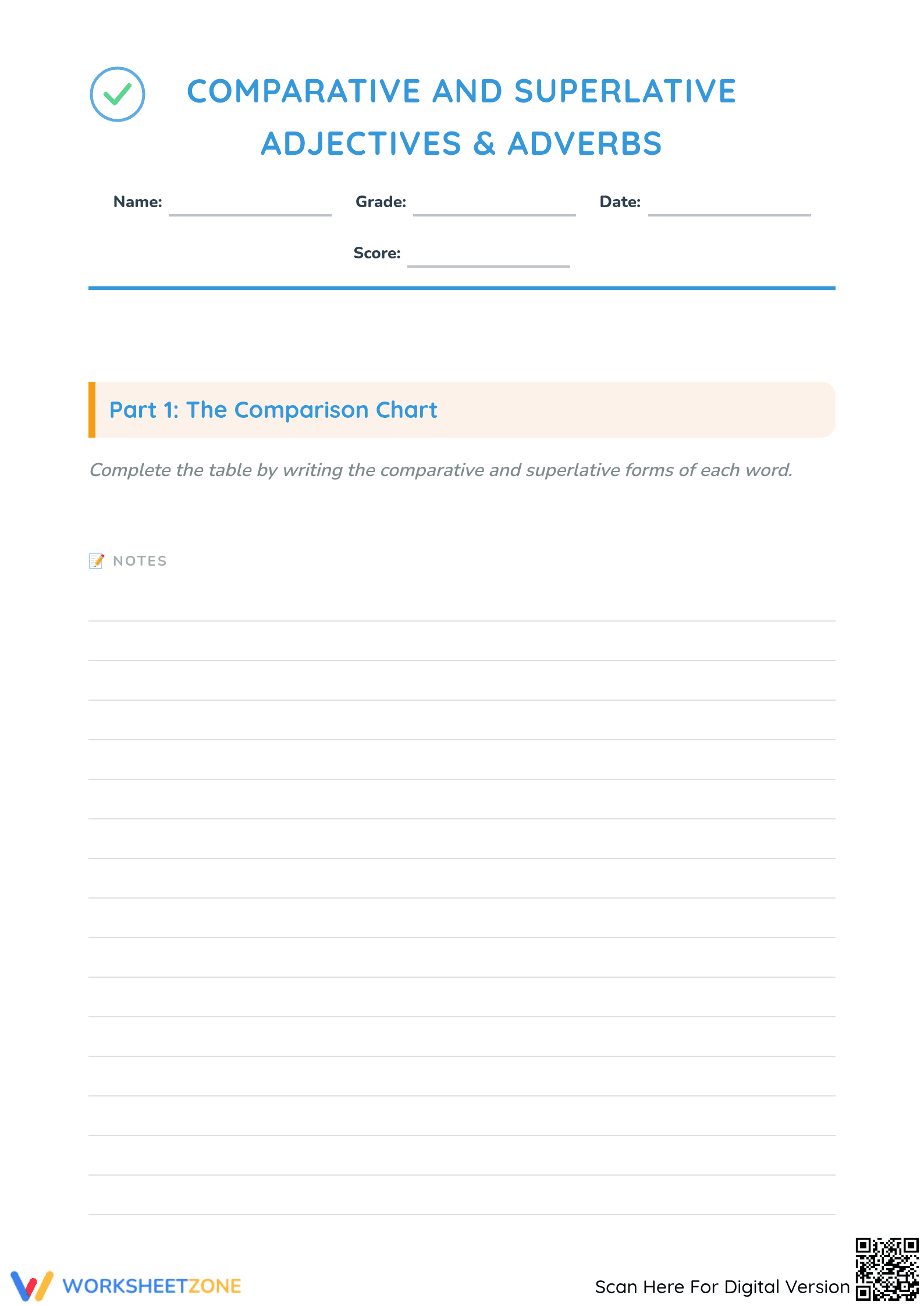
This Grade 2 English Language Arts worksheet provides comprehensive practice for mastering comparative and superlative adjectives and adverbs. Students learn to modify words correctly to show degrees of comparison, moving from basic identification to sentence application. By completing these exercises, learners develop the grammatical precision necessary for descriptive writing and clear communication.
At a Glance
- Grade: 2 · Subject: ELA
- Standard:
CCSS.ELA-LITERACY.L.3.1.G— Form and use comparative and superlative adjectives and adverbs correctly- Skill Focus: Comparative and superlative forms
- Format: 5 pages · 33 problems · Answer key included · PDF
- Best For: Independent practice and grammar review
- Time: 30–45 minutes
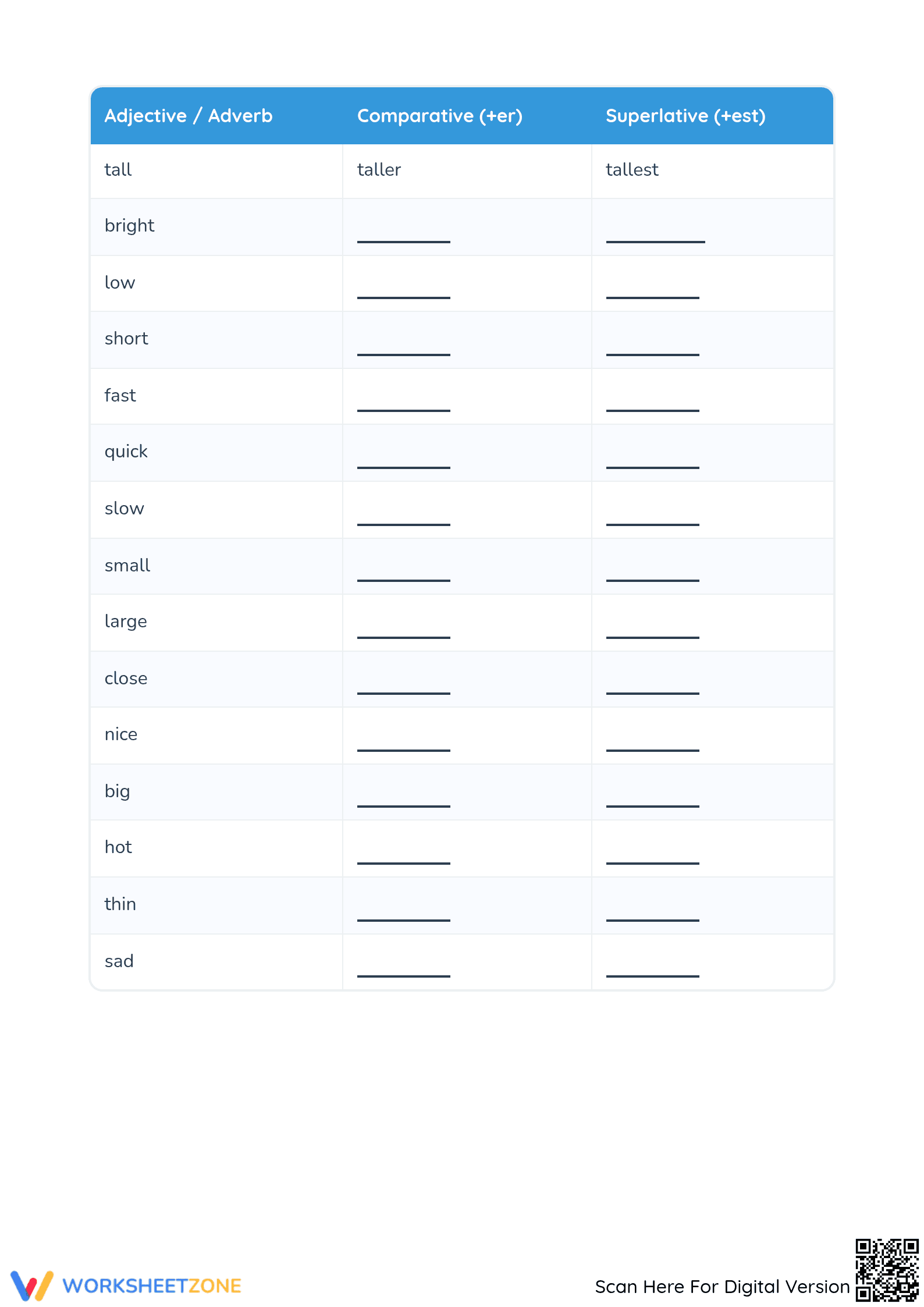
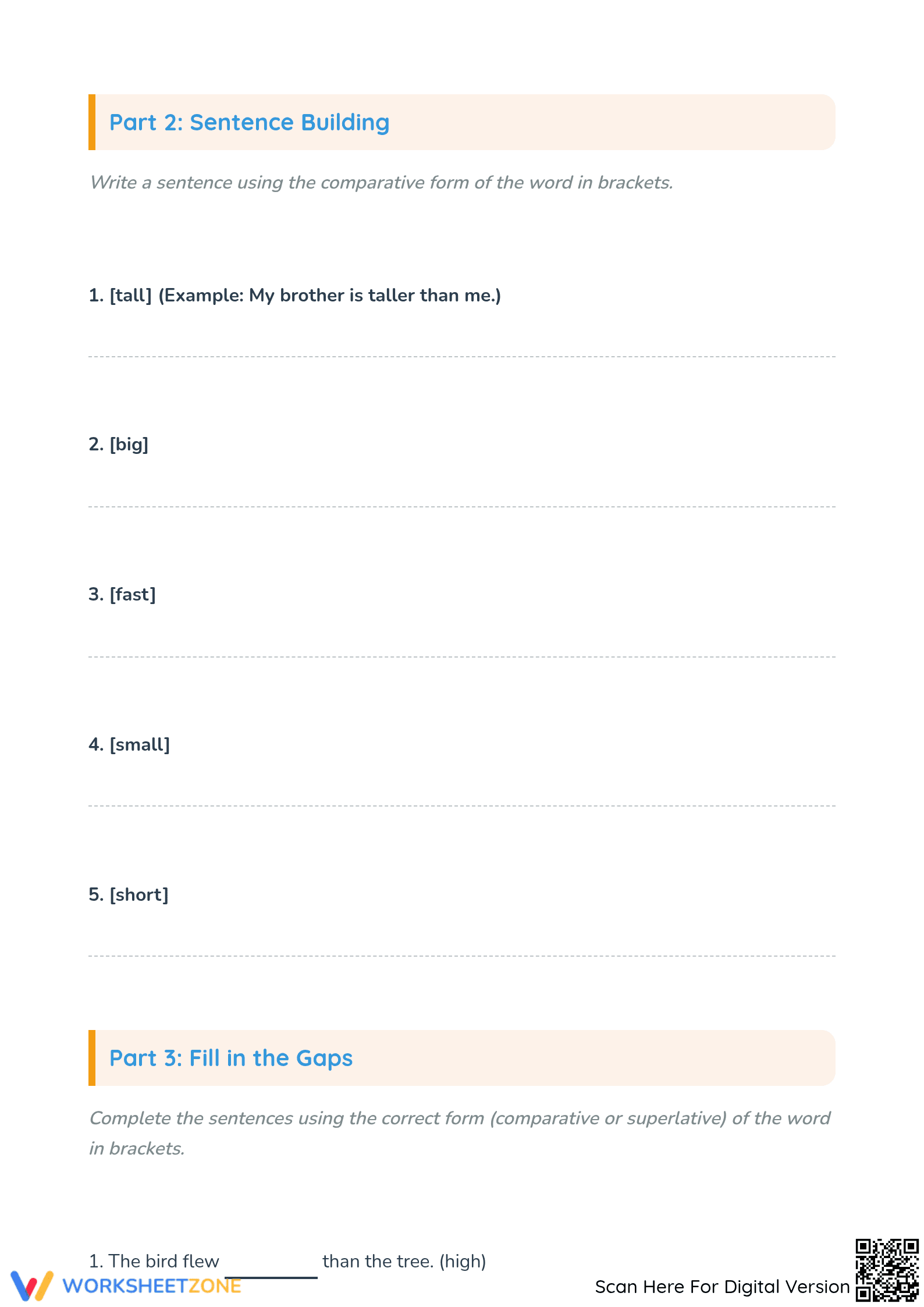
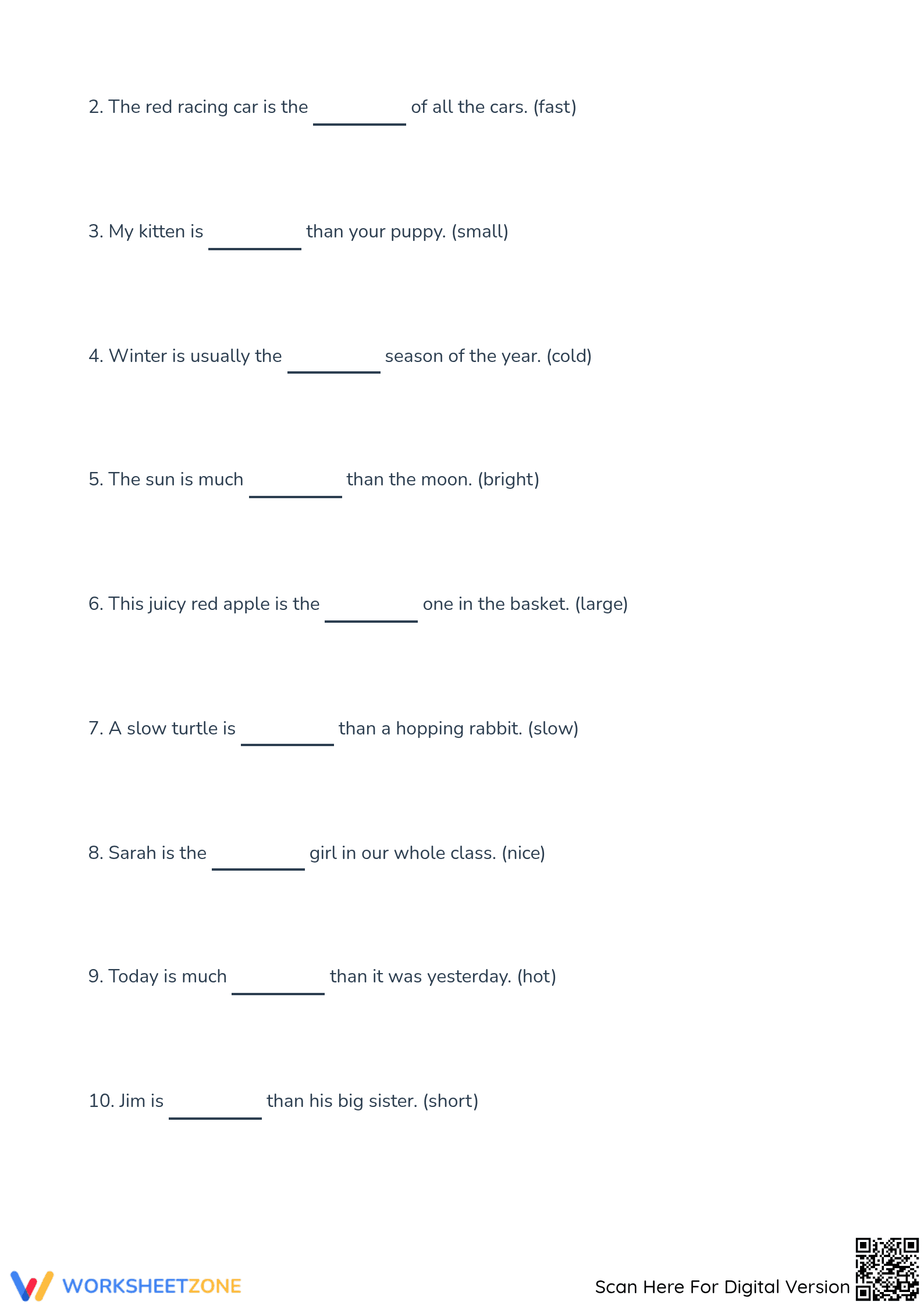
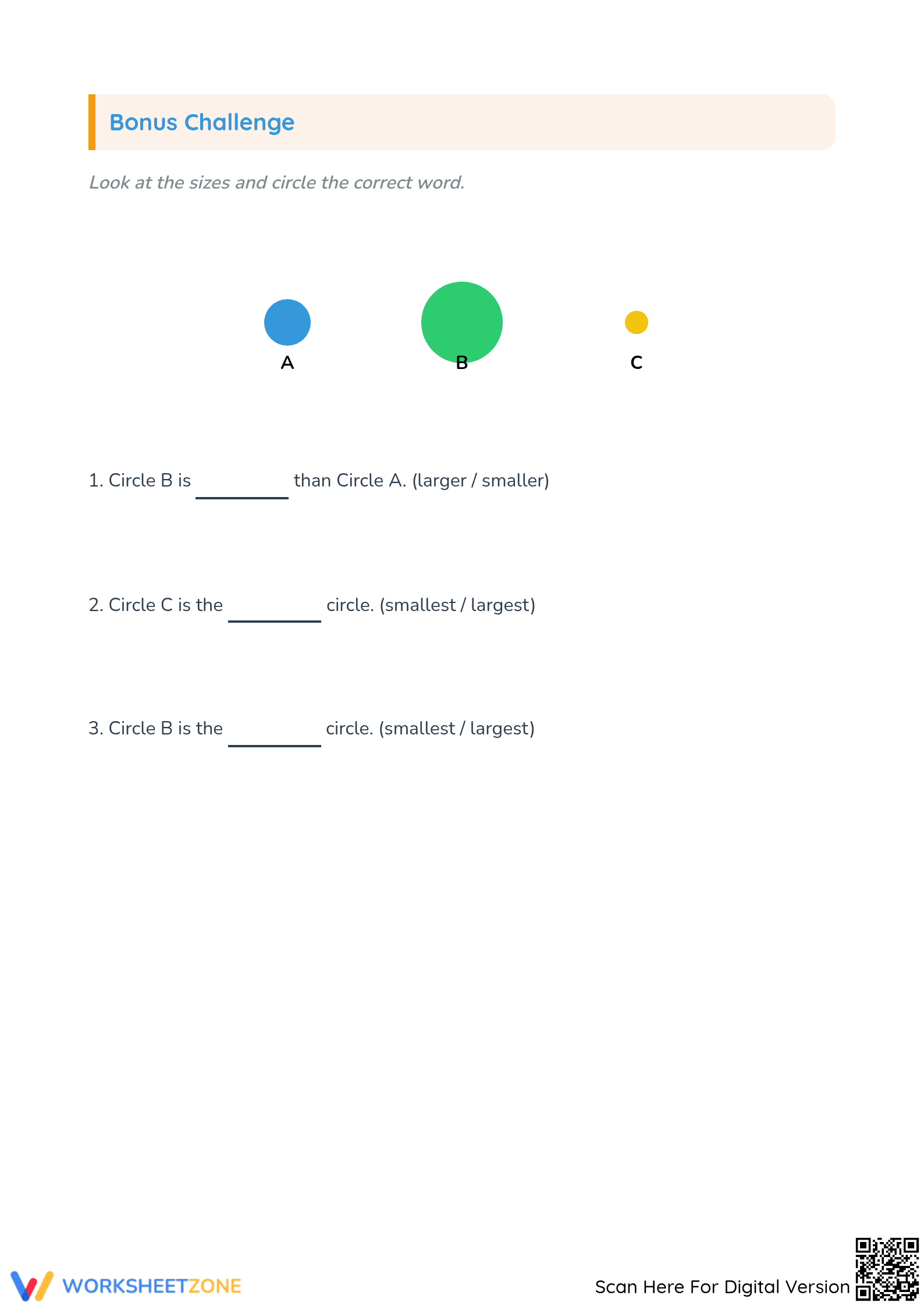
What's Inside: The packet contains five structured pages. It begins with a comprehensive comparison chart where students transform 15 base adjectives and adverbs into their "-er" and "-est" forms. Following the chart, students engage in sentence building and fill-in-the-blank exercises that require applying these forms in context. A bonus challenge uses visual aids to reinforce spatial and size comparisons, and a full answer key is provided for immediate feedback.
Zero-Prep Workflow: This resource is designed for immediate classroom implementation with three simple steps. First, print the five-page PDF (1 minute). Second, distribute the packets to students for independent or guided work (1 minute). Third, use the included answer key for rapid grading or student self-correction (5 minutes). This streamlined process makes it an ideal choice for emergency sub plans or morning work.
Standards Alignment: The primary focus is CCSS.ELA-LITERACY.L.3.1.G, which requires students to form and use comparative and superlative adjectives and adverbs. While often introduced in second grade, this worksheet ensures students meet the rigorous demands of third-grade grammar early. This standard code can be copied directly into lesson plans, IEP goals, or district curriculum mapping tools.
How to Use It: Use this worksheet during the "You Do" phase of a gradual release lesson on descriptive language. It serves as an excellent formative assessment after a direct instruction session on suffixes. Teachers should observe if students correctly double consonants (e.g., "big" to "bigger") during the chart activity. Completion typically takes 30 to 45 minutes depending on student writing speed.
Who It's For: This resource is tailored for Grade 2 students but is highly effective for Grade 3 review or English Language Learners (ELL) who need structured grammar support. It pairs naturally with descriptive writing prompts or anchor charts illustrating the "er/est" rules. The visual bonus challenge provides an entry point for students who benefit from spatial cues.
According to the RAND AIRS 2024 report on literacy instruction, structured grammar practice that moves from isolated word formation to contextual sentence application significantly improves student retention of linguistic rules. This worksheet aligns with those findings by utilizing a 33-task progression that scaffolds the transition from the comparison chart to independent sentence construction. By targeting CCSS.ELA-LITERACY.L.3.1.G, the material addresses the specific developmental need for students to understand how adjectives and adverbs change to reflect varying degrees of intensity. Research from Fisher & Frey (2014) emphasizes that such "word work" is most effective when students are asked to apply rules in multiple formats, as seen in the combination of fill-in-the-blank and visual comparison tasks provided here. This multi-modal approach ensures that Grade 2 learners build a durable foundation for the more complex comparative structures they will encounter in upper elementary texts.


