




























Views
Downloads

Comparative Adjectives Worksheet | Grade 2 Essential

Paste this activity's link or code into your existing LMS (Google Classroom, Canvas, Teams, Schoology, Moodle, etc.).
Students can open and work on the activity right away, with no student login required.
You'll still be able to track student progress and results from your teacher account.
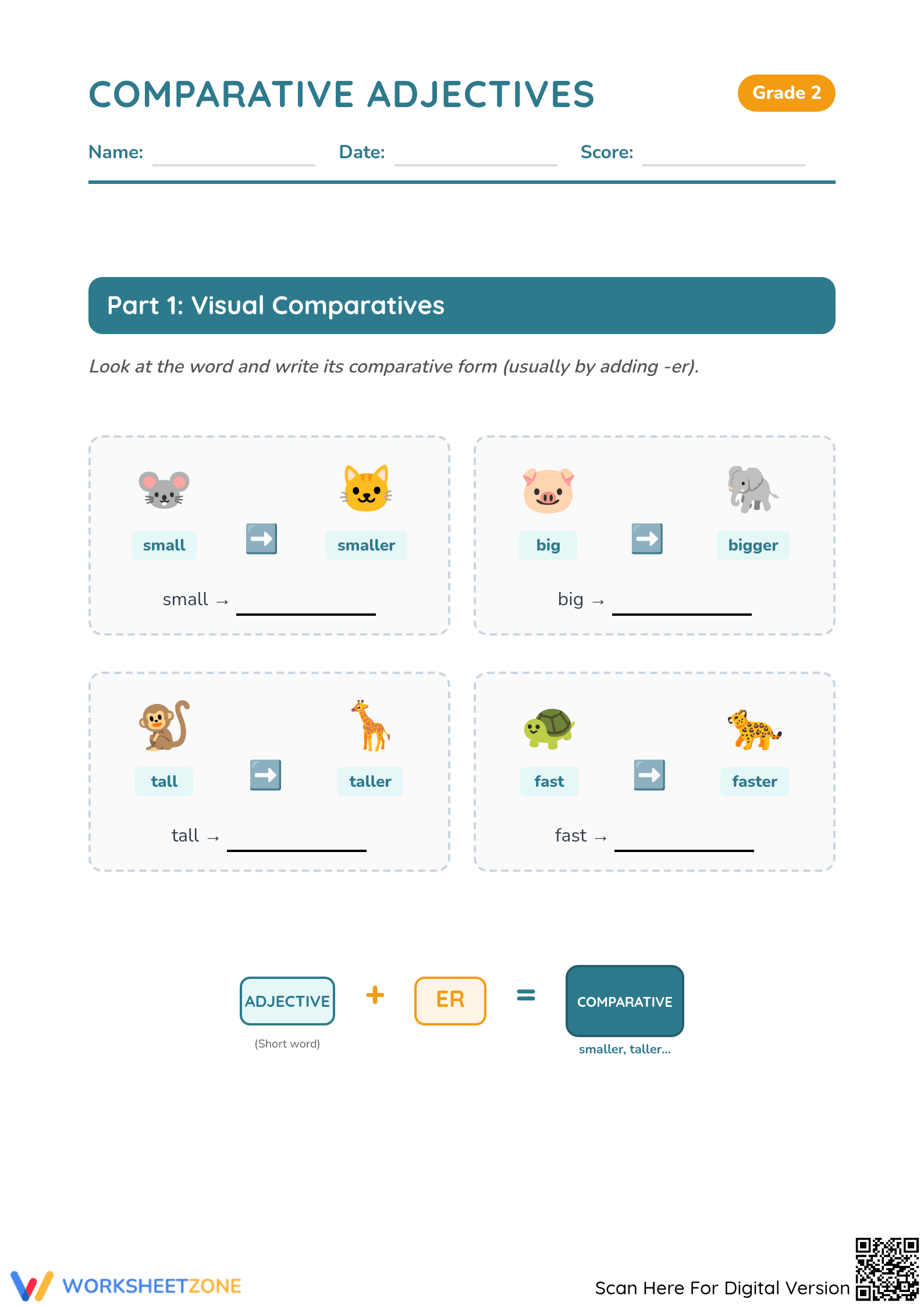
This Grade 2 comparative adjectives worksheet helps students master comparing nouns using the "-er" suffix. Through visual cues and sentence practice, learners develop the precision needed to describe differences in size and quality. Students will transform base adjectives into comparative forms to complete 17 tasks.
At a Glance
- Grade: 2 · Subject: ELA
- Standard:
L.2.1.E— Use adjectives and adverbs to modify nouns and verbs correctly- Skill Focus: Comparative Adjectives (-er suffix)
- Format: 3 pages · 17 problems · Answer key included · PDF
- Best For: Independent grammar practice and homework
- Time: 20–30 minutes
What's Inside
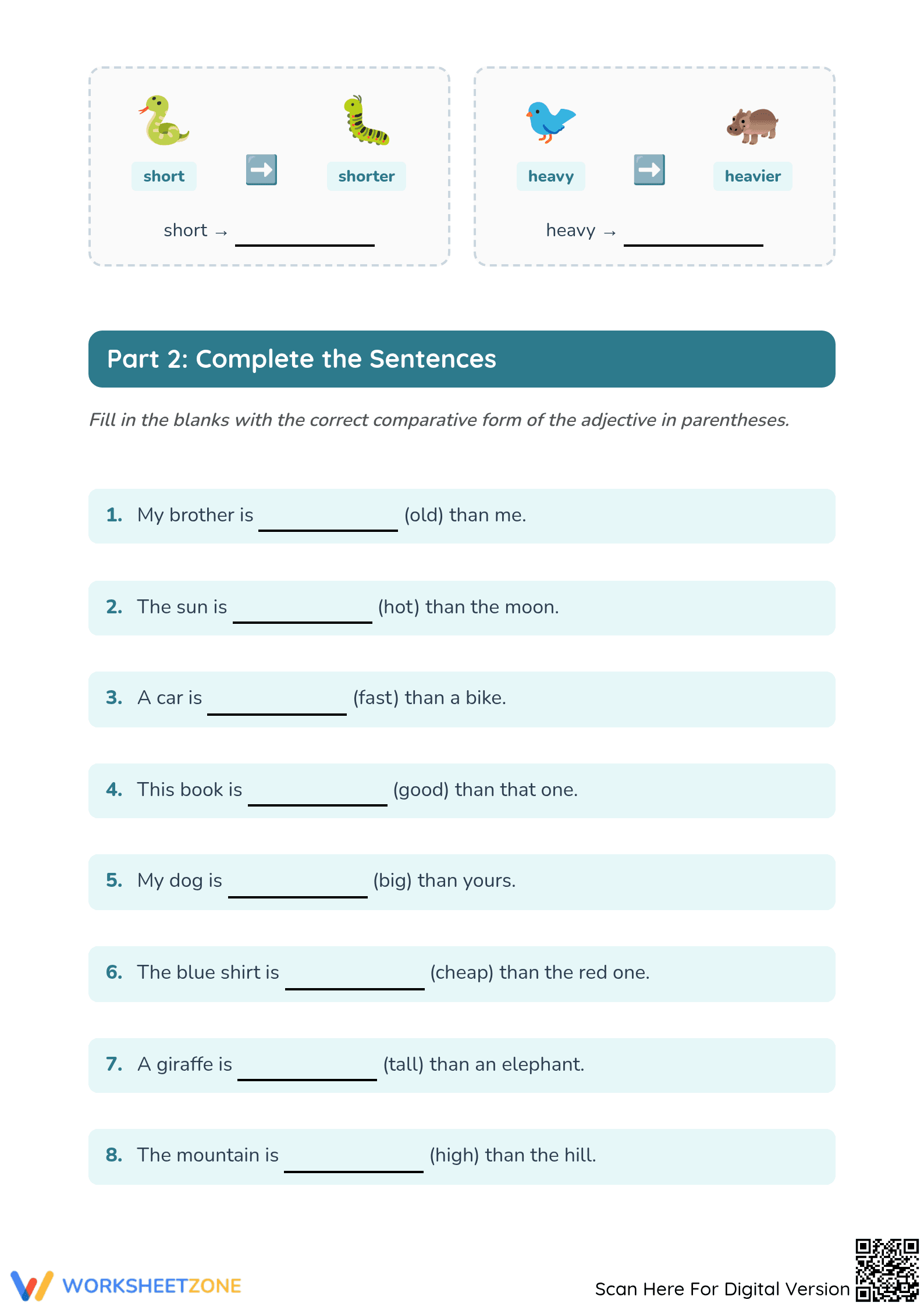
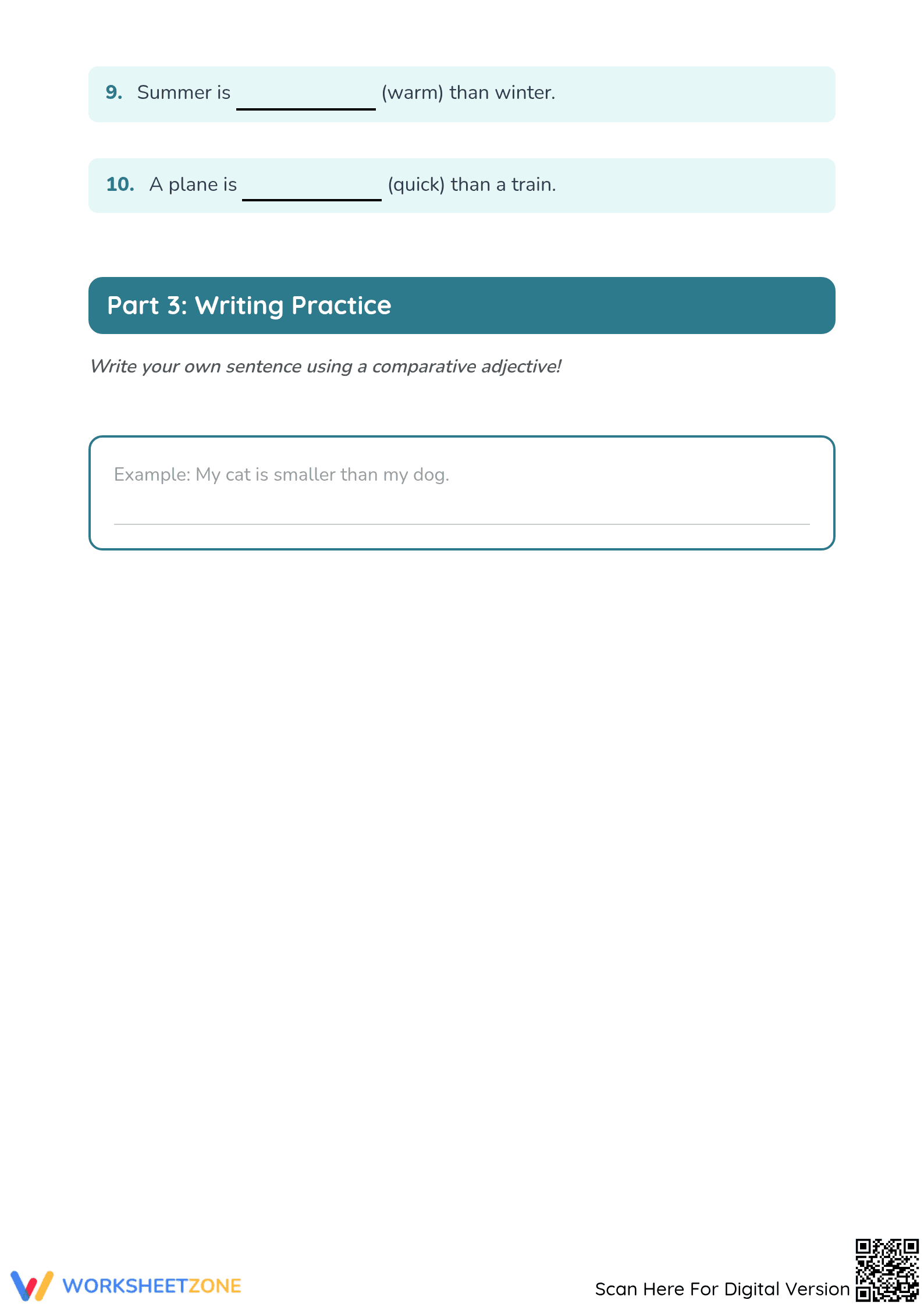
This 3-page PDF includes a full answer key. The first section features 6 visual comparison blocks where students observe animal pairings to identify traits like "smaller." The second section provides 10 fill-in-the-blank sentences requiring students to apply comparative rules. Finally, a creative writing prompt encourages students to generate an original comparative sentence.
Skill Progression
- Guided practice: Visual anchors and a clear formula scaffold the initial 6 identification tasks.
- Supported practice: Students complete 10 sentence exercises, applying rules to specific contexts.
- Independent practice: The final task requires students to synthesize learning by drafting an original sentence.
This gradual-release model ensures students move from recognition to production.
Standards Alignment
The primary focus is CCSS.ELA-LITERACY.L.2.1.E, requiring students to use adjectives and adverbs correctly. This resource targets the comparative inflectional ending, a core second-grade language skill. Both standard codes can be copied directly into lesson plans, IEP goals, or district curriculum mapping tools.
How to Use It
Use this as a formative assessment after direct instruction. It works well as a "You Do" component. Teachers should circulate during sentence completion to observe if students correctly handle spelling shifts like "bigger" or "heavier." Expect completion within 25 minutes.
Who It's For
This is designed for second graders and English Language Learners (ELLs) needing visual support. It pairs naturally with a classroom anchor chart and a descriptive reading passage.
Effective grammar instruction in the primary grades relies on the explicit teaching of morphological changes, such as the addition of the "-er" suffix to base adjectives. This worksheet aligns with L.2.1.E by providing structured opportunities for students to practice using comparative adjectives in both isolated and contextualized formats. According to Fisher & Frey (2014), the gradual release of responsibility—moving from visual modeling to independent sentence construction—is critical for ensuring that students internalize linguistic rules rather than simply memorizing patterns. By integrating 17 varied tasks, this resource allows educators to identify specific misconceptions in spelling or usage before they become ingrained. Research from the NAEP suggests that early mastery of descriptive language correlates with improved narrative writing scores in later elementary years. This printable PDF provides the necessary repetition and visual scaffolding to bridge the gap between basic vocabulary and sophisticated comparative expression in Grade 2.


