




























Views
Downloads

Comparative Adjectives Worksheet | Grade 2 Essential

Paste this activity's link or code into your existing LMS (Google Classroom, Canvas, Teams, Schoology, Moodle, etc.).
Students can open and work on the activity right away, with no student login required.
You'll still be able to track student progress and results from your teacher account.
This Grade 2 comparative adjectives worksheet provides students with 40 structured opportunities to identify and form adjectives that compare two nouns. By focusing on the specific spelling changes required for standard and "y" ending words, students build the linguistic precision necessary for descriptive writing and clear communication.
At a Glance
- Grade: 2 · Subject: ELA
- Standard:
L.3.1.G— Form and use comparative and superlative adjectives and adverbs to compare nouns- Skill Focus: Comparative Adjectives (-er, -ier)
- Format: 4 pages · 40 problems · Answer key included · PDF
- Best For: Independent grammar practice and homework
- Time: 30–40 minutes
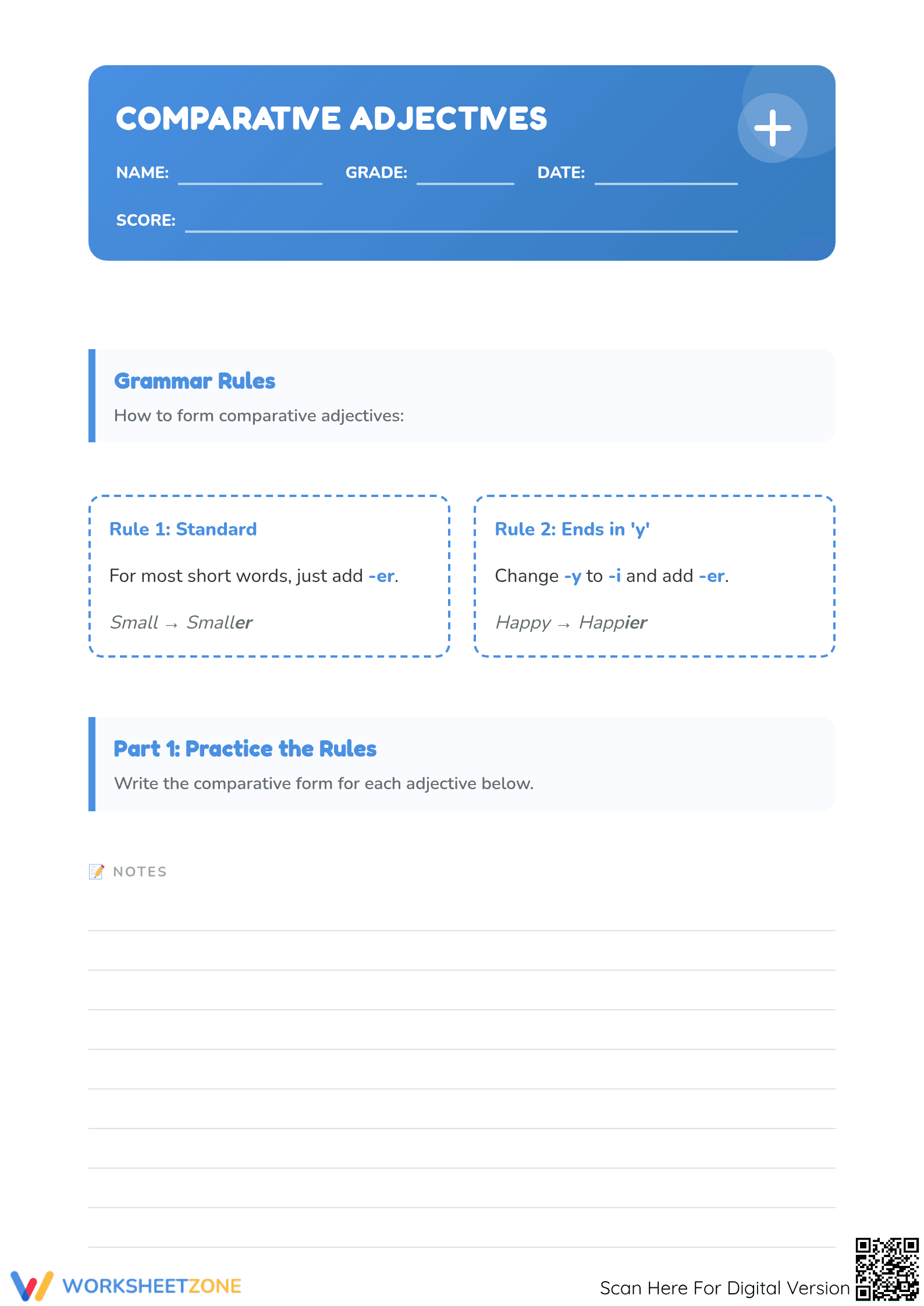
What's Inside: This comprehensive 4-page PDF includes a dedicated grammar rule reference sheet, a 20-item categorization table, and 20 sentence-completion exercises. The layout features clear headers and ample writing space, ensuring students can focus on the spelling mechanics of changing "y" to "i" before adding the "-er" suffix. A complete answer key is provided for rapid grading.
Skill Progression
- Guided Practice: The first page serves as a visual anchor, defining the two primary rules for forming comparatives with clear "before and after" examples.
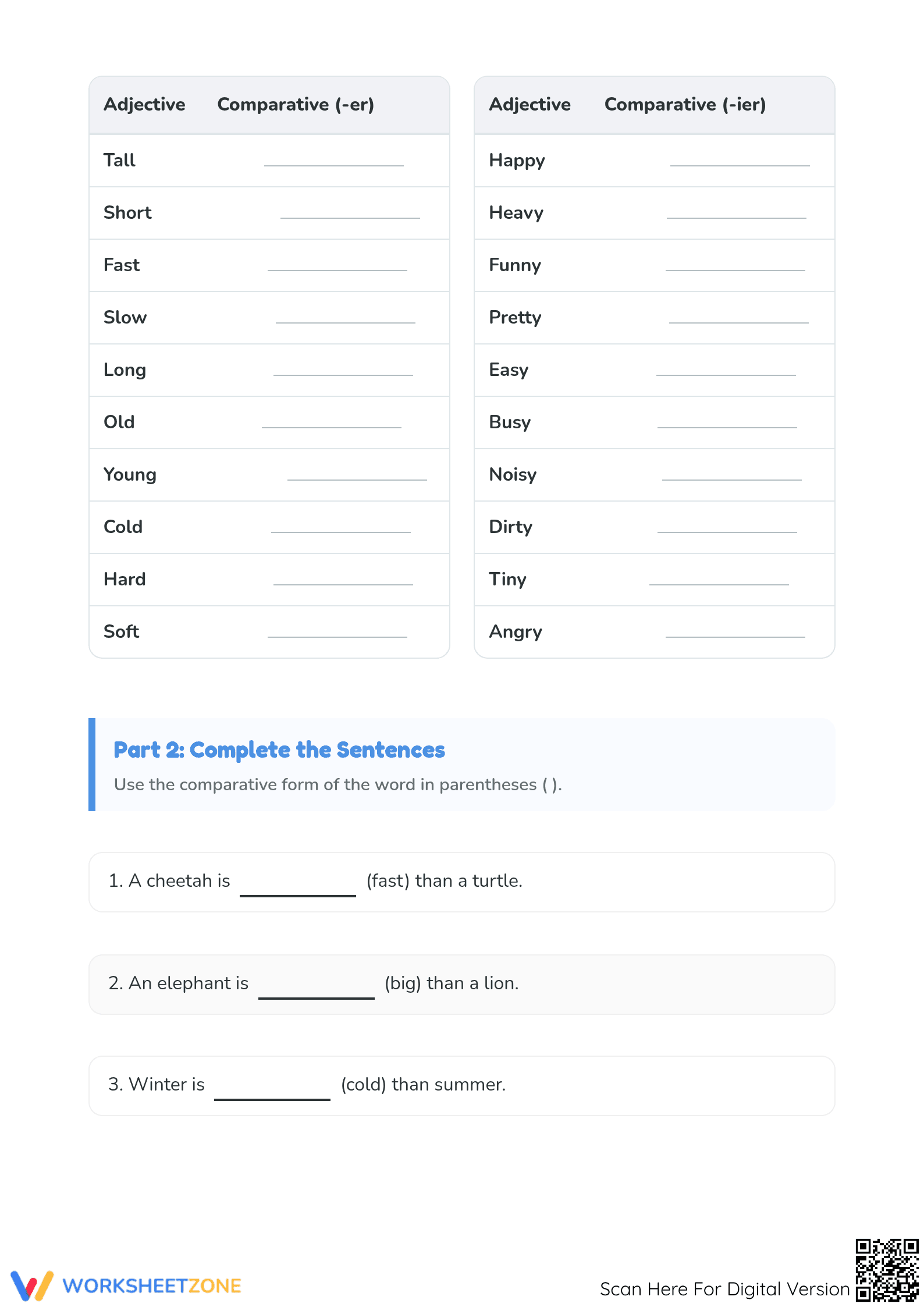
- Supported Practice: Part 1 provides a 20-word table where students transform base adjectives into comparative forms, reinforcing the spelling patterns in isolation.
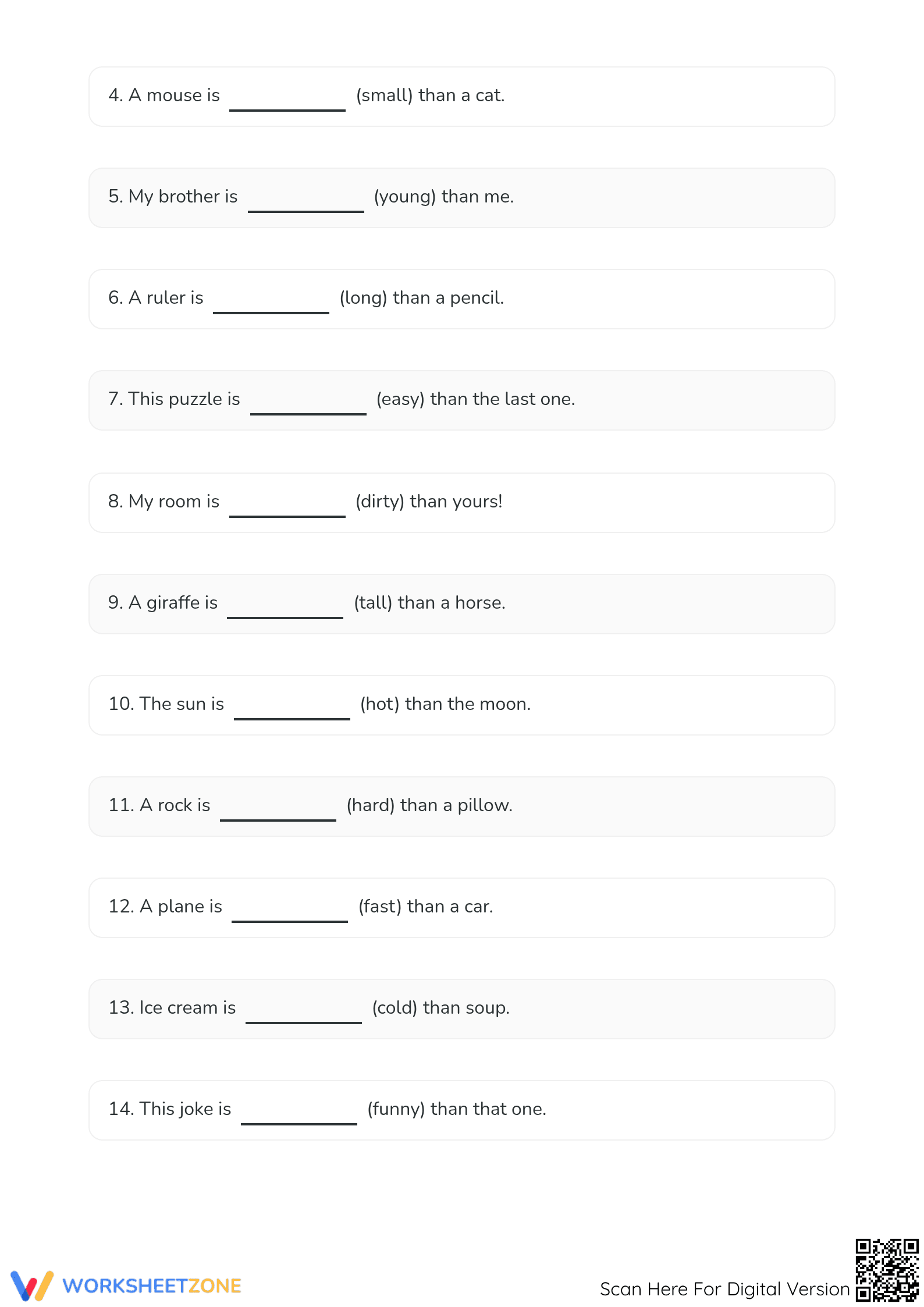
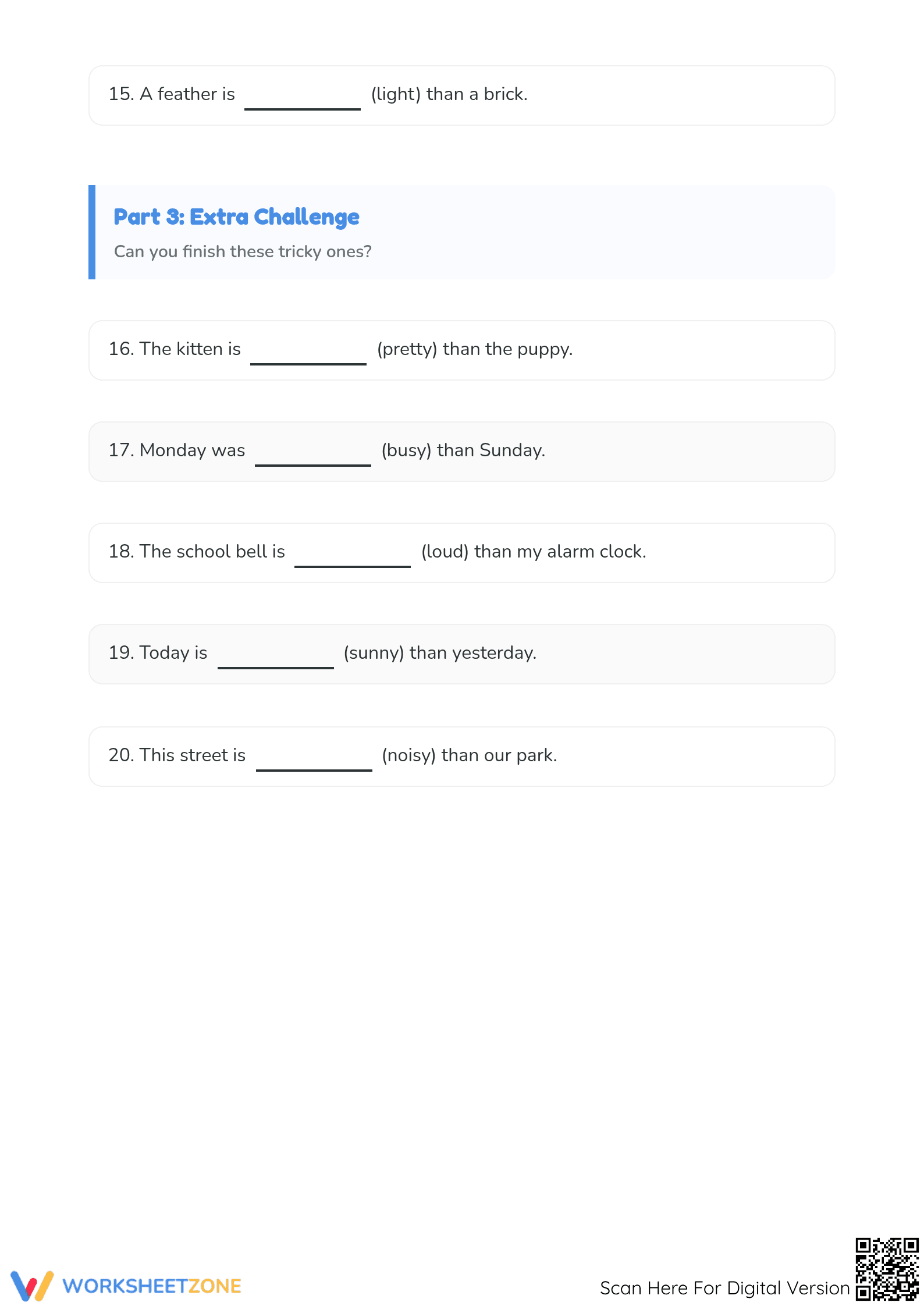
- Independent Practice: Parts 2 and 3 challenge students to apply their knowledge within the context of complete sentences, requiring them to choose the correct form based on the provided base word.
This gradual-release model ensures students move from recognition to application with high success rates.
Standards Alignment: This resource is primarily aligned with CCSS.ELA-LITERACY.L.3.1.G, which requires students to form and use comparative and superlative adjectives and adverbs. While introduced in Grade 2 under general adjective usage (CCSS.ELA-LITERACY.L.2.1.E), this worksheet targets the specific morphological changes required for mastery. Both standard codes can be copied directly into lesson plans, IEP goals, or district curriculum mapping tools.
How to Use It: Use this worksheet as a formative assessment after a direct instruction lesson on descriptive language. It is particularly effective during the "independent practice" phase of a literacy block. Teachers can observe students during Part 1 to identify those struggling with the "y to i" spelling rule before they proceed to the sentence-level tasks. Completion typically takes 30 to 40 minutes.
Who It's For: This resource is designed for second-grade students mastering basic grammar and third-grade students requiring a review of comparative suffixes. It serves as an excellent companion to descriptive writing units or as a targeted intervention for English Language Learners. Pair this with a comparative adjective anchor chart for maximum instructional impact.
According to the RAND AIRS 2024 report on elementary literacy, explicit instruction in morphology and suffix application significantly improves a student's ability to decode and encode complex words. This worksheet addresses that need by isolating the "-er" and "-ier" comparative suffixes, providing the high-repetition practice required for orthographic mapping. By moving from isolated word transformation to contextual sentence completion, the resource follows the evidence-based "I Do, We Do, You Do" instructional framework. Research from Fisher & Frey (2014) suggests that such structured scaffolding is essential for moving grammar skills from short-term memory into long-term functional use. This Grade 2 ELA resource ensures that students not only learn the rule for L.3.1.G but also internalize the spelling exceptions that often hinder young writers. It provides a reliable, research-backed method for achieving grammar mastery in the primary classroom.


