


























Views
Downloads

Essential Beginning Sounds Worksheet | Kindergarten Phonics
Paste this activity's link or code into your existing LMS (Google Classroom, Canvas, Teams, Schoology, Moodle, etc.).
Students can open and work on the activity right away, with no student login required.
You'll still be able to track student progress and results from your teacher account.
This Kindergarten phonics worksheet provides targeted practice for early learners to identify beginning sounds in common words. By connecting visual images to their corresponding initial letters, students build the foundational phonemic awareness necessary for reading success. It offers a straightforward, engaging way to reinforce letter-sound relationships in any early childhood classroom setting.
At a Glance
- Grade: Kindergarten · Subject: ELA Phonics
- Standard:
CCSS.ELA-LITERACY.RF.K.3.A— Demonstrate basic knowledge of one-to-one letter-sound correspondences- Skill Focus: Beginning sound identification
- Format: 2 pages · 7 problems · Answer key included · PDF
- Best For: Independent morning work or literacy centers
- Time: 10–15 minutes
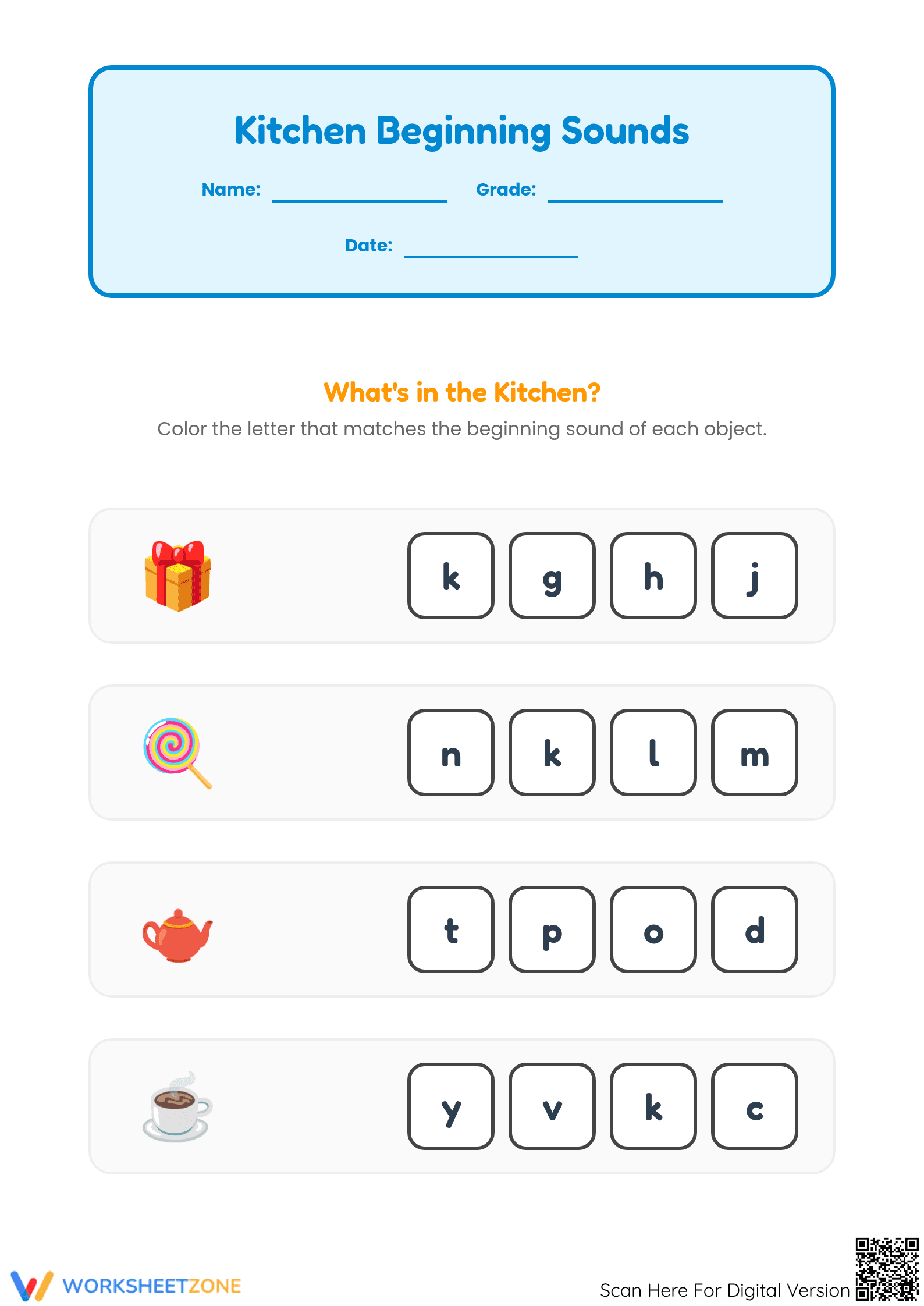
This 2-page PDF includes 7 distinct phonics tasks featuring high-quality illustrations of familiar objects like a teapot, lollipop, and gift. Each task presents a clear image alongside four lowercase letter choices. The layout is spacious and student-friendly, designed specifically for small hands to color or circle their answers. A full answer key is provided for quick teacher or parent verification.
The workflow for this resource is designed for maximum efficiency. First, print the two pages (30 seconds). Next, distribute to students with a box of crayons or markers (1 minute). Finally, review the answers as a whole group or individually using the included key (2 minutes). This zero-prep design makes it an ideal choice for emergency sub plans or transition periods.
This resource aligns directly with CCSS.ELA-LITERACY.RF.K.3.A, which requires students to demonstrate basic knowledge of one-to-one letter-sound correspondences by producing the primary sound or many of the most frequent sounds for each consonant. It also supports RF.K.1.D by reinforcing alphabet recognition. Both standard codes can be copied directly into lesson plans, IEP goals, or district curriculum mapping tools.
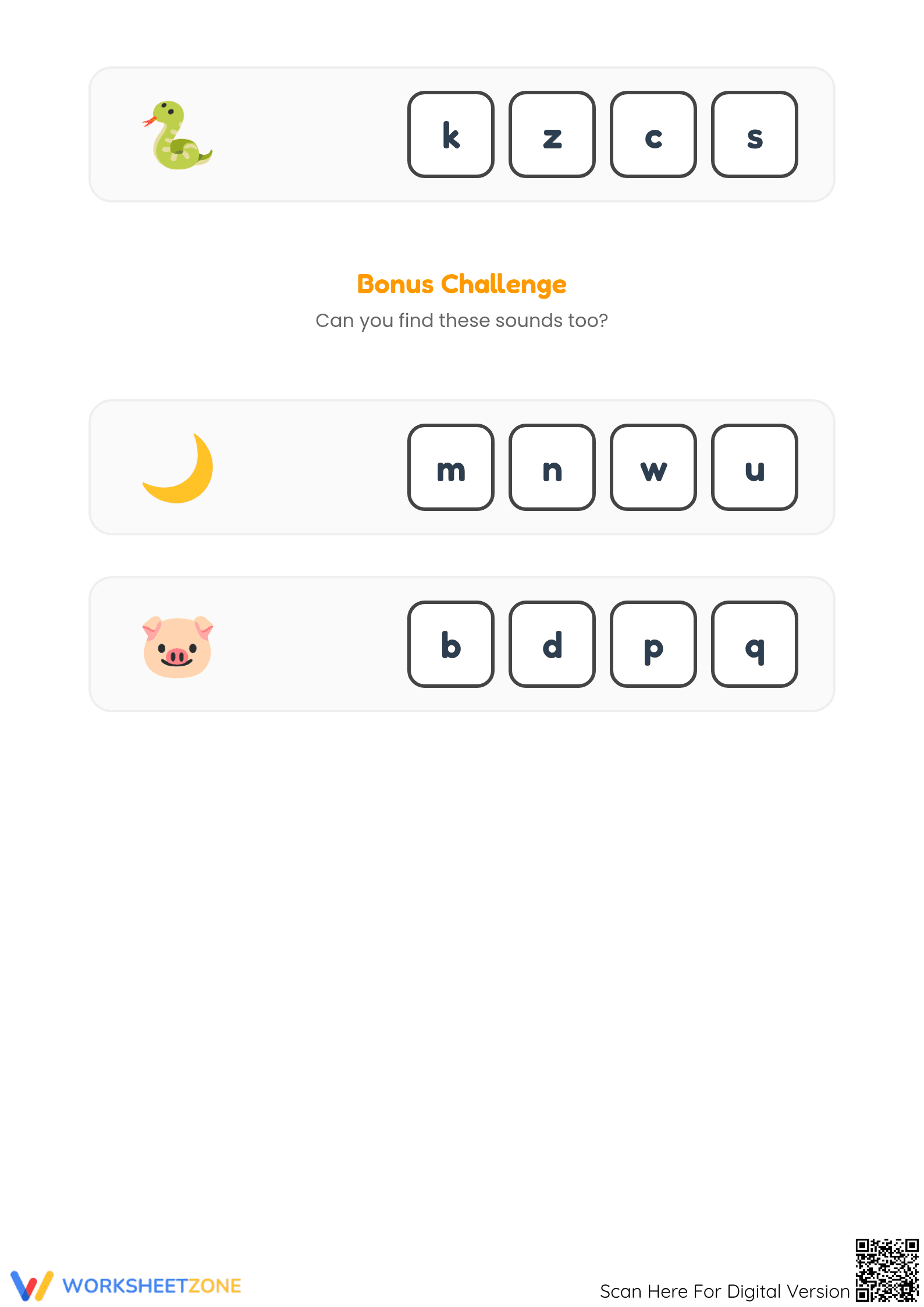
Use this worksheet during the independent practice phase of a lesson on initial consonants. It serves as an excellent formative assessment tool; observe if students are confusing similar-looking letters like 'b', 'd', 'p', and 'q' in the bonus challenge section. Expect students to complete both pages within 10 to 15 minutes depending on their fine motor speed.
This activity is tailored for Preschool, Kindergarten, and Grade 1 students who are beginning to map sounds to symbols. It is particularly helpful for English Language Learners who benefit from the visual cues provided by the illustrations. Pair this with a physical alphabet anchor chart or a sound of the day direct instruction lesson for best results.
Phonemic awareness, specifically the ability to isolate and identify initial sounds, is a primary predictor of later reading fluency. This worksheet targets CCSS.ELA-LITERACY.RF.K.3.A by requiring students to map phonemes to graphemes across 7 visual tasks. According to research by Fisher & Frey (2014), providing students with clear, scaffolded opportunities to practice discrete skills like letter-sound correspondence within a gradual release of responsibility framework significantly improves retention. By utilizing familiar imagery, this resource reduces cognitive load, allowing students to focus entirely on the phonological task. The inclusion of a bonus challenge specifically addresses common reversals like b, d, p, and q, which is a critical developmental milestone in early literacy. This printable PDF ensures that educators can provide high-quality, standards-aligned practice without the need for extensive preparation, supporting evidence-based instructional routines in diverse classroom environments.


