


























Views
Downloads

Color the Beginning Sound Worksheet | Grade K Essential
Paste this activity's link or code into your existing LMS (Google Classroom, Canvas, Teams, Schoology, Moodle, etc.).
Students can open and work on the activity right away, with no student login required.
You'll still be able to track student progress and results from your teacher account.
This beginning sound coloring worksheet helps students master letter-sound correspondence through engaging animal-themed identification tasks. By pairing visual animal cues with multiple-choice letter options, students strengthen their phonemic awareness and initial consonant recognition. It provides a structured, creative way for young learners to demonstrate their understanding of the alphabet.
At a Glance
- Grade: Kindergarten · Subject: English Language Arts
- Standard:
CCSS.ELA-LITERACY.RF.K.3.A— Demonstrate basic knowledge of one-to-one letter-sound correspondences for consonants- Skill Focus: Beginning sound identification
- Format: 3 pages · 5 problems · Answer key included · PDF
- Best For: Independent phonics practice and morning work
- Time: 10–15 minutes
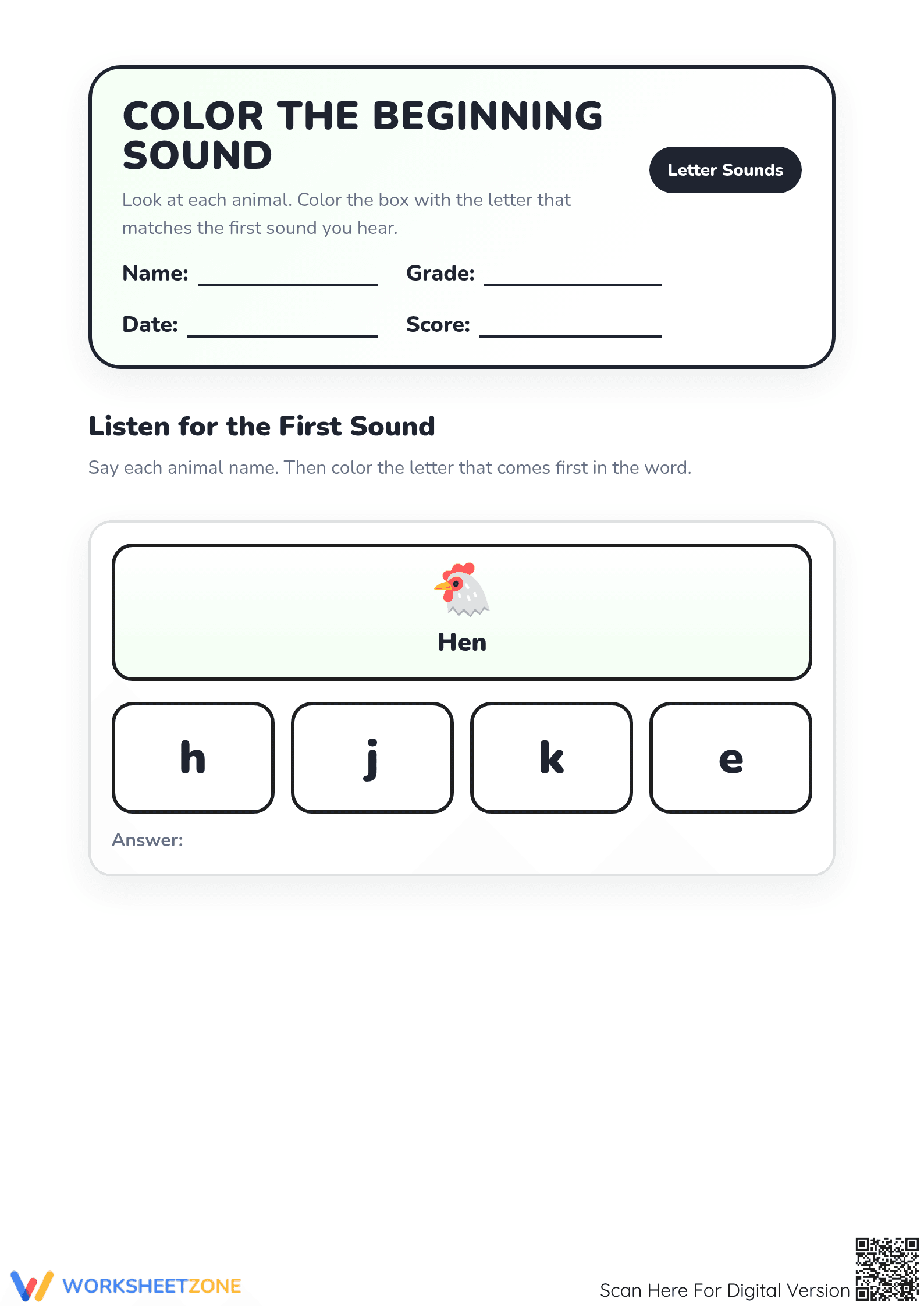
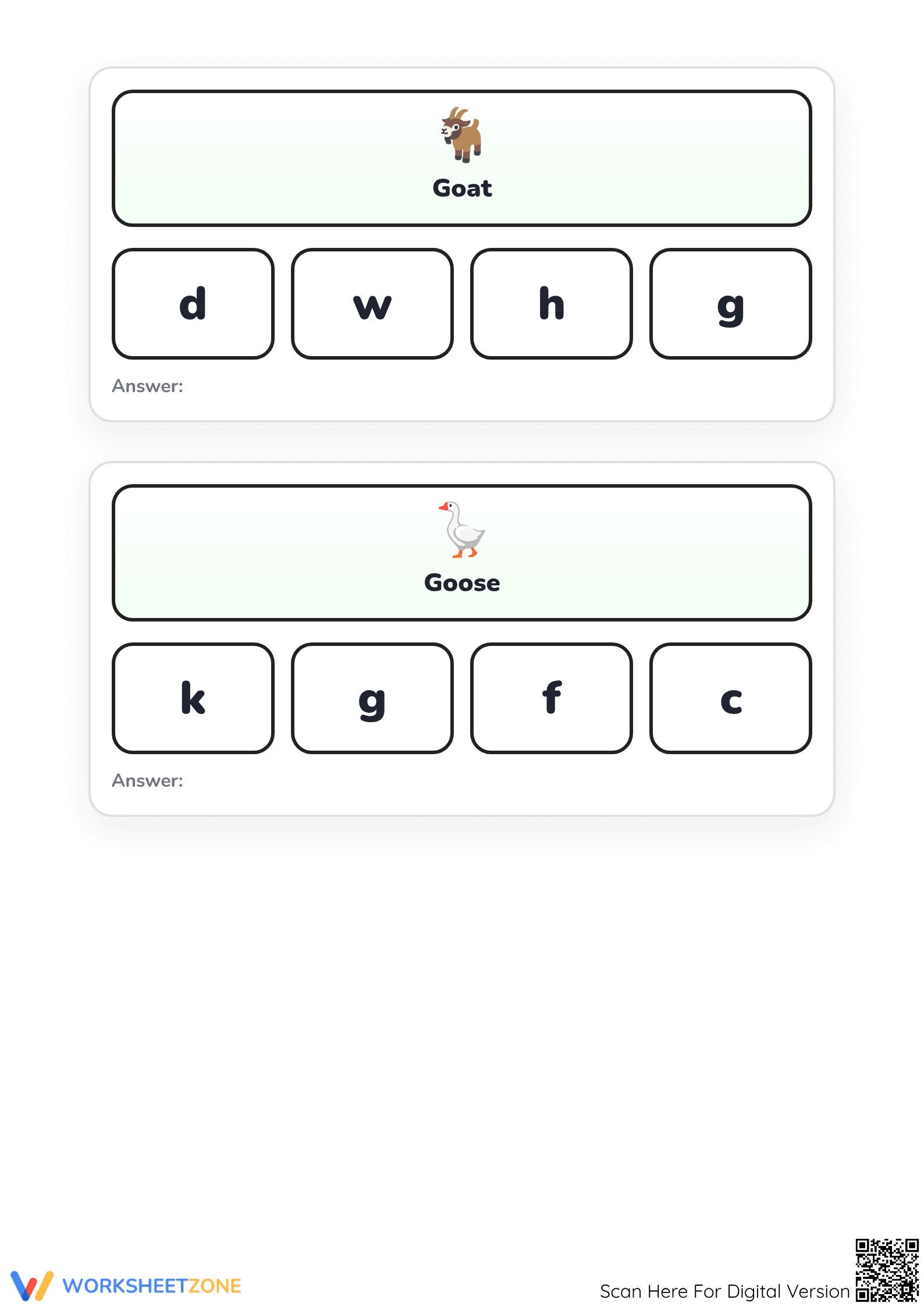
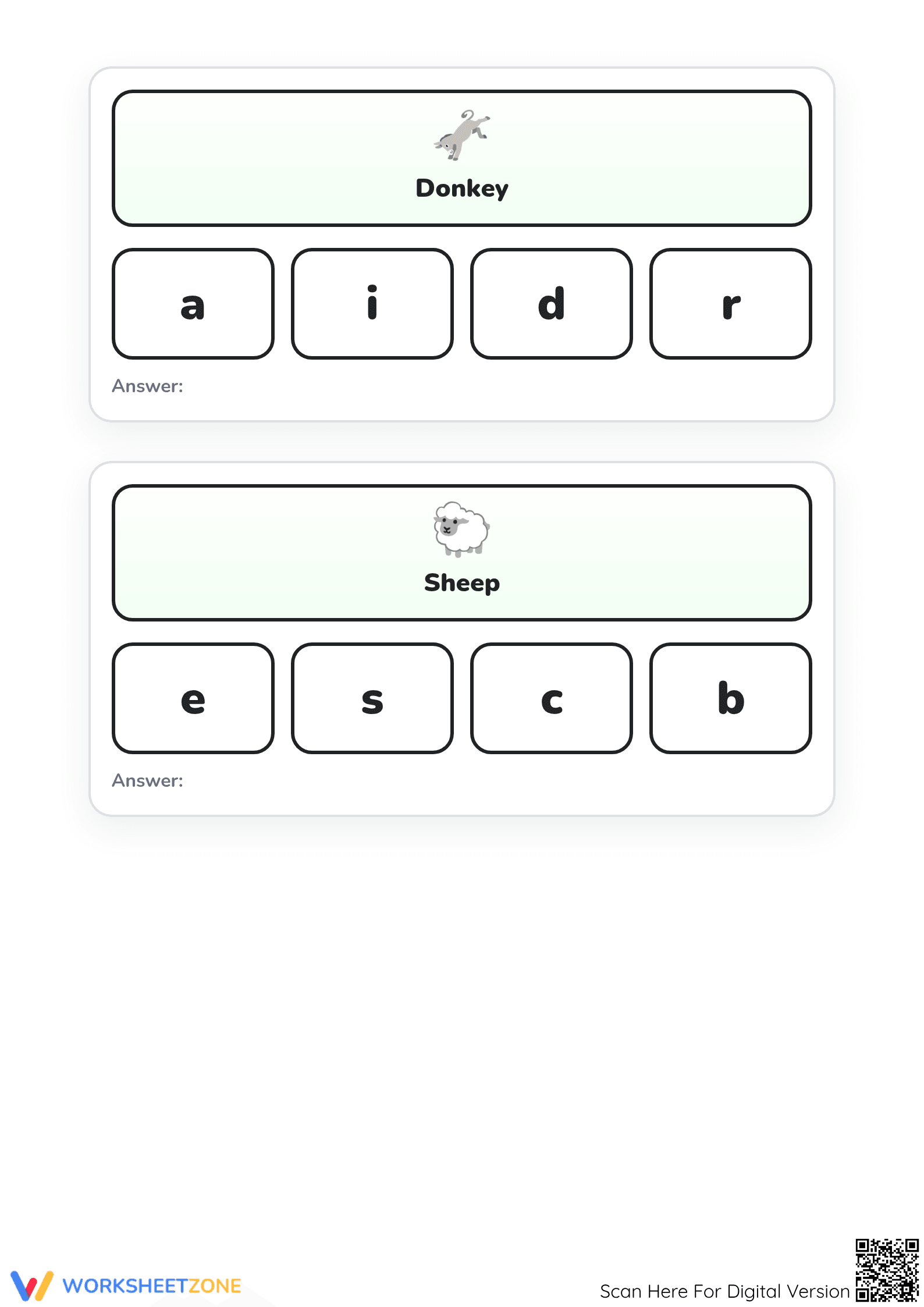
This three-page PDF features five animal-themed boxes designed to isolate initial sounds. Each section presents an animal illustration—like a hen or goat—accompanied by its name and four lowercase letter choices. The layout includes space for the student's name, date, and score, making progress tracking simple. A comprehensive answer key is provided to facilitate quick grading or student self-correction.
Zero-Prep Workflow: First, print the three-page document (30 seconds). Second, distribute the sheets to students with crayons (1 minute). Third, review student responses using the answer key to identify letter-sound gaps (1 minute). Total teacher preparation time is under 3 minutes, making it an ideal choice for emergency sub plans or transition periods.
Standards Alignment: The focus is `CCSS.ELA-LITERACY.RF.K.3.A`, which requires students to demonstrate knowledge of one-to-one letter-sound correspondences for consonants. By selecting the correct initial letter for animals like "Donkey," students practice phonemic isolation required by this standard. Both standard codes can be copied directly into lesson plans, IEP goals, or district curriculum mapping tools.
How to Use It: Use this worksheet during the "You Do" phase of a gradual release model after a direct instruction lesson on initial consonants. It serves as a formative assessment tool to observe if students sound out names. It can also be placed in a literacy center for independent practice, typically taking students 10 to 15 minutes to complete.
Who It's For: This resource is for preschool, kindergarten, and first-grade students developing phonological awareness. It benefits English Language Learners through visual animal prompts. For differentiation, teachers can provide an alphabet anchor chart to assist students struggling with letter-name recognition while they focus on sounds.
Effective phonics instruction requires explicit practice in mapping phonemes to graphemes, a process central to this beginning sound worksheet. According to the RAND AIRS 2024 report on foundational literacy, providing students with structured opportunities to isolate initial sounds is a critical precursor to decoding fluency. This worksheet aligns with research-based practices by using clear pictorial representations to ground abstract sounds in concrete objects. By requiring students to discriminate between multiple letter options, the activity reinforces the one-to-one letter-sound correspondence mandated by CCSS.ELA-LITERACY.RF.K.3.A. Such targeted practice helps bridge the gap between phonemic awareness and formal reading. Educators can use these tasks to gather evidence of mastery, providing a foundation for small-group interventions.


