


























Views
Downloads

Essential Beginning Sounds Worksheet | Grades PK-1 Phonics
Paste this activity's link or code into your existing LMS (Google Classroom, Canvas, Teams, Schoology, Moodle, etc.).
Students can open and work on the activity right away, with no student login required.
You'll still be able to track student progress and results from your teacher account.
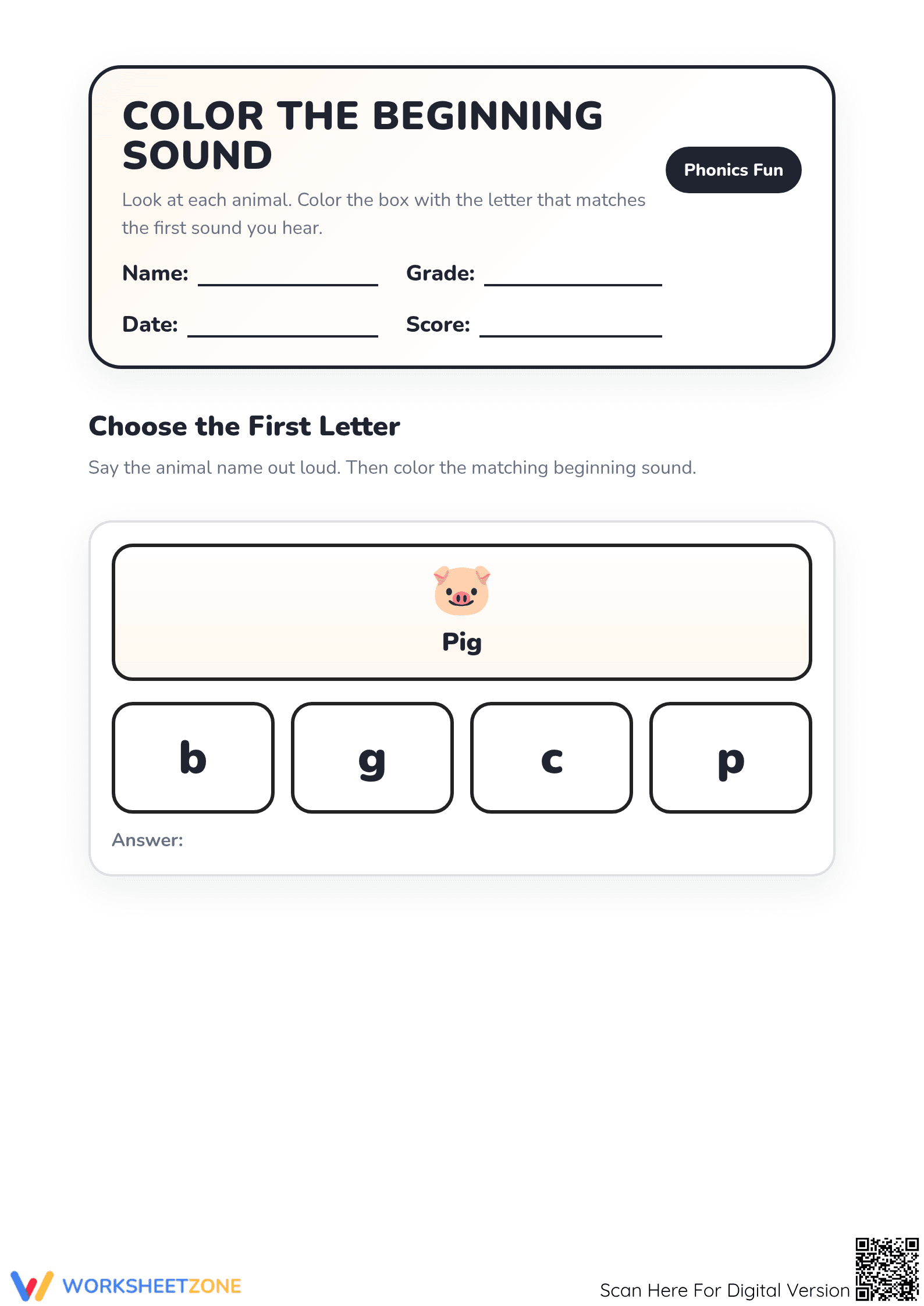
This Grade K-1 beginning sounds worksheet helps early learners master phonemic awareness through a fun coloring activity. Students identify the initial sound of common animals and match them to the correct letter, building foundational skills for reading fluency. It offers an engaging way to assess letter-sound correspondence in young students.
At a Glance
- Grade: Kindergarten · Subject: ELA Phonics
- Standard:
CCSS.ELA-LITERACY.RF.K.3.A— Demonstrate basic knowledge of one-to-one letter-sound correspondences for consonants.- Skill Focus: Beginning sounds identification
- Format: 3 pages · 5 problems · Answer key included · PDF
- Best For: Literacy centers and independent morning work
- Time: 10–15 minutes
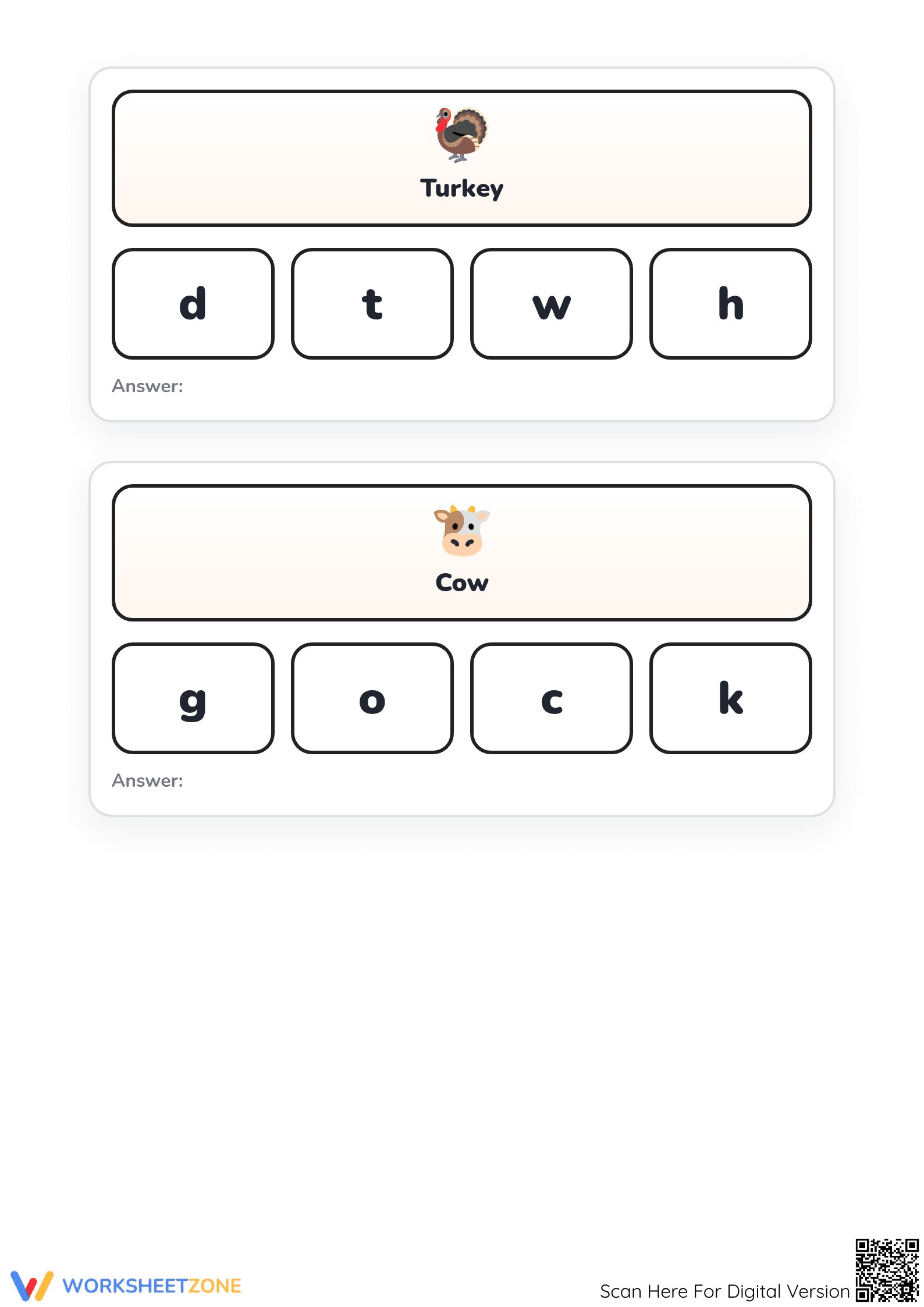
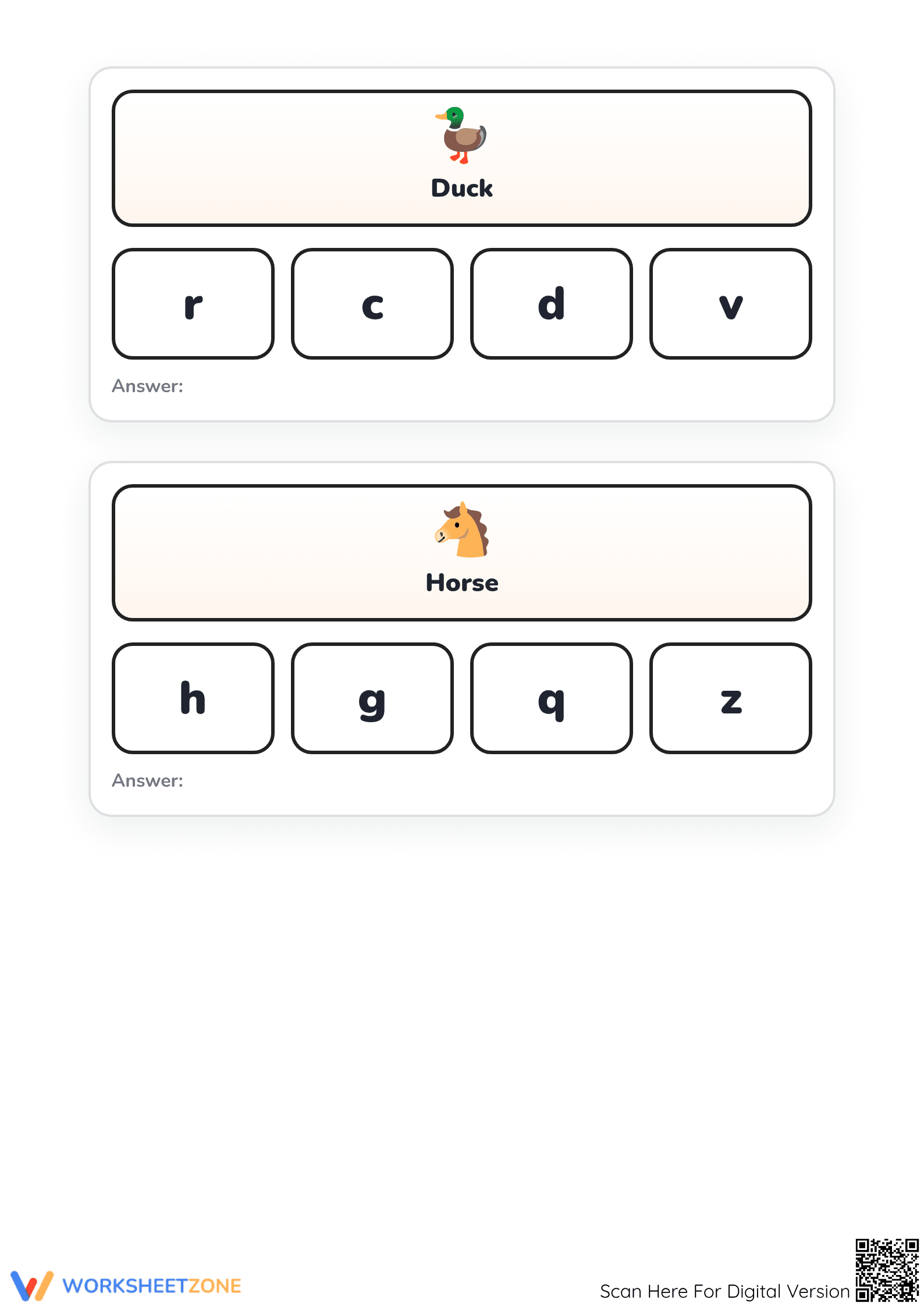
This resource contains three pages of interactive phonics practice. Each page features clear animal illustrations paired with multiple-choice letter boxes. The clean layout is accessible for preschoolers and kindergarteners. A comprehensive answer key is included for each page, allowing for quick grading or student self-correction.
This resource is designed for immediate deployment. Teachers can Print the set in 30 seconds, Distribute it for a quick literacy warm-up, and Review results using the answer key in less than a minute. Total preparation time is under 2 minutes, making this ideal for busy mornings or substitute plans.
This worksheet is primarily aligned with CCSS.ELA-LITERACY.RF.K.3.A, requiring students to demonstrate knowledge of letter-sound correspondences for consonants. It also supports CCSS.ELA-LITERACY.RF.1.3, reinforcing phonics and word analysis. Both standard codes can be copied directly into lesson plans, IEP goals, or district curriculum mapping tools.
Use this during the independent practice phase after a lesson on initial consonant sounds. It serves as a formative assessment; observe if students vocalize animal names before coloring to ensure they connect sounds to visual letters. Expected completion time is 10-15 minutes based on fine motor coloring skills.
This activity is tailored for preschool, kindergarten, and first-grade students developing phonological awareness. It is particularly beneficial for English Language Learners as animal illustrations provide visual cues for vocabulary. Pair this with a beginning sounds anchor chart or a digital phonics game for a complete literacy block.
This resource targets CCSS.ELA-LITERACY.RF.K.3.A to build essential phonemic awareness, a critical precursor to decoding and overall reading success. According to the RAND AIRS 2024 report, consistent practice with letter-sound correspondence in the early years significantly correlates with higher reading proficiency scores in third grade. By requiring students to isolate the initial phoneme and map it to a specific grapheme, this worksheet reinforces the alphabetic principle through structured, visual repetition. Research from Fisher & Frey (2014) emphasizes that such focused, independent practice allows students to internalize phonics rules more effectively than rote memorization alone. This printable provides a high-leverage instructional opportunity that is both classroom-ready and theoretically grounded in evidence-based literacy instruction. The standard code CCSS.ELA-LITERACY.RF.K.3.A and the plain-English skill of initial sound matching are integrated to support precise curricular alignment and student mastery.


