


























Views
Downloads
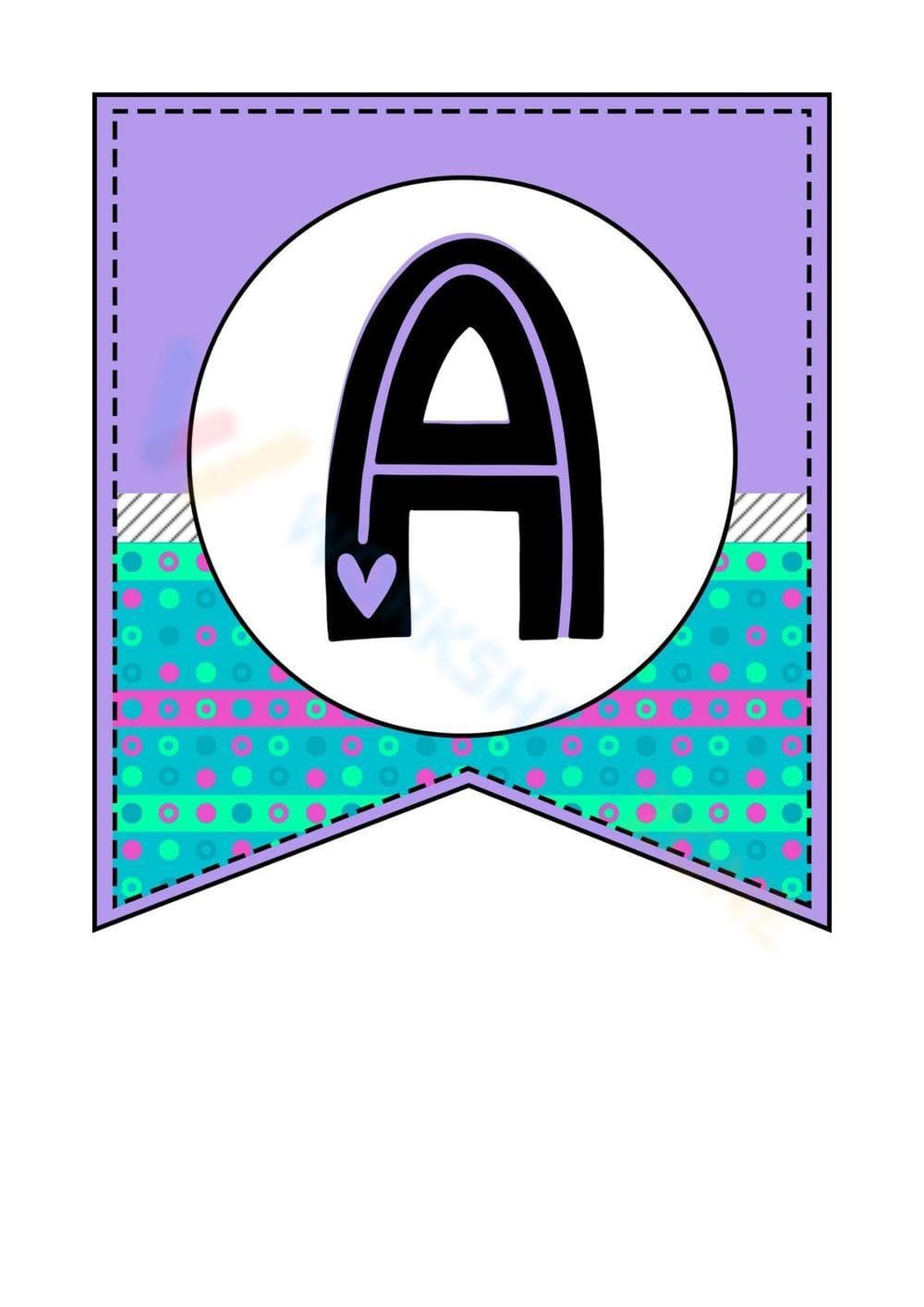

Grade K Alphabet Bunting — Printable No-Prep Banner
Paste this activity's link or code into your existing LMS (Google Classroom, Canvas, Teams, Schoology, Moodle, etc.).
Students can open and work on the activity right away, with no student login required.
You'll still be able to track student progress and results from your teacher account.
This printable alphabet bunting provides early learners with clear visual supports for letter recognition. The banner establishes a literacy-rich environment while reinforcing foundational reading skills. Teachers can display these vibrant letters to help students identify uppercase characters all year.
At a Glance
- Grade: K · Subject: ELA
- Standard:
CCSS.ELA-LITERACY.RF.K.1.D— Recognize and name all uppercase letters- Skill Focus: Alphabet Recognition
- Format: 26 pages · 26 letters · No answer key · PDF
- Best For: Classroom decor and visual reference
- Time: 10–15 minutes
This PDF includes 26 printable bunting flags, each featuring a distinct uppercase letter. Every page uses a highly legible primary font centered within a bold circular frame, set against a purple and teal polka-dot background. This consistent visual structure minimizes distractions while maximizing visibility.
Zero-Prep Workflow
This resource requires minimal preparation, offering an ideal print-and-go solution.
- Print (2 minutes): Simply load standard letter-sized paper or cardstock and print the 26-page document in full color.
- Distribute (5 minutes): Cut along the outer bunting lines. For added durability, laminate the flags before hanging.
- Review (3 minutes): String the letters together using a hole punch and yarn, or staple them directly to a bulletin board.
Total teacher prep time is under 15 minutes for a year-long display. It is also a great task to assign to a parent volunteer or include in a beginning-of-year sub plan.
Standards Alignment
This resource is directly aligned to CCSS.ELA-LITERACY.RF.K.1.D, which requires students to recognize and name all upper- and lowercase letters of the alphabet. By providing a constant visual model, the banner supports daily incidental learning and explicit phonics instruction. Both standard codes can be copied directly into lesson plans, IEP goals, or district curriculum mapping tools.
How to Use It
Use this bunting as a primary alphabet line above the whiteboard for constant reference during phonics instruction. Before direct instruction, educators can point to specific letters to activate prior knowledge. During independent writing time, students can look up at the banner to verify letter formation and orientation. As a formative assessment observation tip, watch to see which students independently reference the banner when attempting to write their names or decode environmental print. Expected setup time is brief, yielding a permanent year-long instructional tool.
Who It's For
Designed for Kindergarten students mastering foundational alphabet skills, this visual support aids visual learners and English Language Learners through consistent environmental print. It pairs perfectly with phonics anchor charts, word walls, or direct instruction lessons.
Establishing a literacy-rich environment is a critical component of early childhood education. This resource supports CCSS.ELA-LITERACY.RF.K.1.D by helping students recognize and name all uppercase letters through consistent visual exposure. According to a 2024 report by EdReports, classrooms that integrate clear, accessible environmental print significantly improve students' incidental learning and automaticity in letter recognition. When foundational reading skills are supported by constant visual models, cognitive load is reduced during explicit phonics instruction. This allows young learners to focus on higher-order tasks like phonemic blending and decoding. By displaying this alphabet bunting, educators provide a reliable scaffold that students can reference independently throughout the school day, fostering both confidence and early literacy development in a highly structured, visually engaging format. Consistent exposure to these foundational elements ensures that all learners have the tools necessary for reading success.


