


























Views
Downloads

Essential Consonant Digraphs Worksheet | Preschool Phonics
Paste this activity's link or code into your existing LMS (Google Classroom, Canvas, Teams, Schoology, Moodle, etc.).
Students can open and work on the activity right away, with no student login required.
You'll still be able to track student progress and results from your teacher account.
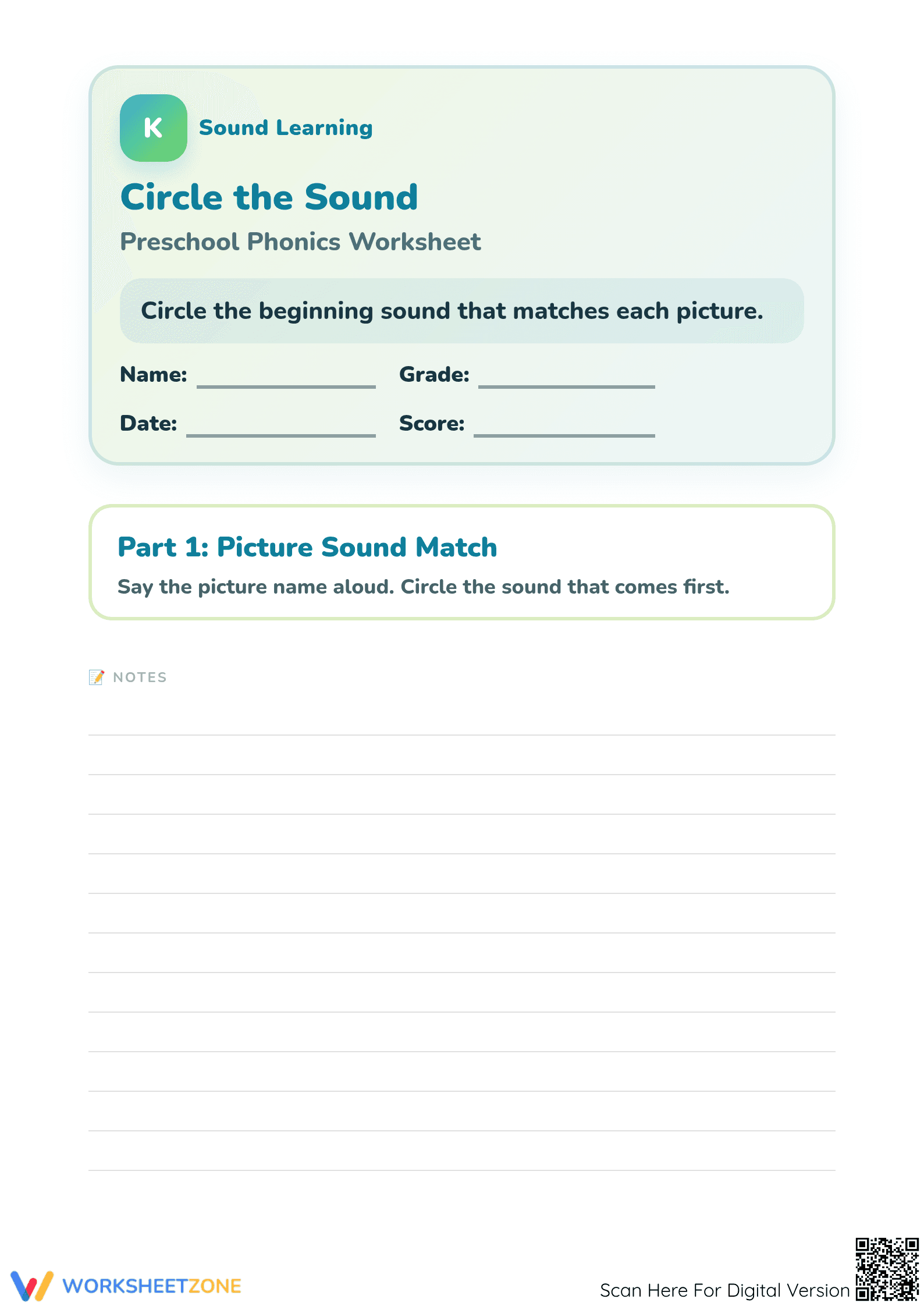
Mastering beginning consonant digraphs is a critical step in early phonics development. This Circle the Sound worksheet helps preschool and kindergarten students identify the specific sounds made by combinations like "wh," "wr," "kn," and "ph." By matching clear visual illustrations with their corresponding phonetic start, learners solidify their understanding of speech-to-print relationships and improve their decoding accuracy.
At a Glance
- Grade: Preschool · Subject: English Language Arts
- Standard:
RF.K.3— Demonstrate basic knowledge of letter-sound correspondences by identifying beginning consonant digraphs- Skill Focus: Consonant Digraphs (wh, wr, kn, ph)
- Format: 3 pages · 7 problems · Answer key included · PDF
- Best For: Early phonics and beginning sound practice
- Time: 15–20 minutes
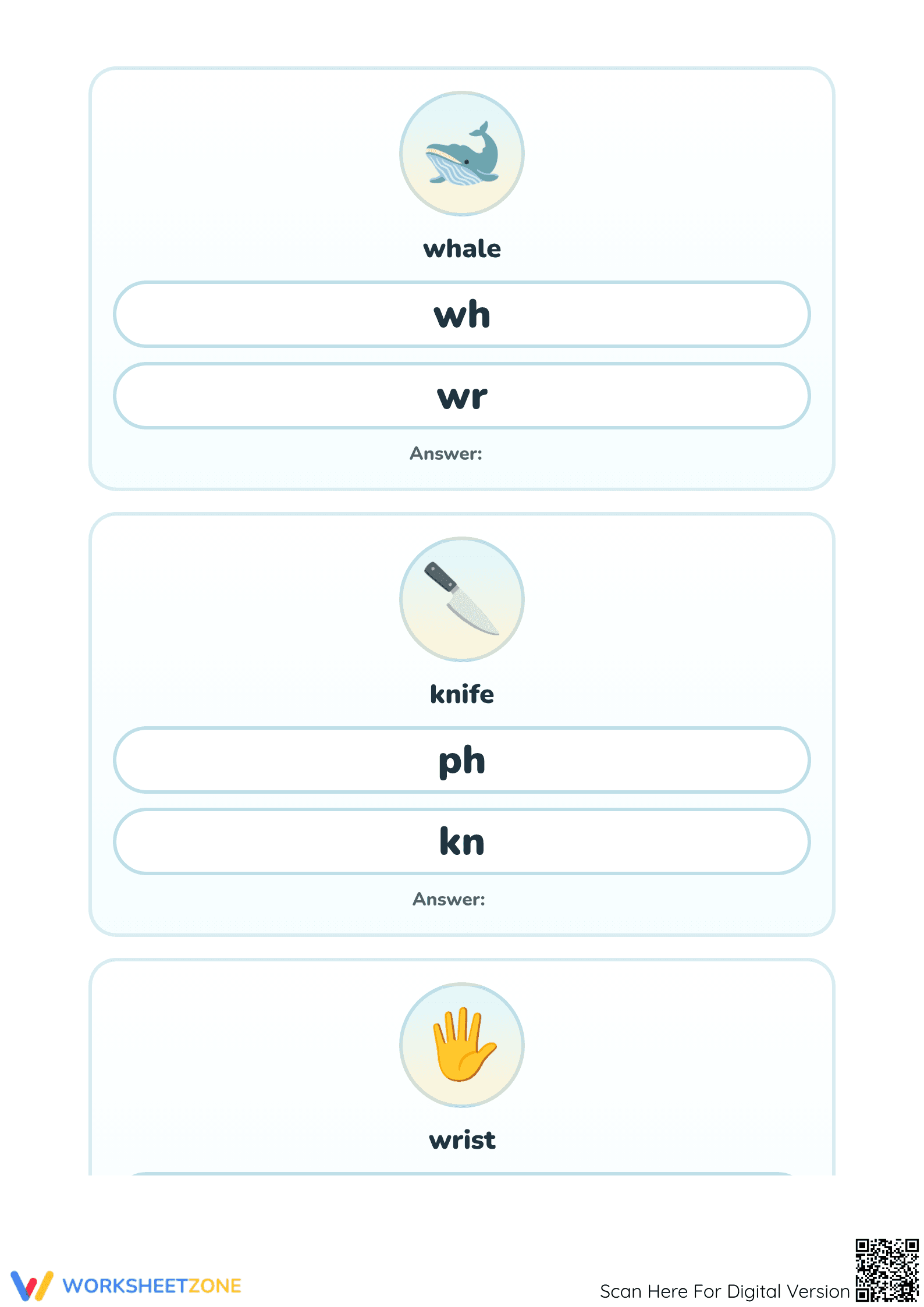
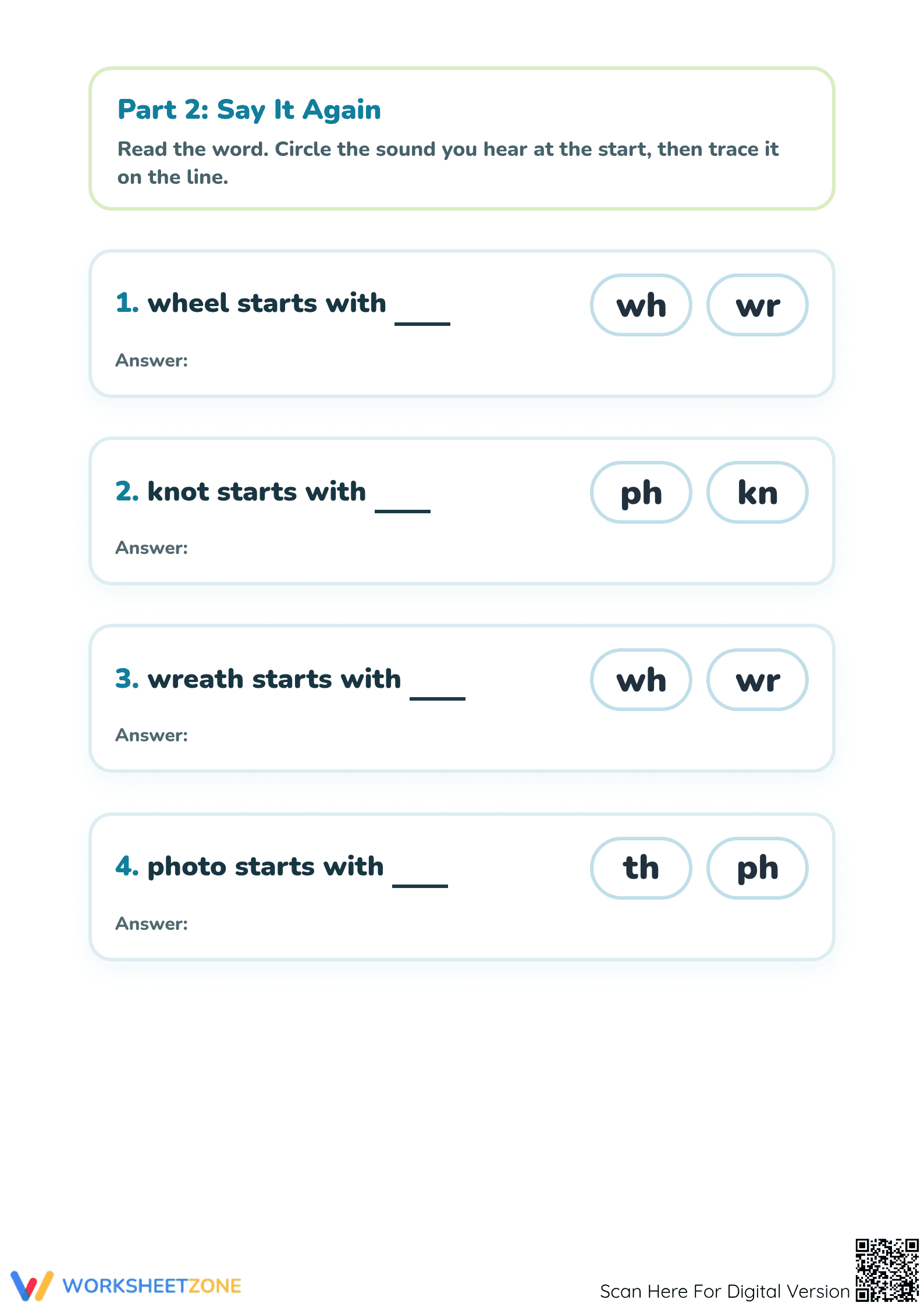
This comprehensive resource consists of three high-quality PDF pages designed for young learners. Part 1 features a Picture Sound Match where students evaluate three distinct items: a whale, a knife, and a wrist. Part 2 transitions to "Say It Again," providing four sentence-based tasks that require students to circle the correct beginning sound and trace the letters on provided lines for fine motor reinforcement.
Skill Progression
- Guided Recognition: Students begin with Part 1, using large, clear icons to identify the correct digraph from two choices, receiving immediate visual support to bridge the phonics gap.
- Supported Practice: In the first half of Part 2, the worksheet provides the word and an empty space, prompting students to say the word aloud and select the hearable phoneme from the options.
- Independent Production: The final stage requires students to trace the identified digraph, moving from auditory recognition to orthographic production, which is a key component of the literacy journey.
This sequence ensures students move from low-stakes identification to active writing and tracing of complex phonemes using the "I Do, We Do, You Do" methodology.
Standards Alignment
This resource is meticulously aligned with CCSS.ELA-LITERACY.RF.K.3, which requires students to demonstrate basic knowledge of one-to-one letter-sound correspondences. By focusing on digraphs, it also supports foundational skills for first-grade reading standards. Both standard codes can be copied directly into lesson plans, IEP goals, or district curriculum mapping tools.
How to Use It
Incorporate this worksheet during small-group phonics rotations after a direct instruction session on "quiet" or "blended" sounds. For a formative assessment, observe if students can pronounce the "silent" letters in digraphs like "kn" and "wr" before they circle the answer. This activity typically takes between 15 and 20 minutes for a Preschool student to complete thoroughly.
Who It's For
This printable is ideal for preschool and kindergarten students who have already mastered single-letter sounds. It serves as an excellent differentiation tool for English Language Learners who need visual cues to understand consonant combinations. Pair this worksheet with a digraph anchor chart or a short reading passage for a complete and cohesive phonics lesson.


