


























Views
Downloads

Essential Circle the Sound Worksheet | Preschool ELA Phonics
Paste this activity's link or code into your existing LMS (Google Classroom, Canvas, Teams, Schoology, Moodle, etc.).
Students can open and work on the activity right away, with no student login required.
You'll still be able to track student progress and results from your teacher account.
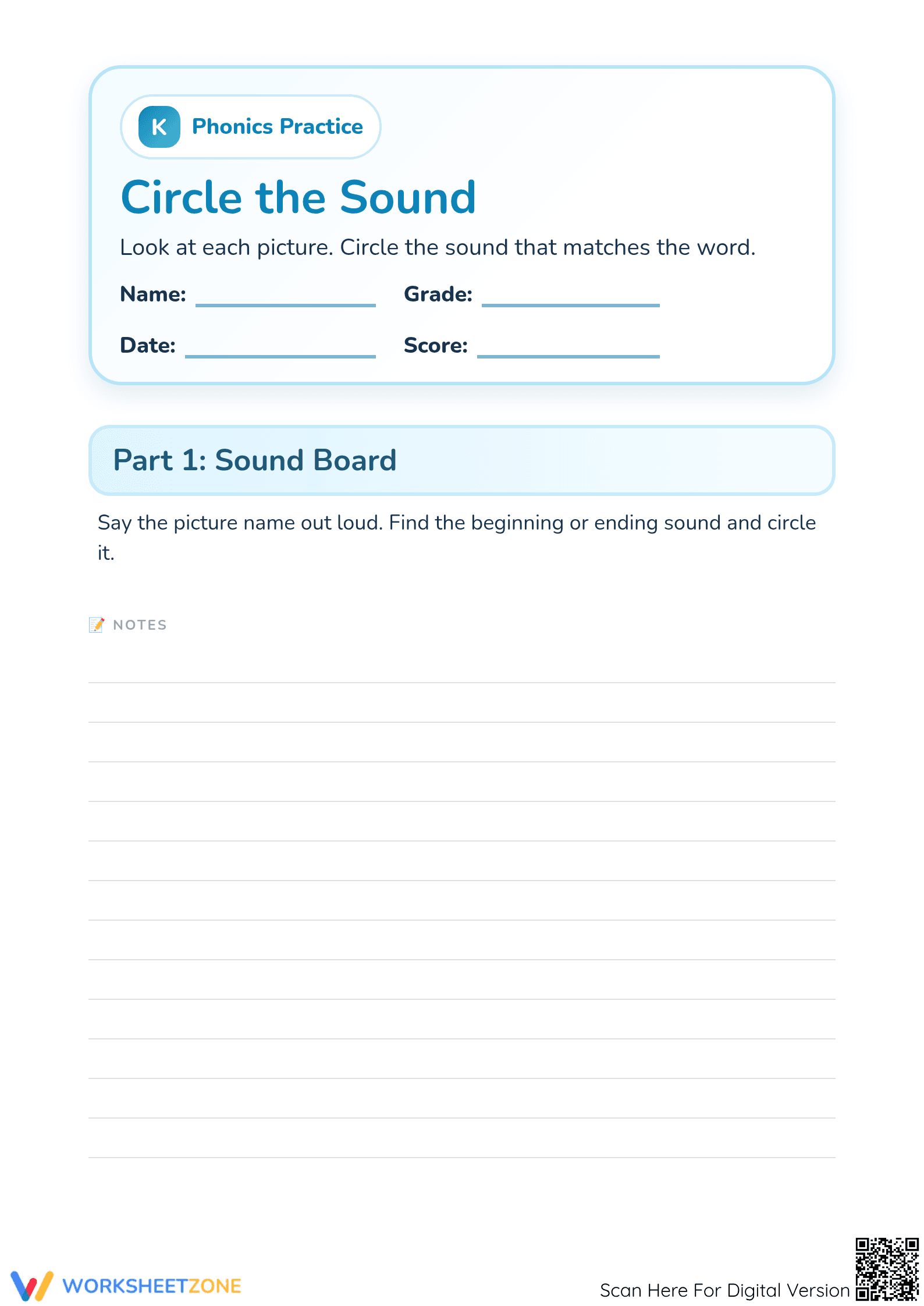
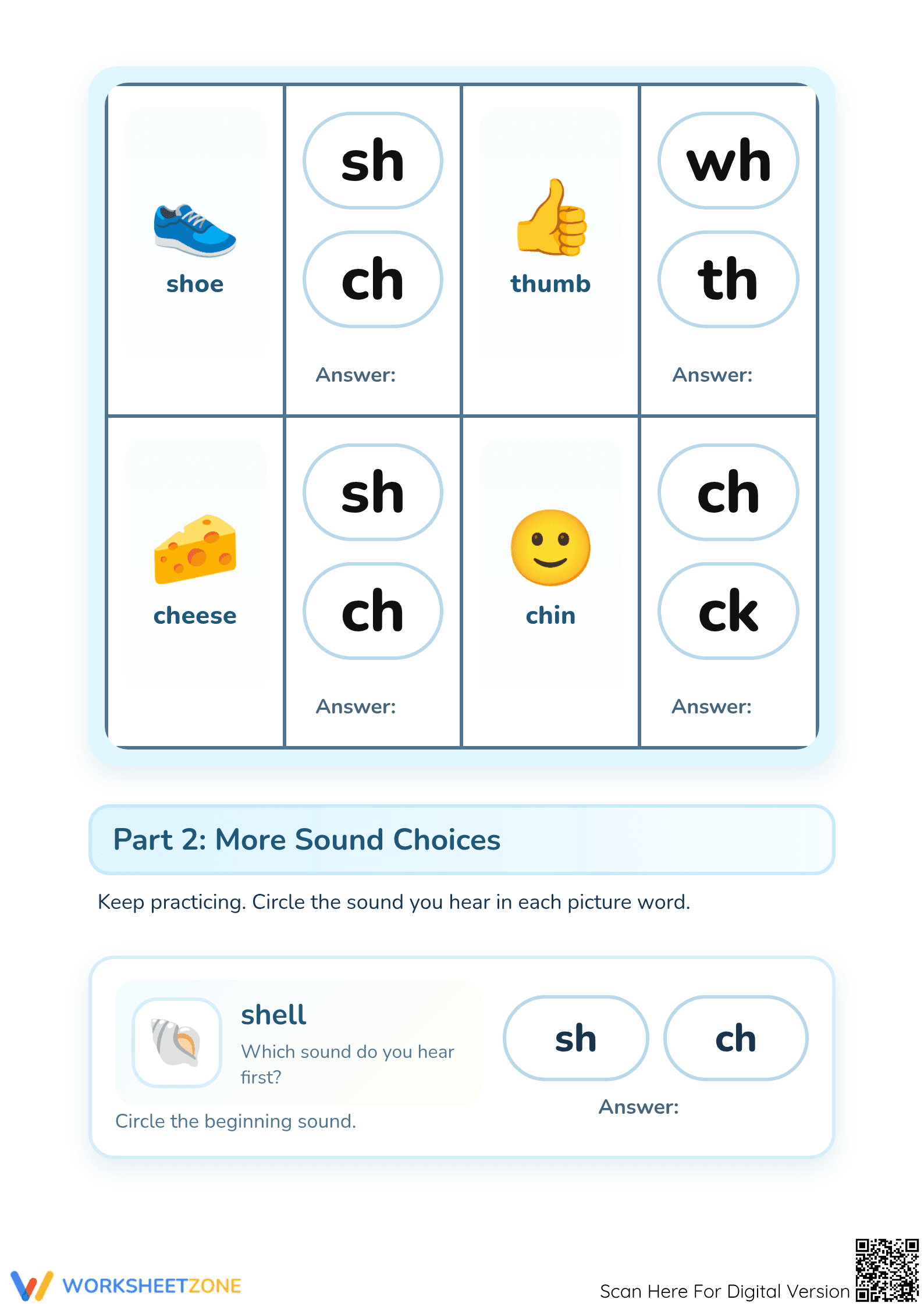
Support early literacy development with this focused consonant digraphs worksheet designed for preschool and kindergarten learners. Students practice identifying the distinct sounds made by letter combinations like "sh," "ch," "th," and "wh" through visual associations. This activity builds the foundational phonemic awareness required for fluent decoding and successful reading outcomes in early childhood education.
At a Glance
- Grade: Preschool · Subject: ELA Phonics
- Standard:
CCSS.ELA-LITERACY.RF.K.3— Demonstrate basic knowledge of letter-sound correspondences by producing primary consonant sounds- Skill Focus: Consonant Digraphs (sh, ch, th, wh, ck)
- Format: 4 pages · 10 problems · Answer key included · PDF
- Best For: Small group phonics and center rotations
- Time: 10–15 minutes
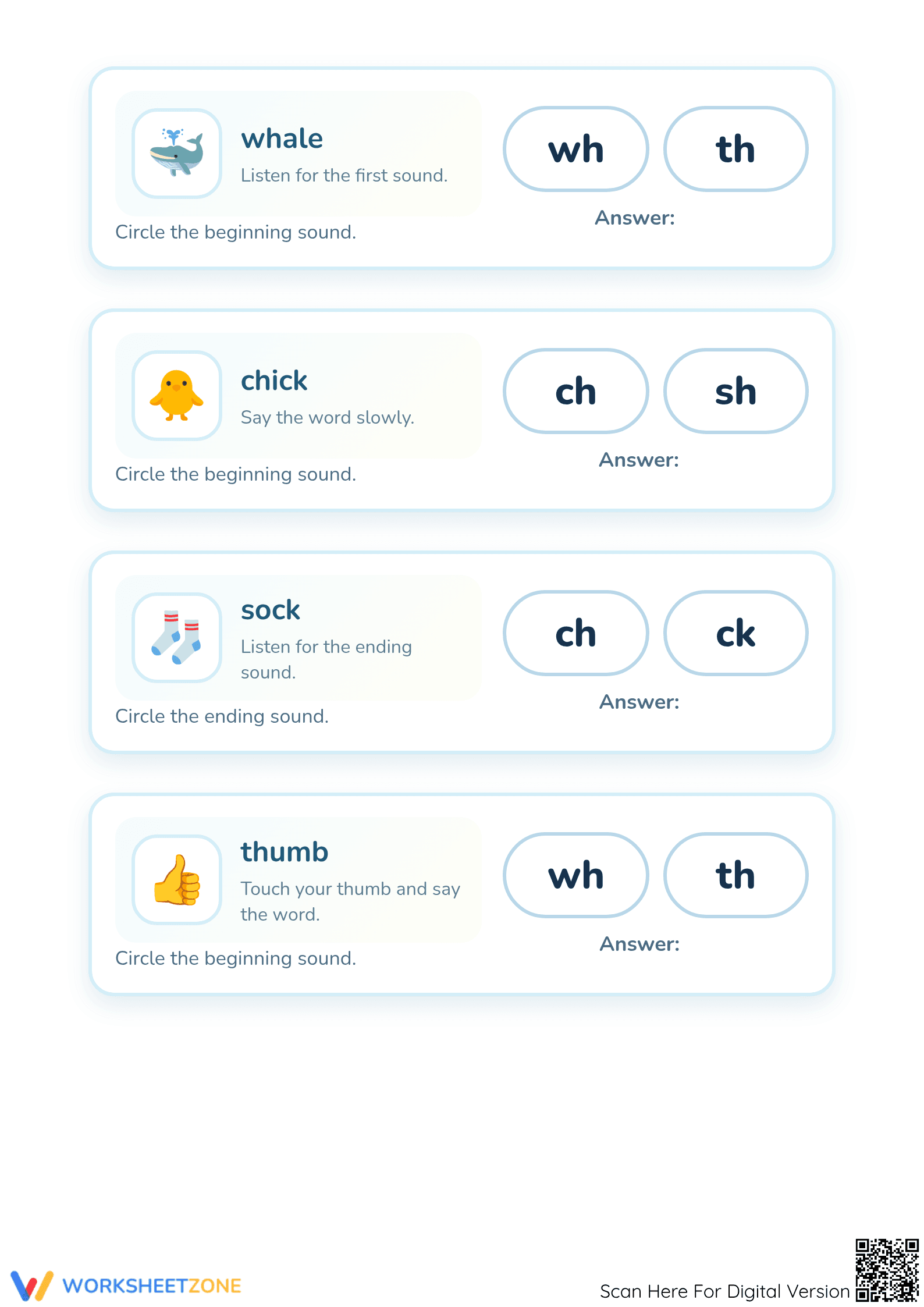
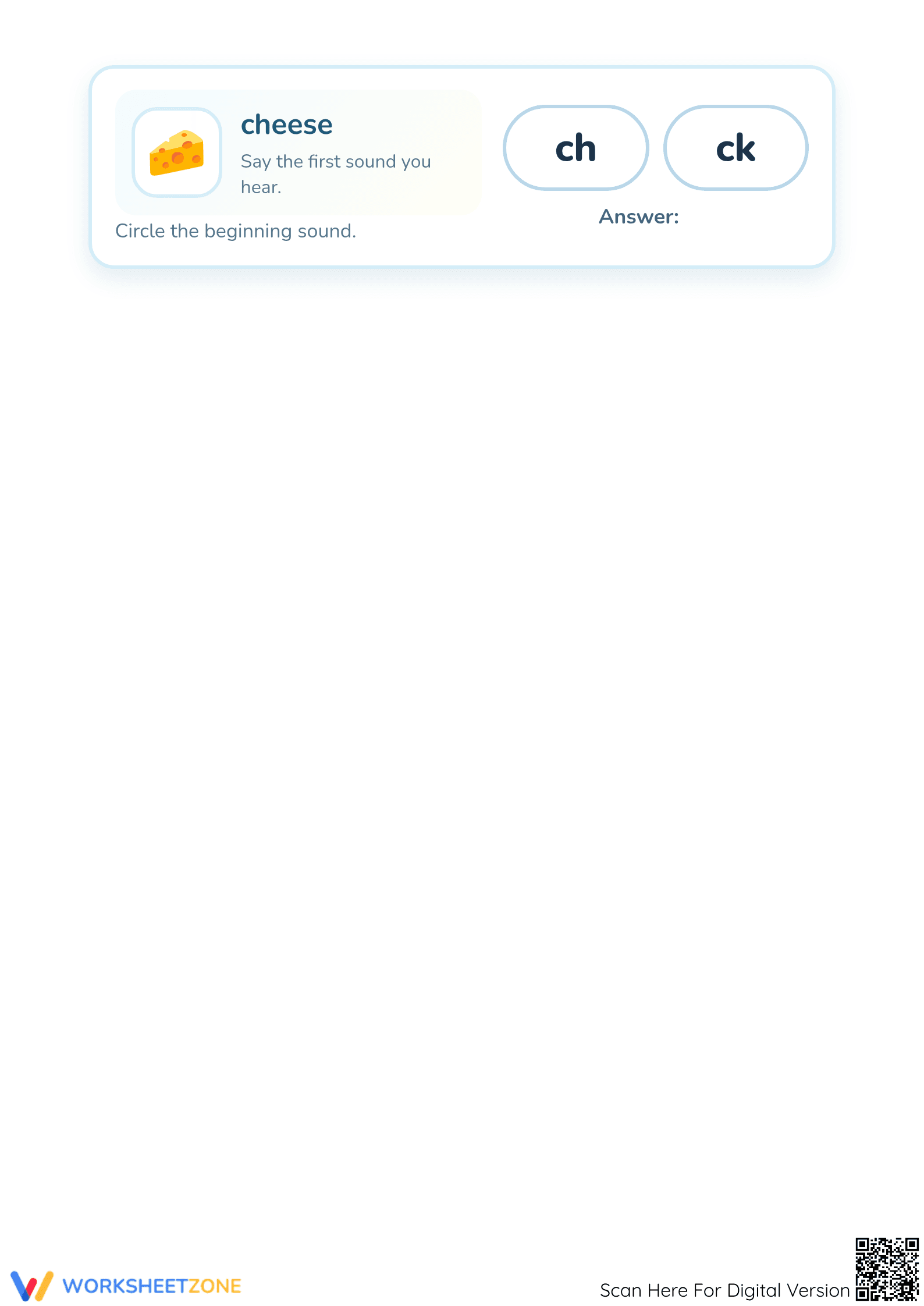
This 4-page instructional resource includes a Sound Board and advanced sound choice sections. The worksheet features high-quality illustrations of common objects like shoes, whales, and socks, paired with multiple-choice sound bubbles. A comprehensive answer key is provided for quick correction, and the structured layout includes dedicated space for student names and performance scores.
Zero-Prep Workflow
- Print: Select the pages needed for your current phonics focus. Total printing time is under 30 seconds for a full classroom set.
- Distribute: Hand out the materials during your literacy block or place them in a designated "I'm Finished" folder.
- Review: Use the provided answer key to grade the 10 tasks in under 2 minutes, or have students self-check their work.
This streamlined process makes the worksheet an ideal solution for substitute lesson plans or unexpected classroom transitions where educational continuity is essential.
The primary alignment for this resource is CCSS.ELA-LITERACY.RF.K.3, which requires students to demonstrate knowledge of one-to-one letter-sound correspondences. By focusing on digraphs, it also supports CCSS.ELA-LITERACY.RF.1.3.A, facilitating the transition from single-consonant sounds to more complex phonetic blends. Both standard codes can be copied directly into lesson plans, IEP goals, or district curriculum mapping tools.
To use this worksheet effectively, introduce it after a direct instruction session on "brother sounds" or digraphs. For a formative assessment tip, observe students as they say the picture names out loud; notice if they are correctly isolating the initial or final sound before making their selection. This task typically takes 10 to 15 minutes to complete independently.
This resource is tailored for preschool students beginning their phonics journey and kindergarteners needing reinforced practice. It is particularly effective for English Language Learners (ELL) who benefit from the visual cues provided next to each vocabulary word. Pair this worksheet with a digraph anchor chart or a "sound-of-the-week" reading passage for a comprehensive instructional experience.
Phonemic awareness is widely recognized as one of the strongest predictors of later reading success. According to Fisher & Frey (2014), purposeful practice with letter-sound correspondences, specifically consonant digraphs like "sh" and "th," is a critical component of the gradual release of responsibility model. This worksheet facilitates that transition by providing 10 structured opportunities for students to apply their knowledge of CCSS.ELA-LITERACY.RF.K.3 in a clear, visual context. By isolating the beginning and ending sounds of familiar objects, learners develop the auditory discrimination skills necessary for orthographic mapping. This evidence-based approach ensures that young students are not merely memorizing words but are instead building the decoding infrastructure required for literacy. The inclusion of clear formatting and immediate feedback via an answer key aligns with best practices for early childhood phonics instruction as highlighted in recent ScienceDirect TpT Analysis reports.


