


























Views
Downloads

Beginning Sounds Worksheet | Grade K Printable
Paste this activity's link or code into your existing LMS (Google Classroom, Canvas, Teams, Schoology, Moodle, etc.).
Students can open and work on the activity right away, with no student login required.
You'll still be able to track student progress and results from your teacher account.
This foundational phonics worksheet helps early learners master initial phoneme recognition by matching familiar images to their corresponding starting letters. By isolating the first sound in everyday words, students build the critical decoding skills necessary for reading fluency and spelling accuracy.
At a Glance
- Grade: Kindergarten · Subject: ELA
- Standard:
CCSS.ELA-LITERACY.RF.K.3.A— Demonstrate basic knowledge of letter-sound correspondences.- Skill Focus: Beginning sounds
- Format: 3 pages · 8 problems · Answer key included · PDF
- Best For: Independent practice or literacy centers
- Time: 10–15 minutes
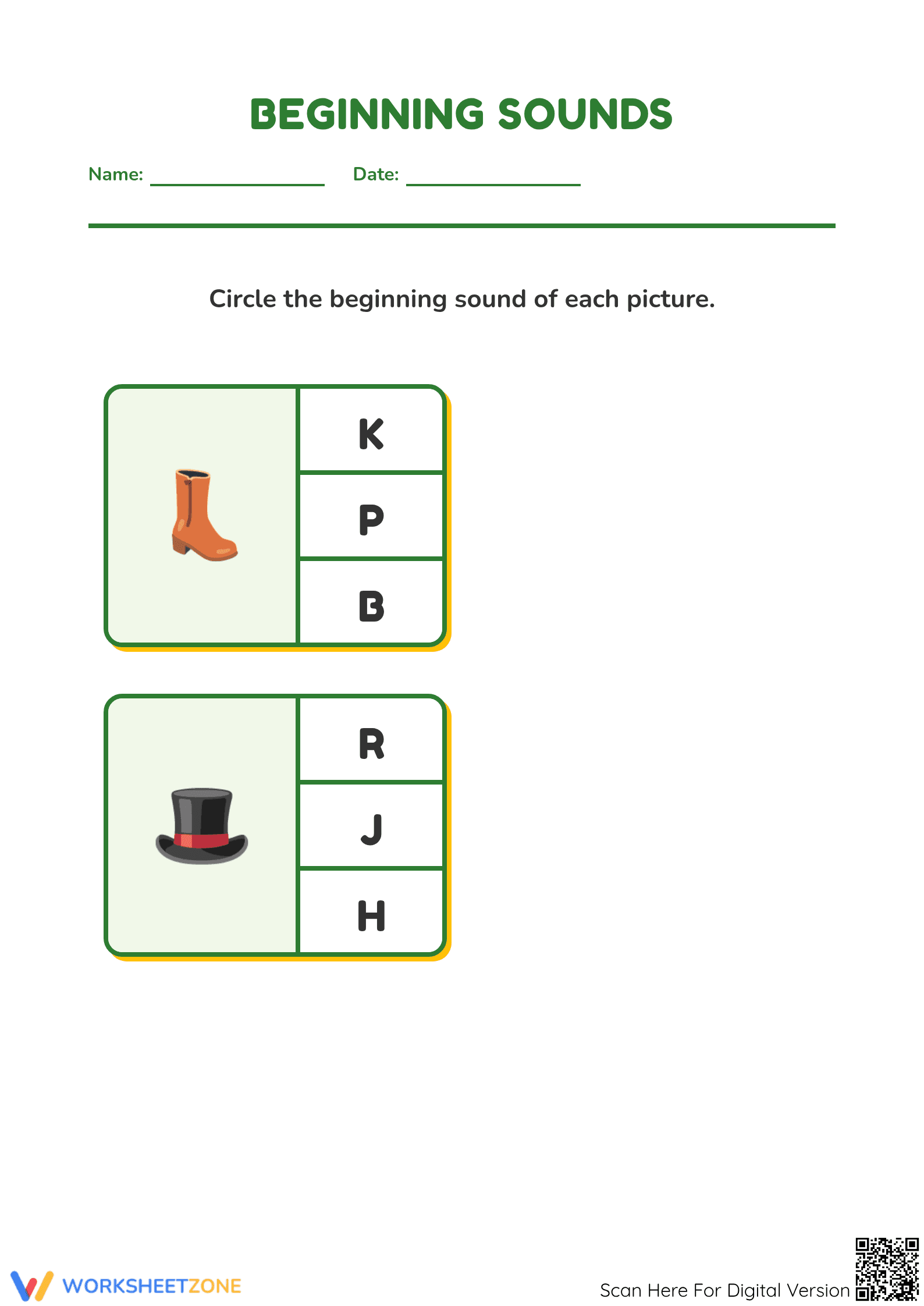
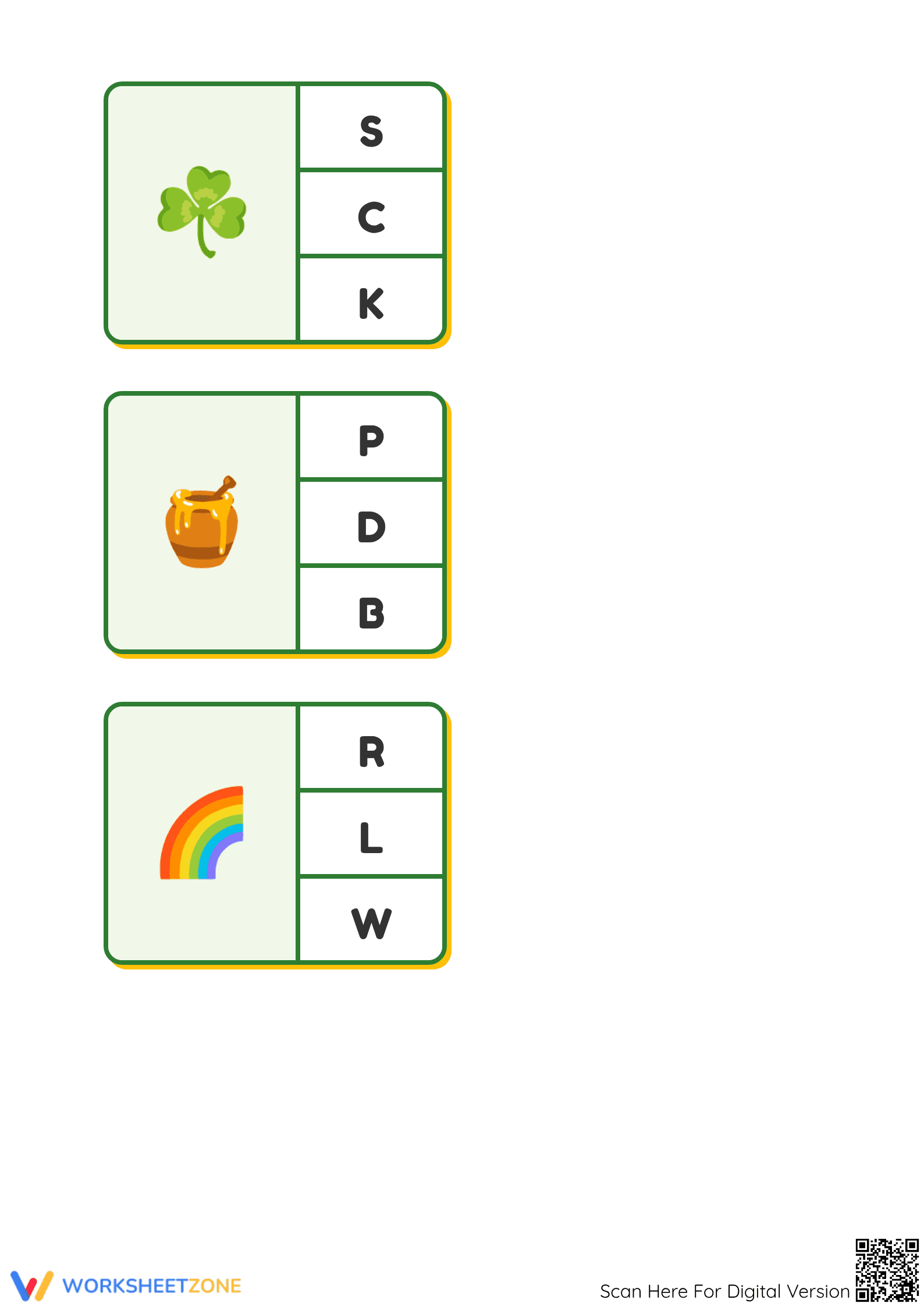
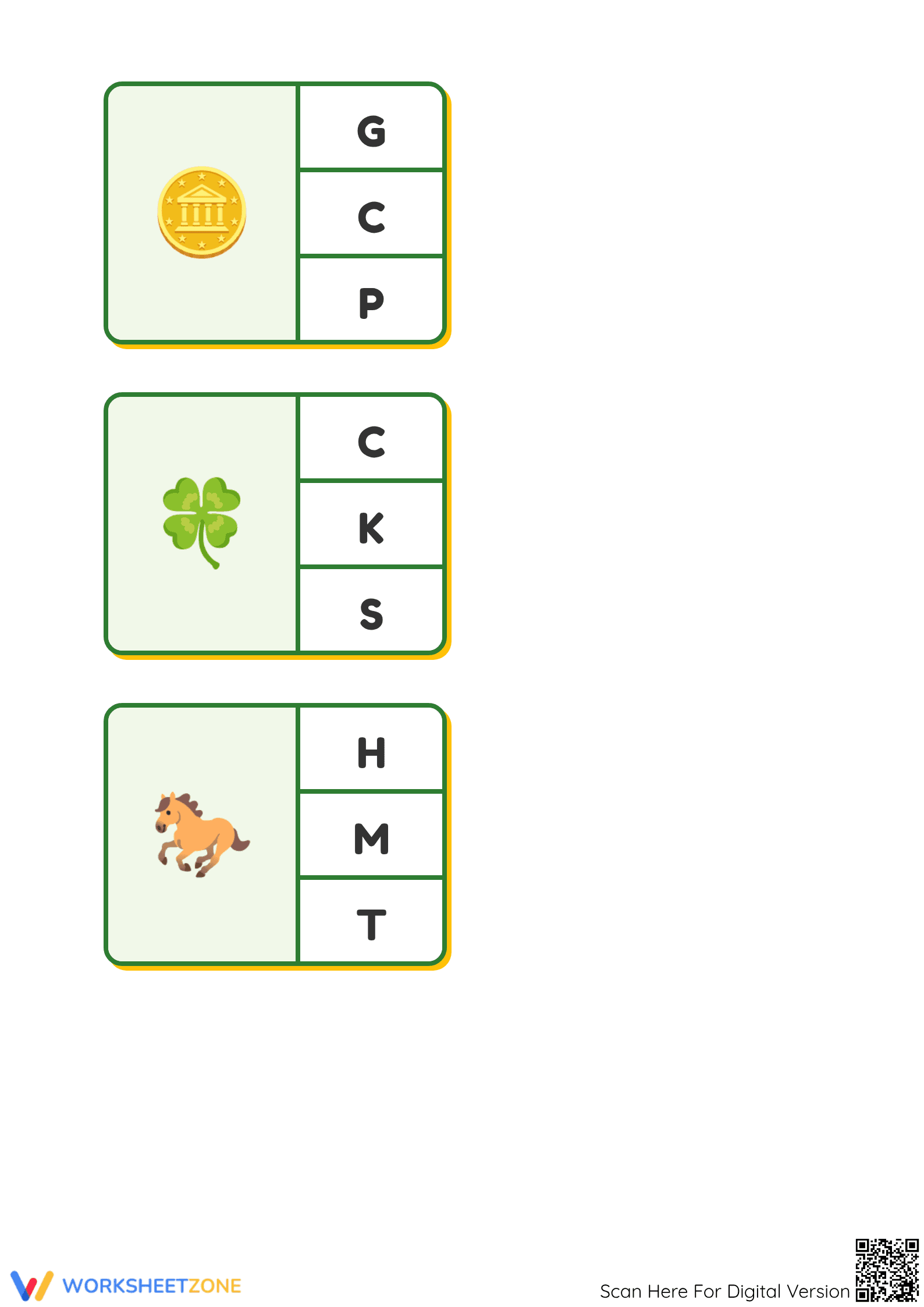
This resource features three highly visual pages containing a total of eight multiple-choice tasks. Each problem presents a clear, full-color illustration of a recognizable object—such as a boot, hat, or rainbow—alongside three uppercase letter options. Students must vocalize the word and circle the correct letter that represents the initial sound. A complete, full-page answer key is provided for every worksheet page, allowing for quick grading or self-correction by the student.
- Guided practice: Complete the first page together, emphasizing the pronunciation of the picture and stretching out the initial sound so students can hear it clearly.
- Supported practice: Move to the second page, allowing students to name pictures aloud while providing corrective feedback on their letter selections.
- Independent practice: Assign the final page for students to complete on their own to assess mastery of initial phoneme isolation.
This gradual-release approach ensures students build confidence before working independently.
This worksheet is directly aligned to CCSS.ELA-LITERACY.RF.K.3.A: "Demonstrate basic knowledge of one-to-one letter-sound correspondences by producing the primary sound or many of the most frequent sounds for each consonant." It also supports early phonemic awareness by requiring students to isolate the first sound in spoken words. Both standard codes can be copied directly into lesson plans, IEP goals, or district curriculum mapping tools.
Deploy this worksheet during morning work routines or as a focused activity within small-group literacy centers. Before handing out the assignment, review the names of all the pictures to ensure vocabulary gaps do not interfere with phonics assessment. As a formative assessment observation tip, watch students' mouths as they whisper the words to themselves; this helps confirm they are actively isolating the first phoneme rather than guessing. Most kindergarteners will complete the eight tasks in 10 to 15 minutes.
This printable is designed for preschool, kindergarten, and first-grade students who are developing their foundational reading skills. It serves as an excellent intervention tool for older students struggling with phonemic awareness or English Language Learners building their English vocabulary and sound repertoire. Pair this activity with a classroom alphabet anchor chart or a direct instruction lesson on consonant sounds to maximize student success.
Mastering initial phonemes is a critical stepping stone in early literacy development. This resource targets CCSS.ELA-LITERACY.RF.K.3.A, requiring students to demonstrate basic knowledge of letter-sound correspondences. According to a comprehensive EdReports 2024 analysis of foundational reading programs, explicit and systematic instruction in phonemic awareness—specifically the ability to isolate and manipulate individual sounds—is essential for later decoding and spelling proficiency. When young learners practice matching visual representations of words to their corresponding beginning letters, they strengthen the neural pathways that connect auditory processing with visual recognition. This targeted practice builds immediate phonics skills and fosters the automaticity required for fluent reading. By providing structured, repetitive exposure to these letter-sound relationships, educators can effectively bridge the gap between spoken language and written text, setting a strong foundation for future academic achievement.


