


























Views
Downloads

Printable Beginning Sounds Worksheet | Grade K-1 Phonics
Paste this activity's link or code into your existing LMS (Google Classroom, Canvas, Teams, Schoology, Moodle, etc.).
Students can open and work on the activity right away, with no student login required.
You'll still be able to track student progress and results from your teacher account.
Strengthen early literacy skills by helping students isolate and identify the initial sounds in common words. This phonics worksheet focuses on the critical transition between hearing a sound and connecting it to a specific grapheme. By using familiar vehicles, students develop the phonological awareness necessary for decoding and fluent reading in later grades.
At a Glance
- Grade: Kindergarten · Subject: English Language Arts
- Standard:
CCSS.RF.K.3.A— Produce the primary sound for each consonant and demonstrate one-to-one letter-sound correspondence- Skill Focus: Initial Consonant Identification
- Format: 2 pages · 4 problems · Answer key included · PDF
- Best For: Small group phonics and independent practice
- Time: 15–20 minutes
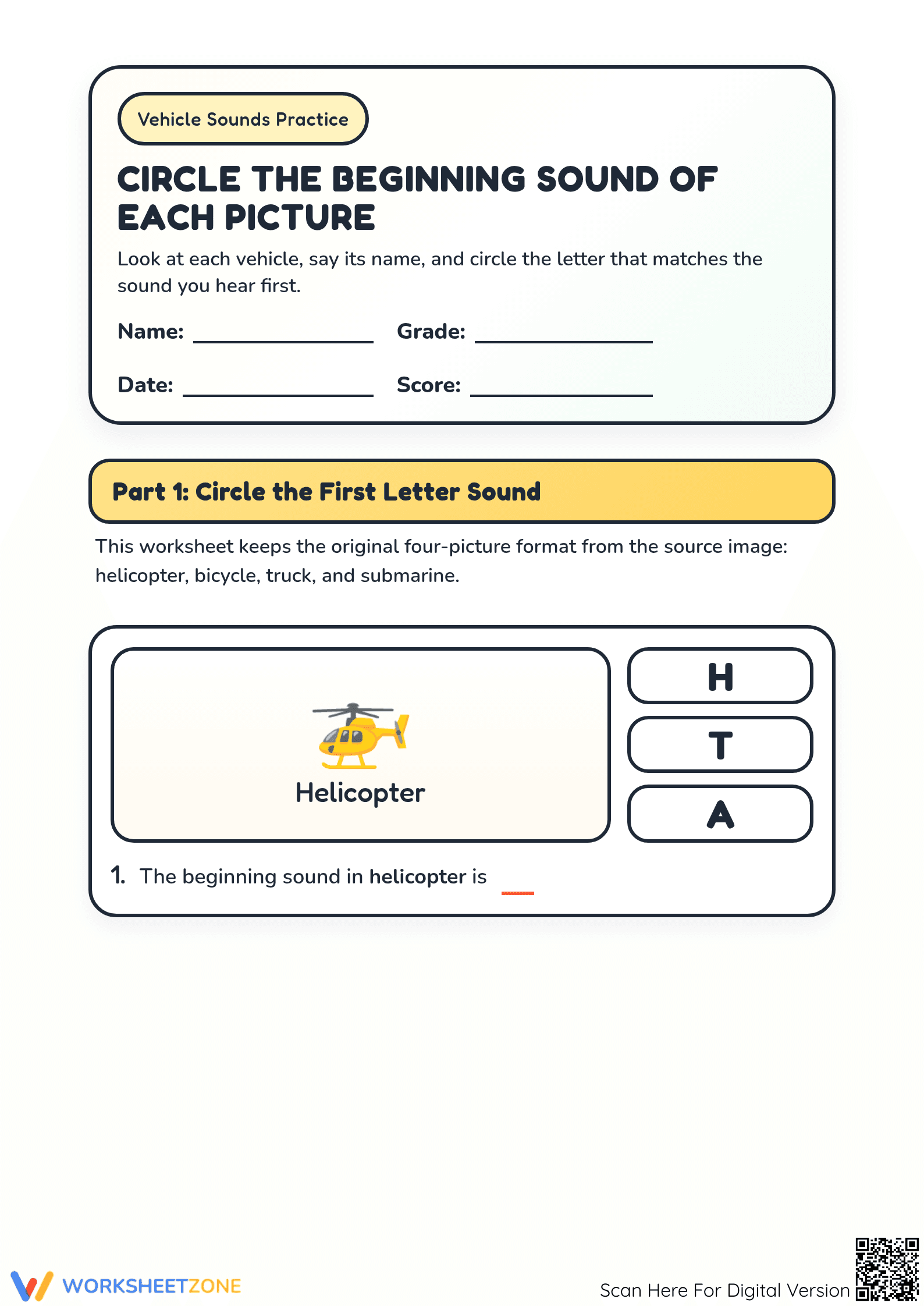
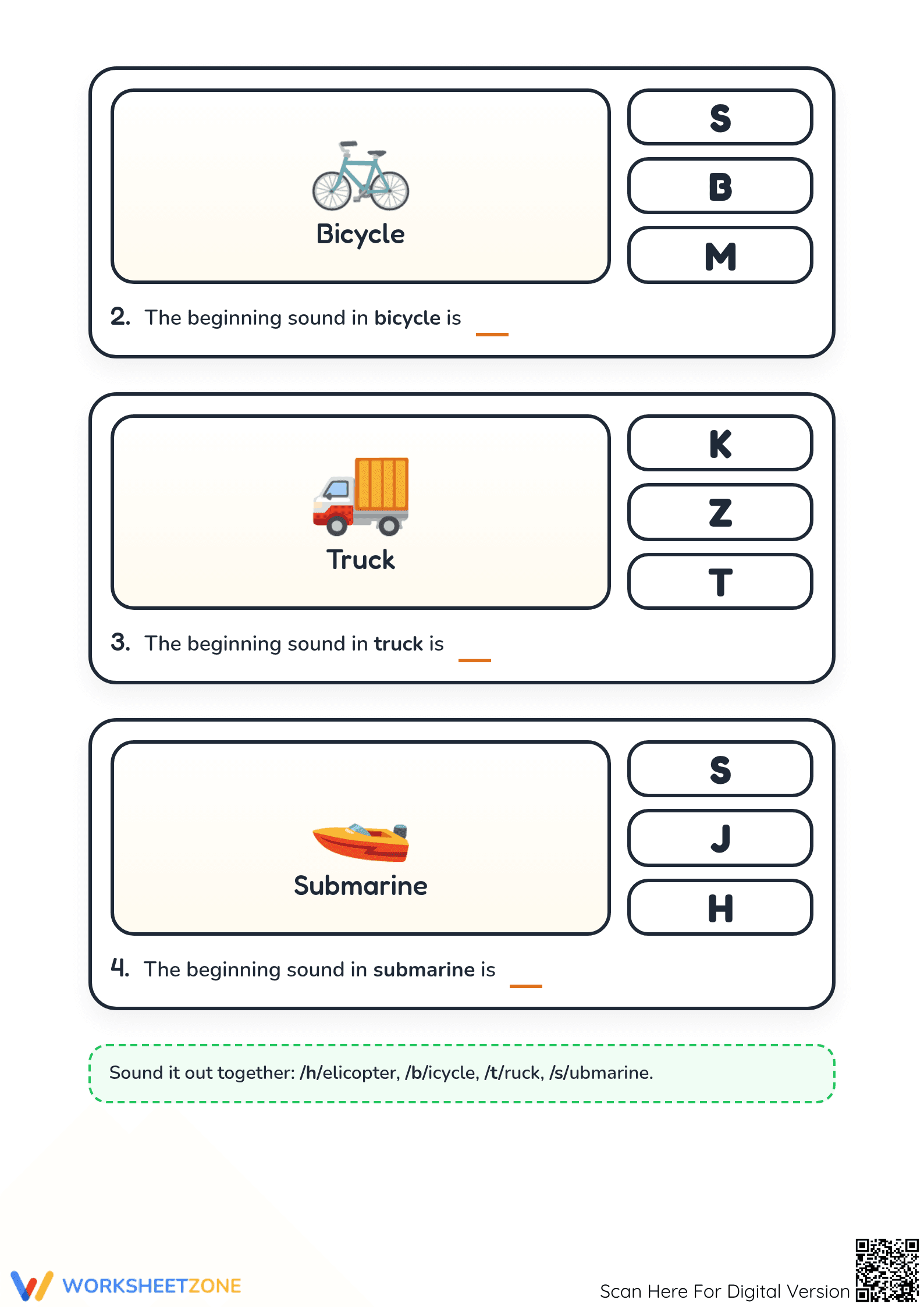
Inside this resource, you will find two structured pages designed for young learners. The first page features a helicopter and introduces the multiple-choice circle format along with a fill-in-the-blank sentence. The second page continues the vehicle theme with bicycle, truck, and submarine illustrations. Each task requires students to say the vehicle name aloud, identify the first sound, and select the corresponding letter from three distinct options.
Skill Progression and Scaffolding
This resource employs a gradual release of responsibility model, starting with guided practice using "Helicopter," progressing to supported practice with high-frequency consonants (B and T) to aid sound discrimination, and concluding with independent application for "Submarine." This structure ensures students build confidence and master initial letter-sound relationships.
Standards Alignment
The primary focus of this worksheet is `CCSS.ELA-LITERACY.RF.K.3.A`, which requires students to demonstrate basic knowledge of one-to-one letter-sound correspondences. By isolating the first phoneme in each vehicle name, students also touch upon `CCSS.ELA-LITERACY.RF.K.2.D`, which involves isolating and pronouncing initial sounds. Both standard codes can be copied directly into lesson plans, IEP goals, or district curriculum mapping tools.
How to Use It
This worksheet is ideal for use during the "You Do" phase of a direct instruction phonics lesson. After introducing a new letter sound, use these pages as a formative assessment to check for understanding. Teachers should observe students as they complete the circle tasks; if a student consistently chooses a letter that represents the final sound rather than the beginning sound, it indicates a need for further instruction on sound isolation. The worksheet typically takes 15 to 20 minutes to complete.
Who It's For
This resource is specifically designed for Preschool, Kindergarten, and Grade 1 students who are beginning their phonics journey. It is particularly helpful for students requiring additional visual support or English Language Learners (ELLs) who benefit from the clear connection between the vehicle images and their English names. Pair this with a vehicle-themed read-aloud or a tactile sandpaper letter station for a comprehensive literacy experience.
Research by Fisher & Frey (2014) highlights that isolating initial phonemes is a key predictor of reading success. This worksheet targets this milestone by requiring students to produce and visually identify consonant sounds. It integrates speaking, listening, and writing to solidify understanding of CCSS.RF.K.3.A, making it an evidence-based tool for developing phonemic awareness and transitioning students into active decoders.


