


























Views
Downloads
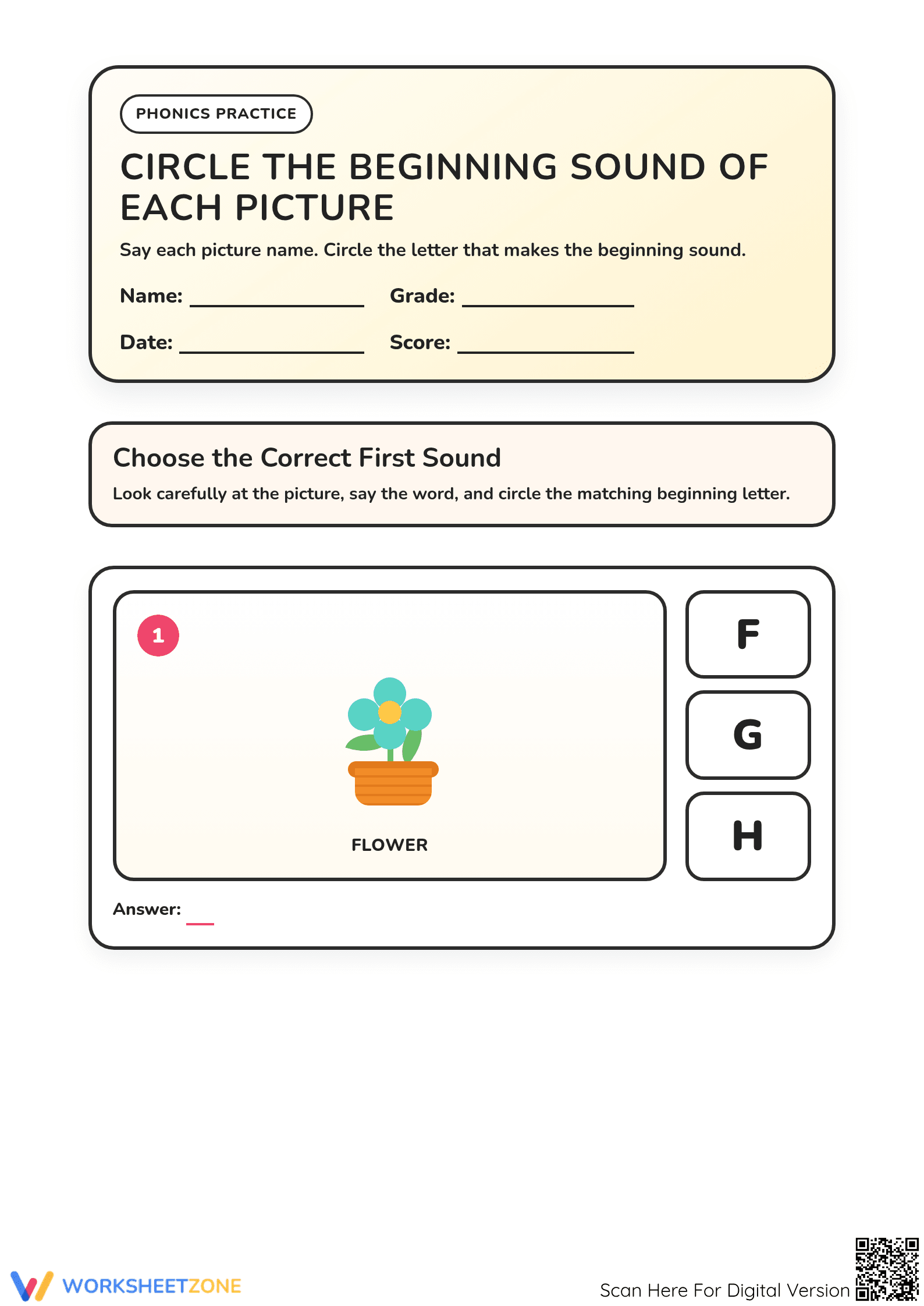
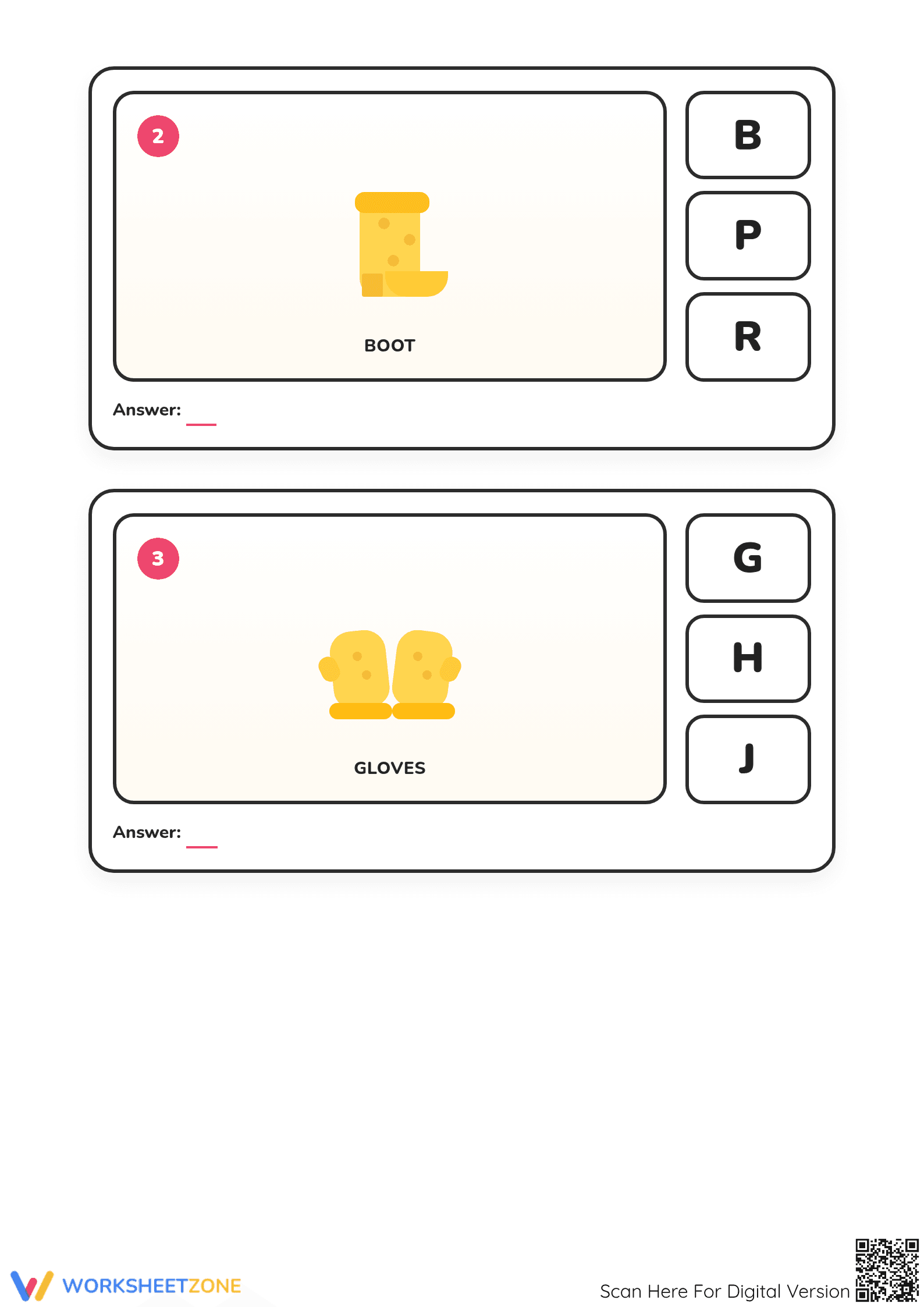
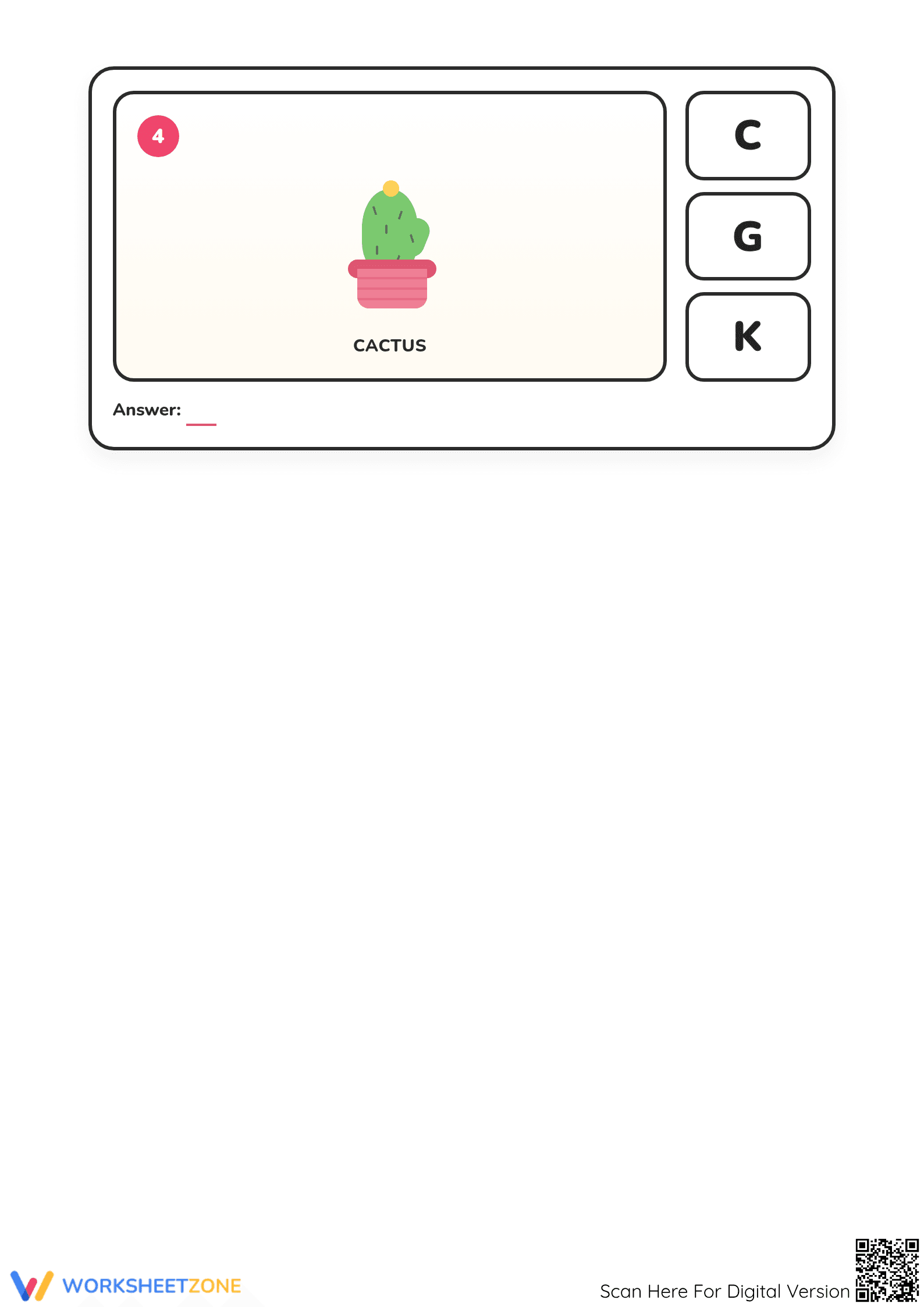

Essential Beginning Sounds Worksheet: K Printable
Paste this activity's link or code into your existing LMS (Google Classroom, Canvas, Teams, Schoology, Moodle, etc.).
Students can open and work on the activity right away, with no student login required.
You'll still be able to track student progress and results from your teacher account.
This printable Grade K phonics worksheet provides targeted practice for students to identify and isolate initial consonant sounds. By matching vibrant illustrations to their corresponding beginning letters, learners build the phonemic awareness necessary for early reading success. This resource ensures students gain confidence in letter-sound correspondence through a simple, engaging format that requires no teacher setup.
At a Glance
- Grade: Kindergarten · Subject: English Language Arts
- Standard:
CCSS.ELA-LITERACY.RF.K.3.A— Produce the primary sound for each consonant in a one-to-one correspondence- Skill Focus: Initial Consonant Identification
- Format: 3 pages · 4 problems · Answer key included · PDF
- Best For: Independent phonics practice and morning work
- Time: 10–15 minutes
What's Inside
This comprehensive three-page PDF packet contains four distinct initial sound tasks. Each task features a high-quality color illustration alongside three multiple-choice letter options. Students are prompted to say the word aloud and circle the correct starting letter. The set includes a full answer key and clear student instructions on every page to support independent work.
Zero-Prep Workflow
The workflow for this resource is designed for maximum efficiency in busy classrooms. Teachers can print the entire three-page set in under thirty seconds and distribute it immediately without any additional cutting or laminating. Reviewing the work takes less than one minute using the provided visual answer key. This makes the worksheet an ideal choice for emergency sub plans or last-minute literacy centers.
Standards Alignment
This resource is directly aligned to CCSS.ELA-LITERACY.RF.K.3.A, which requires students to demonstrate basic knowledge of one-to-one letter-sound correspondences by producing the primary sound for each consonant. It also supports CCSS.ELA-LITERACY.RF.1.2, focusing on phonological awareness and the isolation of initial sounds in spoken single-syllable words. Both standard codes can be copied directly into lesson plans, IEP goals, or district curriculum mapping tools.
How to Use It
Use this worksheet as a formative assessment during the independent phase of a lesson on consonant sounds. Distribute the pages after a group chant of the alphabet to observe which students can independently transfer auditory sounds to visual letter symbols. Alternatively, assign it as a morning work activity to reinforce previous day instruction. Completion typically takes between ten and fifteen minutes.
Who It's For
This practice is designed for Kindergarten and first-grade students who are beginning their phonics journey. It is also suitable for Preschoolers showing early literacy readiness or older English Language Learners needing foundational support. Pair this resource with a physical alphabet anchor chart or a digital pronunciation guide to provide additional visual and auditory scaffolds for struggling learners.
According to research from EdReports 2024, high-quality foundational skills materials must provide explicit and systematic practice in phoneme-grapheme mapping. This Grade K worksheet facilitates this by requiring students to produce the primary sound for consonants, a critical component of CCSS.ELA-LITERACY.RF.K.3.A. By isolating the initial sound in words like "flower" or "cactus," learners bridge the gap between spoken phonemes and written symbols. NAEP data consistently shows that early mastery of these one-to-one correspondences is a leading predictor of third-grade reading proficiency. This resource provides the structured repetition necessary for students to move toward automaticity in decoding. Because it focuses on high-frequency consonant sounds, it aligns with evidence-based literacy practices that prioritize phonological awareness as the bedrock of the reading brain. Educators can rely on this tool to provide reliable data on student progress toward mastery of core phonemic standards.


