


























Views
Downloads

Essential Beginning Sounds Worksheet | Kindergarten ELA
Paste this activity's link or code into your existing LMS (Google Classroom, Canvas, Teams, Schoology, Moodle, etc.).
Students can open and work on the activity right away, with no student login required.
You'll still be able to track student progress and results from your teacher account.
Identifying beginning sounds is a foundational step in phonemic awareness and early literacy development. This printable worksheet helps young learners bridge the gap between spoken words and written letters by focusing on initial consonant sounds. Students will practice isolating phonemes and matching them to their corresponding graphemes, building the confidence needed for independent reading success.
At a Glance
- Grade: Kindergarten · Subject: English Language Arts
- Standard:
CCSS.ELA-LITERACY.RF.K.3.A— Demonstrate basic knowledge of one-to-one letter-sound correspondences by producing primary consonant sounds- Skill Focus: Initial Phoneme Isolation
- Format: 3 pages · 6 problems · Answer key included · PDF
- Best For: Early phonemic awareness and letter-sound matching
- Time: 10–15 minutes
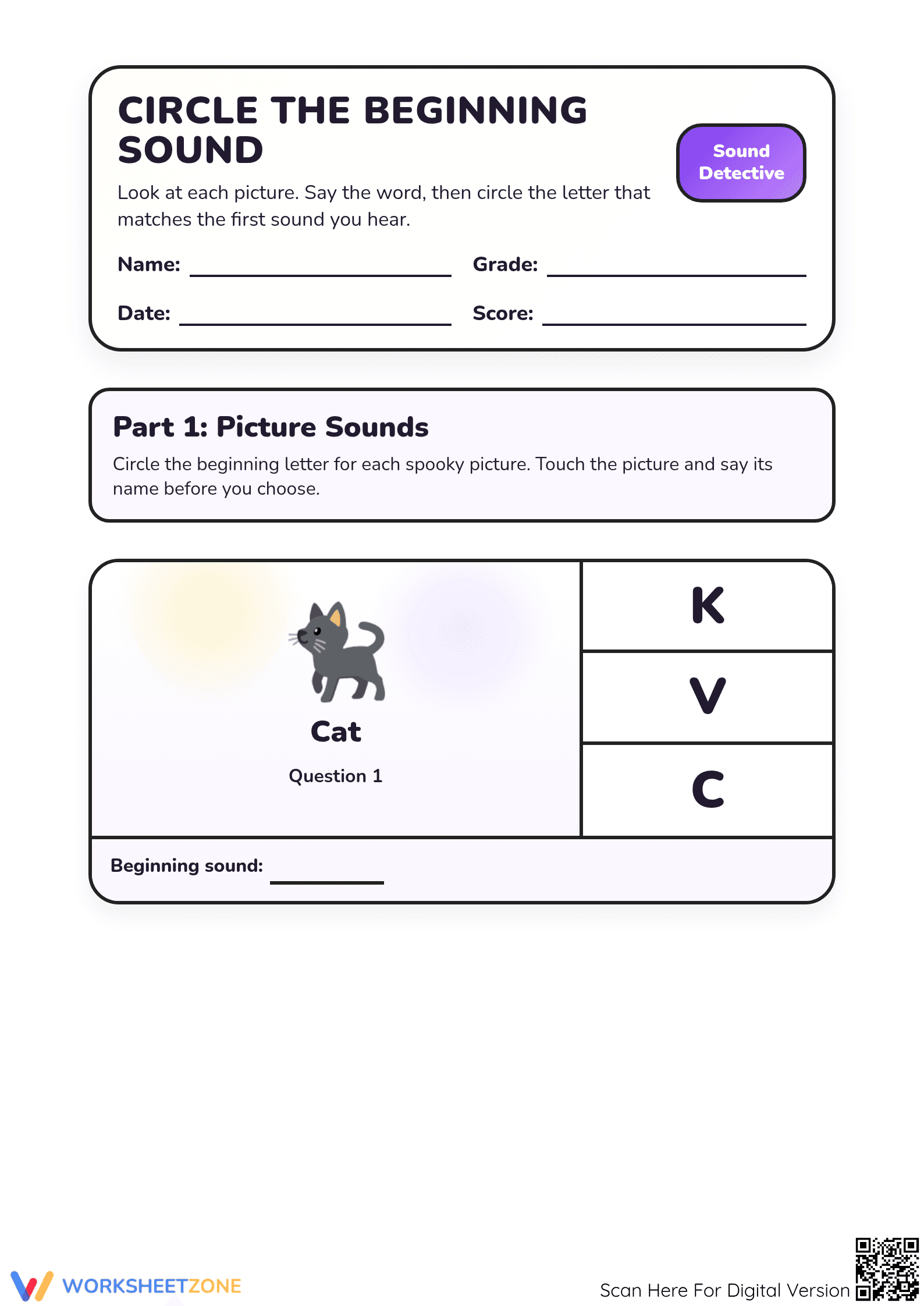
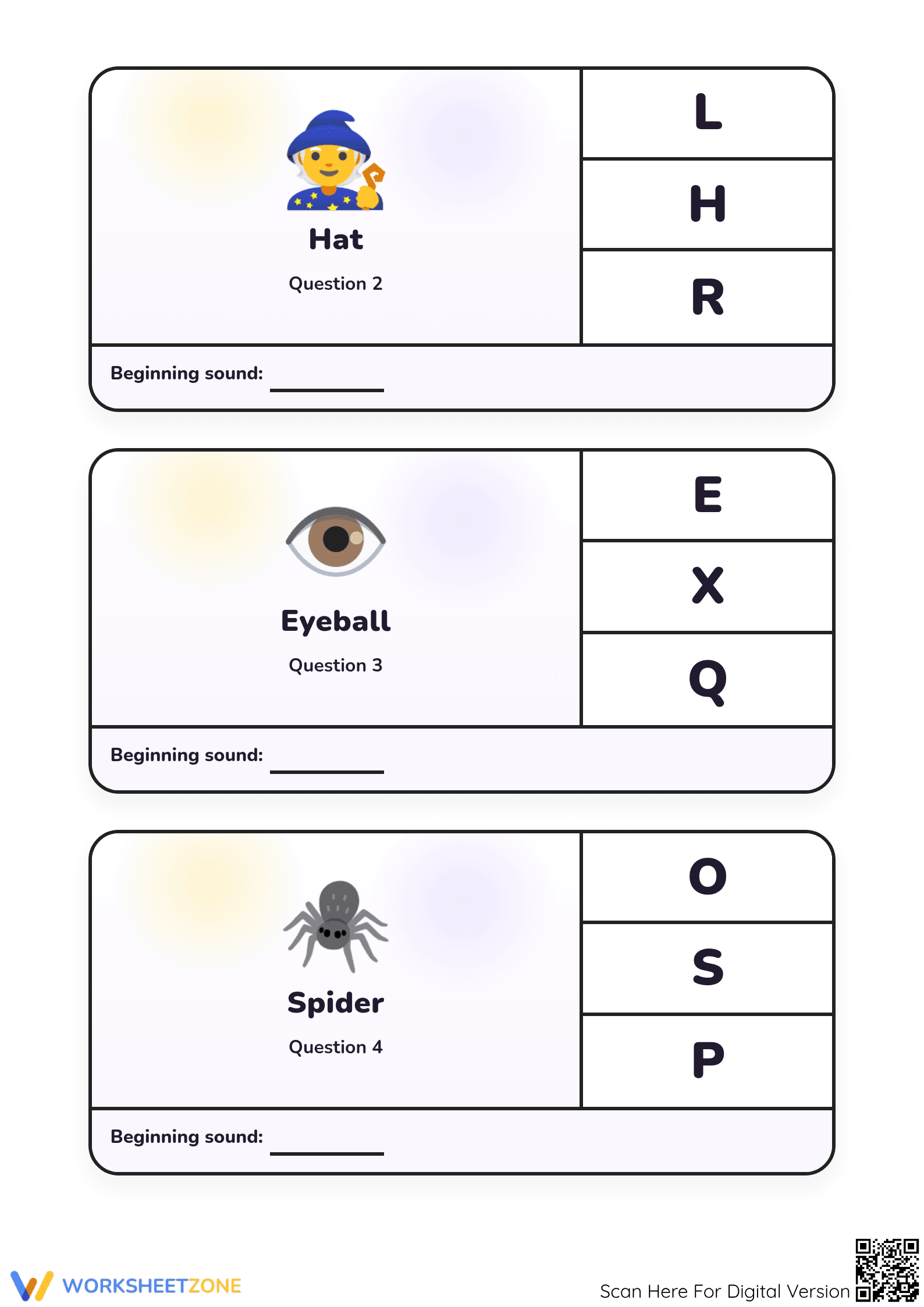
This three-page PDF features six engaging, picture-supported tasks designed for early readers. Each page presents high-quality illustrations of familiar objects like cats, hats, and spiders to provide clear context for sound isolation. The structure includes multiple-choice letter selections and lines for students to write the beginning sound they hear, ensuring a mix of recognition and production. A complete answer key is provided to facilitate quick grading.
Skill Progression
- Guided Practice: The activity begins with "Part 1: Picture Sounds," where students are prompted to touch the picture and say its name before choosing between three distinct letter options for four primary problems.
- Supported Practice: Each question includes a specific "Beginning sound" line, encouraging students to transition from simple recognition to active letter formation based on the phoneme isolated.
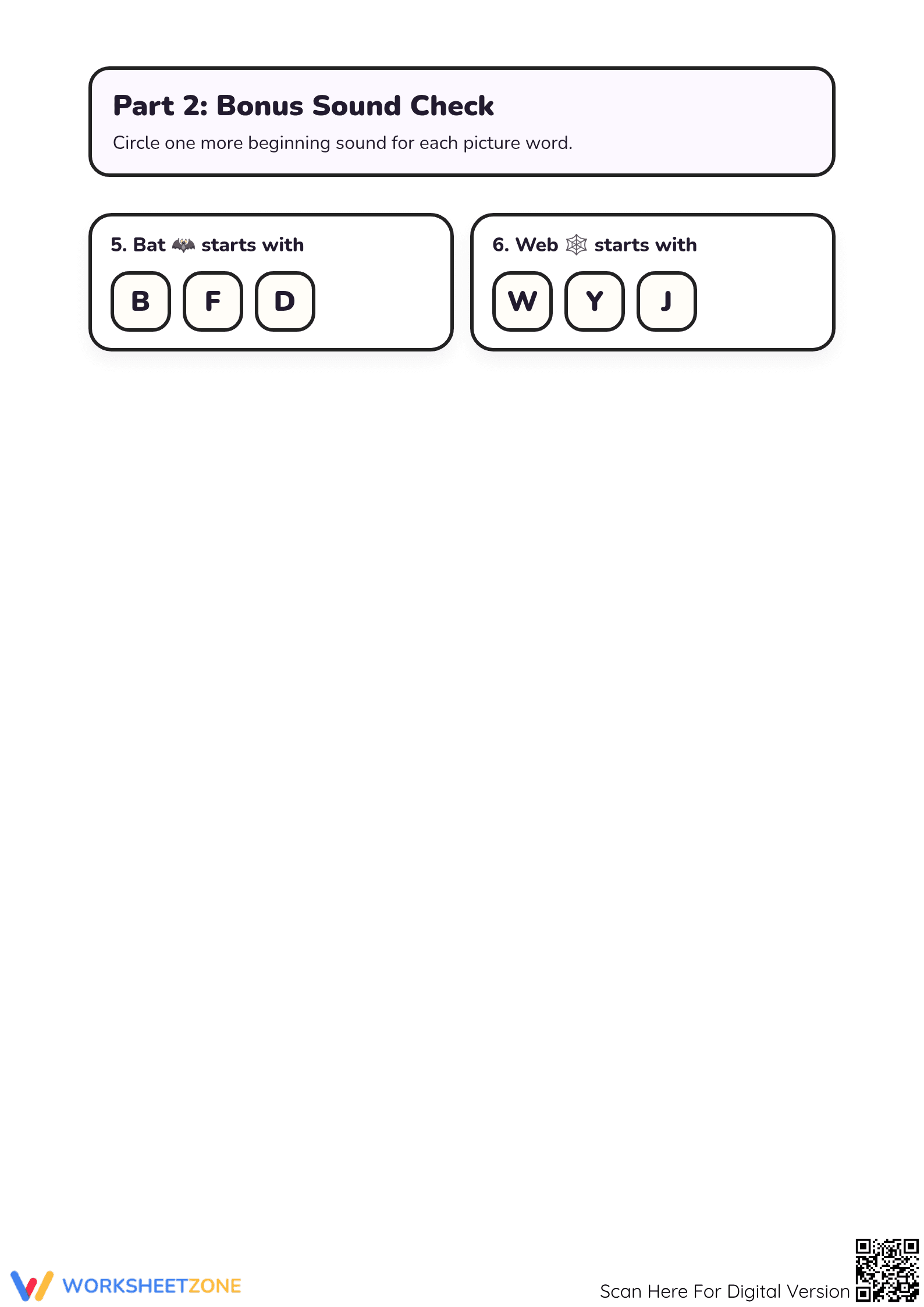
- Independent Practice: "Part 2: Bonus Sound Check" provides two additional challenges with reduced scaffolding to confirm mastery of the initial phoneme isolation skill and finalize the gradual-release instructional model.
Standards Alignment
The primary focus of this resource is CCSS.ELA-LITERACY.RF.K.3.A, which requires students to demonstrate basic knowledge of one-to-one letter-sound correspondences by producing the primary sound for each consonant. By matching pictures like a "Web" to the letter "W," students engage in direct application of phonics rules. This standard code can be copied directly into lesson plans, IEP goals, or district curriculum mapping tools to ensure instructional consistency.
How to Use It
This worksheet is ideal for use during the independent practice phase of a gradual-release lesson on initial sounds. After modeling how to stretch a word to hear the first sound, assign this packet as a formative assessment to check for understanding. Teachers should observe students as they say each word aloud to ensure accurate phoneme isolation before making their selection. Expected completion time is 10 to 15 minutes.
Who It's For
This resource is specifically designed for preschool, kindergarten, and first-grade students who are developing their phonics skills. It provides necessary scaffolding for English Language Learners (ELLs) through clear visual representations of each vocabulary word. For best results, pair this worksheet with a set of alphabet anchor charts or a leveled reading passage to reinforce the letter-sound relationships being practiced here.
Instructional emphasis on initial phoneme isolation is a critical predictor of future reading proficiency. This worksheet aligns with "Science of Reading" principles, advocating explicit, systematic phonics instruction. Engaging with six targeted tasks, students build neural pathways for decoding. Familiar words focus cognitive load on initial sounds, not complex vocabulary. This resource provides 10 to 15 minutes of evidence-based practice for small-group instruction. Educators can use the included answer key to identify letter-sound gaps for corrective feedback and data-driven adjustments aligned with CCSS standards, ensuring foundational skills for independent literacy.


