


























Views
Downloads

Chase Paw Patrol Coloring Page | Essential Grade K-2
Paste this activity's link or code into your existing LMS (Google Classroom, Canvas, Teams, Schoology, Moodle, etc.).
Students can open and work on the activity right away, with no student login required.
You'll still be able to track student progress and results from your teacher account.
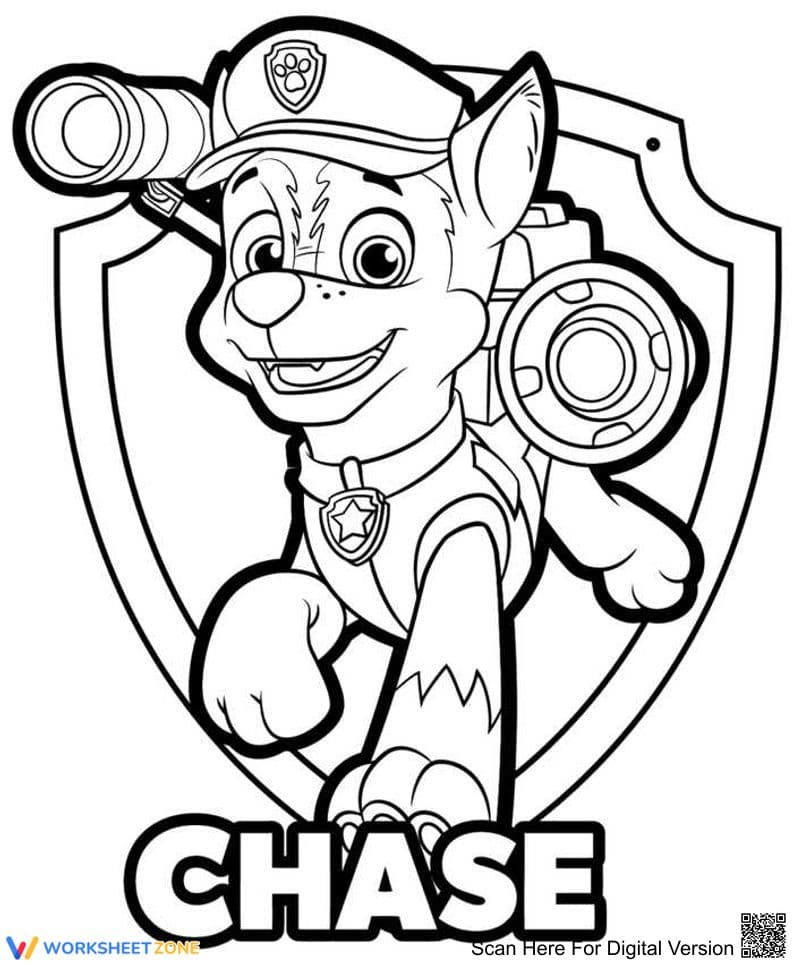
This Grade K-2 Chase coloring worksheet provides a high-interest activity that strengthens fine motor skills and hand-eye coordination. By coloring the iconic Paw Patrol character and his shield logo, students practice the precision required for early writing tasks. This resource serves as an effective tool for artistic expression while supporting foundational visual literacy goals.
At a Glance
- Grade: K-2 · Subject: English / Arts
- Standard:
CCSS.ELA-LITERACY.SL.K.5— Add drawings or other visual displays to descriptions to provide additional detail- Skill Focus: Fine motor development and color recognition
- Format: 1 page · 1 task · No answer key · PDF
- Best For: Morning work or early finishers
- Time: 15–20 minutes
What's Inside: This resource consists of a single, high-resolution printable page featuring Chase in his police gear. The illustration includes bold, clear outlines to assist younger learners in staying within the lines. The background features the Paw Patrol shield logo, providing additional geometric shapes for coloring. No complex instructions are needed, as the task is self-explanatory for students from Kindergarten through Grade 2.
The zero-prep workflow for this resource is designed for maximum efficiency in a busy classroom. First, print the single-page PDF (30 seconds). Second, distribute the sheets to students during transition periods or as a focused individual activity (1 minute). Third, review the completed work to assess fine motor control and color choice (30 seconds per student). This process requires less than 2 minutes of teacher preparation time.
Standards Alignment: This worksheet aligns with `CCSS.ELA-LITERACY.SL.K.5`, which requires students to add drawings or other visual displays to descriptions to provide additional detail. While primarily an artistic task, it encourages students to visualize and represent characters from popular media, aiding in narrative recall and descriptive communication. This standard code can be copied directly into lesson plans, IEP goals, or district curriculum mapping tools.
How to Use It: Use this worksheet as a hook during a lesson on community helpers or as a calming activity after recess. It is particularly effective as a formative assessment tool; observe how students hold their crayons or markers to identify those who may need additional occupational therapy support. Expected completion time is 15 to 20 minutes depending on the student's detail level.
Who It's For: This resource is designed for early elementary students, specifically those in Kindergarten and First Grade who are developing their pincer grasp. It is also an excellent choice for English Language Learners (ELLs) to practice color vocabulary in a low-stakes environment. Pair this with a read-aloud story about teamwork or a short video clip to provide context for the character.
According to research from Fisher & Frey (2014), the integration of visual arts and fine motor tasks in early childhood education is a critical component of literacy development. This Chase coloring worksheet supports the CCSS.ELA-LITERACY.SL.K.5 standard by encouraging students to engage with visual representations and develop the manual dexterity required for writing. Fine motor control, practiced through the precise act of coloring within lines, directly correlates with later pencil grip efficiency and letter formation accuracy. Furthermore, the use of familiar characters like Chase from Paw Patrol increases student motivation and task persistence, which are essential for developing sustained attention in a classroom setting. By providing a structured yet creative outlet, this resource allows educators to observe a student's spatial awareness and color processing. This alignment ensures that even simple artistic activities contribute meaningfully to the broader goals of the primary curriculum.


