


























Views
Downloads
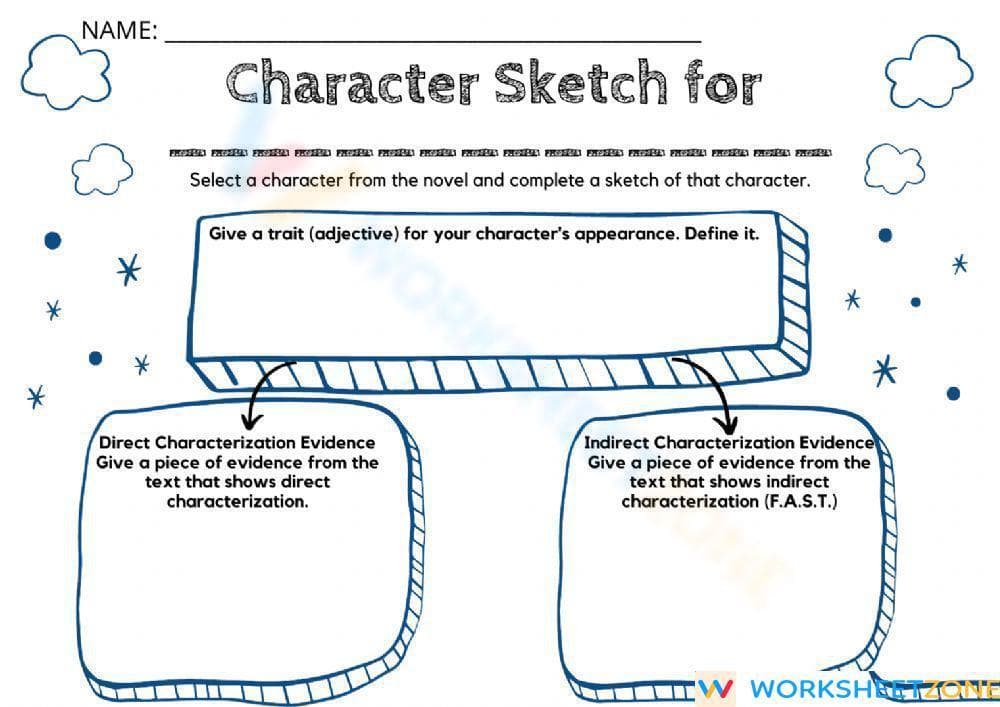
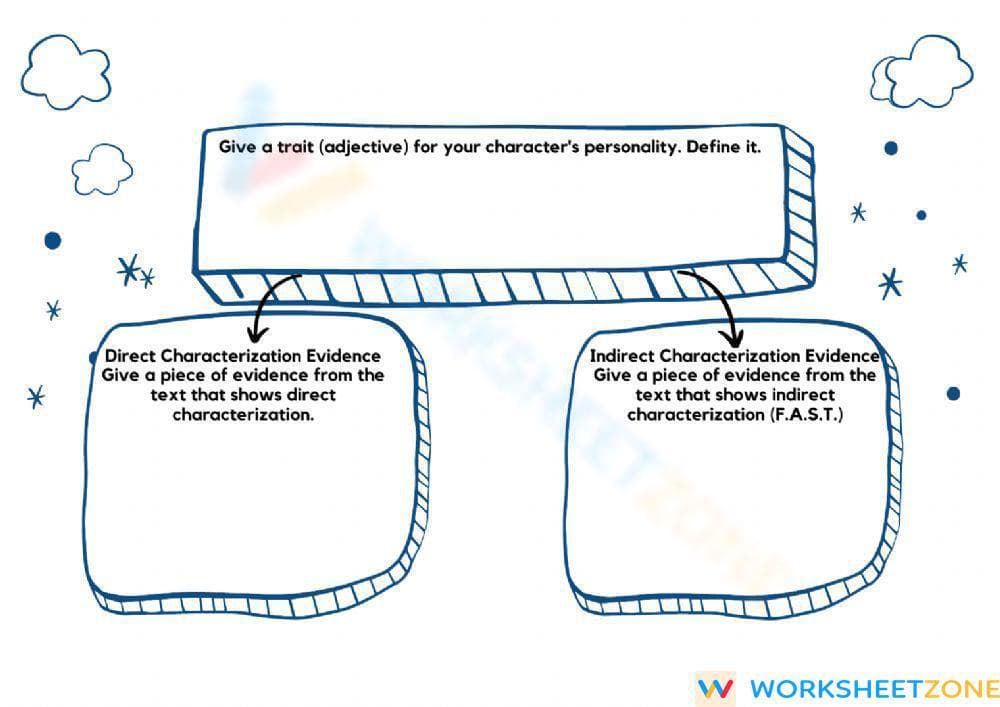
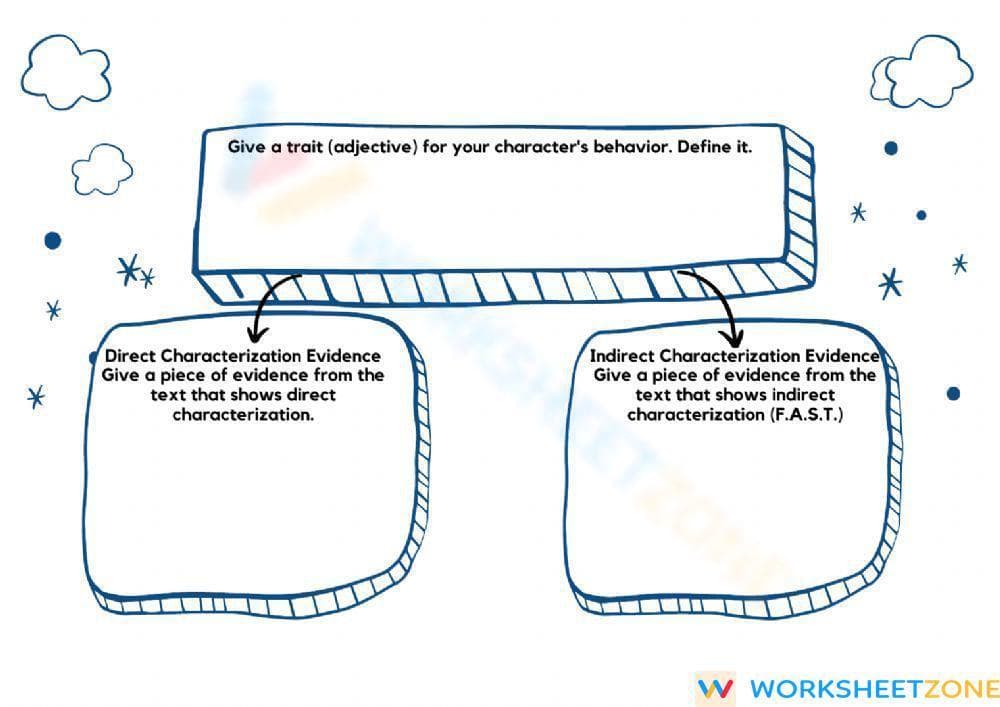

Printable Character Analysis Worksheet | Grades 4-10 ELA
Paste this activity's link or code into your existing LMS (Google Classroom, Canvas, Teams, Schoology, Moodle, etc.).
Students can open and work on the activity right away, with no student login required.
You'll still be able to track student progress and results from your teacher account.
This three-page character sketch worksheet provides a structured framework for students to move from observation to text-based analysis. Students identify character traits for appearance, personality, and behavior, then locate direct and indirect textual evidence to support their claims, strengthening comprehension skills.
At a Glance
- Grade: 4–10 · Subject: English Language Arts
- Standard:
CCSS.ELA-LITERACY.RL.7.1— Cite textual evidence to support analysis of a text.- Skill Focus: Direct and Indirect Characterization
- Format: 3 pages · 9 prompts · Model answers included · PDF
- Best For: Independent practice during a novel study
- Time: 25–40 minutes
What's Inside
This resource contains three graphic organizers, each for a different facet of character: appearance, personality, and behavior. Each page prompts students to name a trait, define it, and find one piece of direct and one piece of indirect characterization (using the F.A.S.T. guide). A sample answer key is included to model effective responses.
A Scaffolded Approach to Analysis
The worksheet follows a gradual release model to build student confidence. The progression moves from concrete to abstract analysis.
- Guided Practice: The first page on appearance serves as a simple entry point, perfect for whole-class modeling of finding direct evidence.
- Supported Practice: The second page on personality requires more inference and is ideal for pair work to locate evidence for traits.
- Independent Practice: The final page on behavior challenges students to connect actions to traits independently, serving as a formative assessment.
Standards Alignment
This worksheet is directly aligned with CCSS anchor standards for reading literature, primarily focusing on evidence-based analysis for middle grades. The main standard is: CCSS.ELA-LITERACY.RL.7.1: Cite several pieces of textual evidence to support analysis of what the text says explicitly as well as inferences drawn from the text. This task also supports RL.7.3 (analyzing story elements). These codes can be copied into lesson plans.
How to Use This Worksheet
Use this tool after direct instruction on characterization for immediate practice. Alternatively, assign it as a during-reading task where students complete sections after key chapters. For a quick formative check, observe whether students can distinguish between direct and indirect evidence, as this reveals their grasp of inference. Most students can complete the activity in 25-40 minutes.
Who It's For
This resource is for students in grades 4-10 learning to analyze characters. The clear structure benefits English learners and struggling readers. For differentiation, provide a word bank of character traits. This worksheet pairs well with an anchor chart defining the F.A.S.T. method for indirect characterization that students can reference as they work.
Analyzing character is a foundational skill for deep reading comprehension, directly supported by this graphic organizer. Aligned with CCSS.ELA-LITERACY.RL.7.1, this tool requires students to move beyond surface-level descriptions and engage in evidence-based reasoning. The worksheet’s structure, which separates direct from indirect characterization, provides a concrete scaffold for making and supporting inferences—a documented area of difficulty for many readers. Research from Fisher & Frey (2014) emphasizes the importance of such text-dependent tasks in building college and career readiness skills. By prompting students to find specific textual proof for abstract traits, this worksheet operationalizes key literary analysis practices. This method not only improves comprehension of the immediate text but also equips students with a repeatable analytical process they can apply to any narrative, aligning with findings on transferable literacy skills.


