


























Views
Downloads

Essential HS-LS1-7 Cellular Respiration Worksheet
Paste this activity's link or code into your existing LMS (Google Classroom, Canvas, Teams, Schoology, Moodle, etc.).
Students can open and work on the activity right away, with no student login required.
You'll still be able to track student progress and results from your teacher account.
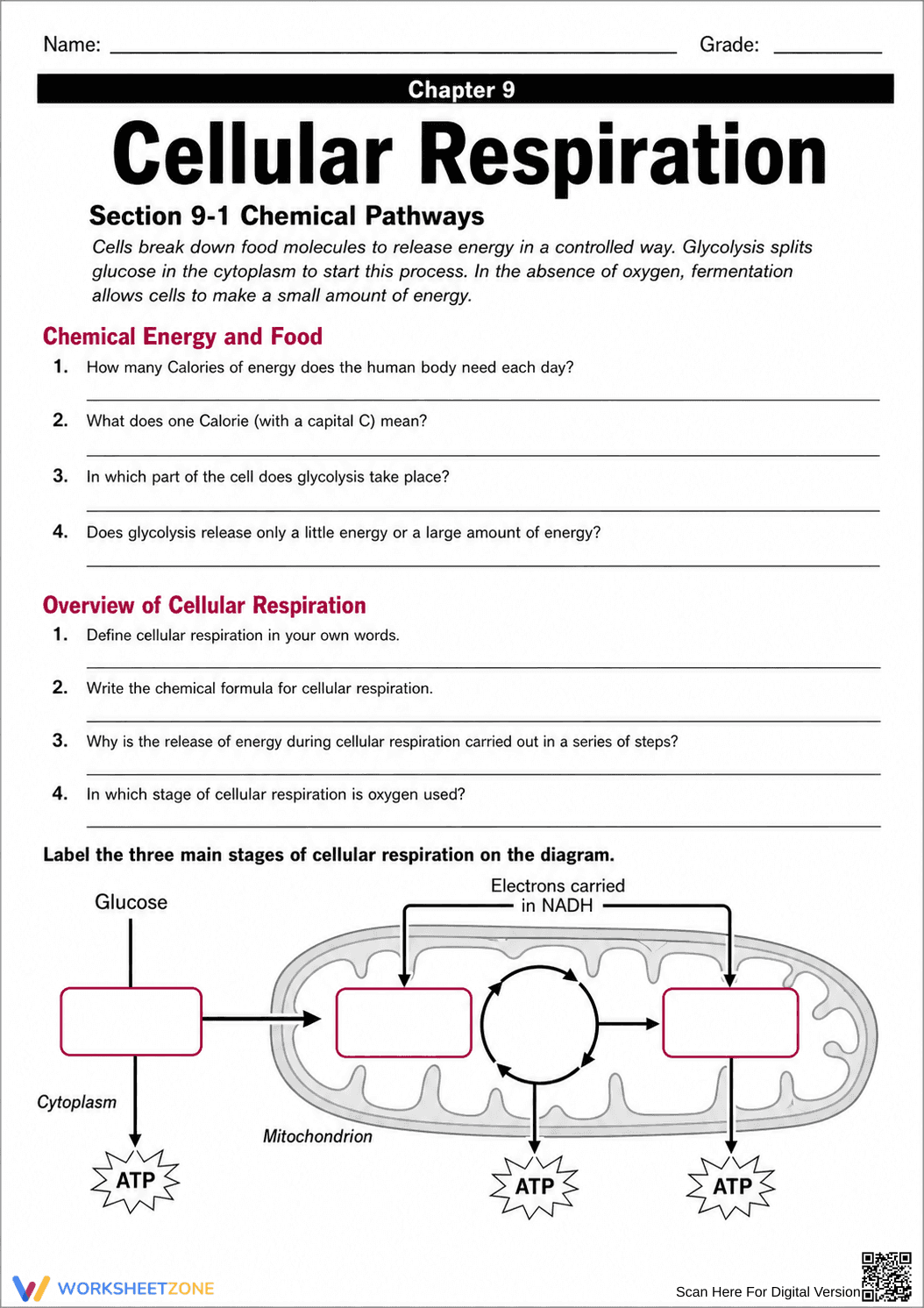
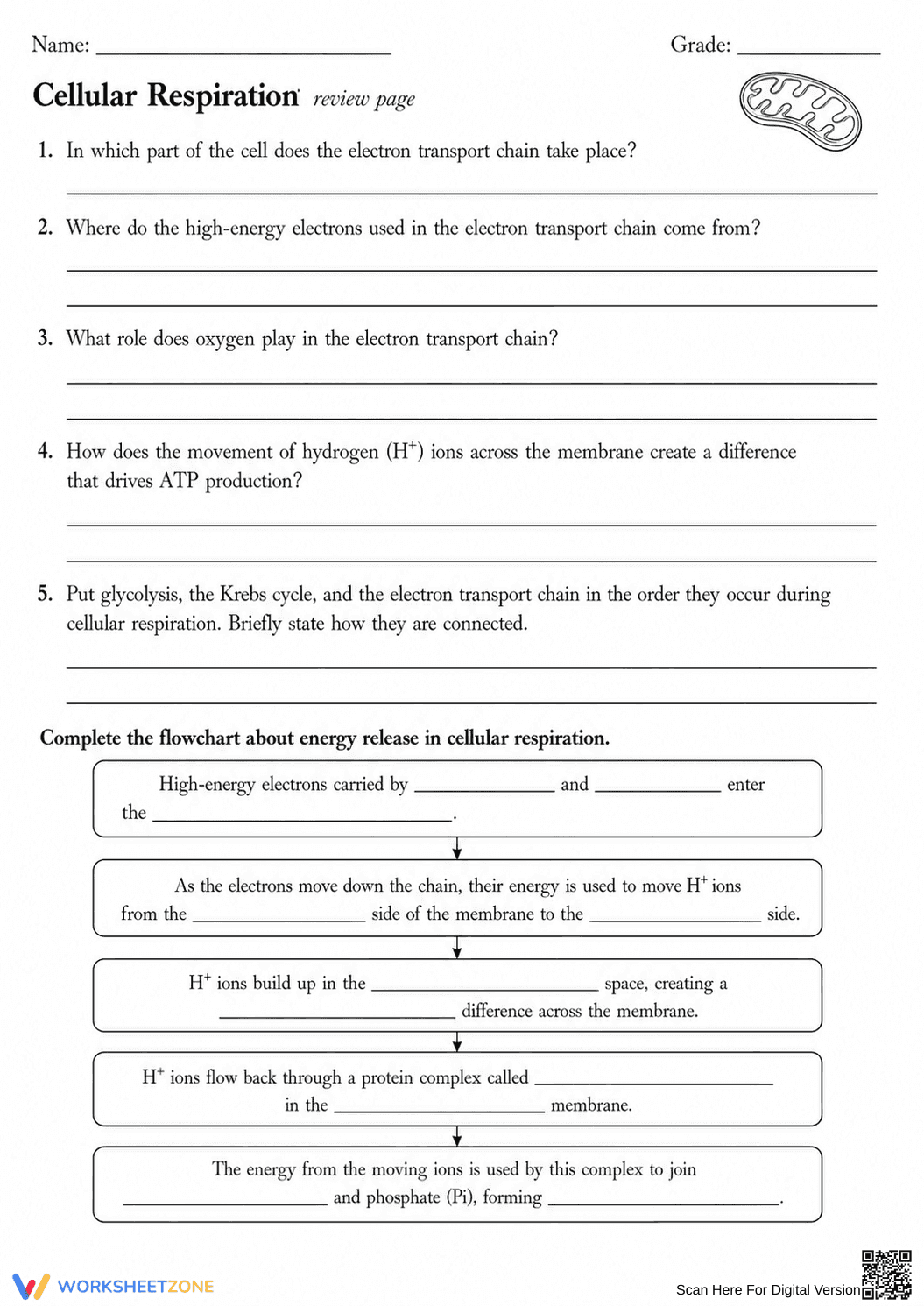
This comprehensive biology resource provides a structured exploration of how cells transform food into usable energy. Students analyze the chemical pathways of glycolysis, the Krebs cycle, and the electron transport chain to understand the net transfer of energy. It ensures learners can model the complex interactions between oxygen and glucose molecules to produce ATP.
At a Glance
- Grade: 9-11 · Subject: Biology
- Standard:
HS-LS1-7— Illustrate how cellular respiration breaks bonds in food and oxygen to transfer energy- Skill Focus: Metabolic Pathways & ATP Production
- Format: 7 pages · 65 problems · Diagram labeling · PDF
- Best For: Unit assessment or intensive guided practice
- Time: 60–90 minutes
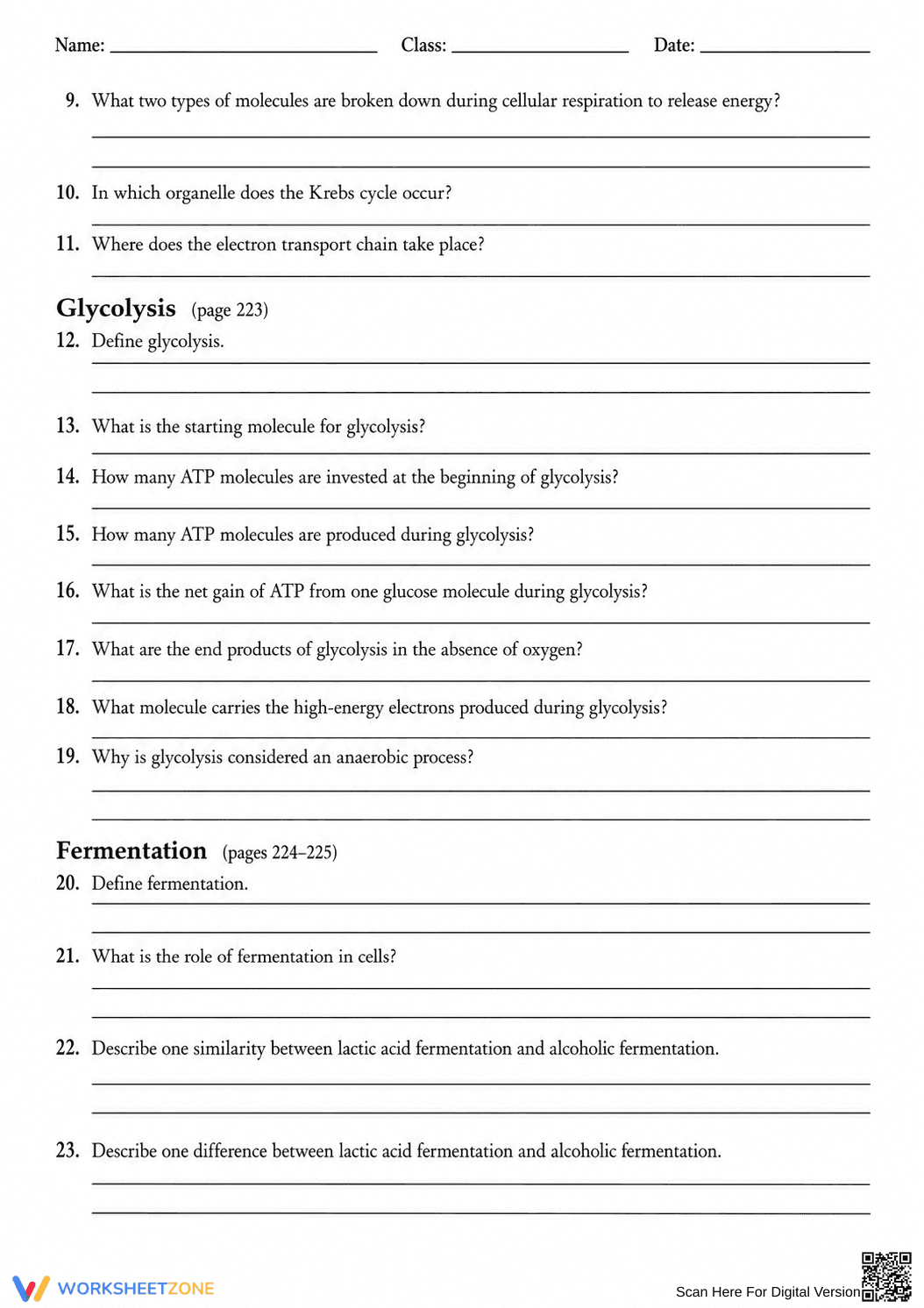
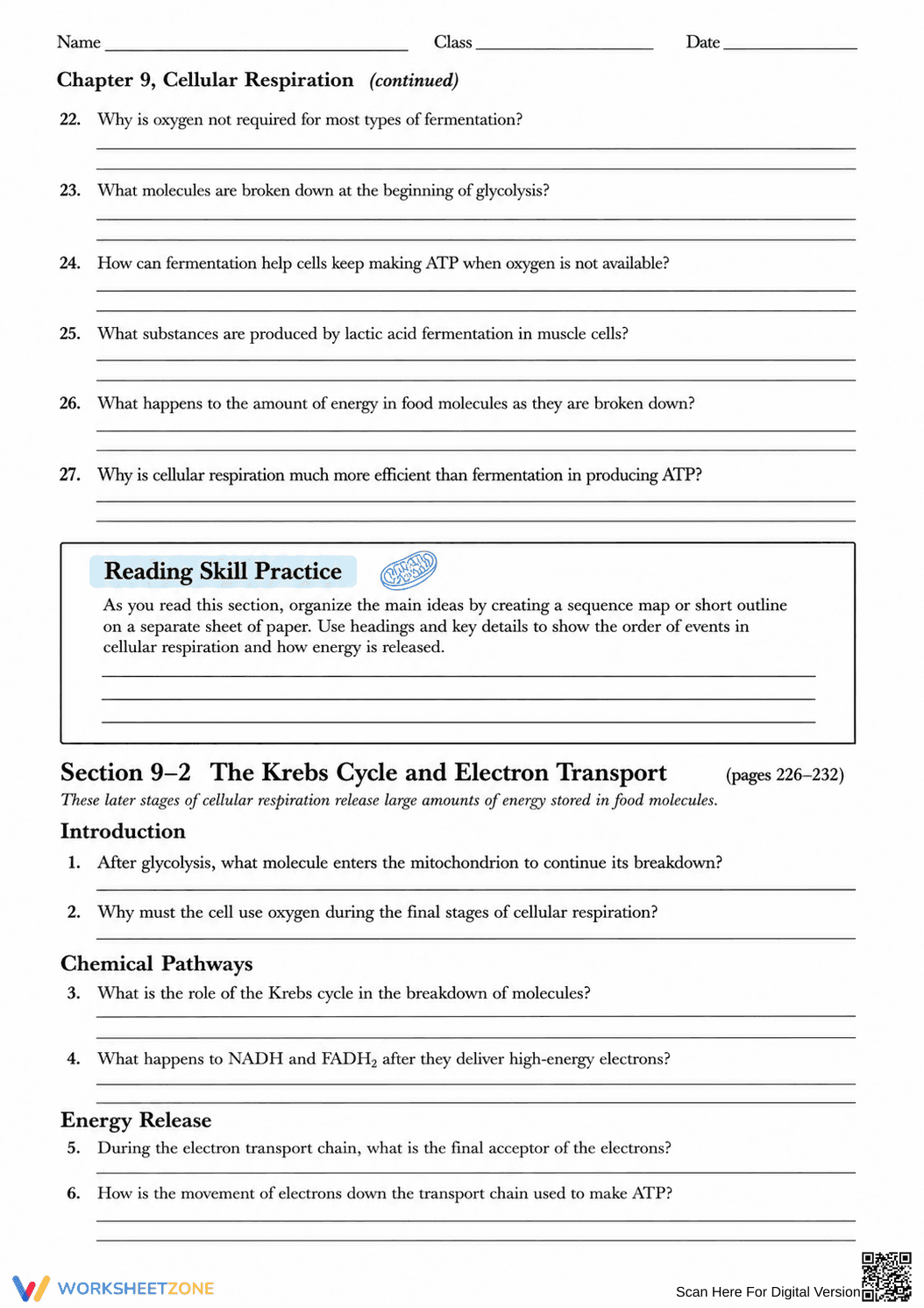
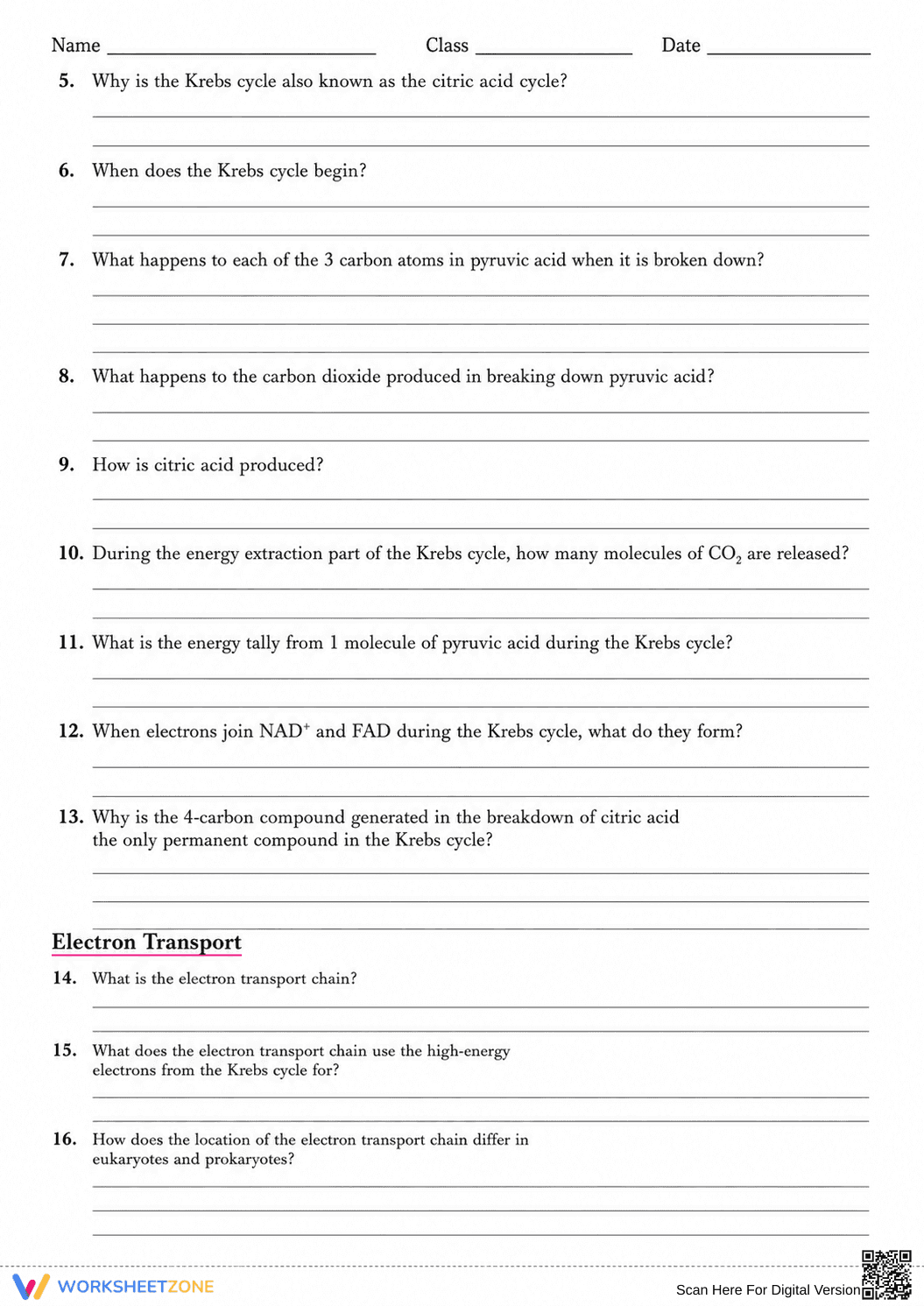
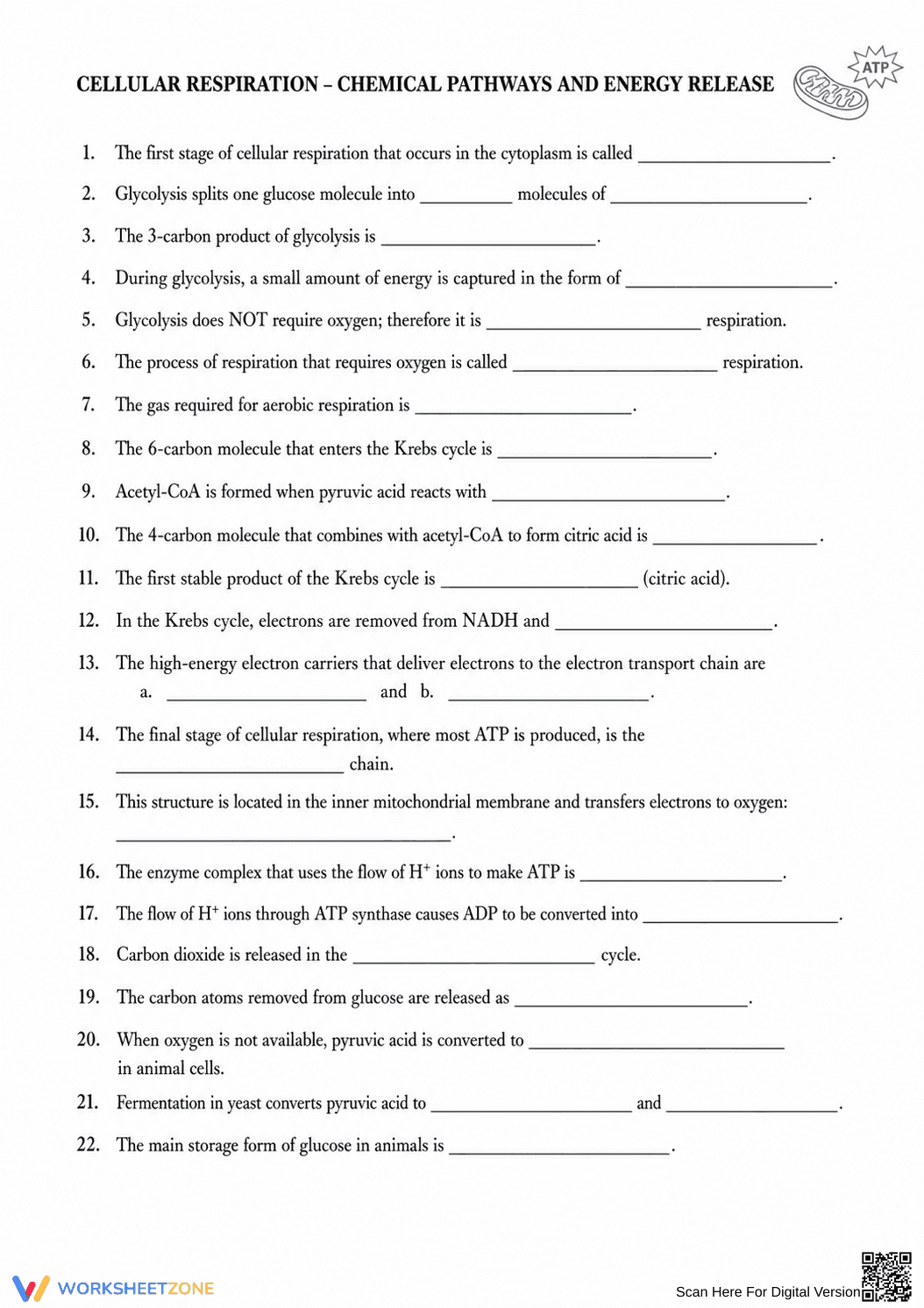
The packet contains seven distinct pages of rigorous content. It includes a detailed mitochondrial diagram for labeling the three main stages of respiration, a dedicated section on fermentation, and a complex flowchart for electron transport. Students encounter multiple task types, including fill-in-the-blank summaries, short-answer conceptual questions, and comparative analysis between aerobic and anaerobic processes.
Mastery Evidence
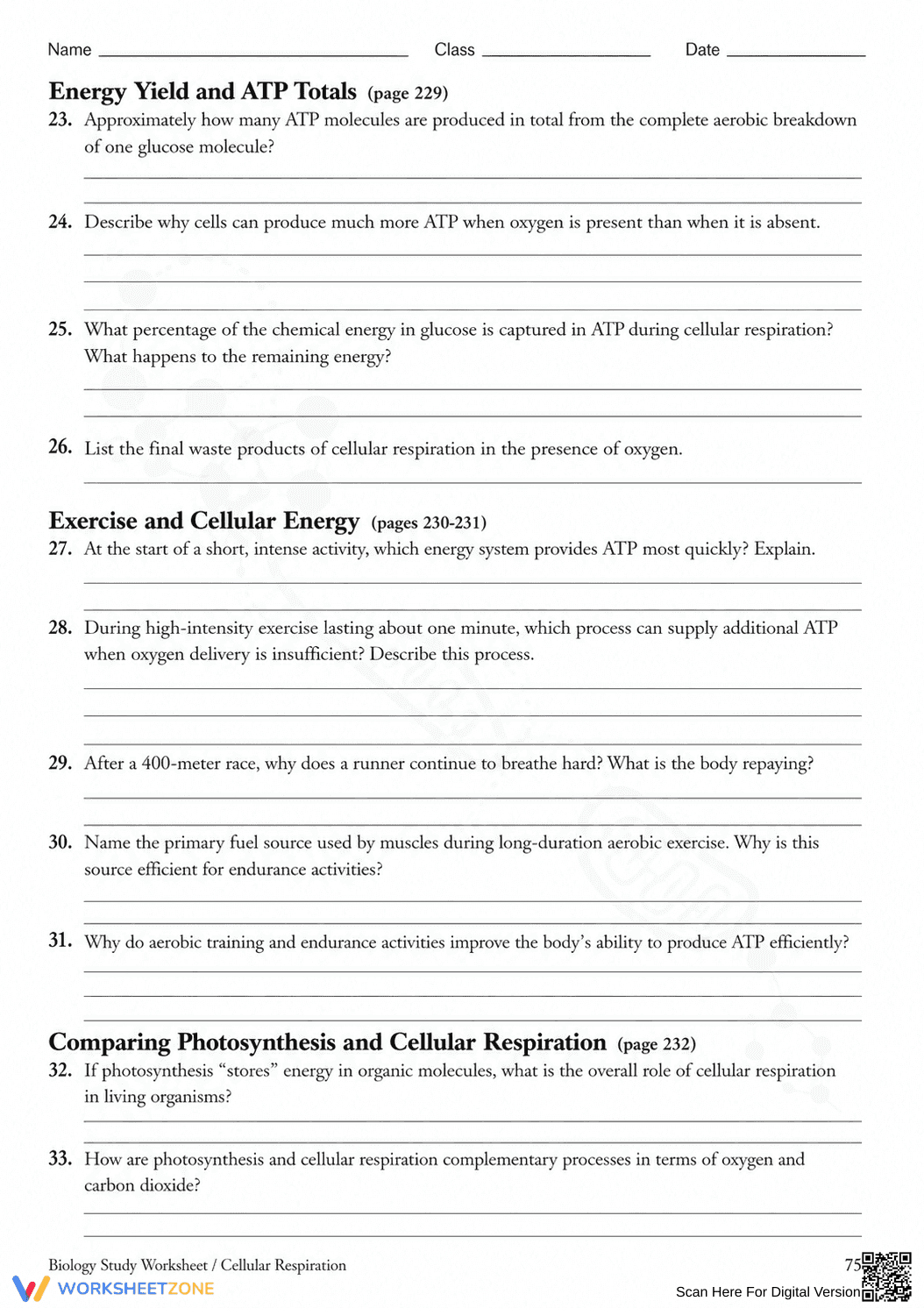
Mastery is evidenced through a scaffolded progression of cognitive demands. Initial tasks require simple identification of organelles and molecules, while later sections demand that students explain the efficiency of ATP production and the physiological response to exercise. Each page maps to specific sub-skills of the NGSS framework, allowing educators to track student progress from basic recall to complex systems modeling. Scores can be entered directly into gradebooks or used for IEP progress notes regarding scientific literacy.
Standards Alignment
This resource is primarily aligned with `HS-LS1-7`, focusing on the chemical process of cellular respiration whereby the bonds of food molecules and oxygen molecules are broken and the bonds in new compounds are formed. It also supports HS-LS1-5 by contrasting energy storage in photosynthesis with energy release in respiration. Both standard codes can be copied directly into lesson plans, IEP goals, or district curriculum mapping tools.
How to Use It
Use this packet as a summative assessment after completing a unit on cellular energetics. Alternatively, assign specific pages as formative check-for-understanding activities following direct instruction on glycolysis or the Krebs cycle. During the activity, observe if students can correctly identify the final electron acceptor in the transport chain to gauge their grasp of aerobic requirements. Completion typically requires 60 to 90 minutes of focused instructional time.
Who It's For
This is designed for high school biology students, including those in Honors or Pre-AP tracks. It provides the necessary depth for learners who need to move beyond simple definitions into chemical mechanisms. Pair this with a 3D mitochondrial model or a virtual lab simulation to provide a multi-sensory learning experience for diverse student populations.
According to the RAND AIRS 2024 report on secondary science education, high-quality instructional materials must move beyond rote memorization toward modeling complex biological systems. This worksheet addresses that need by requiring students to visualize and label the flow of high-energy electrons through the mitochondrial membrane. By connecting the microscopic chemical pathways of the Krebs cycle to macroscopic phenomena like muscle fatigue during exercise, the resource reinforces the crosscutting concept of Energy and Matter. Research from Fisher & Frey (2014) suggests that structured graphic organizers, such as the included energy release flowchart, significantly improve student retention of multi-step biochemical processes. This 7-page packet provides the rigorous practice necessary for students to achieve mastery of the HS-LS1-7 standard, ensuring they can explain how the bonds of food molecules are broken to facilitate life functions.


