


























Views
Downloads

Grade 9 Cellular Respiration — Printable No-Prep Worksheet
Paste this activity's link or code into your existing LMS (Google Classroom, Canvas, Teams, Schoology, Moodle, etc.).
Students can open and work on the activity right away, with no student login required.
You'll still be able to track student progress and results from your teacher account.
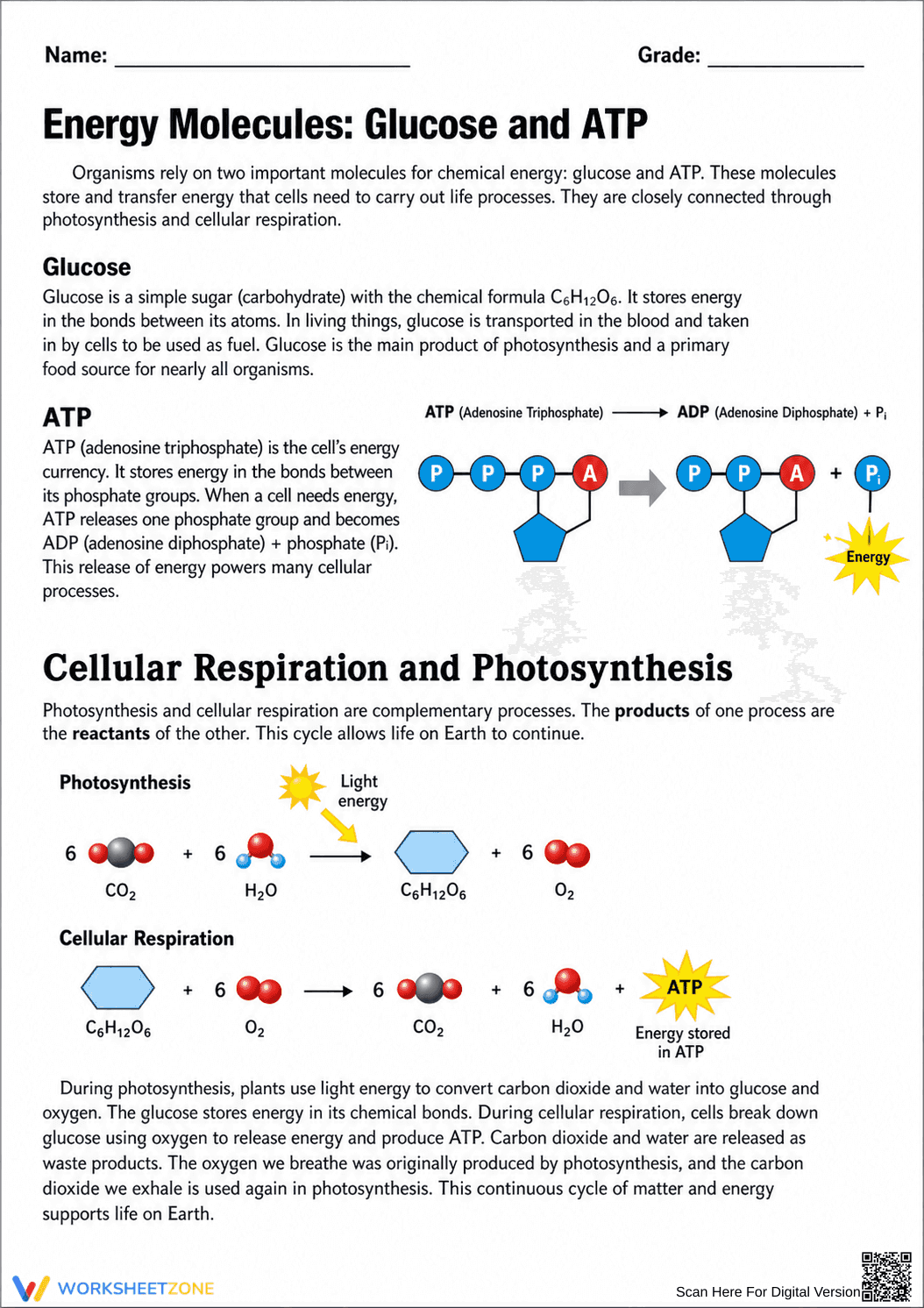
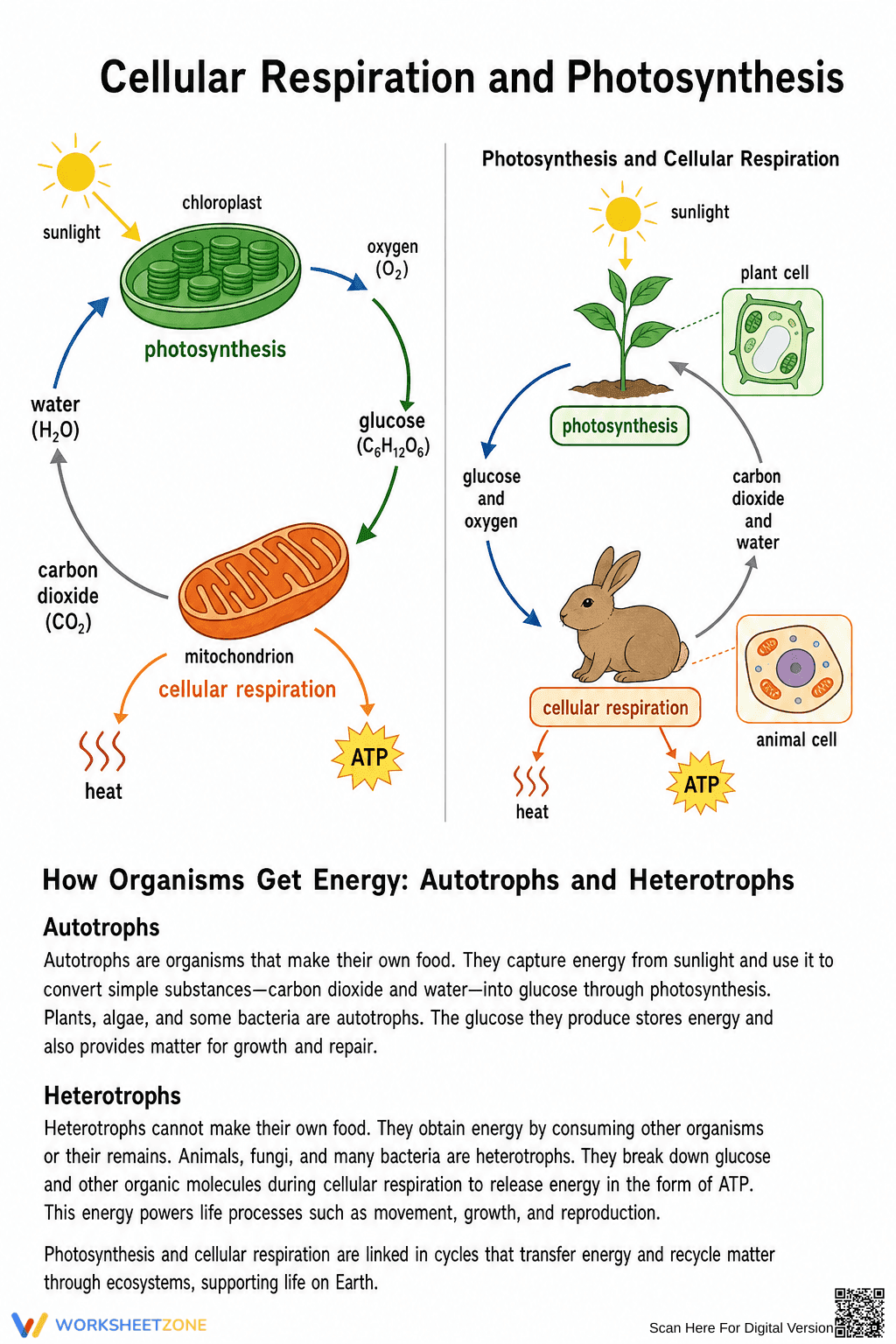
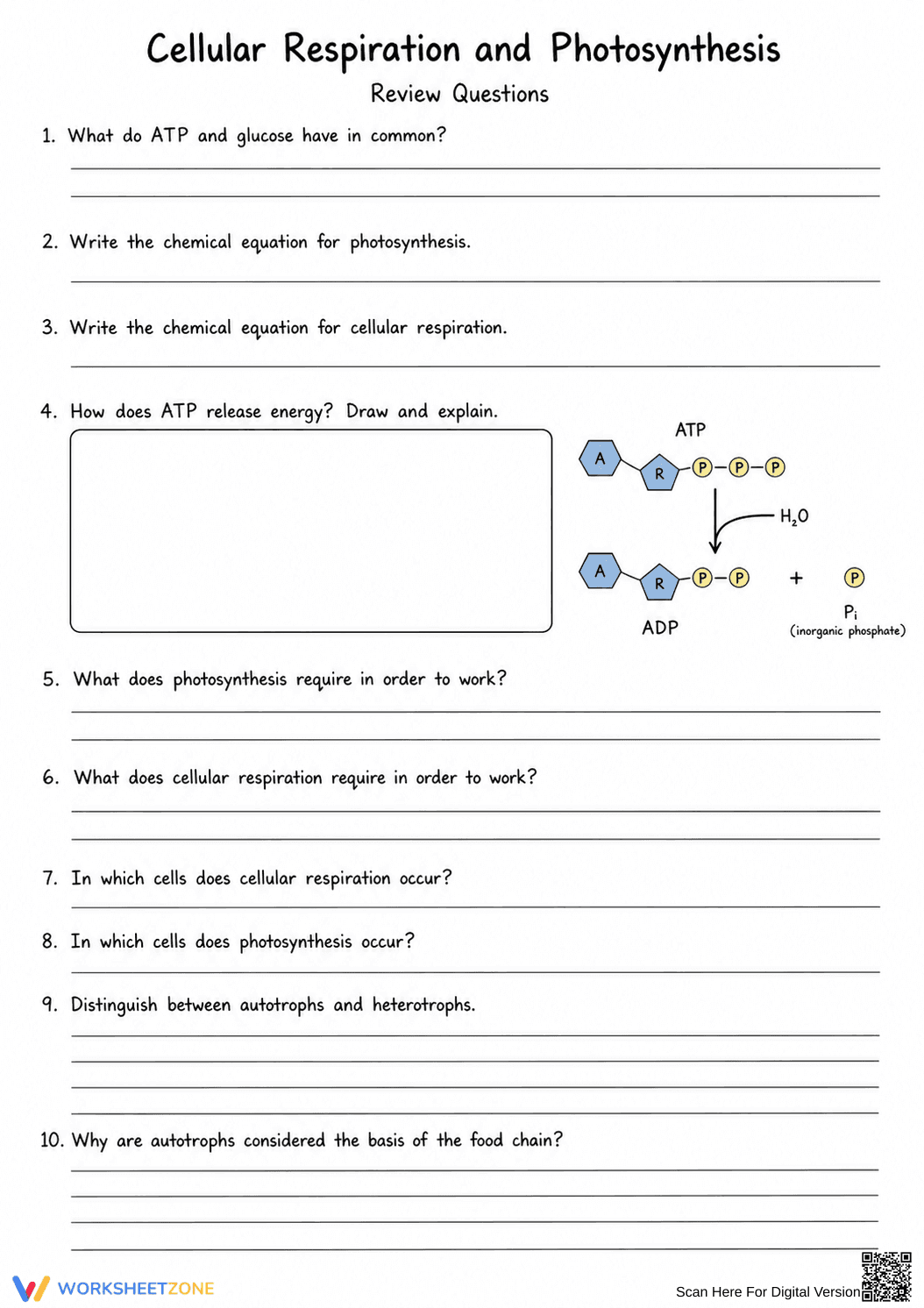
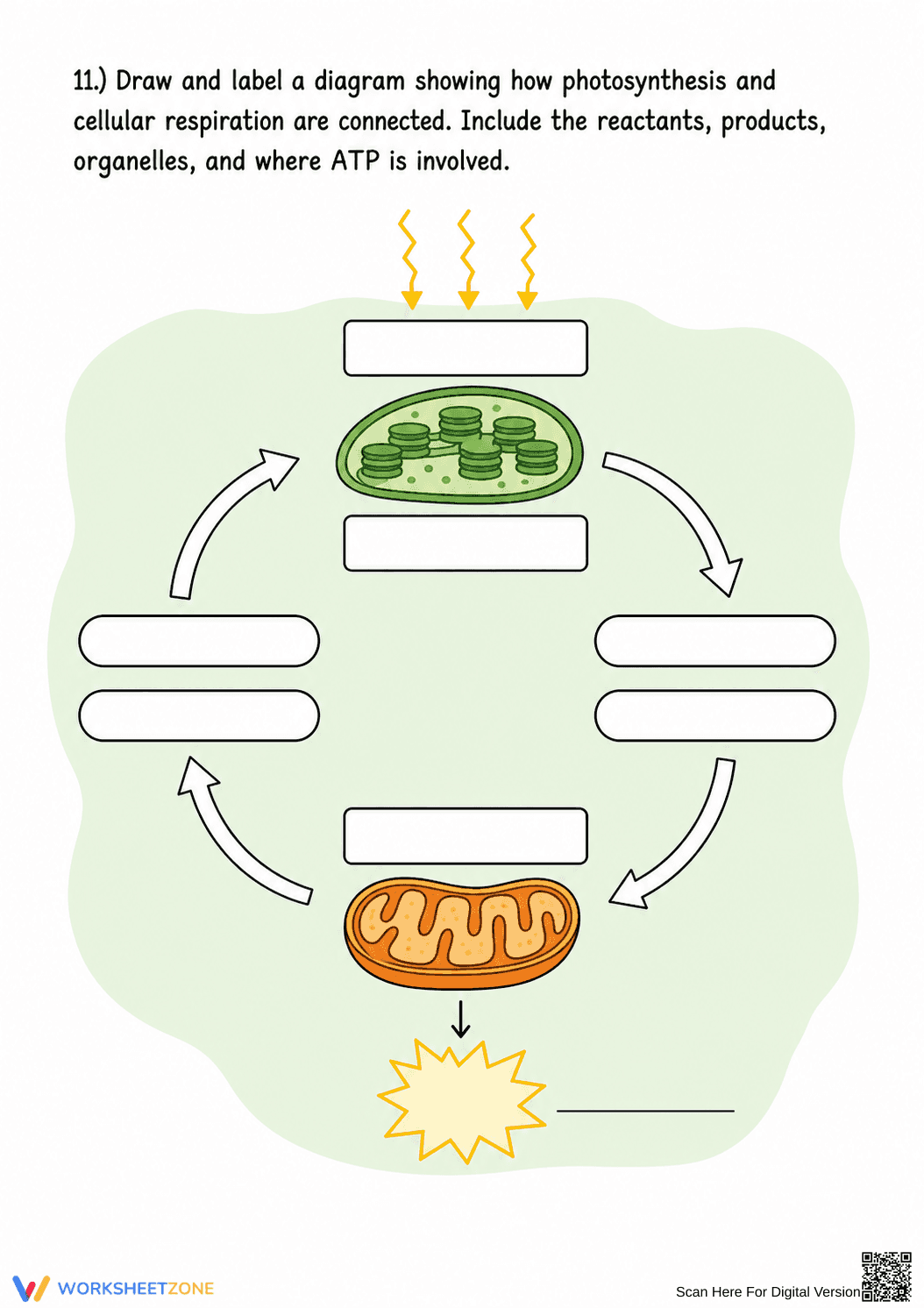
This biology worksheet helps students master cellular respiration and photosynthesis. By analyzing reading passages and diagrams, learners understand how ATP and glucose function, applying their knowledge to answer review questions and label a cycle diagram.
At a Glance
- Grade: 9 · Subject: Biology
- Standard:
HS-LS1-7— Model cellular respiration and energy transfer- Skill Focus: Photosynthesis and Cellular Respiration
- Format: 4 pages · 11 problems · Answer key included · PDF
- Best For: Independent practice or sub plans
- Time: 30–45 minutes
Inside, educators will find two pages of visual informational text breaking down complex chemical equations. The reading covers autotrophs, heterotrophs, and the ATP-ADP cycle. A two-page assessment follows, featuring ten short-answer questions and one diagram-labeling task mapping reactants and products. A complete answer key is provided.
Zero-Prep Workflow
This resource requires minimal teacher setup:
- Print (1 min): Print the four-page PDF. Formatted for double-sided copying.
- Distribute (1 min): Hand out packets. The built-in text means no external books are needed.
- Review (3 min): Use the answer key to check comprehension.
With under two minutes of prep, this is an ideal sub plan.
Standards Alignment
Aligned with HS-LS1-7: Use a model to illustrate that cellular respiration is a chemical process whereby bonds of food and oxygen molecules are broken and new compounds form, resulting in energy transfer. Both standard codes can be copied directly into lesson plans, IEP goals, or district curriculum mapping tools.
How to Use It
Use this packet as an introductory lesson before direct instruction, allowing students to build background knowledge on ATP. It also serves as a robust review activity. For formative assessment, monitor the final diagram-labeling task; struggles placing oxygen indicate a need to review these complementary processes. Expected completion time is 30 to 45 minutes.
Who It's For
Optimized for 9th-grade biology students. The embedded reading provides built-in differentiation for those who need reference material while working. It pairs perfectly with hands-on laboratory activities, like observing elodea plants, bridging theoretical equations with observable phenomena.
Integrating structured reading materials with visual models significantly improves student comprehension of abstract biological processes. According to a ScienceDirect TpT Analysis, providing students with integrated text and diagrammatic models enhances their ability to conceptualize microscopic energy transfers. This worksheet aligns with HS-LS1-7, requiring students to model cellular respiration and energy transfer accurately. By combining explicit instruction on chemical formulas with a visual mapping task of the chloroplast and mitochondrion cycle, the resource reduces cognitive load. Students do not have to split their attention between a textbook and a separate workbook. Instead, they can directly reference the text to construct their understanding of how autotrophs and heterotrophs interact within an ecosystem. This evidence-based approach ensures that learners can confidently articulate the relationship between glucose, ATP, and the complementary cycles of life on Earth.


