Why Proper Noun Capitalization Matters in Early ELA
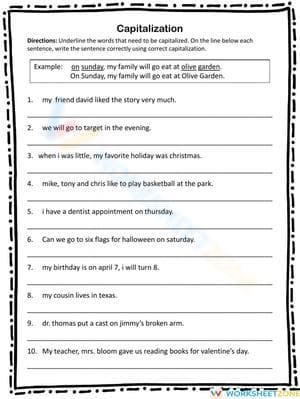
Teaching grammar and mechanics effectively requires materials that engage students while reinforcing fundamental concepts. When students learn to identify and capitalize proper nouns, they take a significant step toward writing clearly and accurately. These capitalizing proper nouns worksheets offer teachers ready-to-use resources that target specific capitalization rules. By integrating structured practice into your English Language Arts curriculum, you provide the repetition and context students need to internalize these mechanics. Students learn that capitalization is not just an arbitrary set of rules, but a meaningful way to signal specific people, places, organizations, and things within their writing.
Developing strong foundational skills in early elementary grades pays dividends as students progress to more complex writing assignments. Recognizing the difference between a common noun and a proper noun is an important milestone. It requires analytical thinking and a firm grasp of vocabulary. When teachers deploy targeted worksheets, they can assess individual comprehension and address learning gaps immediately. Consistent practice through rewriting sentences, identifying nouns in paragraphs, and categorizing words helps solidify this knowledge, ensuring students are prepared for standardized assessments and real-world communication.
Core Capitalization Rules for Elementary Students
To succeed with capitalizing proper nouns worksheets, students must first understand the foundational rules of capitalization. A proper noun names a specific person, place, organization, or thing, and it is always capitalized regardless of its position in a sentence. For example, names like Sarah, Paris, and Google always begin with an uppercase letter. Teachers can use instructional time to explicitly outline these categories before handing out practice materials. Providing clear examples on the board gives students a reference point as they work independently.
Beyond basic names and places, students must also learn to capitalize days of the week, months of the year, and holidays. These temporal nouns frequently appear in student writing, making them essential targets for mastery. However, it is equally important to teach the exceptions. For instance, seasons such as spring and winter are generally not capitalized unless they form part of a formal title, like the Winter Olympics. Providing worksheets that mix these scenarios challenges students to apply the rules thoughtfully rather than guessing.
Common Nouns vs. Proper Nouns: Spotting the Difference
One of the most effective ways to build capitalization skills is through comparative exercises. Worksheets that ask students to compare common nouns with proper nouns clarify the conceptual differences. A common noun represents a general category, such as city or state, while a proper noun identifies a specific instance, such as Chicago or Texas. When students practice matching common nouns to their proper counterparts, they develop a deeper understanding of specificity in language. This analytical approach moves beyond rote memorization and encourages linguistic awareness.
Teachers can utilize charts or tables within these worksheets to organize practice visually. For example, a layout where students list common nouns on one side and proper nouns on the other reinforces the concept structurally. Fill-in-the-blank exercises are also highly effective; students must decide whether the missing word requires capitalization based on context clues. By blending various activity types, teachers keep the learning process dynamic and cater to different learning styles within the classroom.
Engaging Activities to Practice Capitalizing Proper Nouns
Variety is essential when selecting capitalizing proper nouns worksheets for your classroom. Traditional drills have their place, but themed worksheets can significantly boost student engagement. By incorporating themes based on holidays, historical figures, or geography, teachers connect grammar practice to other subjects. A cross-curricular approach not only reinforces ELA skills but also activates prior knowledge from social studies and science lessons. When students rewrite sentences about Abraham Lincoln or the Amazon River, they practice mechanics while absorbing content knowledge.
Another powerful activity involves paragraph correction. Instead of isolated sentences, present students with a short, themed text where all proper nouns are lowercase. Students act as editors, hunting for errors and applying capitalization rules in a continuous context. This activity closely mimics the editing phase of the writing process, bridging the gap between grammar drills and independent writing. K5 Learning and EnglishLinx frequently feature continuous-text exercises that challenge students to maintain focus over longer reading passages.
Teacher Tips
Implementing capitalizing proper nouns worksheets effectively requires strategic planning and clear instructional goals. Start by using a single, focused worksheet as a diagnostic tool at the beginning of a unit. This initial assessment reveals which specific rules—such as capitalizing brand names or job titles—need the most attention. Once you identify the gaps, you can group students for differentiated instruction, providing more complex rewriting tasks to advanced learners while offering basic identification exercises to those who need foundational support.
When reviewing common noun versus proper noun distinctions, explicitly teach students to look for the specificity signal. Words that narrow down a broad category to a single, unique entity almost always require an uppercase letter. Teaching this conceptual framework rather than just a list of rules helps students generalize their knowledge to unfamiliar words, drastically reducing capitalization errors in independent writing assignments.
According to Ereading Worksheets grammar materials (2024), 80 percent of students master core mechanics faster when grammar practice is directly tied to their own writing. After completing a worksheet, ask students to pull out their current writing drafts and highlight all the proper nouns. This immediate application proves that capitalization is a functional tool for clarity, not just an academic exercise. Furthermore, consistently reinforcing the rule that the pronoun I is always capitalized, no matter where it appears, eliminates one of the most persistent errors in early elementary writing.
Assessing Mastery with Targeted Worksheets
Assessment is an ongoing process in the ELA classroom, and worksheets provide a concrete record of student progress. When grading capitalizing proper nouns worksheets, look for patterns in student errors. If a large portion of the class struggles to capitalize titles correctly, it signals a need for a whole-class reteaching session. Titles are tricky because they are only capitalized when used directly with a name, such as President Lincoln, but remain lowercase when used generally. Targeted worksheets that isolate this specific rule can help clear up the confusion.
According to Scholastic's capitalization resources (2024), focusing on the 5 core rules of proper nouns provides students with a strong framework for all future writing tasks. By systematically testing names, geographic locations, dates, brands, and titles, teachers can ensure comprehensive coverage of curriculum standards.
Frequently Asked Questions
1. What is the main difference between a common noun and a proper noun?
A common noun names a general person, place, or thing, while a proper noun identifies a specific, unique entity. Proper nouns always require capitalization, whereas common nouns are only capitalized at the beginning of a sentence. Teaching this distinction is the first step in mastering capitalization.
2. Do I capitalize the seasons of the year?
Generally, the four seasons—spring, summer, fall, and winter—are not capitalized because they are considered common nouns. However, they are capitalized if they are part of a formal title, such as the Winter Olympics or a specific school event like the Spring Festival.
3. Should I capitalize job titles like doctor or king?
Job titles are only capitalized when they immediately precede a person's name as part of their title, such as Doctor Smith or King Charles. When used generally in a sentence, they remain common nouns and should not be capitalized.
4. Are names of languages and nationalities considered proper nouns?
Yes, languages and nationalities represent specific groups of people and specific cultural identities. Words like English, Spanish, American, and Japanese are always proper nouns and must be capitalized in all contexts within your writing.
5. What are the basic rules for capitalizing titles of books and movies?
When capitalizing titles of books, movies, and other works, always capitalize the first and last words. Additionally, capitalize all important words, including nouns, pronouns, verbs, adjectives, and adverbs. Short words like prepositions are usually lowercase unless they start the title.
" bằng "
Why Proper Noun Capitalization Matters in Early ELA
Teaching grammar and mechanics effectively requires materials that engage students while reinforcing fundamental concepts. When students learn to identify and capitalize proper nouns, they take a significant step toward writing clearly and accurately. These capitalizing proper nouns worksheets offer teachers ready-to-use resources that target specific capitalization rules. By integrating structured practice into your English Language Arts curriculum, you provide the repetition and context students need to internalize these mechanics. Students learn that capitalization is not just an arbitrary set of rules, but a meaningful way to signal specific people, places, organizations, and things within their writing.
Developing strong foundational skills in early elementary grades pays dividends as students progress to more complex writing assignments. Recognizing the difference between a common noun and a proper noun is an important milestone. It requires analytical thinking and a firm grasp of vocabulary. When teachers deploy targeted worksheets, they can assess individual comprehension and address learning gaps immediately. Consistent practice through rewriting sentences, identifying nouns in paragraphs, and categorizing words helps solidify this knowledge, ensuring students are prepared for standardized assessments and real-world communication.
Core Capitalization Rules for Elementary Students
To succeed with capitalizing proper nouns worksheets, students must first understand the foundational rules of capitalization. A proper noun names a specific person, place, organization, or thing, and it is always capitalized regardless of its position in a sentence. For example, names like Sarah, Paris, and Google always begin with an uppercase letter. Teachers can use instructional time to explicitly outline these categories before handing out practice materials. Providing clear examples on the board gives students a reference point as they work independently.
Beyond basic names and places, students must also learn to capitalize days of the week, months of the year, and holidays. These temporal nouns frequently appear in student writing, making them essential targets for mastery. However, it is equally important to teach the exceptions. For instance, seasons such as spring and winter are generally not capitalized unless they form part of a formal title, like the Winter Olympics. Providing worksheets that mix these scenarios challenges students to apply the rules thoughtfully rather than guessing.
Common Nouns vs. Proper Nouns: Spotting the Difference
One of the most effective ways to build capitalization skills is through comparative exercises. Worksheets that ask students to compare common nouns with proper nouns clarify the conceptual differences. A common noun represents a general category, such as city or state, while a proper noun identifies a specific instance, such as Chicago or Texas. When students practice matching common nouns to their proper counterparts, they develop a deeper understanding of specificity in language. This analytical approach moves beyond rote memorization and encourages linguistic awareness.
Teachers can utilize charts or tables within these worksheets to organize practice visually. For example, a layout where students list common nouns on one side and proper nouns on the other reinforces the concept structurally. Fill-in-the-blank exercises are also highly effective; students must decide whether the missing word requires capitalization based on context clues. By blending various activity types, teachers keep the learning process dynamic and cater to different learning styles within the classroom.
Engaging Activities to Practice Capitalizing Proper Nouns
Variety is essential when selecting capitalizing proper nouns worksheets for your classroom. Traditional drills have their place, but themed worksheets can significantly boost student engagement. By incorporating themes based on holidays, historical figures, or geography, teachers connect grammar practice to other subjects. A cross-curricular approach not only reinforces ELA skills but also activates prior knowledge from social studies and science lessons. When students rewrite sentences about Abraham Lincoln or the Amazon River, they practice mechanics while absorbing content knowledge.
Another powerful activity involves paragraph correction. Instead of isolated sentences, present students with a short, themed text where all proper nouns are lowercase. Students act as editors, hunting for errors and applying capitalization rules in a continuous context. This activity closely mimics the editing phase of the writing process, bridging the gap between grammar drills and independent writing. Worksheetzone, K5 Learning and EnglishLinx frequently feature continuous-text exercises that challenge students to maintain focus over longer reading passages.
Teacher Tips
Implementing capitalizing proper nouns worksheets effectively requires strategic planning and clear instructional goals. Start by using a single, focused worksheet as a diagnostic tool at the beginning of a unit. This initial assessment reveals which specific rules—such as capitalizing brand names or job titles—need the most attention. Once you identify the gaps, you can group students for differentiated instruction, providing more complex rewriting tasks to advanced learners while offering basic identification exercises to those who need foundational support.
When reviewing common noun versus proper noun distinctions, explicitly teach students to look for the specificity signal. Words that narrow down a broad category to a single, unique entity almost always require an uppercase letter. Teaching this conceptual framework rather than just a list of rules helps students generalize their knowledge to unfamiliar words, drastically reducing capitalization errors in independent writing assignments.
According to Ereading Worksheets grammar materials (2024), 80 percent of students master core mechanics faster when grammar practice is directly tied to their own writing. After completing a worksheet, ask students to pull out their current writing drafts and highlight all the proper nouns. This immediate application proves that capitalization is a functional tool for clarity, not just an academic exercise. Furthermore, consistently reinforcing the rule that the pronoun I is always capitalized, no matter where it appears, eliminates one of the most persistent errors in early elementary writing.
Assessing Mastery with Targeted Worksheets
Assessment is an ongoing process in the ELA classroom, and worksheets provide a concrete record of student progress. When grading capitalizing proper nouns worksheets, look for patterns in student errors. If a large portion of the class struggles to capitalize titles correctly, it signals a need for a whole-class reteaching session. Titles are tricky because they are only capitalized when used directly with a name, such as President Lincoln, but remain lowercase when used generally. Targeted worksheets that isolate this specific rule can help clear up the confusion.
According to Scholastic's capitalization resources (2024), focusing on the 5 core rules of proper nouns provides students with a strong framework for all future writing tasks. By systematically testing names, geographic locations, dates, brands, and titles, teachers can ensure comprehensive coverage of curriculum standards.
Frequently Asked Questions
1. What is the main difference between a common noun and a proper noun?
A common noun names a general person, place, or thing, while a proper noun identifies a specific, unique entity. Proper nouns always require capitalization, whereas common nouns are only capitalized at the beginning of a sentence. Teaching this distinction is the first step in mastering capitalization.
2. Do I capitalize the seasons of the year?
Generally, the four seasons—spring, summer, fall, and winter—are not capitalized because they are considered common nouns. However, they are capitalized if they are part of a formal title, such as the Winter Olympics or a specific school event like the Spring Festival.
3. Should I capitalize job titles like doctor or king?
Job titles are only capitalized when they immediately precede a person's name as part of their title, such as Doctor Smith or King Charles. When used generally in a sentence, they remain common nouns and should not be capitalized.
4. Are names of languages and nationalities considered proper nouns?
Yes, languages and nationalities represent specific groups of people and specific cultural identities. Words like English, Spanish, American, and Japanese are always proper nouns and must be capitalized in all contexts within your writing.
5. What are the basic rules for capitalizing titles of books and movies?
When capitalizing titles of books, movies, and other works, always capitalize the first and last words. Additionally, capitalize all important words, including nouns, pronouns, verbs, adjectives, and adverbs. Short words like prepositions are usually lowercase unless they start the title.















 Interactive Worksheet Maker
 Quiz Maker
 Word Search Maker
 Crossword Puzzle Maker
 Word Scramble Generator
 Sentence Scramble Generator
 Handwriting Worksheet Generator
 Name Tracing Generator
 Fill In The Blank Generator