




























Views
Downloads

Capitalizing Titles Worksheet | Grade 1 Essential ELA

Paste this activity's link or code into your existing LMS (Google Classroom, Canvas, Teams, Schoology, Moodle, etc.).
Students can open and work on the activity right away, with no student login required.
You'll still be able to track student progress and results from your teacher account.
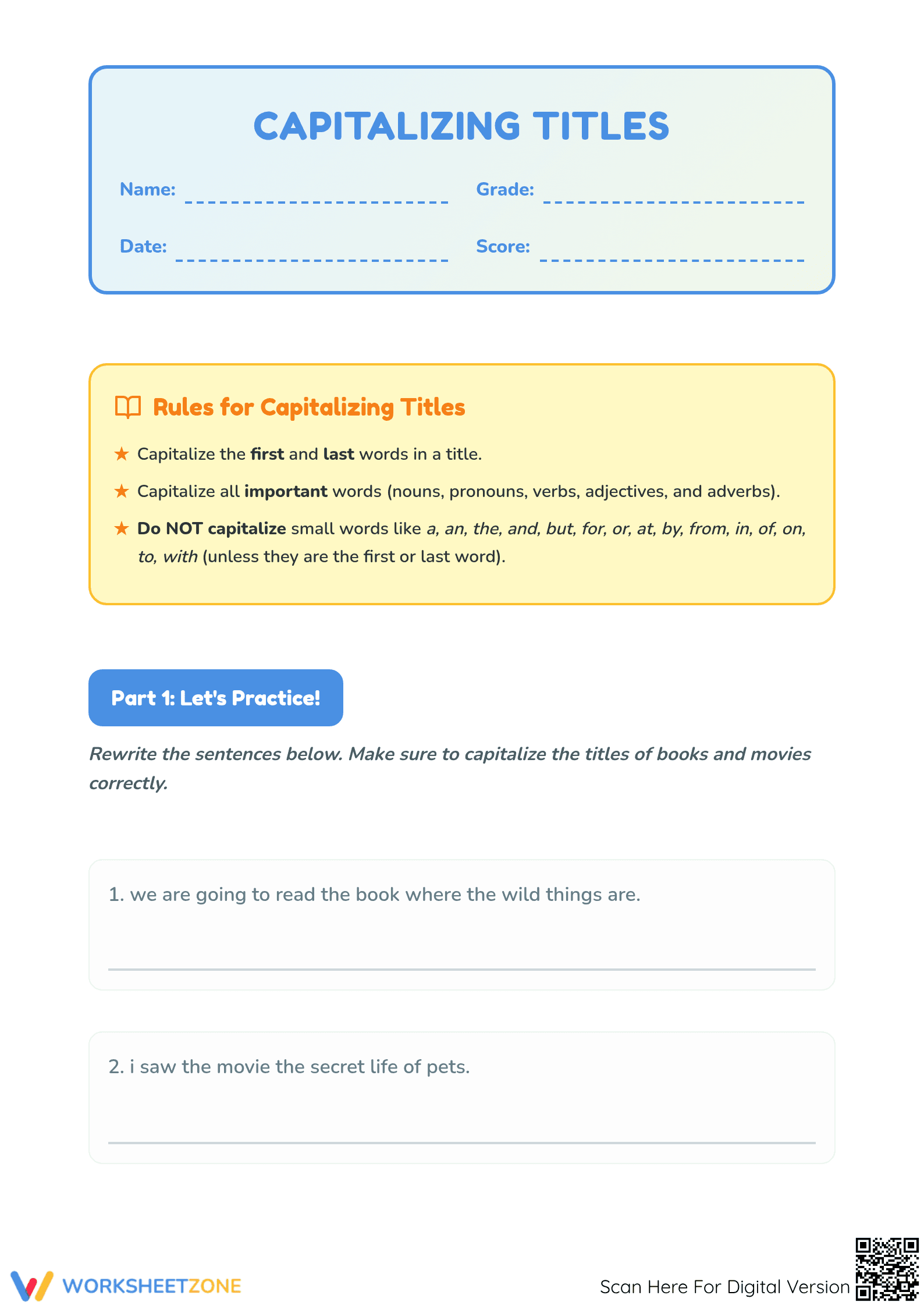
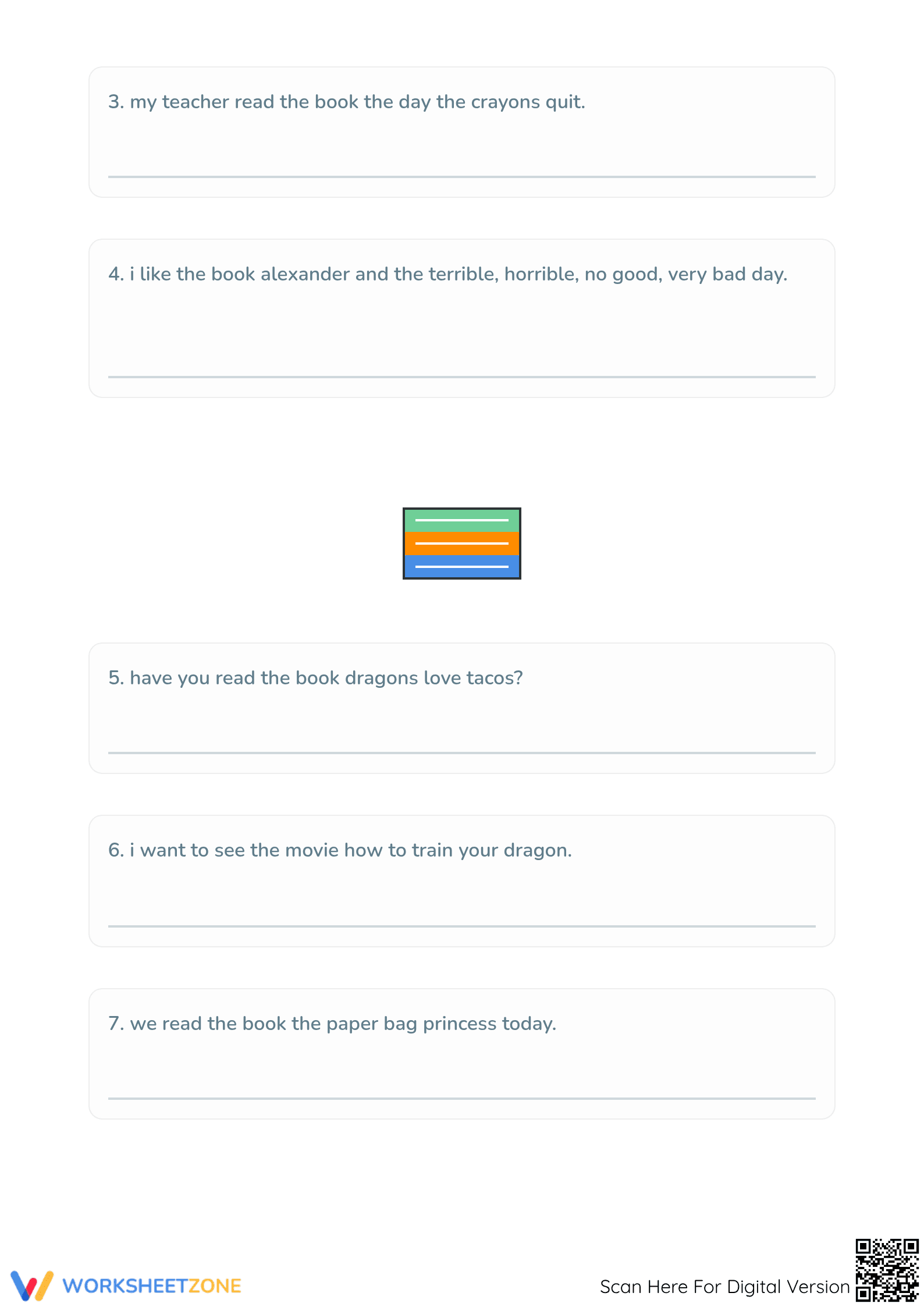
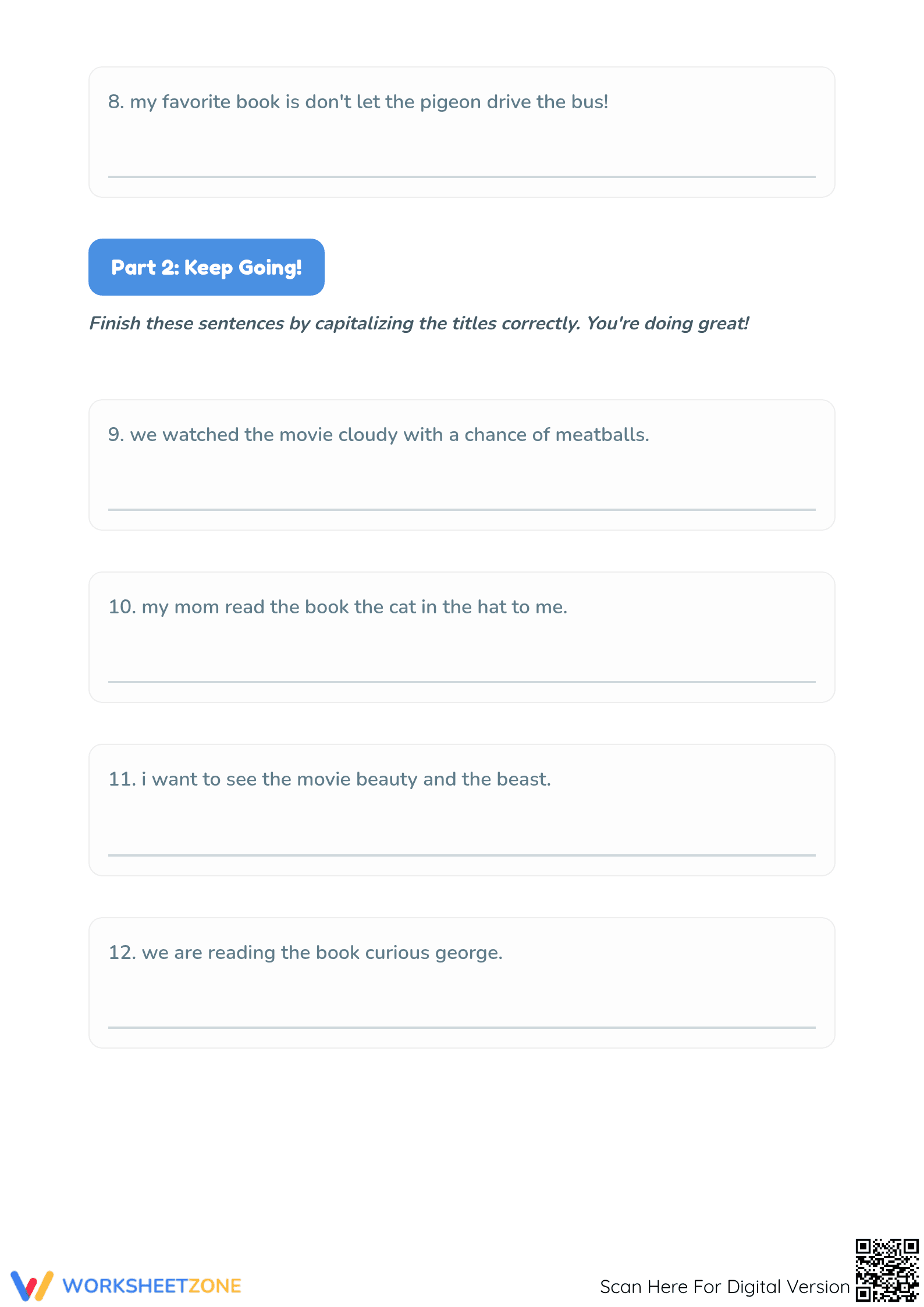
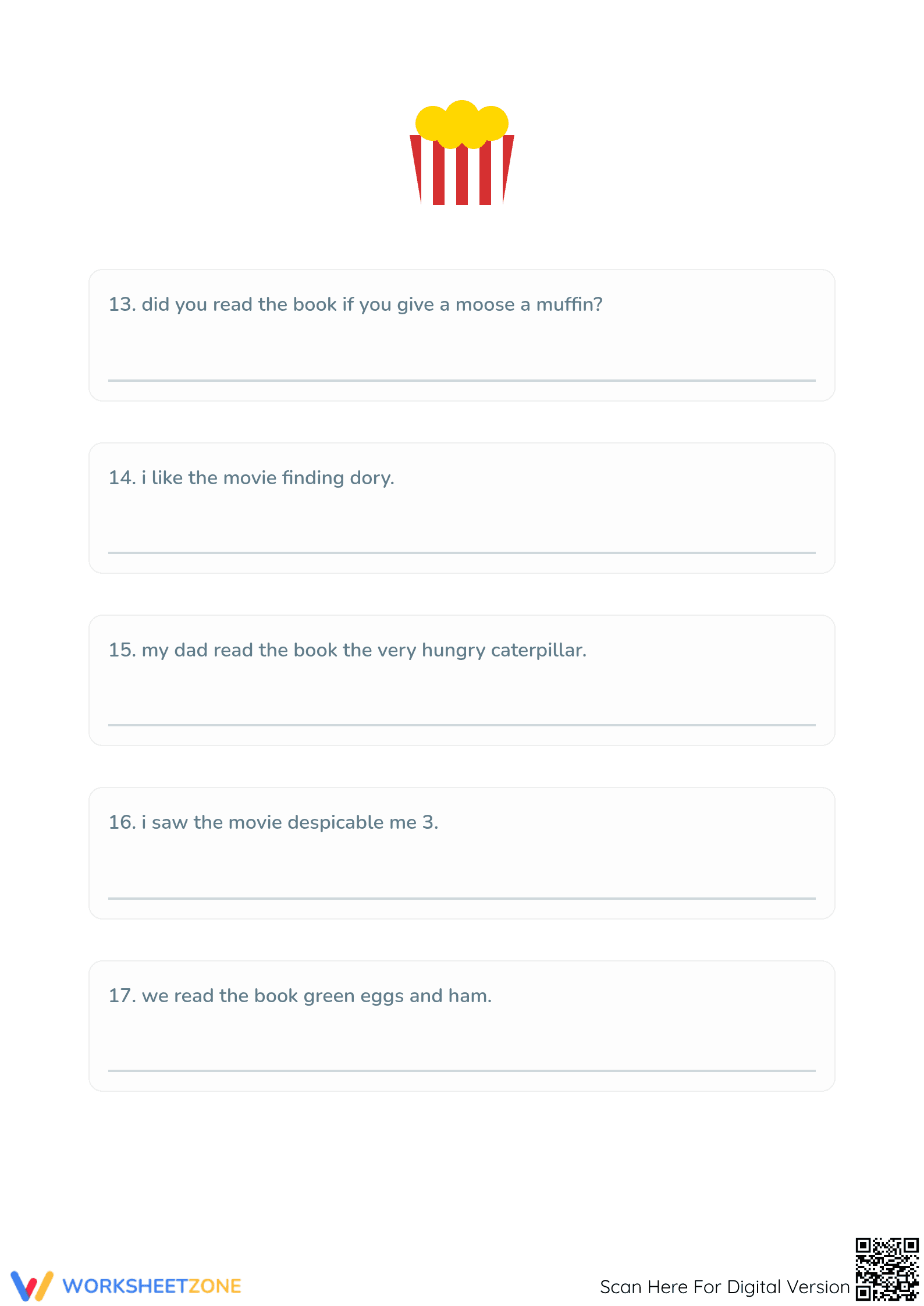
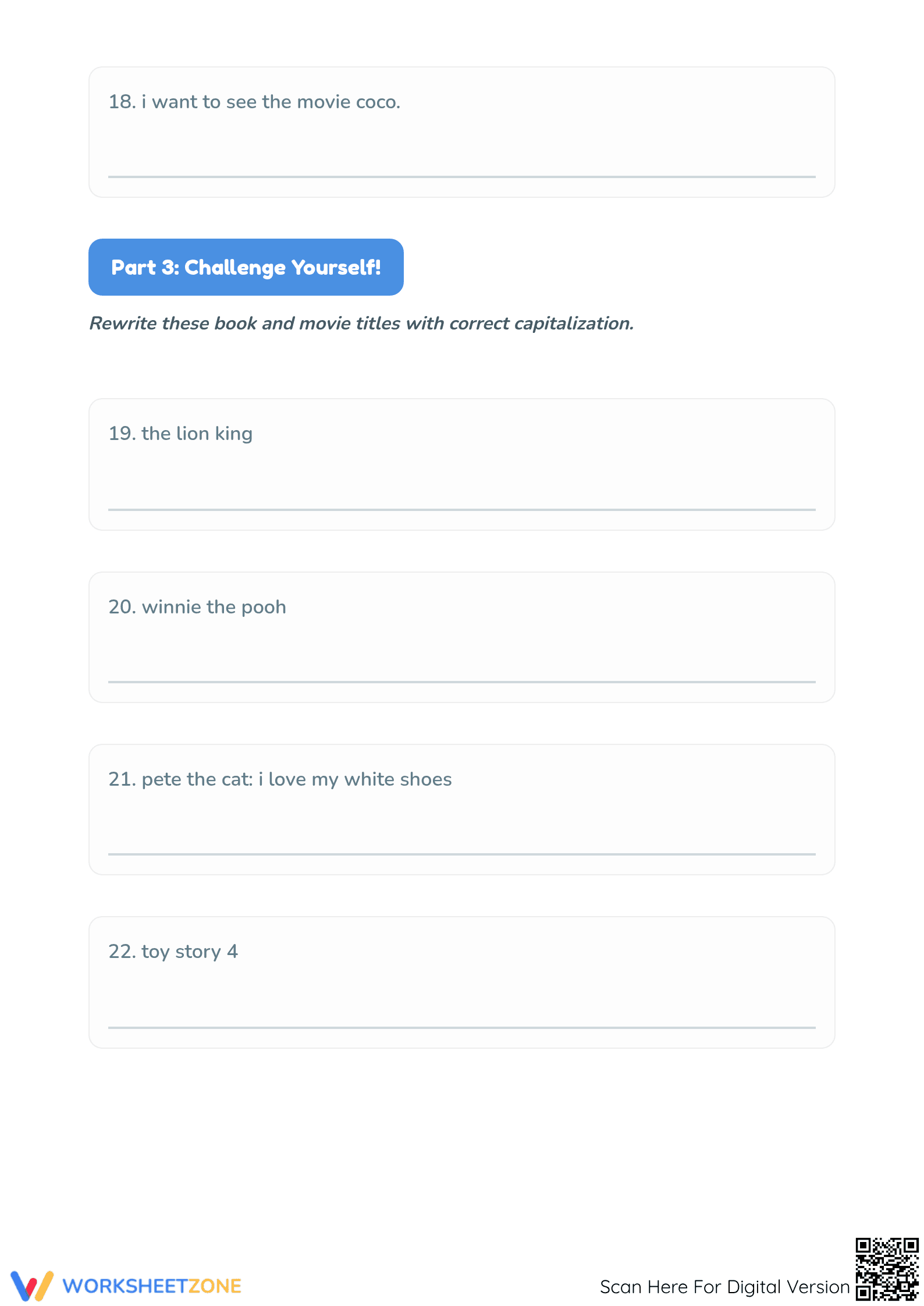
This Grade 1 ELA worksheet provides comprehensive practice for mastering capitalization rules in book and movie titles. Students learn to identify which words require uppercase letters and which remain lowercase, ensuring they develop foundational writing mechanics. By rewriting 22 specific examples, learners gain the confidence needed for accurate sentence construction and formal literacy.
At a Glance
- Grade: 1 · Subject: ELA
- Standard:
CCSS.ELA-LITERACY.L.1.2— Demonstrate command of the conventions of standard English capitalization, punctuation, and spelling.- Skill Focus: Capitalizing Book and Movie Titles
- Format: 5 pages · 22 problems · Answer key included · PDF
- Best For: Independent practice and literacy centers
- Time: 20–30 minutes
The packet contains five pages of structured exercises, beginning with a clear "Rules for Capitalizing Titles" reference box. It includes 22 total tasks divided into three distinct parts: sentence-based rewriting, continued practice with popular media titles, and a "Challenge Yourself" section for standalone title formatting. A full five-page answer key is provided for rapid grading and student self-correction.
This resource is designed for immediate classroom implementation. Teachers can print the five-page set in under 2 minutes, distribute the packets to students during the independent practice phase of a lesson, and use the included answer key to review results in less than 60 seconds. It serves as an ideal sub-plan or morning work activity because the instructions are self-explanatory and the rules are clearly displayed at the top of the first page.
This worksheet aligns with `CCSS.ELA-LITERACY.L.1.2`, focusing on the command of standard English capitalization conventions. While Grade 1 students typically focus on names and dates, this resource extends that knowledge to titles of works, providing a bridge to Grade 2 and 3 standards. Both standard codes can be copied directly into lesson plans, IEP goals, or district curriculum mapping tools.
Use this worksheet during a writing workshop after a mini-lesson on proper nouns and titles. It is particularly effective as a formative assessment; observe if students correctly leave articles like "a" or "the" in lowercase when they appear in the middle of a title. Completion typically takes 20 to 30 minutes depending on student writing speed and familiarity with the titles mentioned.
This resource is tailored for first-grade students but works well for second-grade review or English Language Learners (ELL) who need explicit instruction on English title casing. It pairs naturally with a classroom library exploration or a direct instruction lesson using an anchor chart of favorite book covers to visualize the rules in action.
According to Fisher & Frey (2014), the gradual release of responsibility is most effective when students move from clear rule-based instruction to independent application. This worksheet facilitates that transition by providing a reference guide followed by 22 targeted practice items. Research from the RAND AIRS 2024 report emphasizes that repetitive, high-quality practice in mechanics like `CCSS.ELA-LITERACY.L.1.2` is essential for developing automaticity in young writers. By focusing on familiar book and movie titles, the material increases student engagement while reinforcing the plain-English skill of capitalizing the first, last, and important words in a title. This structured approach ensures that Grade 1 learners internalize capitalization conventions through meaningful context rather than isolated drills, leading to better retention and application in their original writing pieces across the curriculum.


