




























Views
Downloads

Capitalizing Book Titles Worksheet | Grade 1 Essential

Paste this activity's link or code into your existing LMS (Google Classroom, Canvas, Teams, Schoology, Moodle, etc.).
Students can open and work on the activity right away, with no student login required.
You'll still be able to track student progress and results from your teacher account.
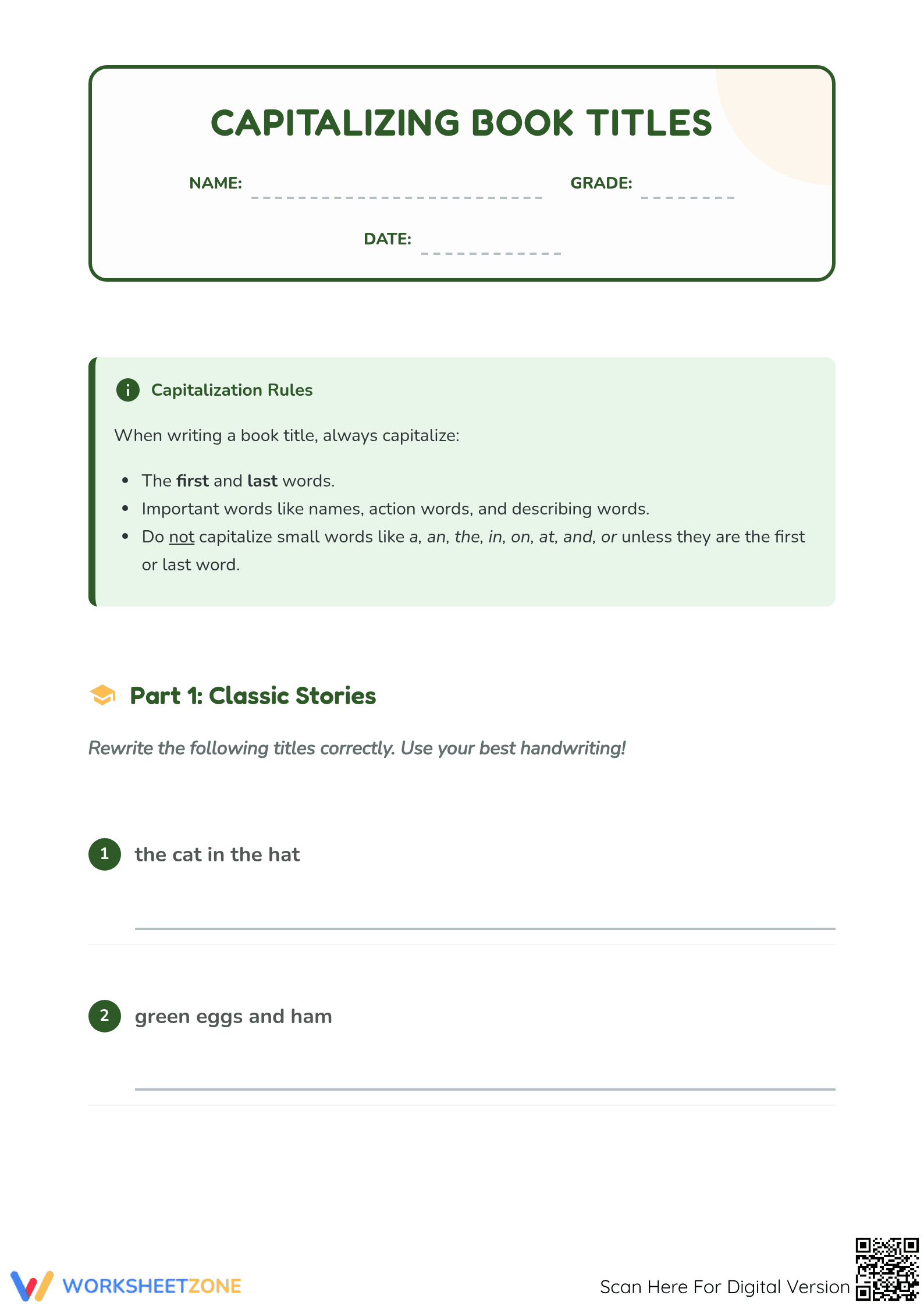
This comprehensive Grade 1 ELA worksheet provides students with a structured environment to master the mechanics of capitalizing book titles. By applying specific grammatical rules to familiar literary examples, learners develop the precision needed for formal writing. Students will transform lowercase titles into correctly formatted proper nouns, reinforcing their understanding of capitalization conventions.
At a Glance
- Grade: 1 · Subject: English Language Arts
- Standard:
CCSS.ELA-LITERACY.L.1.2— Demonstrate command of the conventions of standard English capitalization and punctuation when writing.- Skill Focus: Capitalizing book titles
- Format: 5 pages · 25 problems · Answer key included · PDF
- Best For: Independent practice and literacy centers
- Time: 20–30 minutes
What's Inside
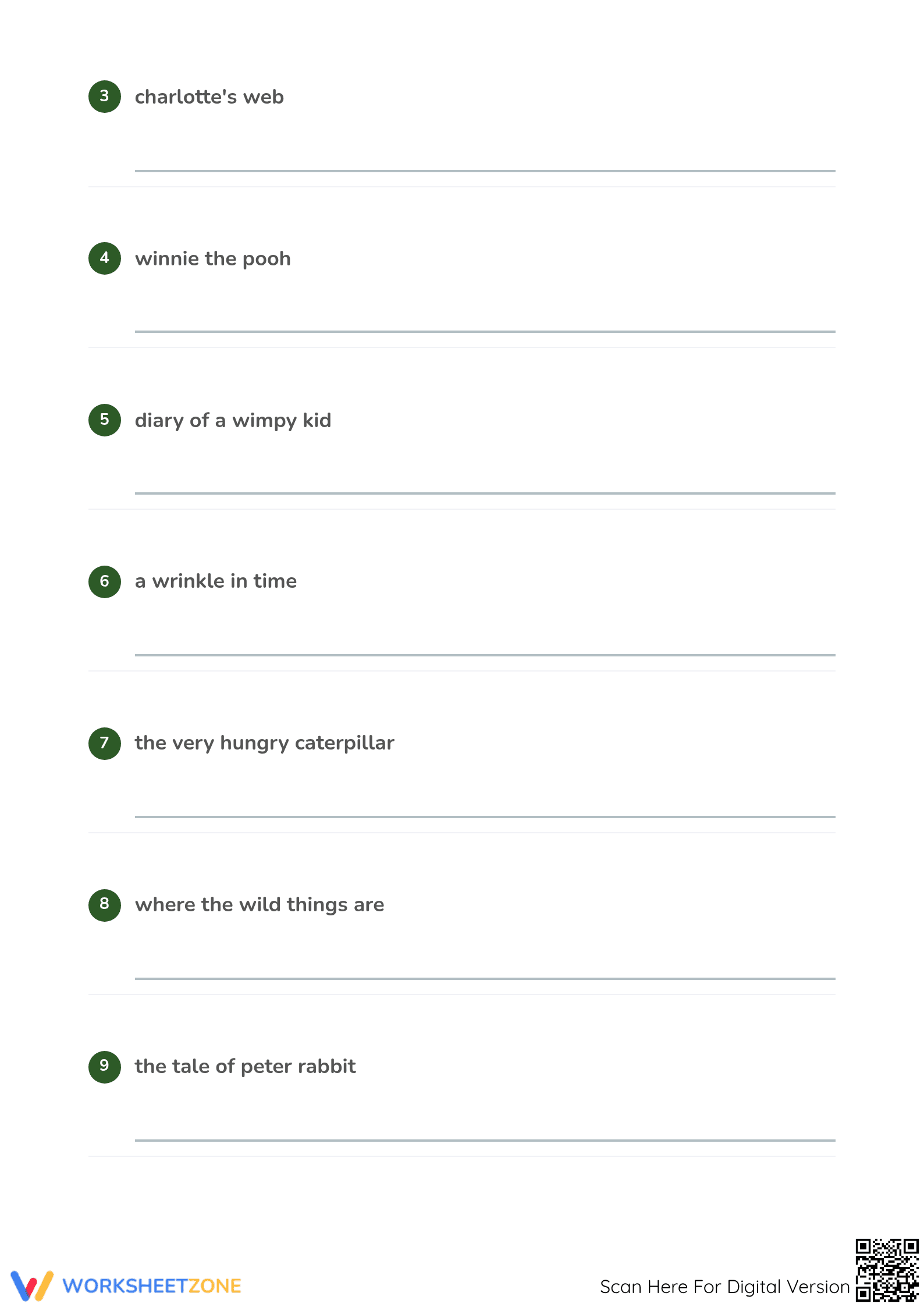
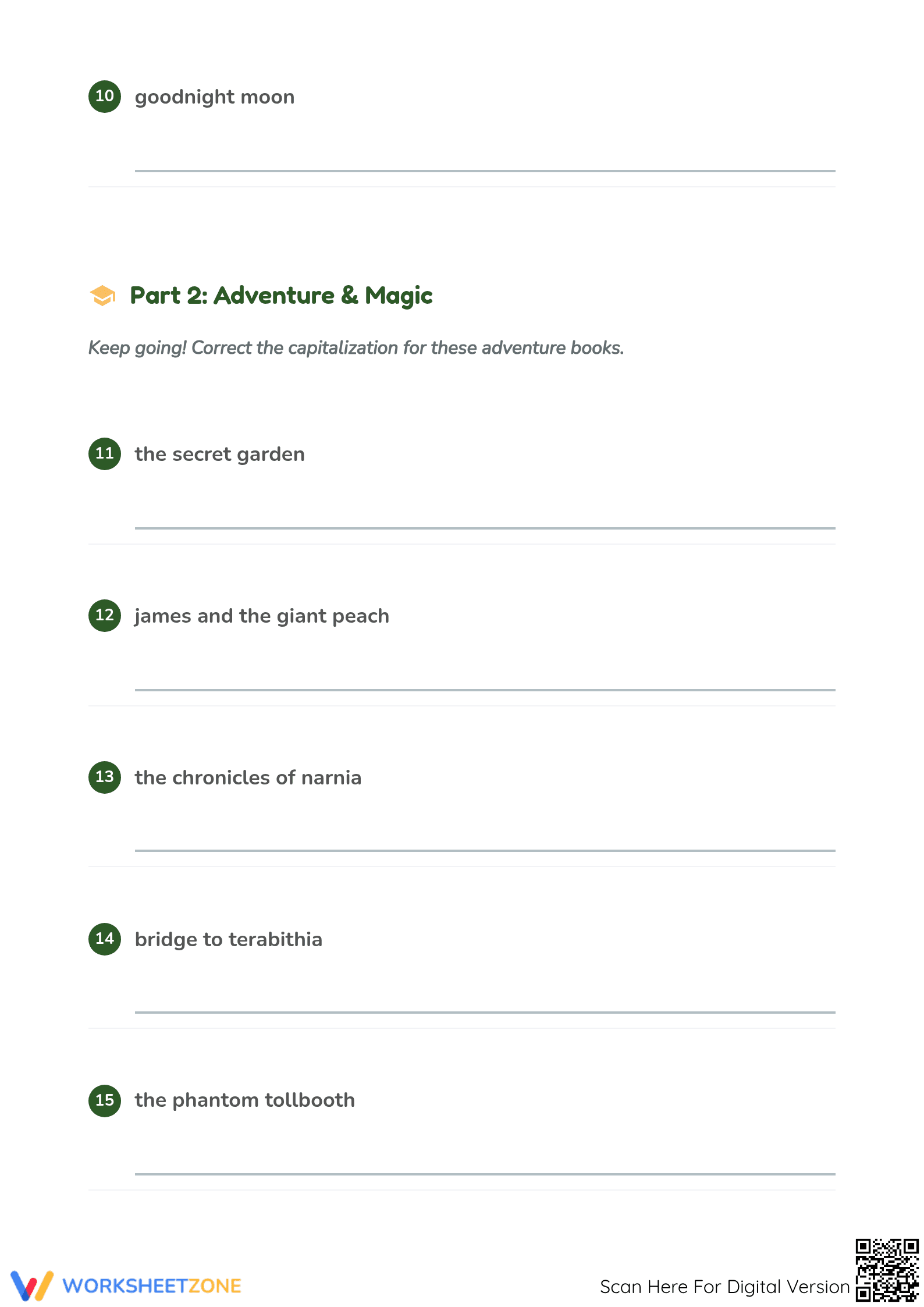
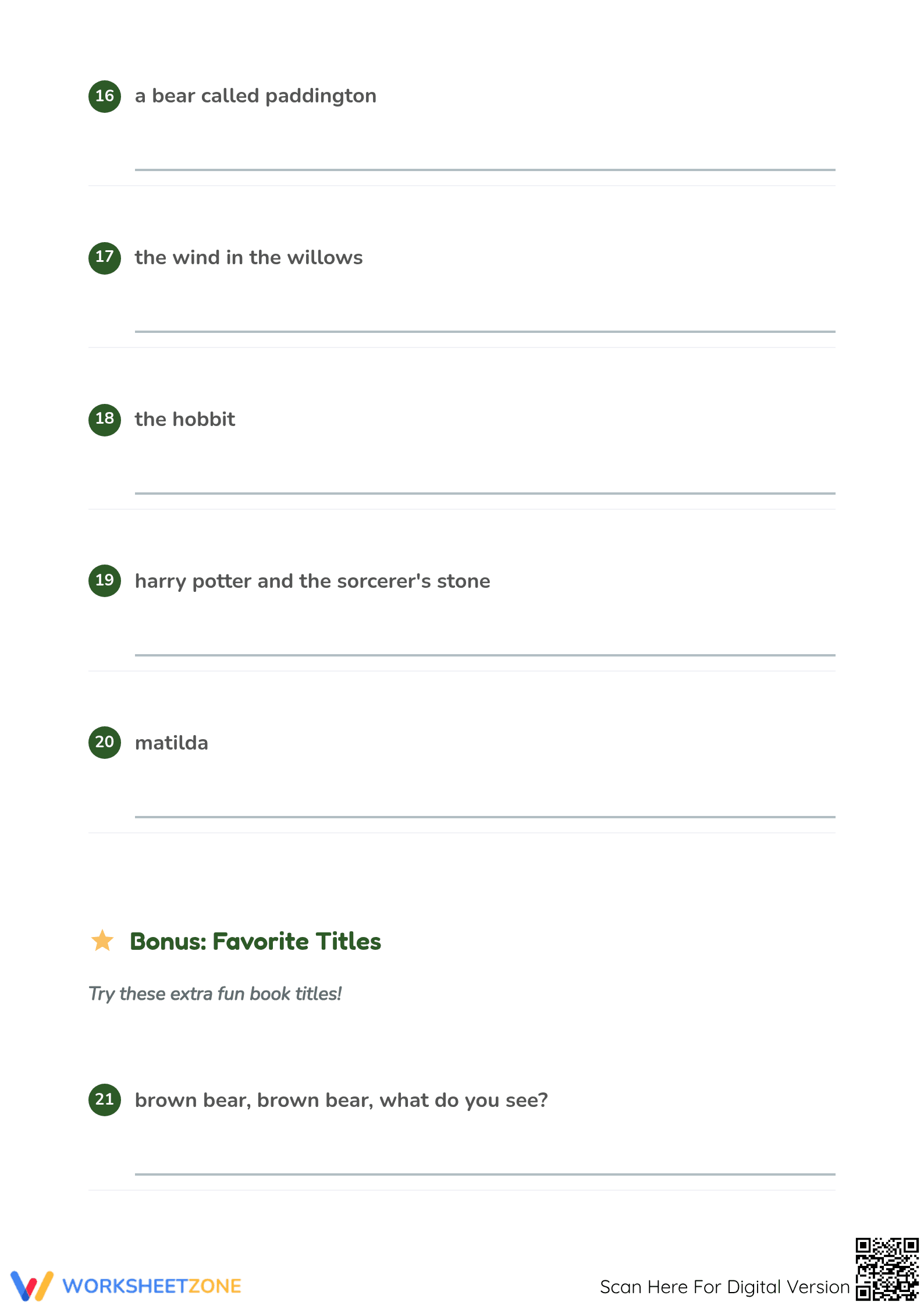
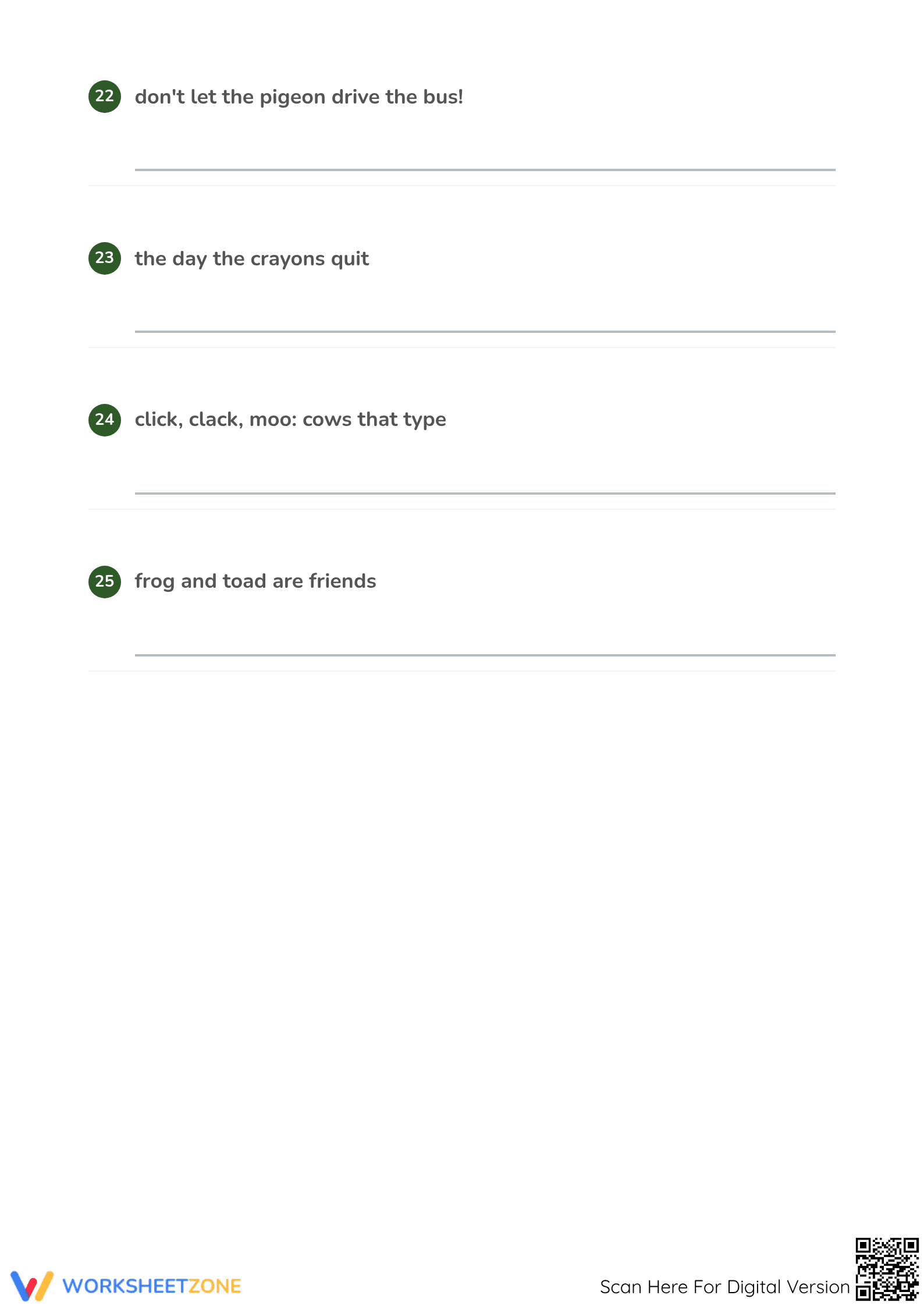
This 5-page instructional packet features a dedicated "Capitalization Rules" reference box on the first page, which serves as a permanent scaffold for students. It contains 25 unique rewriting tasks divided into thematic sections like "Classic Stories" and "Adventure & Magic." Each task provides ample horizontal line space for students to practice their best handwriting while applying the rules. A complete 5-page answer key is provided for rapid grading.
Zero-Prep Workflow
- Print: Select the desired pages and print enough copies for your cohort in less than 60 seconds.
- Distribute: Hand out the worksheets; the built-in rule box ensures students can begin immediately without a lengthy introductory lecture.
- Review: Use the included answer key to check student work in under 1 minute per page, or display it for self-correction.
This resource is specifically designed for high-efficiency classroom environments and serves as an ideal emergency sub plan due to its self-explanatory nature.
Standards Alignment
This resource aligns with `CCSS.ELA-LITERACY.L.1.2`, focusing on the command of standard English capitalization. While Grade 1 standards emphasize names and dates, this worksheet bridges the gap toward Grade 3 title conventions by introducing the concept of "important words" versus "small words." Both standard codes can be copied directly into lesson plans, IEP goals, or district curriculum mapping tools.
How to Use It
Assign this worksheet during the independent practice phase of a grammar lesson. It works exceptionally well in a literacy rotation station where students can refer to the rules box independently. For a formative assessment, observe students as they handle the "small words" like 'of' or 'the' in the middle of titles; this reveals their true grasp of the capitalization hierarchy. Expect completion in approximately 25 minutes.
Who It's For
This resource is tailored for first-grade students but is also highly effective for second-grade review or ESL/ELL learners who need explicit instruction in English title mechanics. It pairs naturally with a classroom library tour or a read-aloud session where students identify titles on book covers before beginning the written practice.
According to the RAND AIRS 2024 analysis of instructional materials, high-quality ELA resources must provide explicit rule modeling followed by high-volume application to ensure long-term retention of linguistic conventions. This worksheet fulfills that requirement by providing a clear instructional anchor followed by 25 distinct opportunities for student response. By focusing on the specific skill of capitalizing book titles within the broader CCSS.ELA-LITERACY.L.1.2 framework, the material allows for targeted intervention. Research suggests that when students engage with familiar content, such as the classic book titles featured in this set, cognitive load is reduced, allowing them to focus entirely on the new grammatical rule being introduced. This systematic approach to handwriting and mechanics practice supports the development of automaticity in early writers, ensuring they can eventually apply these capitalization rules fluently in their own creative compositions and academic reports without constant teacher prompting.


