


























Views
Plays

Capitalize First Word and Titles | Grade 3 Essential
Paste this activity's link or code into your existing LMS (Google Classroom, Canvas, Teams, Schoology, Moodle, etc.).
Students can open and work on the activity right away, with no student login required.
You'll still be able to track student progress and results from your teacher account.
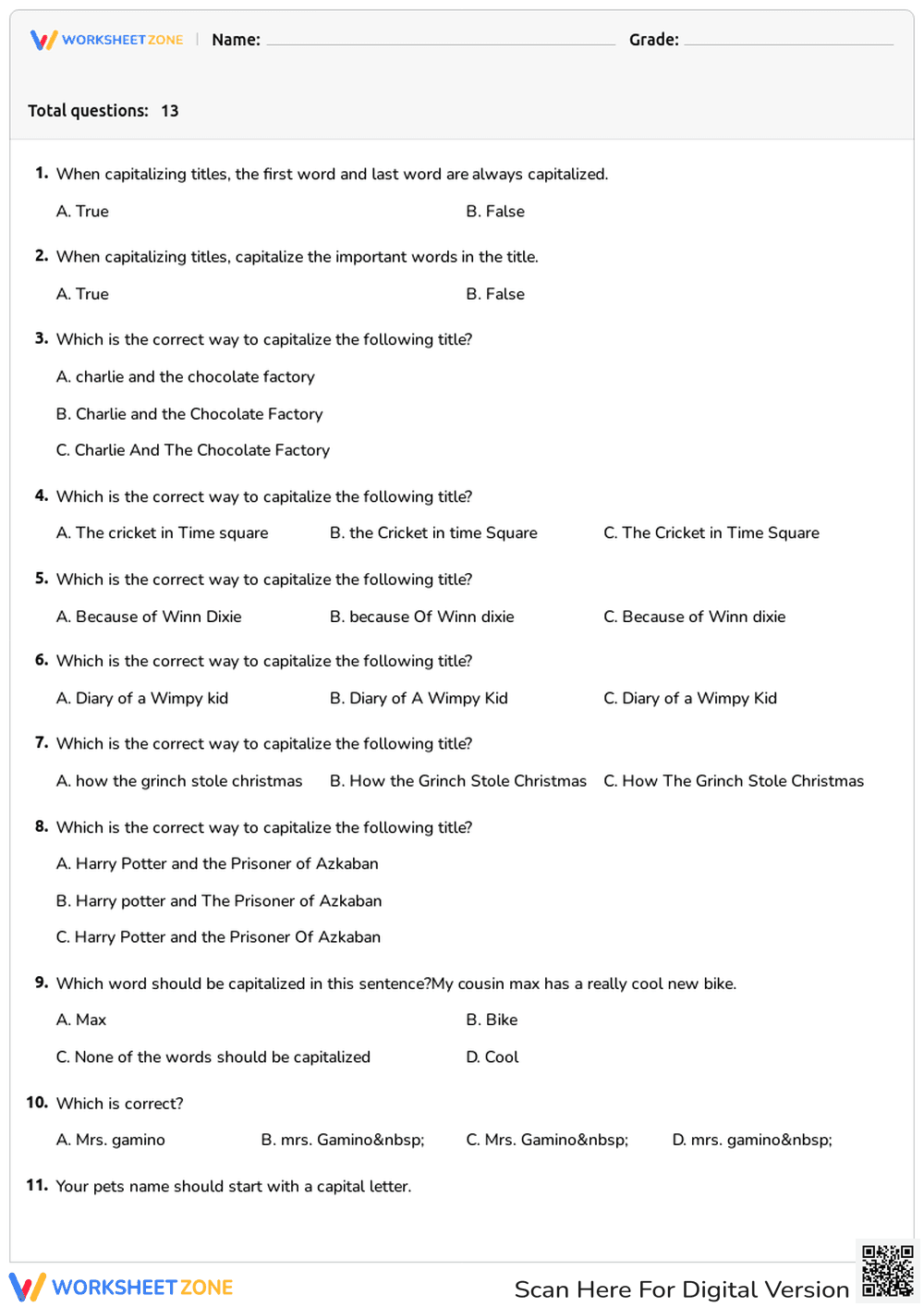
This Grade 3 capitalization worksheet provides students with 13 targeted multiple-choice questions to master the mechanics of proper noun and title formatting. By identifying correct capitalization in book titles and sentence starts, learners build the foundational editing skills necessary for clear written communication. It offers immediate practice with real-world examples like book titles and names.
At a Glance
- Grade: 3 · Subject: ELA
- Standard:
CCSS.ELA-LITERACY.L.3.2.A— Capitalize appropriate words in titles of books and other works- Skill Focus: Title and Proper Noun Capitalization
- Format: 2 pages · 13 problems · Answer key included · PDF
- Best For: Independent practice or quick formative assessment
- Time: 15–20 minutes
What's Inside
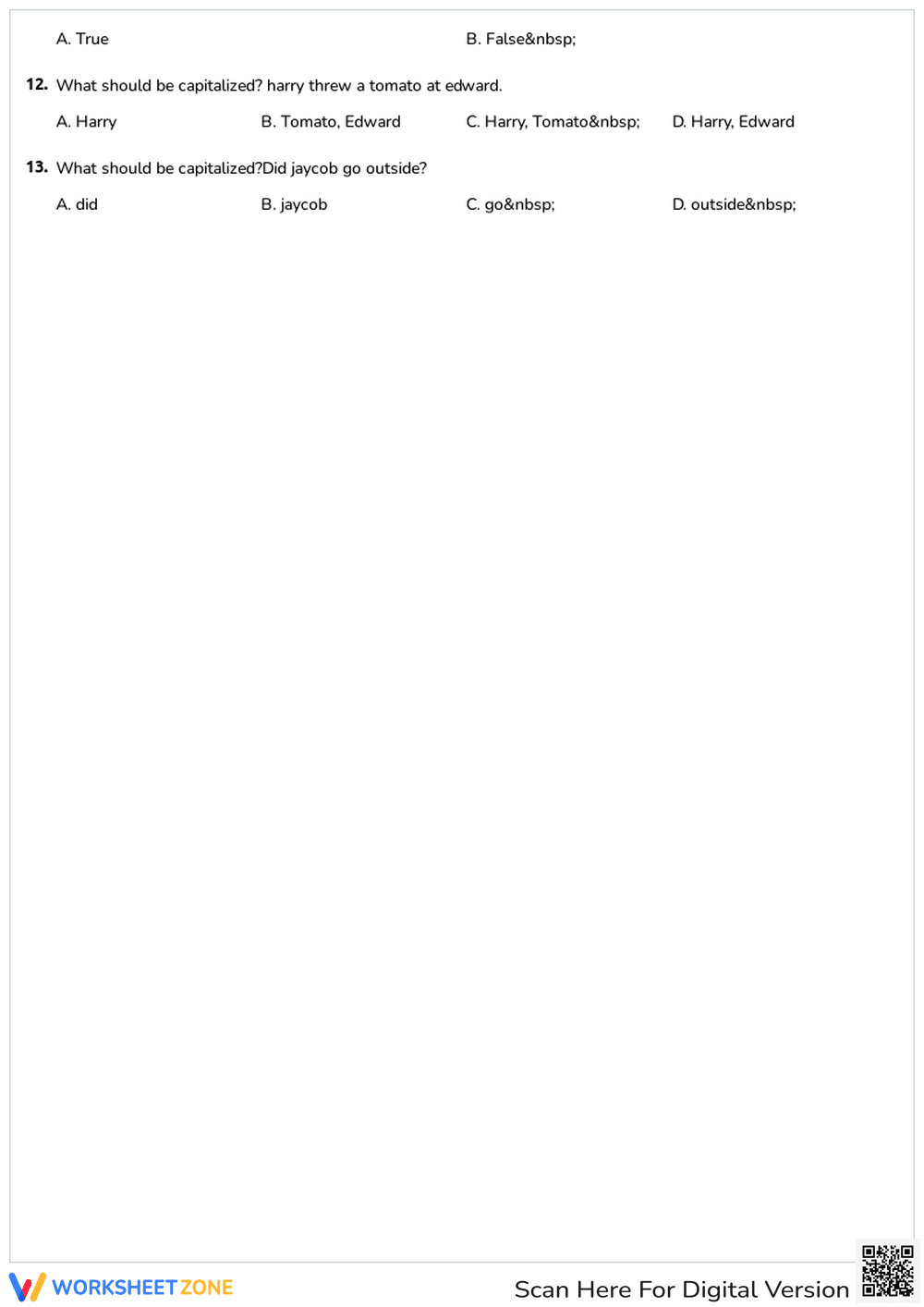
The PDF features 13 multiple-choice questions. The first section focuses on the conceptual rules of title capitalization, such as the importance of the first and last words. The subsequent tasks require students to select the correctly formatted title from a list of options, including popular literature like "Diary of a Wimpy Kid." The final questions transition to identifying proper nouns and sentence-level capitalization errors.
Zero-Prep Workflow
This worksheet is designed for a zero-prep workflow to save teacher time. First, print the two-page document (30 seconds). Next, distribute the sheets to students for independent work or a quick quiz (1 minute). Finally, review the answers using the provided key or by having students peer-grade (5 minutes). The total teacher preparation time is under 2 minutes, making this an ideal resource for morning work or sub plans.
Standards Alignment
The primary focus is `CCSS.ELA-LITERACY.L.3.2.A`, which requires students to "Capitalize appropriate words in titles." The worksheet also supports `CCSS.ELA-LITERACY.L.2.2.A` by reinforcing the capitalization of proper nouns like names and places. Both standard codes can be copied directly into lesson plans, IEP goals, or district curriculum mapping tools.
How to Use It
Use this worksheet during the "You Do" phase of a gradual release lesson on capitalization. After teaching the rules for titles, assign this as a formative assessment to check for understanding. It also works well as a "Do Now" activity to activate prior knowledge before a creative writing session. Expect students to complete the 13 questions in approximately 15 to 20 minutes.
Who It's For
This resource is tailored for Grade 3 students but is highly effective for Grade 2 enrichment or Grade 4 review. It is particularly helpful for English Language Learners who are navigating the nuances of English capitalization rules. Pair this worksheet with a mentor text or a classroom anchor chart that lists common "lowercase" words in titles like articles and short prepositions.
According to the RAND AIRS 2024 report on literacy instruction, consistent practice with discrete grammar skills like capitalization is essential for developing fluent writing habits in the elementary years. This worksheet addresses the specific requirements of CCSS.ELA-LITERACY.L.3.2.A by requiring students to distinguish between "important" words and minor parts of speech within titles. Research from Fisher & Frey (2014) emphasizes that multiple-choice formats can serve as effective scaffolds for identifying errors before students are asked to generate correctly capitalized text independently. By focusing on high-interest book titles, the worksheet increases engagement while reinforcing the technical rules of the English language. This structured approach ensures that students move beyond rote memorization toward a functional understanding of how capitalization signals importance and structure to a reader. The inclusion of 13 varied tasks provides sufficient data for teachers to identify specific misconceptions regarding proper nouns versus common nouns.


