


























1 / 6
0
Views
0
Downloads

Save
0 Likes
Share
Exploring Boyle's Law: Theory and Practice Problems
0 Views
0 Downloads
Paste this activity's link or code into your existing LMS (Google Classroom, Canvas, Teams, Schoology, Moodle, etc.).
Students can open and work on the activity right away, with no student login required.
You'll still be able to track student progress and results from your teacher account.
Information
Description
What It Is:
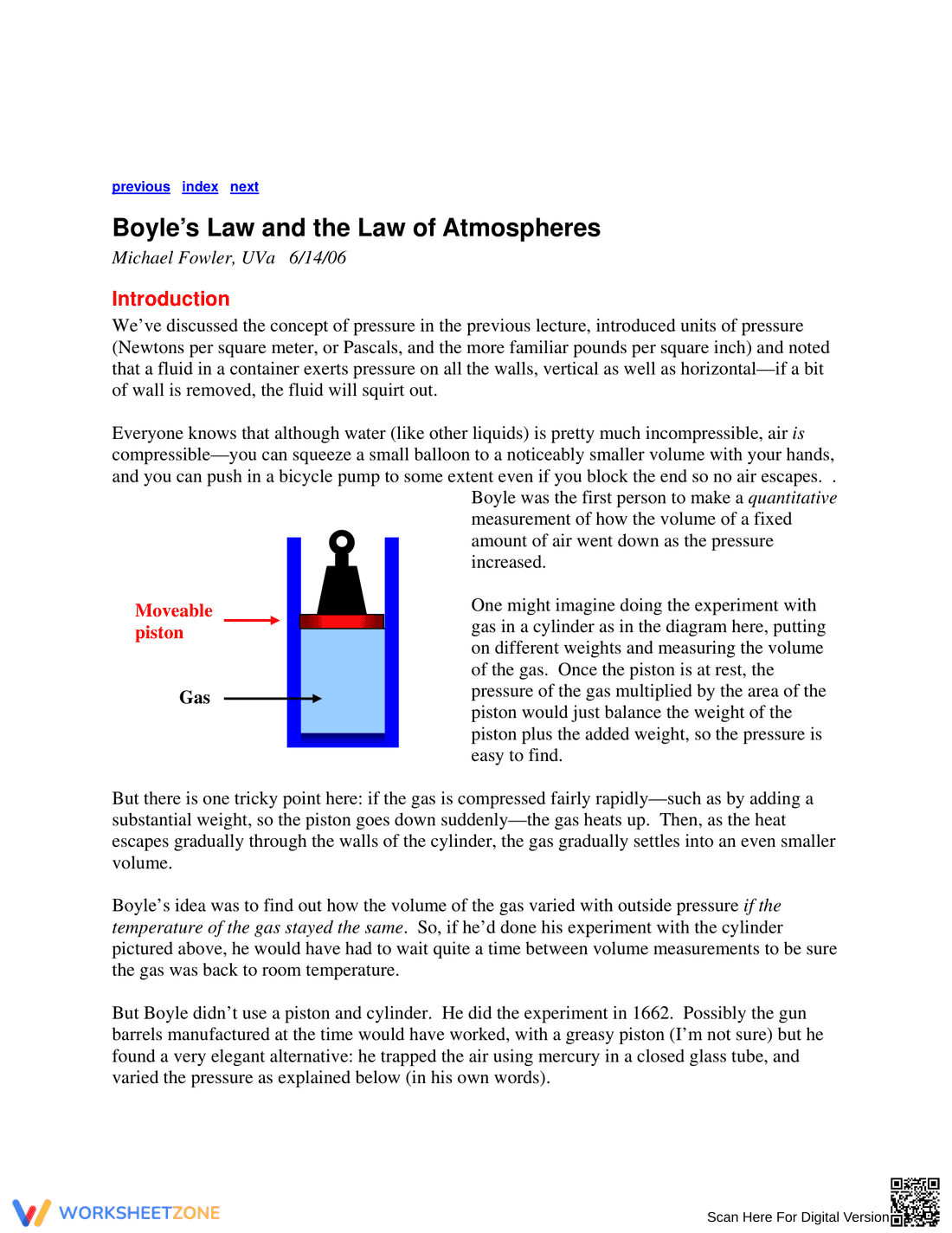
This is an educational worksheet introducing Boyle's Law and the Law of Atmospheres. It includes an introduction to the concept of pressure, including units like Newtons per square meter and Pascals. A diagram shows a cylinder with a moveable piston containing gas. The text explains how the pressure of the gas relates to the weight on the piston.
Grade Level Suitability:
Suitable for high school physics or chemistry, grades 10-12. The worksheet covers fundamental concepts of pressure, volume, and their relationship in gases, requiring a basic understanding of physics principles.
Why Use It:
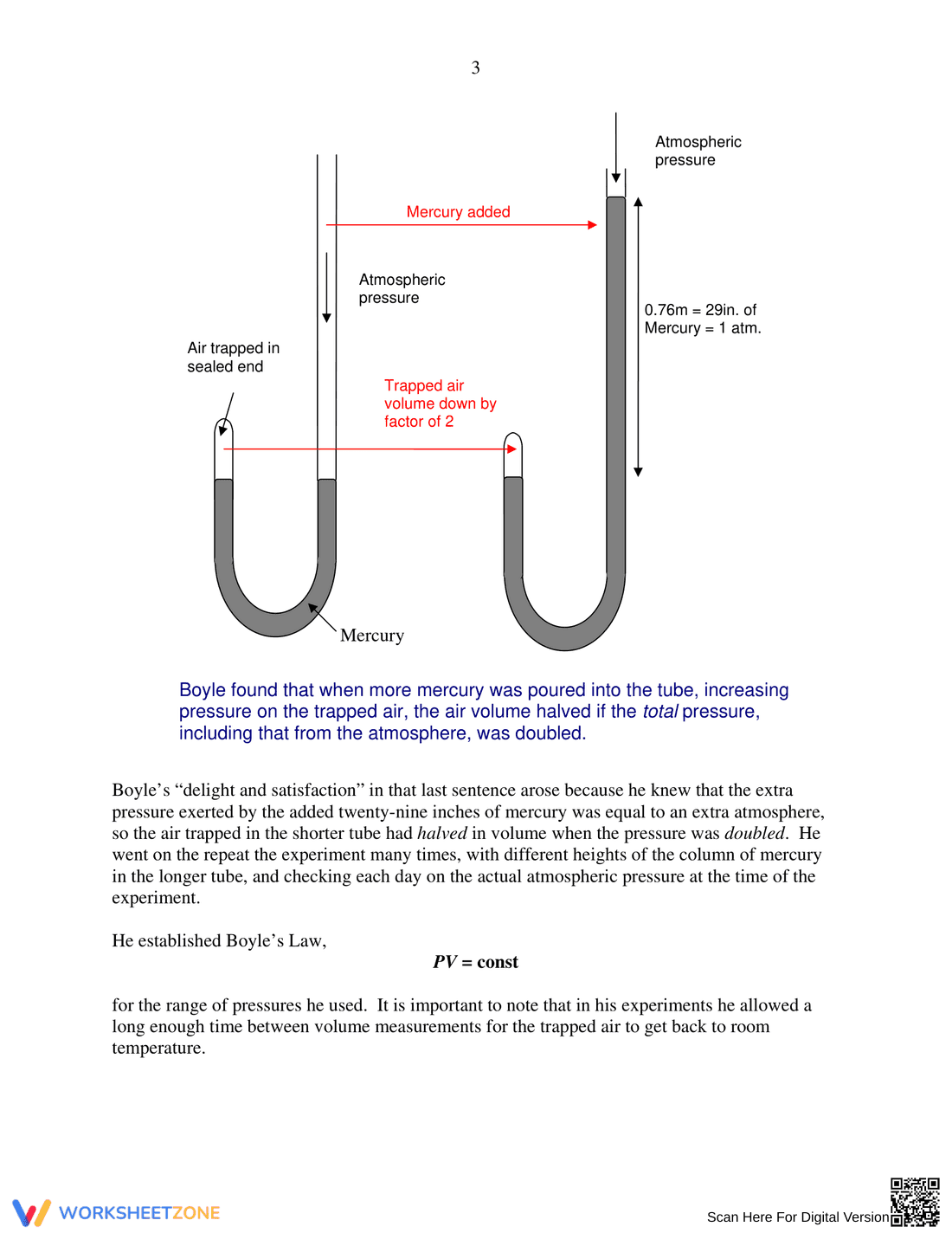
This worksheet helps students understand the relationship between pressure and volume of a gas according to Boyle's Law. It provides a visual representation of the concept and explains how to measure pressure using a piston and cylinder setup. It also gives historical context by mentioning Boyle's experiment.
How to Use It:
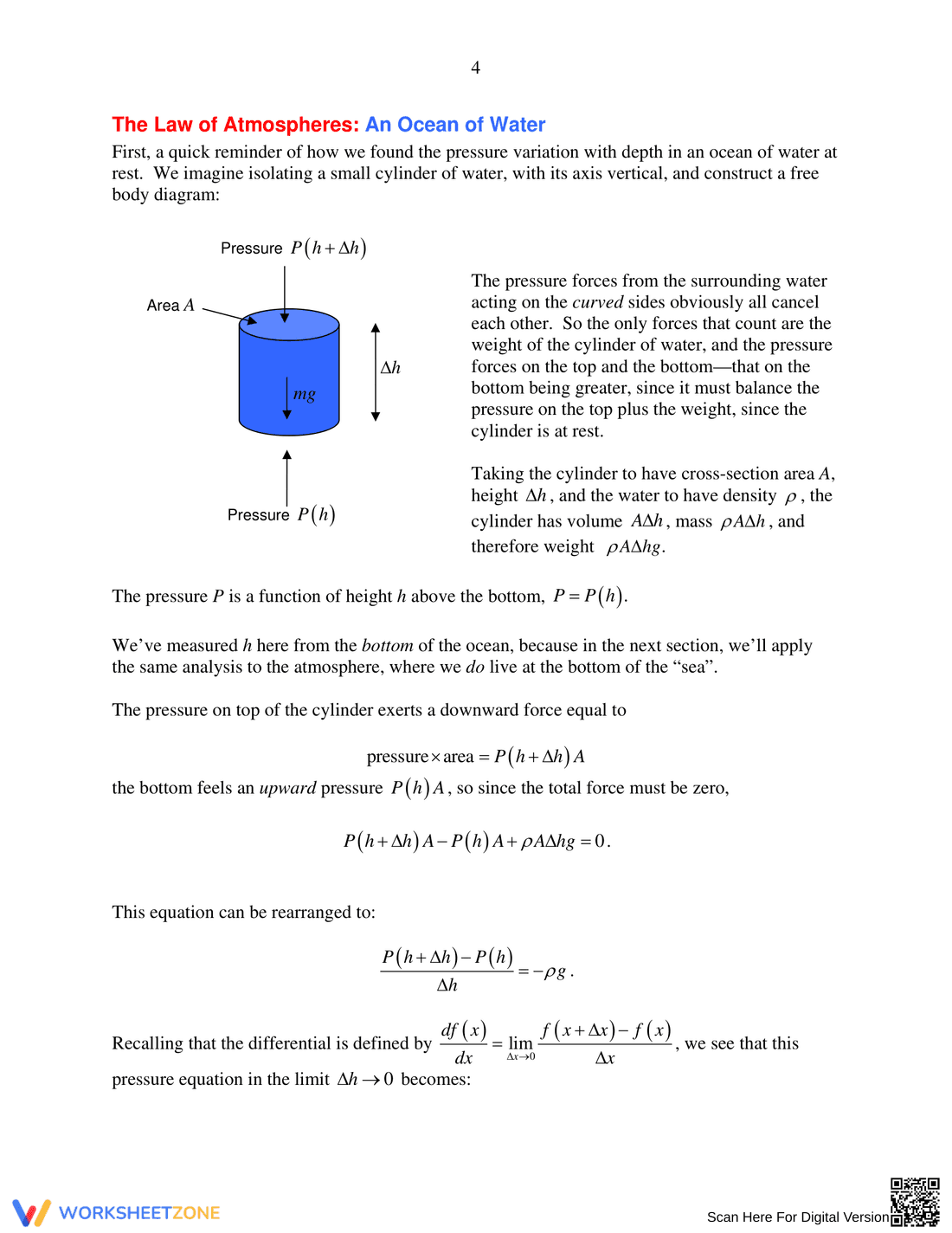
Read the introduction to understand the concepts of pressure and Boyle's Law. Study the diagram of the cylinder and piston to visualize the relationship between gas volume and pressure. Work through the explanations to understand how the pressure is calculated.
Target Users:
High school students studying physics or chemistry, particularly those learning about gas laws. Teachers can use it as an introductory material or as a supplementary resource for explaining Boyle's Law.
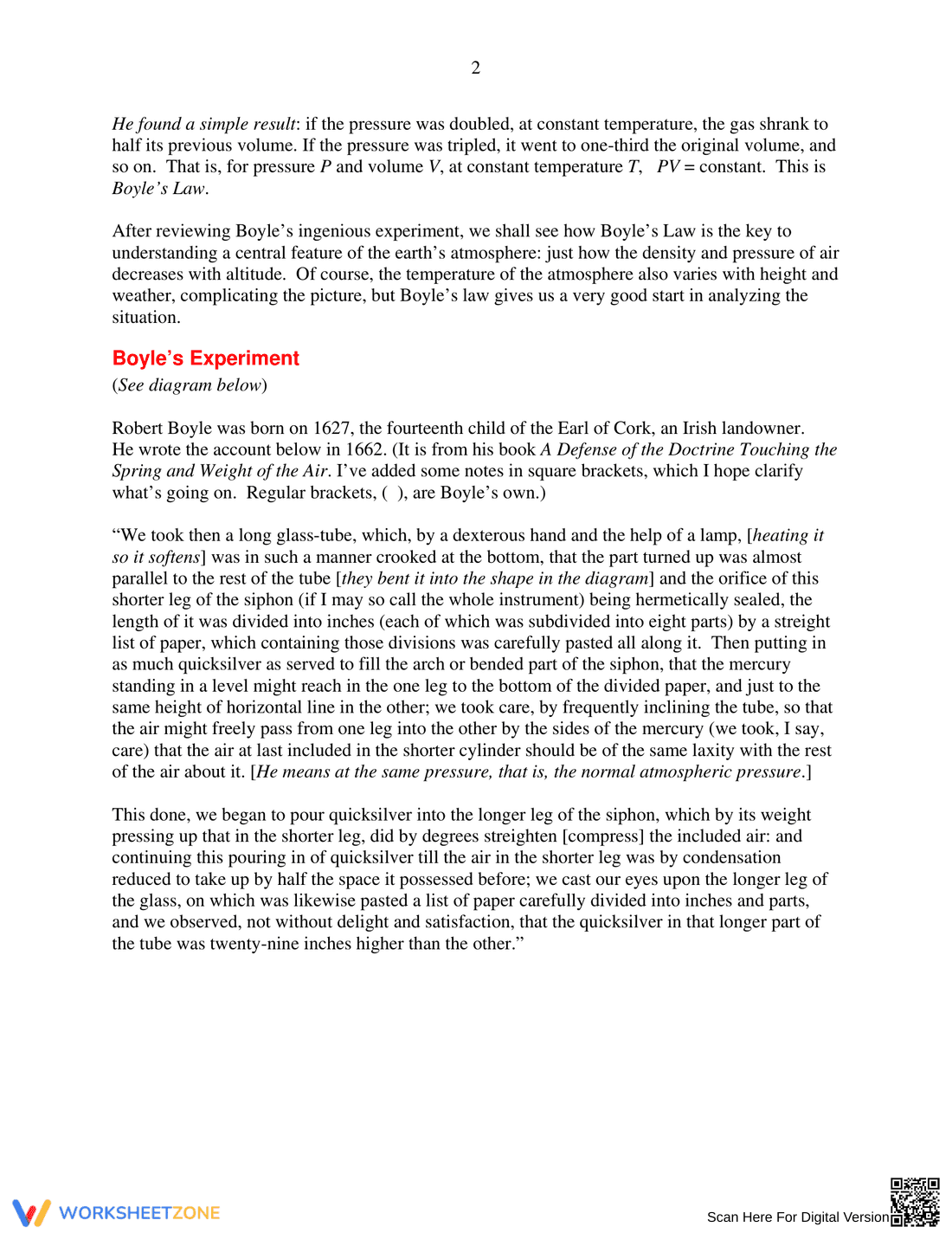
This is an educational worksheet introducing Boyle's Law and the Law of Atmospheres. It includes an introduction to the concept of pressure, including units like Newtons per square meter and Pascals. A diagram shows a cylinder with a moveable piston containing gas. The text explains how the pressure of the gas relates to the weight on the piston.
Grade Level Suitability:
Suitable for high school physics or chemistry, grades 10-12. The worksheet covers fundamental concepts of pressure, volume, and their relationship in gases, requiring a basic understanding of physics principles.
Why Use It:
This worksheet helps students understand the relationship between pressure and volume of a gas according to Boyle's Law. It provides a visual representation of the concept and explains how to measure pressure using a piston and cylinder setup. It also gives historical context by mentioning Boyle's experiment.
How to Use It:
Read the introduction to understand the concepts of pressure and Boyle's Law. Study the diagram of the cylinder and piston to visualize the relationship between gas volume and pressure. Work through the explanations to understand how the pressure is calculated.
Target Users:
High school students studying physics or chemistry, particularly those learning about gas laws. Teachers can use it as an introductory material or as a supplementary resource for explaining Boyle's Law.


