


























1 / 6
0
Views
0
Downloads


0.0
0
Save
0 Likes
Share
Boyle's Law: Advanced Problems and Applications
0 Views
0 Downloads
Paste this activity's link or code into your existing LMS (Google Classroom, Canvas, Teams, Schoology, Moodle, etc.).
Students can open and work on the activity right away, with no student login required.
You'll still be able to track student progress and results from your teacher account.
Information
Description
What It Is:
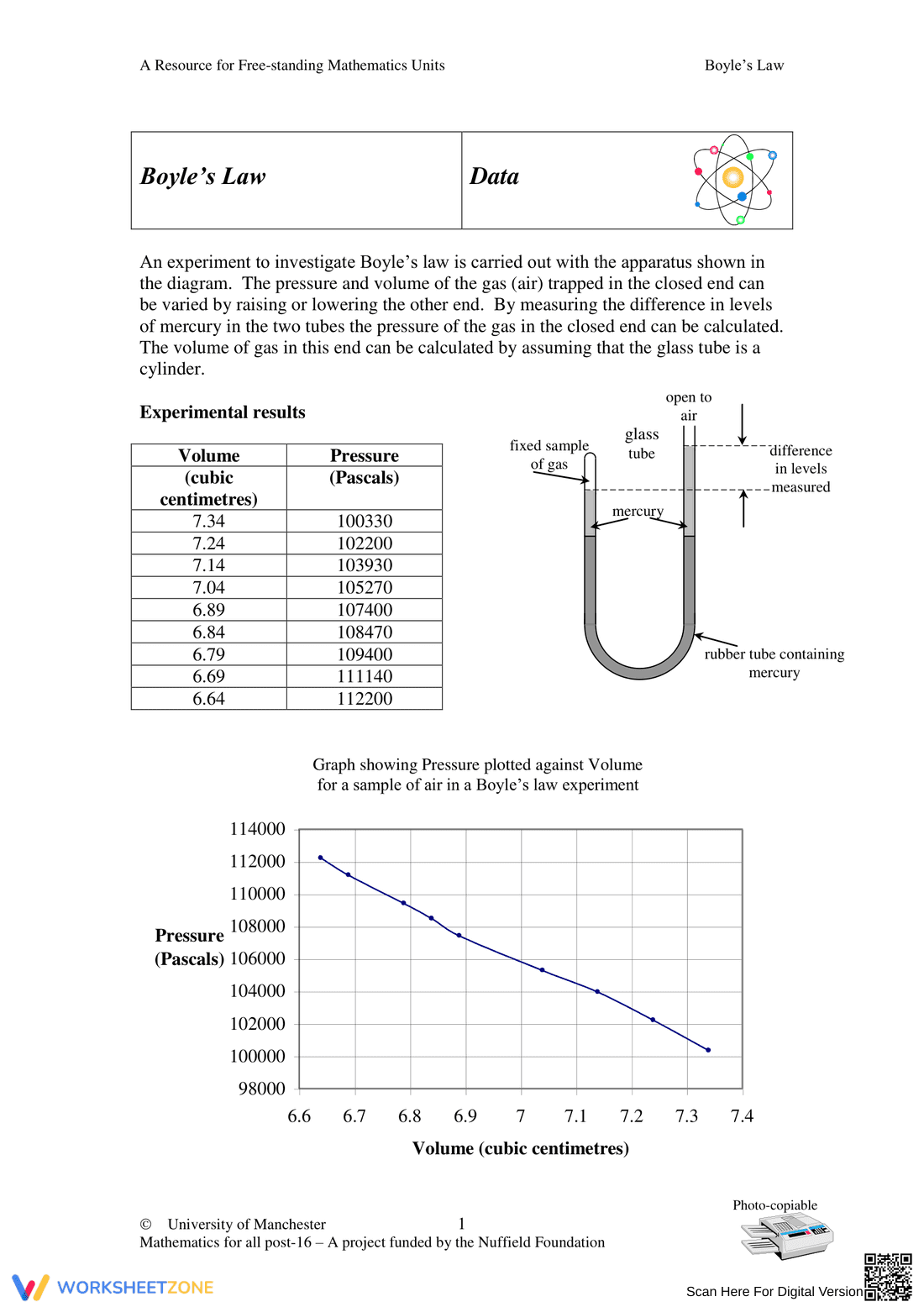
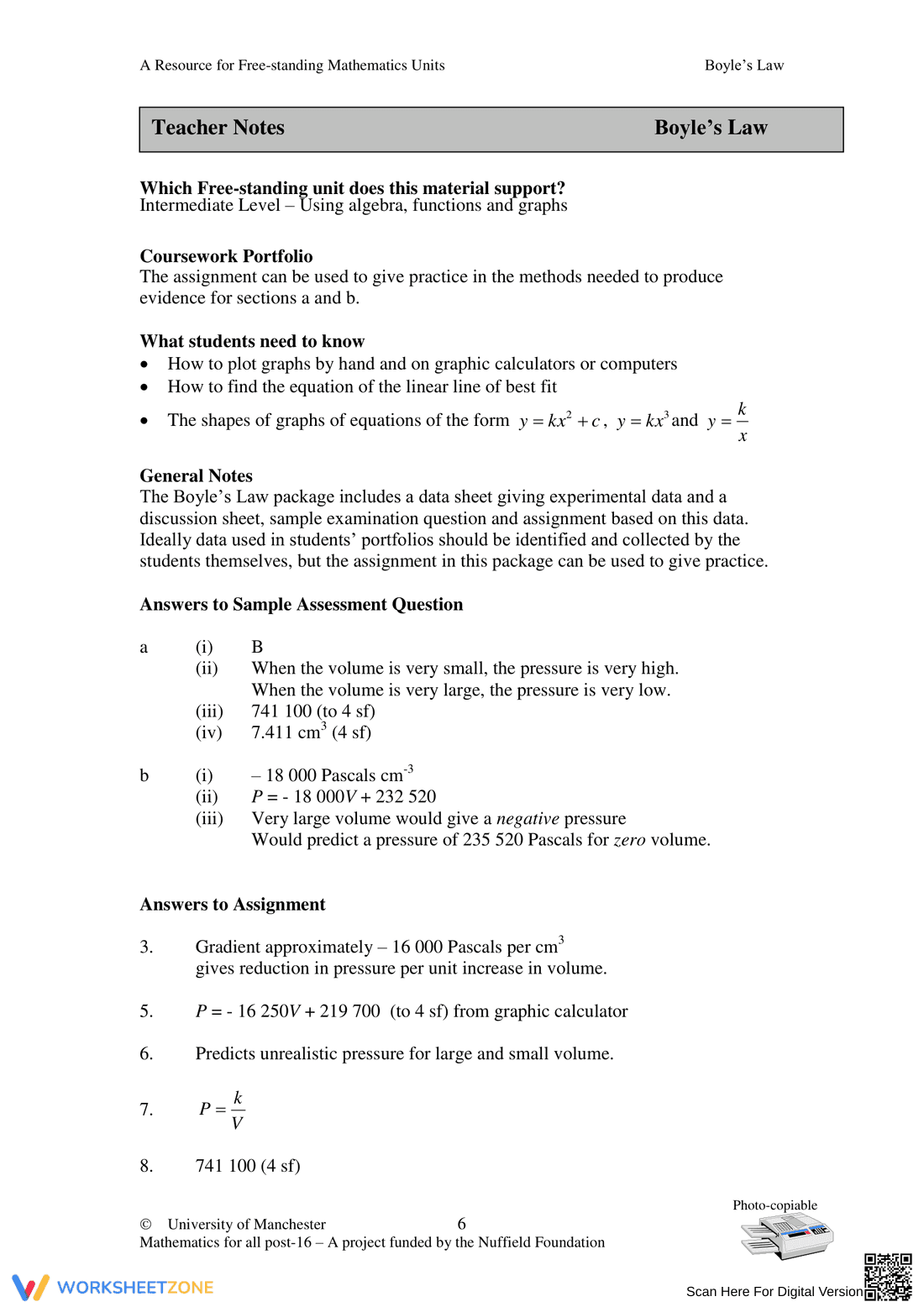
This is an educational worksheet focused on Boyle's Law. It presents an experiment setup with a diagram showing a U-shaped tube with mercury, a fixed sample of gas, and an opening to the air. The worksheet includes experimental results in a table format, listing volume (cubic centimeters) and pressure (Pascals) values. It also features a graph plotting pressure against volume for a sample of air in a Boyle's Law experiment.
Grade Level Suitability:
This worksheet is suitable for high school (Grades 9-12) and introductory college-level physics courses. It requires an understanding of scientific experiments, data analysis, graphing, and the concept of inverse relationships, specifically Boyle's Law. The use of Pascals as a pressure unit also indicates a more advanced level.
Why Use It:
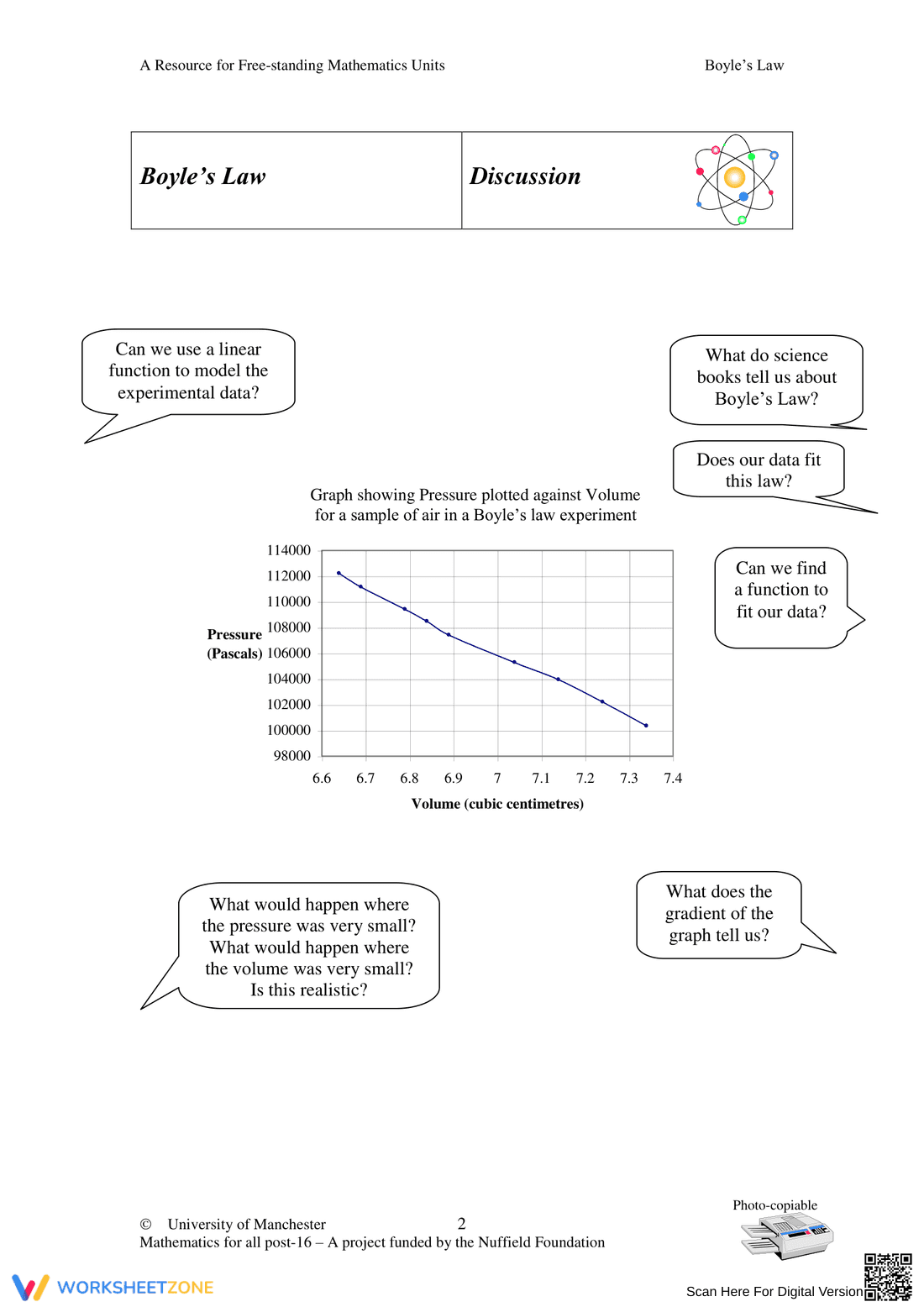
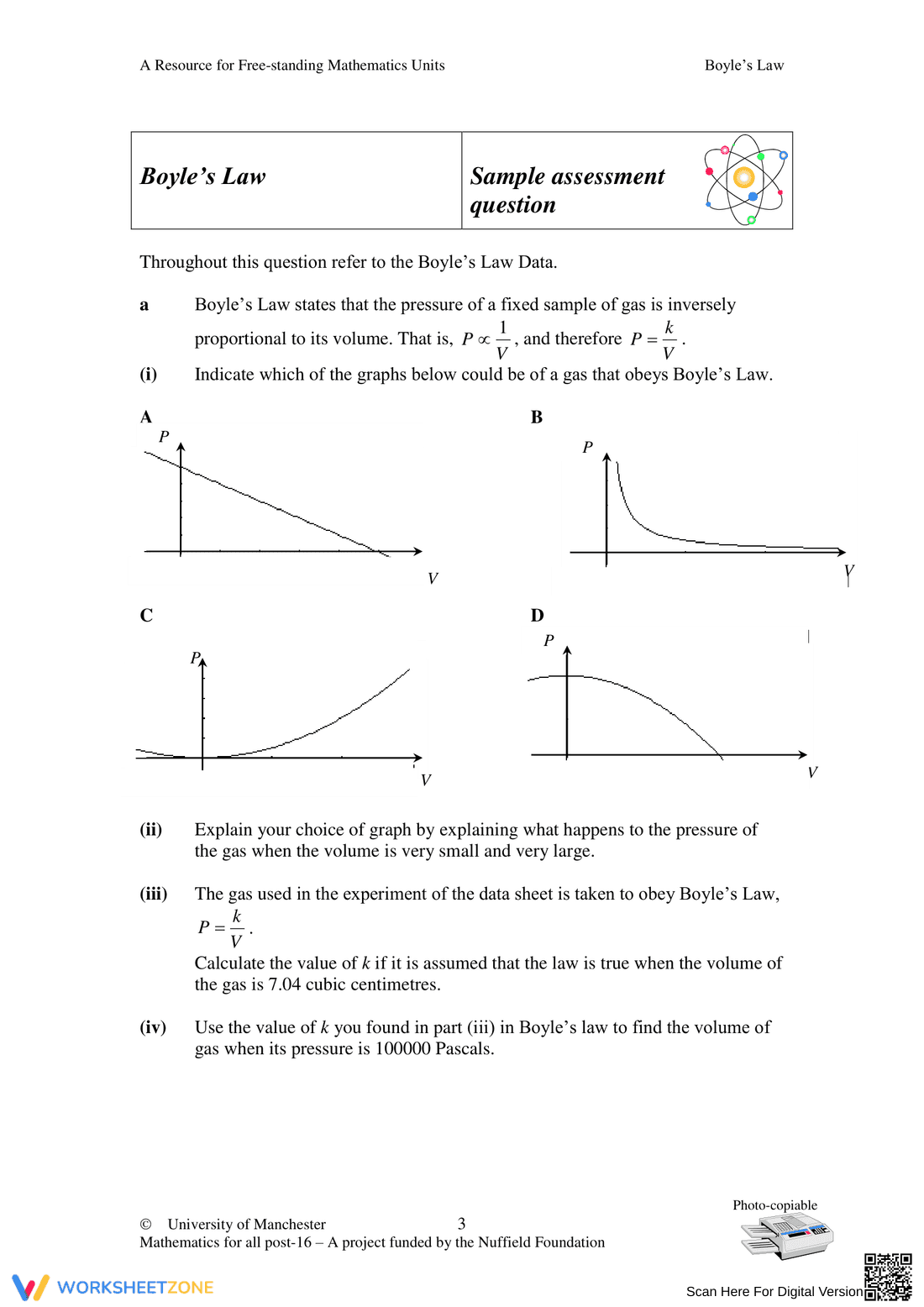
This worksheet helps students understand Boyle's Law through a practical experiment and data analysis. It allows them to visualize the inverse relationship between pressure and volume, practice graphing experimental data, and interpret results in the context of a scientific principle. It reinforces data analysis and graphical representation skills.
How to Use It:
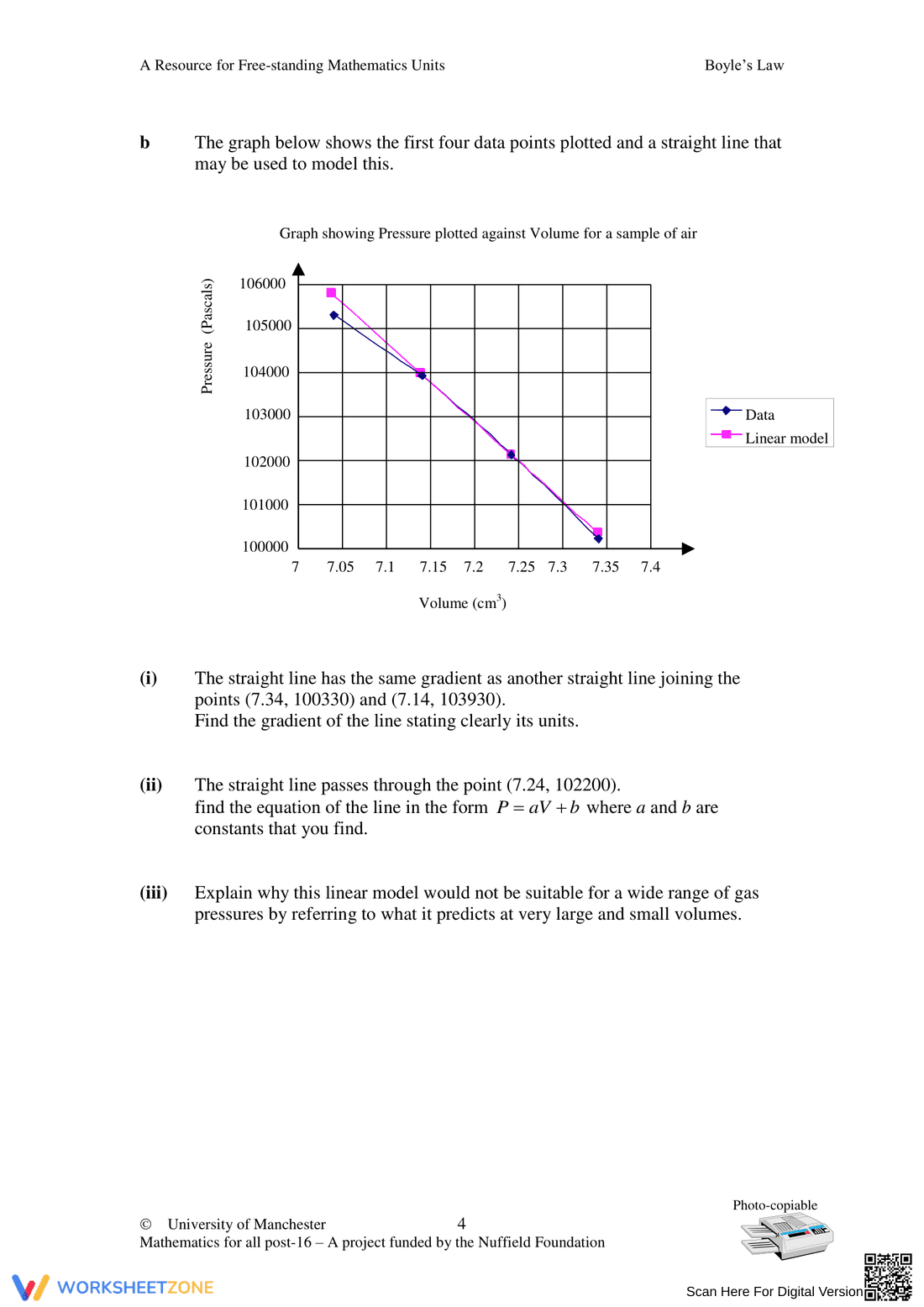
Students can use the worksheet to understand the experimental setup, analyze the provided data in the table, plot the data points on the graph (if not already provided), and interpret the resulting curve to confirm Boyle's Law. They can also use the experimental results to perform calculations related to Boyle's Law (P1V1 = P2V2).
Target Users:
The target users are high school physics students, introductory college physics students, and teachers looking for resources to teach Boyle's Law and gas laws in general. It is also useful for students preparing for science exams or conducting independent research projects related to gas behavior.
This is an educational worksheet focused on Boyle's Law. It presents an experiment setup with a diagram showing a U-shaped tube with mercury, a fixed sample of gas, and an opening to the air. The worksheet includes experimental results in a table format, listing volume (cubic centimeters) and pressure (Pascals) values. It also features a graph plotting pressure against volume for a sample of air in a Boyle's Law experiment.
Grade Level Suitability:
This worksheet is suitable for high school (Grades 9-12) and introductory college-level physics courses. It requires an understanding of scientific experiments, data analysis, graphing, and the concept of inverse relationships, specifically Boyle's Law. The use of Pascals as a pressure unit also indicates a more advanced level.
Why Use It:
This worksheet helps students understand Boyle's Law through a practical experiment and data analysis. It allows them to visualize the inverse relationship between pressure and volume, practice graphing experimental data, and interpret results in the context of a scientific principle. It reinforces data analysis and graphical representation skills.
How to Use It:
Students can use the worksheet to understand the experimental setup, analyze the provided data in the table, plot the data points on the graph (if not already provided), and interpret the resulting curve to confirm Boyle's Law. They can also use the experimental results to perform calculations related to Boyle's Law (P1V1 = P2V2).
Target Users:
The target users are high school physics students, introductory college physics students, and teachers looking for resources to teach Boyle's Law and gas laws in general. It is also useful for students preparing for science exams or conducting independent research projects related to gas behavior.


