Spelling activities are interactive orthographic exercises that help students master word patterns and phonetic structures through multi-sensory engagement. These activities refer to rainbow writing, word sorts, and spelling relays designed for students in grades PreK–12. Worksheetzone provides these resources to ensure educators can replace repetitive rote drills with engaging tasks that build the muscle memory and phonetic awareness required for reading and writing success.
15+ spelling activities
Spelling activities foster children’s linguistic curiosity and precision through active participation. In a classroom setting, these tasks work best when they cater to various learning styles, including visual, kinesthetic, and auditory learners. According to Reading Rockets, multi-sensory spelling instruction is significantly more effective for long-term retention than traditional list-based memorization.
1. Rainbow writing
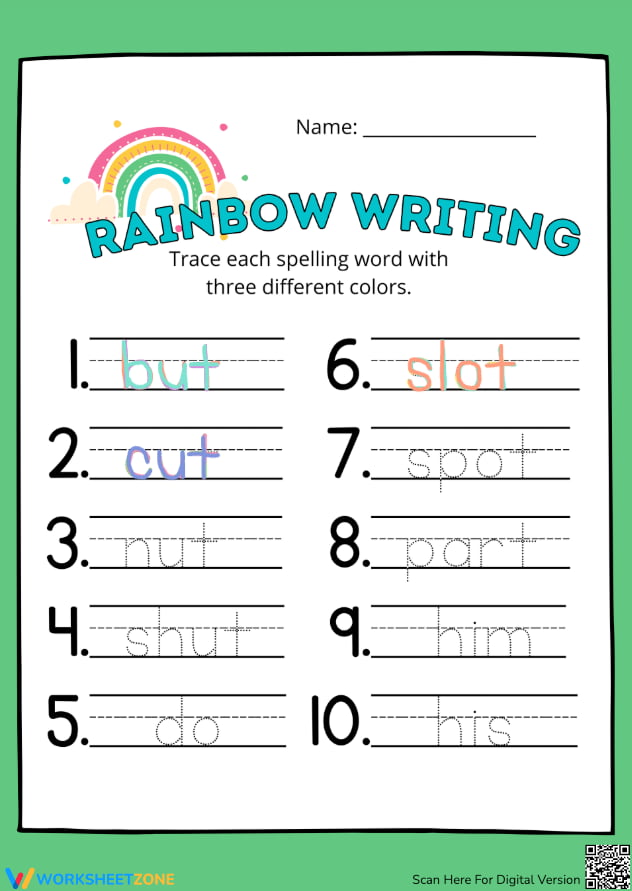
Rainbow writing is a visual and artistic way to practice repetition without it feeling like a chore. Students write each of their spelling words in one color, then trace over them again using a second, third, and fourth color. By the time they are finished, each word looks like a vibrant rainbow. This method reinforces the muscle memory required for correct spelling while providing a satisfying visual reward.
2. Spelling word sort
In a word sort, students categorize their spelling list based on specific phonetic patterns, such as long vowels, silent letters, or prefixes. This activity encourages critical thinking as children must analyze the internal structure of a word rather than just memorizing it as a whole. It is an excellent way to help students recognize the “rules” of the English language through hands-on discovery.
3. Word search spelling

Creating a word search can be just as effective as solving one. Students can either create their own grid on paper or use a Word Search Maker to easily turn their spelling words into a puzzle. After completing the grid, they can swap puzzles with a partner to solve. This activity requires students to pay close attention to the exact order of letters twice – once while placing the word in the grid and once while searching for it.
4. Look-cover-write-check
Look-cover-write-check is a classic strategy that builds independent study skills. Students look at a word, cover it up, write it from memory, and then check their work. Research shared by The Reading League suggests that this method improves orthographic mapping by requiring students to visualize the word.
5. Spelling with playdough

For kinesthetic and tactile learners, using playdough is a game-changer. Students roll the dough into “snakes” and manipulate them to form the letters of their spelling words. Feeling the shape of the letters helps solidify the word’s structure in their minds. It’s a sensory-rich activity that turns a high-pressure subject like spelling into a relaxing, creative task.
6. Spelling bingo
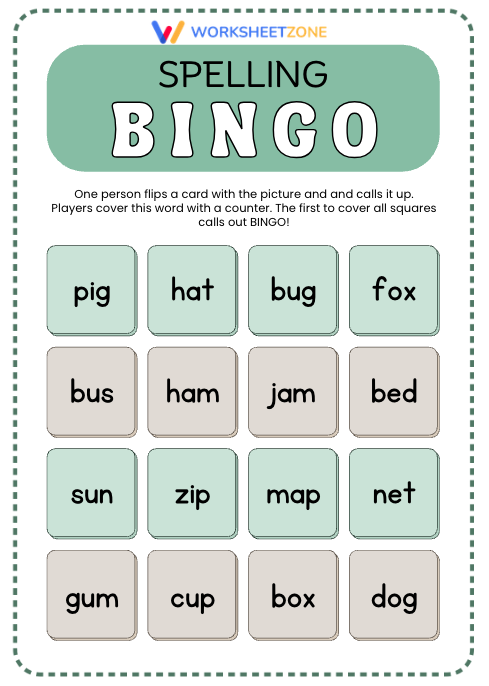
Transform your weekly list into a competitive game of Bingo. Each student fills out a grid with their spelling words in random order. The teacher calls out the definition or a sentence with the word missing, and the students identify and mark the correct word on their board. This not only practices spelling but also reinforces vocabulary and listening skills in a high-energy environment.
7. Write the room
Get students out of their seats with “Write the Room.” The teacher hides spelling word cards in various locations around the classroom. Students move around with a clipboard and a recording sheet, hunting for the words and writing them down as they find them down as they find them. Adding physical movement to the learning process can significantly increase focus and retention for high-energy students.
8. Spelling pyramid
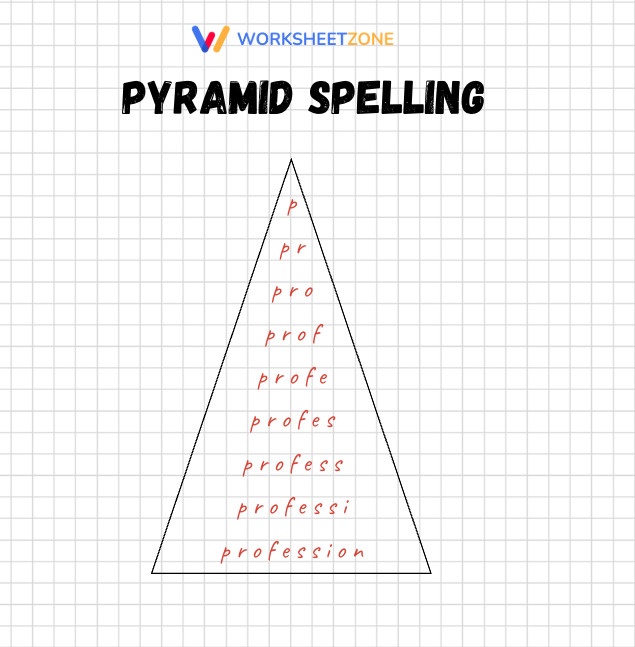
Building a spelling pyramid helps students visualize how a word is constructed letter by letter. To create a pyramid, the student starts with the first letter on the top line, then writes the first two letters on the second line, the first three on the third, and so on until the word is complete. This incremental building process is particularly helpful for mastering long or complex words.
9. Sentence builder
Context is everything when it comes to language. In this activity, students are tasked with writing a creative sentence for each of their spelling words. To make it more challenging, you can ask them to use two or three spelling words in a single sentence. This ensures that they not only know how to spell the word but also understand its meaning and proper usage.
10. Spelling relay
The spelling relay is a team-based activity that brings a bit of “PE energy” into the classroom. Divide the class into teams; one student from each team runs to the whiteboard, writes the first letter of a word, and runs back to hand the marker to the next teammate. The team must work together to complete the word letter-by-letter, promoting teamwork and quick thinking under pressure.
11. Magnetic letter spelling

Using magnetic letters on a cookie sheet or a whiteboard allows students to manipulate the “building blocks” of language. This is particularly helpful for younger students who may still be developing the fine motor skills needed for neat handwriting. They can easily swap out letters, experiment with different endings, and physically move consonants and vowels around to see how the word changes.
12. Spelling maze
A spelling maze is a logic puzzle where the correct path through the maze is paved with the correctly spelled versions of words. Students must choose between the right spelling and a common misspelling (like “recieve” vs “receive”) to find the exit. This challenges students to recognize visual cues and common pitfalls, making them more observant during their own writing.
13. Word illustration

Visual learners thrive when they can associate a word with an image. For this activity, students write their spelling word and then draw a picture that represents it. For more abstract words, they can try to incorporate the letters of the word into the drawing itself. This dual-coding approach (text + image) is a scientifically proven way to enhance long-term memory.
14. Partner dictation
Communication is a key in partner dictation. One student reads a word aloud while their partner writes it down; then, they switch roles. This activity practices both auditory processing (hearing the sounds) and orthographic mapping (writing the letters). It also encourages peer-to-peer coaching, as students often find it easier to accept corrections from a friend.
15. Spelling scramble
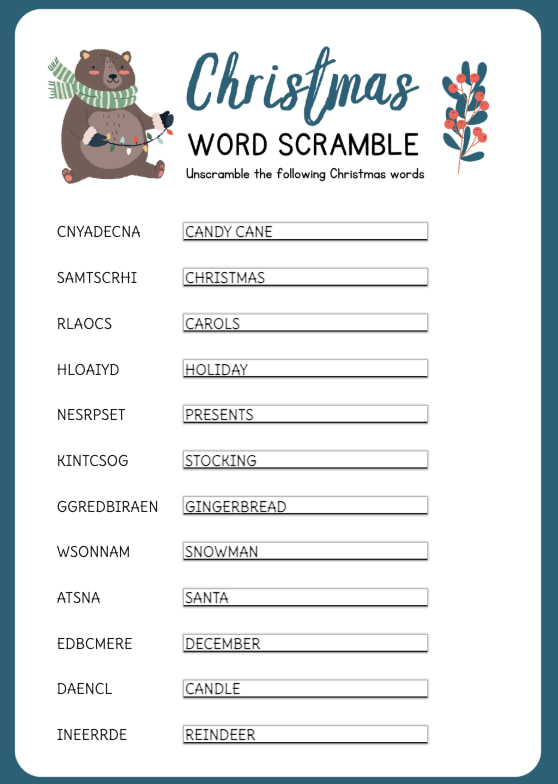
Unscrambling letters is a fantastic way to test a student’s “deep” knowledge of a word. The teacher provides a list of spelling words with the letters mixed up (e.g., “apple” becomes “pelpa”). Students must use their knowledge of phonics and word structure to rearrange the letters into the correct sequence. It’s essentially a brain teaser that reinforces letter order.
To save time, teachers can use a Word Scramble Generator to instantly create word scramble activities from their spelling lists.
16. Weekly spelling journal
A weekly spelling journal serves as a personalized record of a student’s progress. Each week, they choose 5 words they found difficult and write a short reflection on why they were tricky or use them in a short story. Over time, this journal becomes a valuable resource that students can look back on to see how much their literacy skills have improved.
FAQs
1. How often should we practice spelling?
We recommend integrating short, 10–15 minute spelling activities into your daily routine. Daily, varied practice is much more effective than one long session at the end of the week. By rotating through different activities like “Rainbow Writing” and “Spelling Relay,” you keep students engaged and motivated.
2. Can these activities be used for homeschooling?
Absolutely. Most Worksheetzone spelling tasks require minimal materials and are perfect for one-on-one or small-group instruction at home. They turn “spelling time” into “game time,” which significantly reduces academic anxiety and builds a positive relationship with literacy.
3. How do these activities help with reading?
Spelling and reading are two sides of the same coin. By breaking down and building words through these activities, students reinforce their understanding of phonics and word patterns. Research shows that strong spellers are almost always strong readers because they have a deep understanding of orthographic structures.
Final thoughts
Spelling activities play an essential role in shaping well-rounded, confident writers. From tactile playdough building to high-energy relays, each task supports a different area of literacy growth. The most effective spelling practice balances fun with meaningful application. When chosen thoughtfully, these activities inspire curiosity and prepare young learners for long-term success.
Looking for more literacy resources? Explore our related guides on Grammar Activities, Close Reading Activities, and ELA Activities.